When OpenAI released GPT-5.1, it didn’t sound like much more than a routine update, another decimal in a sea of upgrades. But this “.1” hides a quiet transformation. GPT-5.1 is faster, more consistent, and noticeably more human in tone. It’s not a reinvention of ChatGPT, it’s a refinement of how it thinks.
Here’s a breakdown of what’s actually new, and how GPT-5.1 compares to GPT-5.
Also read: Microsoft’s AI Super Factory explained: The mega data center for the next generation of intelligence
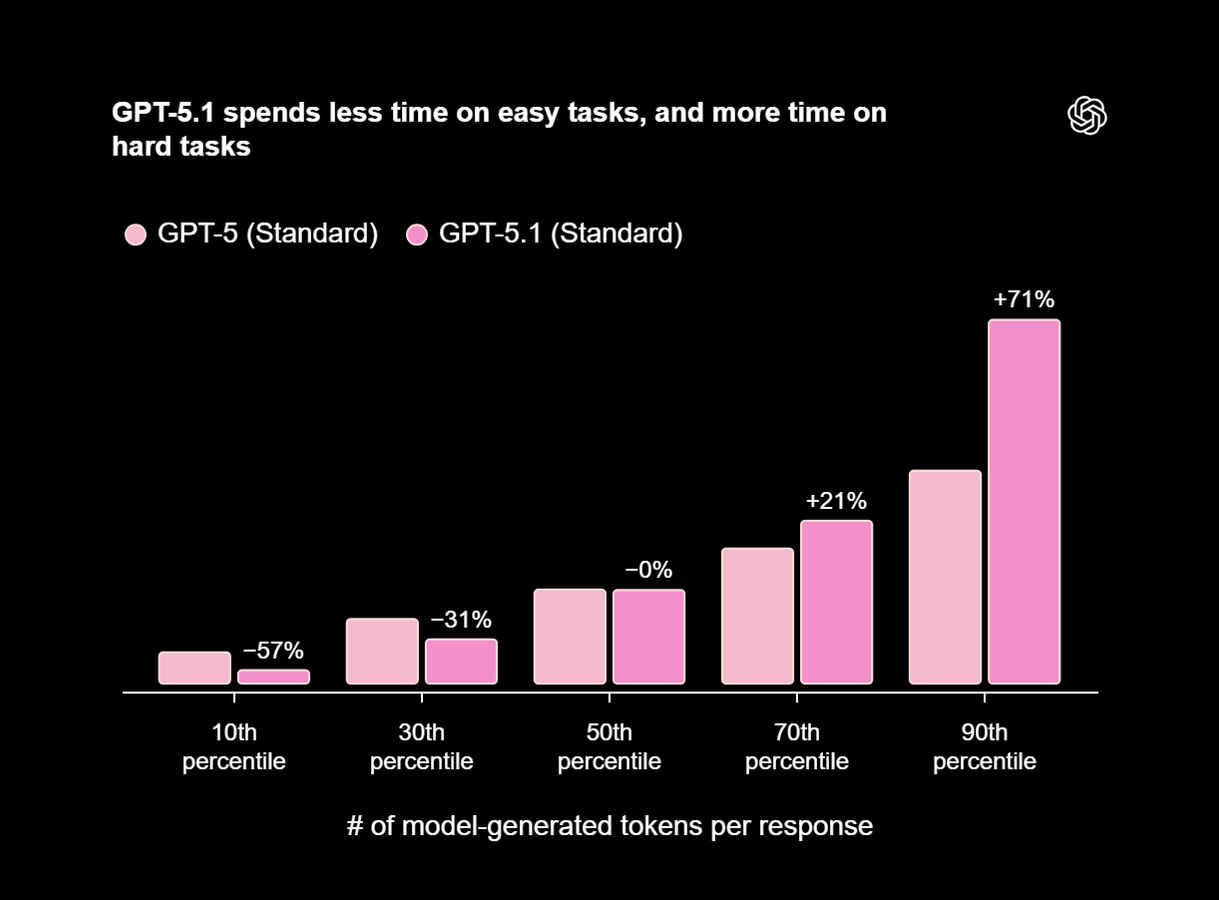
The biggest difference is GPT-5.1’s dual-mode design.
GPT-5 handled both functions behind the scenes. GPT-5.1 gives users the choice, control over speed versus depth, a defining change in how we interact with AI.
GPT-5.1 can process and recall far longer prompts, up to about a million tokens in internal testing, compared to GPT-5’s 256,000. That means it can analyze entire research papers or maintain context over extended conversations.
It also responds faster, roughly 30% quicker in Instant Mode, while Thinking Mode introduces “reflection passes” — internal checks that improve logic and consistency. GPT-5 sometimes lost focus across paragraphs; GPT-5.1 stays coherent through pages.
One of GPT-5.1’s most obvious improvements is in tone. It adjusts its voice, professional, casual, or creative, based on your prompts. GPT-5 tended to sound uniform and neutral; GPT-5.1 feels more flexible, even empathetic.
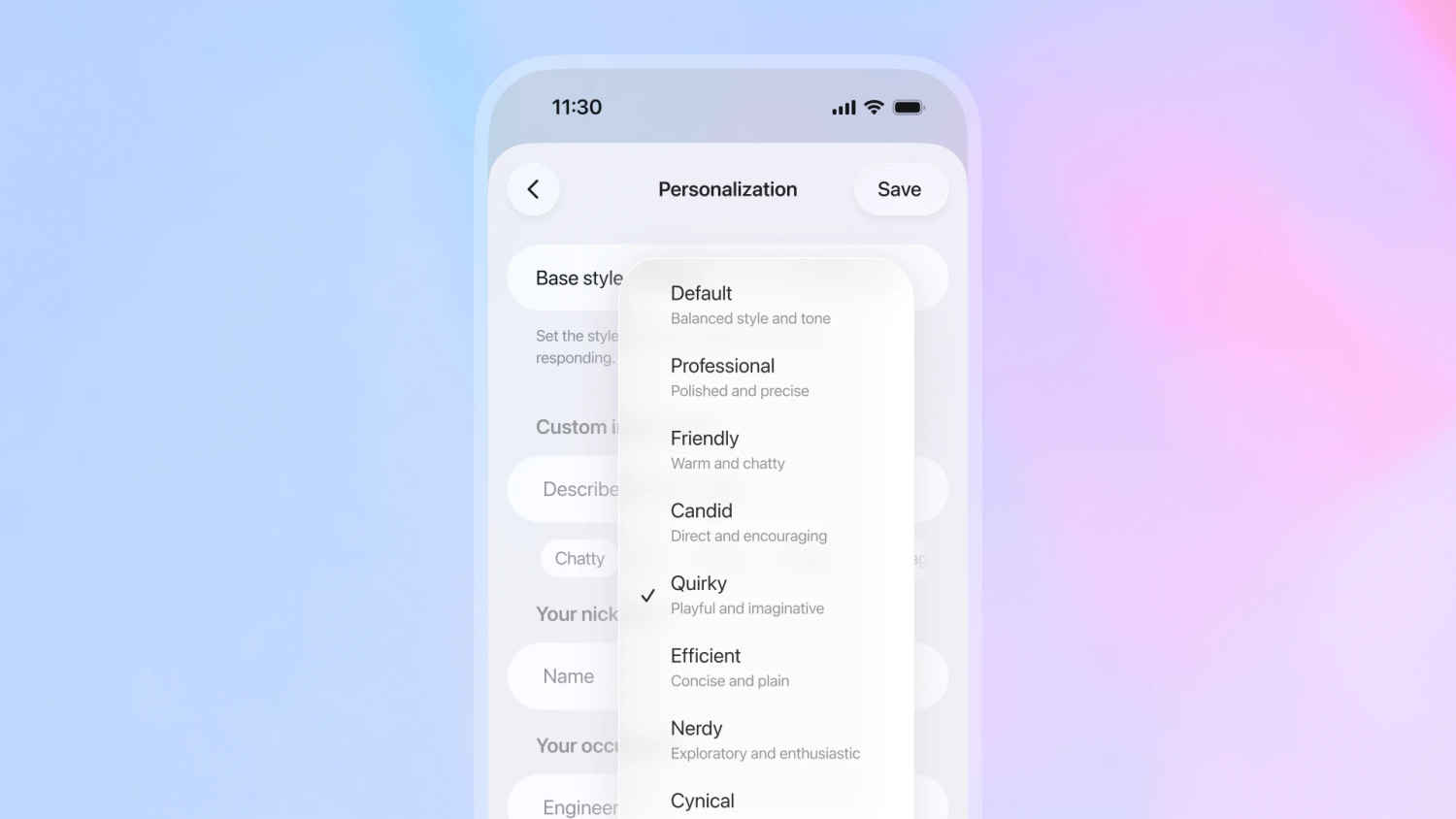
Earlier this year, OpenAI added basic tone presets. With GPT-5.1, those options have been rebuilt and expanded into six distinct styles:
These aren’t gimmicks, they’re based on the tones real users gravitate toward. The idea is simple: instead of manually steering ChatGPT’s personality in every prompt, you can now set a tone that feels uniquely right and let the model stay in it.
It also keeps track of user preferences better. If you ask for concise answers or a specific tone, GPT-5.1 remembers and maintains it through the session. Conversations flow more naturally – less “chatbot,” more collaborator.
Also read: AI isn’t about bigger models: Snowflake’s Jeff Hollan on agentic AI future
OpenAI says GPT-5.1 shows a 40% drop in factual hallucinations compared to GPT-5. It’s better at self-correction, often re-evaluating its own output before replying.
This is most visible in Thinking Mode, where you can see the model’s “thought process” before it finalizes a response. It’s a step toward transparency, letting users glimpse how the AI reached a conclusion.
Developers will notice that GPT-5.1 is stronger at code synthesis and debugging, interpreting real compiler errors and suggesting fixes. In math and logic, it performs closer to specialist models while staying conversational.
On the multimodal front, GPT-5.1 connects text and images more naturally. Describe a chart or upload a visual, and it explains details with context, not just generic captions, something GPT-5 often struggled with.
GPT-5.1 introduces Private Compute Mode, letting some reasoning happen locally, keeping sensitive data off OpenAI’s servers. This makes it friendlier for enterprise and research use.
For developers, new tools like streamed reasoning output, lower latency, and custom tone profiles allow fine-tuned integration, GPT-5 couldn’t do this natively.
GPT-5.1 isn’t revolutionary, it’s evolutionary. It refines the model’s balance between speed, reasoning, and tone. GPT-5 was all about scale; GPT-5.1 is about control.
It’s faster when you need it, deeper when you ask for it, and more human when it speaks. For most users, that small “.1” makes a big difference.
Also read: AI vs. artists: What Germany’s copyright ruling against OpenAI means for creativity and tech