For years, Indian consumers saw tablets as “big phones without the phone bit” or “budget PCs without the power.” The pandemic changed that. What was once an occasional-use gadget for reading PDFs or streaming movies became a lifeline for education, remote work, and yes, binge-watching. In 2024, the Indian tablet market grew by over 40% as per IDC, a rare double-digit spike in a category many once considered niche.
Pankaj Harjai, APJ Leader & Director of Tablets & Smart Devices at Lenovo, is unequivocal about why the category has resurged. “The tablet is no longer a one-purpose device,” he says. “It’s used for meetings, learning, productivity, entertainment, and now even gaming. People have realised it can fit into so many parts of their lives.”
Remote learning and work created an urgency, but Harjai argues that sustained demand comes from product evolution. “Form factors have changed. We’ve moved from basic slates to devices with pen support, detachable keyboards, and performance that can rival laptops for many use cases,” he explains.
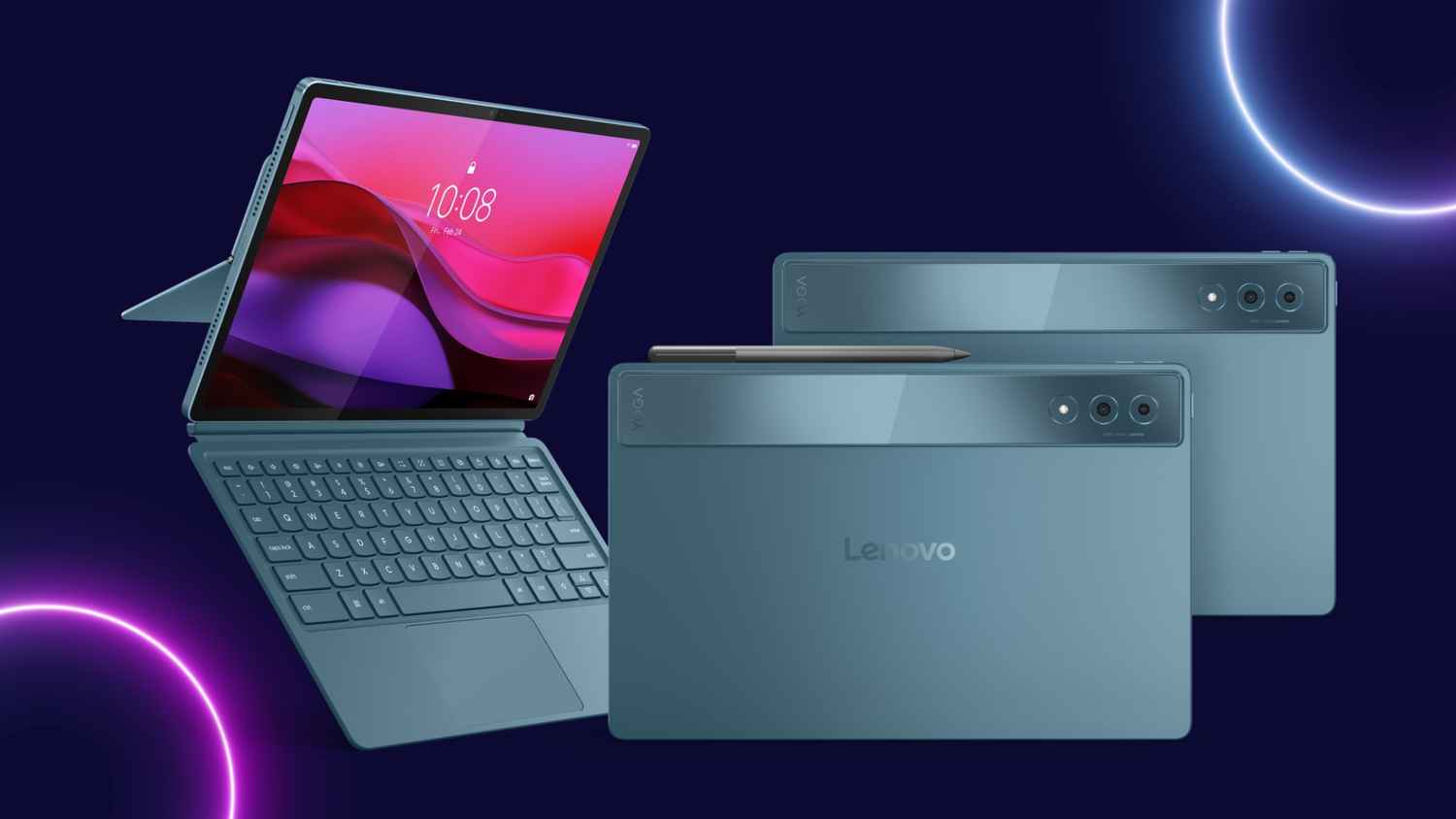
The growth in entertainment is clear: OTT streaming exploded and people wanted bigger screens than their phones but didn’t want to be tethered to a TV. Gaming, once a desktop-and-console-only affair, has found a home on the tablet form factor due to cooler thermals than a phone, more screen real estate, and increasingly high-refresh displays. Productivity, though, is the dark horse. “For a lot of professionals, the tablet has become a must-have second device. In some cases, it’s even the first,” Harjai admits, pointing to his own Yoga Tab Plus.
Harjai outlines what he calls Lenovo’s four “swim lanes”: productivity, entertainment, gaming, and education, where the company is placing deliberate bets to ensure it’s not a temporary blip.
Each of the “lanes” has a clear flagship: AI-enabled models for productivity, the JBL-equipped Tab Plus for entertainment, Legion for gaming, and stylus-ready Yoga devices for education.
On the education front, Harjai points to Lenovo’s work with NGOs to distribute devices to students. “When you see a child using a tablet for the first time to learn, there’s delight, but also gratitude. That’s when you know you’re doing more than selling hardware.”
While many tablets in India are priced under Rs 25,000, and that’s still the volume sweet spot, Harjai concedes. But ASPs (average selling prices) have doubled for Lenovo in the past three years. Why? “Two years ago, we asked consumers in 15 countries what they wanted in a tablet. They told us: more power, better screens, larger batteries, and they were willing to pay for it,” Harjai recalls.
The Lenovo Tab Yoga Plus, priced starting at Rs 49,999, is proof. “We were pleasantly surprised by the love it’s received. People saw the value: personalised AI that learns your habits, on-device knowledge retrieval, and hardware that actually enhances creativity. The consumer today is smart,” he says, leaning in. “If they see value, they’ll pay.”
Tablets, Harjai argues, are inherently interactive devices: “A tablet has more ways to interact with the user than a PC. Touch, pen, keyboard, cameras. That’s why AI on a tablet makes more sense than on a PC for certain use cases. It’s a canvas for interaction.”
He cites practical scenarios: a coach getting analytics tailored to a player’s style; a creator whose device learns their design preferences; a salesperson whose notes sync intelligently between laptop and tablet.
The company is betting big: two more AI-focused tablets are slated between October and March, adding to the two already in the market. Lenovo’s internal roadmap calls for tighter integration with Motorola phones and deeper Smart Connect features.
Competing with Xiaomi and Samsung in the sub–Rs 30K range, Lenovo leans on hardware differentiation. The Tab Plus offers eight JBL speakers and a built-in kickstand. The Idea Tab Pro delivers a 3K display, matte “paper-like” display for natural writing and a 10,000mAh+ battery.
“We also do something few others offer: commercial customisation,” Harjai notes. “If a business needs specific security protocols or app compatibility, we work directly with Google to deliver it.” It’s a strategy designed to keep one foot in the retail channel and the other in enterprise deals, a hedge against the volatility of purely consumer-facing sales.
According to CMR, 5G tablets now account for 43% of the Indian market. Harjai sees it as primarily future-proofing rather than an immediate necessity. “Eighty per cent of usage is still on Wi-Fi. But when people step out, they don’t want to depend on hotspots. 5G makes that seamless.”
Lenovo’s new 5G Idea Tab series will launch this month at around Rs 20,000.
Gaming is another growth edge. Lenovo’s Legion Tab 4 will arrive in January 2026 to deliver what Harjai calls a “next leap” in performance.
Harjai smiles when I ask if tablets are still seen as “secondary devices.” For him, they’re not. “If you ask me personally, my tablet is my first device. I work on it, watch movies, take notes, even run AI workflows,” Harjai says.
Lenovo wants more people to think like that. Which is why pen compatibility is now standard across its new range, something he says many rivals still lack. “Most competitors still don’t offer that across models. It’s a huge differentiator for students and professionals.” It’s part of dismantling the biggest myth about tablets: that they’re just for video calls or casual Netflix binges.
Looking at 2025, Harjai’s focus is clear: expand AI capabilities, strengthen Smart Connect across Lenovo PCs, Motorola phones, and tablets, and introduce products that go beyond screen size upgrades. “Just making a bigger phone isn’t enough,” he says. “Consumers want more, and they’re telling us exactly what that is.”
In a market that has grown by nearly half in a single year, Lenovo’s bet is that AI, thoughtful hardware design, and commercial flexibility will keep tablets from sliding back into niche status.
“The consumer is demanding, and that’s a good thing. It keeps us improving every day,” Harjai says.