Microsoft recently reported a major milestone: Windows 11 has officially surpassed 1 billion monthly active users. According to the company’s fiscal Q2 2026 earnings call, the OS reached this goal in just 1,576 days, significantly faster than Windows 10, which took 1,706 days. On paper, it is a triumph of adoption and scale.
However, this statistical victory is clashing with a historic low in user sentiment. As Microsoft pushes toward an “Agentic” future – where the OS proactively anticipates user needs through integrated AI – the platform is facing a public revolt from the power users and developers who form its backbone.
Also read: Windows 11 crosses 1 billion mark, as Xbox revenue falls
Pavan Davuluri, Microsoft’s President of Windows and Devices, has taken a direct stance in acknowledging this growing “trust gap.” In a recent interview with The Verge and subsequent follow-up statements, Davuluri admitted that corporate promises are no longer sufficient to appease a frustrated user base.
“The feedback we’re receiving from our community of passionate customers and Windows Insiders has been clear,” Davuluri stated. “We need to improve Windows in ways that are meaningful for people… We know words aren’t enough, it’s on us to continue improving and shipping.”
Davuluri confirmed that the Windows engineering team is now entering a high-intensity phase internally described as “swarming.” This pivot involves redirecting massive resources away from new AI “spectacles” to focus exclusively on fixing deep-seated “pain points”: system performance, reliability, and the inconsistent UI dialogs that have plagued Windows 11 since its 2021 launch.
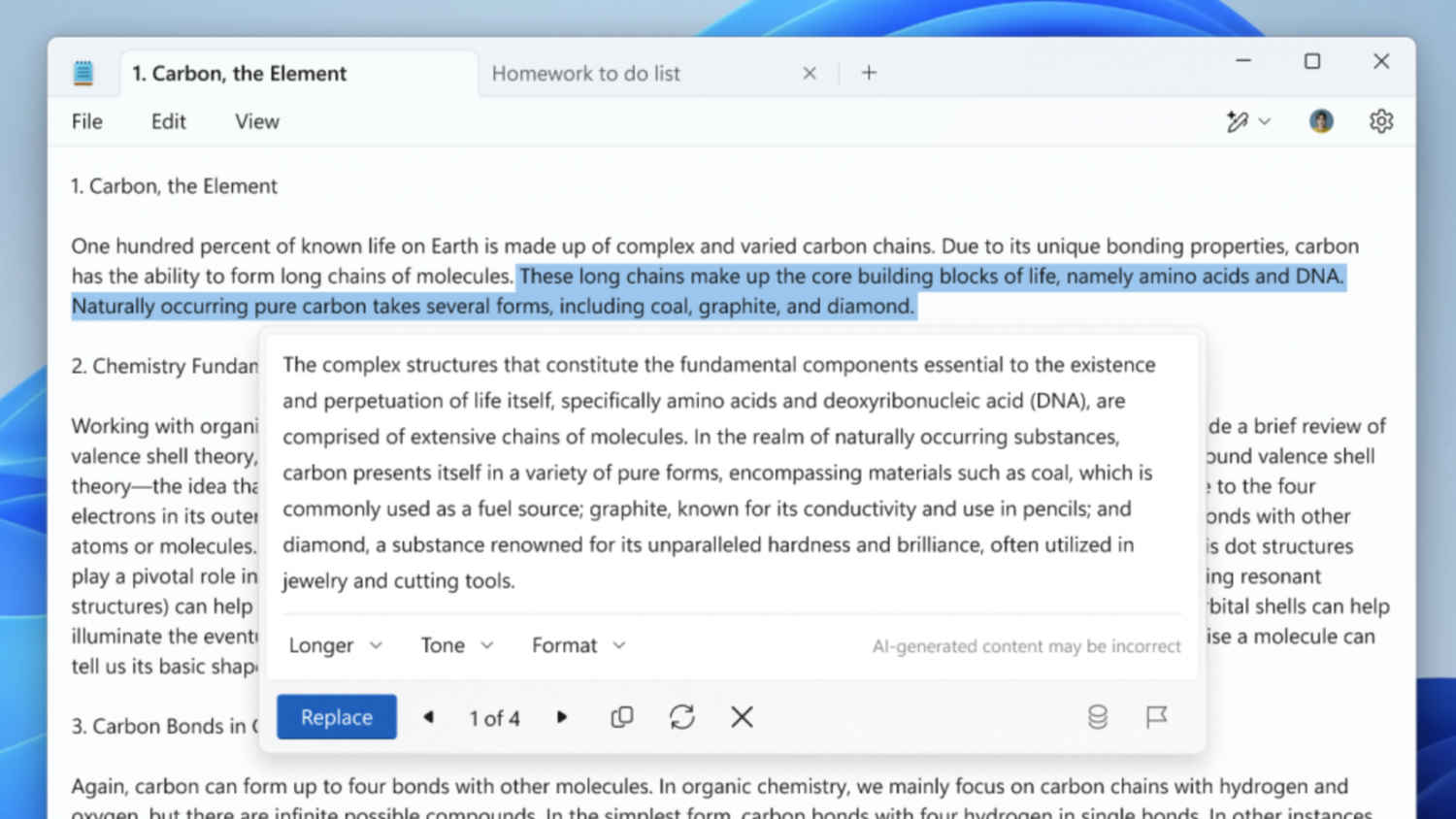
The controversy over Notepad serves as the primary symbol for this erosion of trust. A tool prized for forty years as a fast, offline, and “invisible” utility, Notepad was recently updated with AI-powered “Rewrite” and “Summarize” features.
Also read: Microsoft scrambles to fix Windows 11 after security update causes unexpected failures
To use these tools, users must sign in with a Microsoft account, and their text is processed via cloud-based Azure services. On forums like r/Windows11, the sentiment is that Microsoft has violated a “safe space” and could have just done this with WordPad instead of getting rid of it. As one highly upvoted comment noted, “If Ms wants to cram AI and extra features somewhere, revive WordPad and put everything there. Notepad should stay simple and lightweight, that’s the whole point of it.”
Many analysts point out that the 1-billion-user milestone is driven more by necessity than desire. With the October 2025 end-of-support date for Windows 10 having passed, millions of users and enterprises moved to Windows 11 simply to maintain security updates. This “forced migration” has created a unique contradiction for 2026:
Windows 11 is technically the fastest-growing version of Windows ever, up over 45% year-over-year. Users are increasingly vocal about “update anxiety.” The January 2026 update cycle further damaged credibility when the KB5074109 patch triggered critical “UNMOUNTABLE_BOOT_VOLUME” errors, leaving systems in boot loops and requiring manual recovery.
Davuluri’s “swarming” effort is intended to prove that Microsoft can still build a tool that gets out of the user’s way. The 2026 roadmap now prioritizes “fundamentals” over “agentic” features. Microsoft has reportedly even pulled back on some “Recall” functionality, making it strictly opt-in after significant privacy pushback.
For the first time in the Windows 11 era, the goal isn’t to add something new, it’s to prove that the OS can be reliable again. Whether 1 billion users will stay for the AI or are simply waiting for a more stable alternative remains the defining question of Davuluri’s tenure.
Also read: Xbox Cloud Gaming may soon let players stream games for free, but there’s a catch