Samsung has launched its 2025 Bespoke AI appliance lineup in India. The company says it wants to redefine what home appliances can do, using artificial intelligence to make them more intuitive, more connected, and more useful. That’s the pitch.
The launch includes AI-powered refrigerators, washing machines, air conditioners, and an all-in-one washer-dryer combo. These aren’t entirely new product categories, but Samsung is trying to make them smarter by adding voice control, touch displays, connected apps, and predictive features.
“Bespoke” is Samsung’s lifestyle-focused product line, built to be more modular, stylish, and now smarter. With “Bespoke AI,” the brand is trying to fold artificial intelligence into appliances like refrigerators, air conditioners, washing machines, and dryers. AI, in this context, means connected features that automate routines, suggest actions, and learn user behaviour.
Samsung says the appliances are designed around four pillars: Easy, Save, Care, and Secure. That loosely translates to automation, efficiency, health monitoring, and data protection. These features do matter and add value. But what exactly is new?
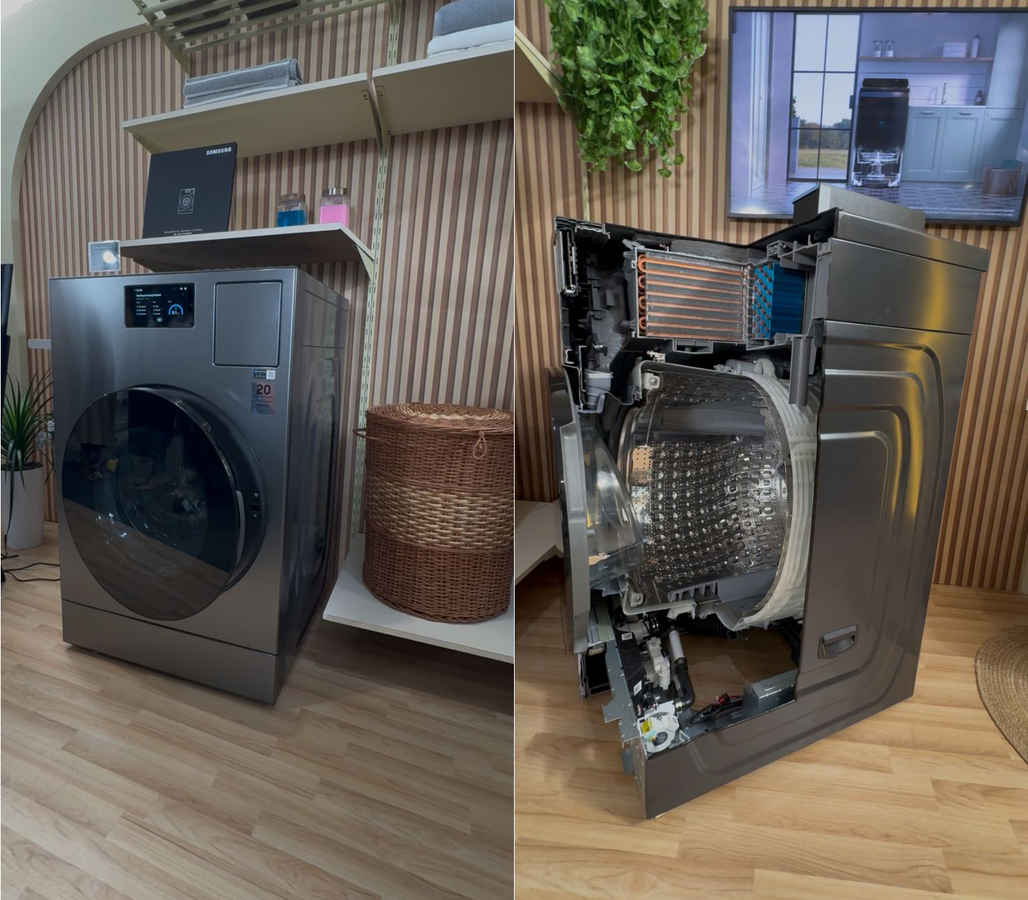
The most heavily promoted product is the Bespoke AI Laundry Combo. It’s a washer and dryer combined into one machine. It includes a 7-inch touchscreen display, voice control through Bixby, and AI-powered cycle optimisation. It can detect how much laundry you’ve put in, what type of fabric it is, how dirty it might be, and then adjust the water, detergent, and settings accordingly.
There’s also a “Super Speed” mode that finishes a wash-and-dry cycle in under 100 minutes. The machine can even open its door automatically after a cycle ends to release moisture and prevent damp smells. It stores detergent for up to 32 loads and offers usage reports through Samsung’s SmartThings app.
These features sound useful, especially for busy households or people living in compact apartments. But the price is high. At ₹3,19,000, it’s far from affordable.
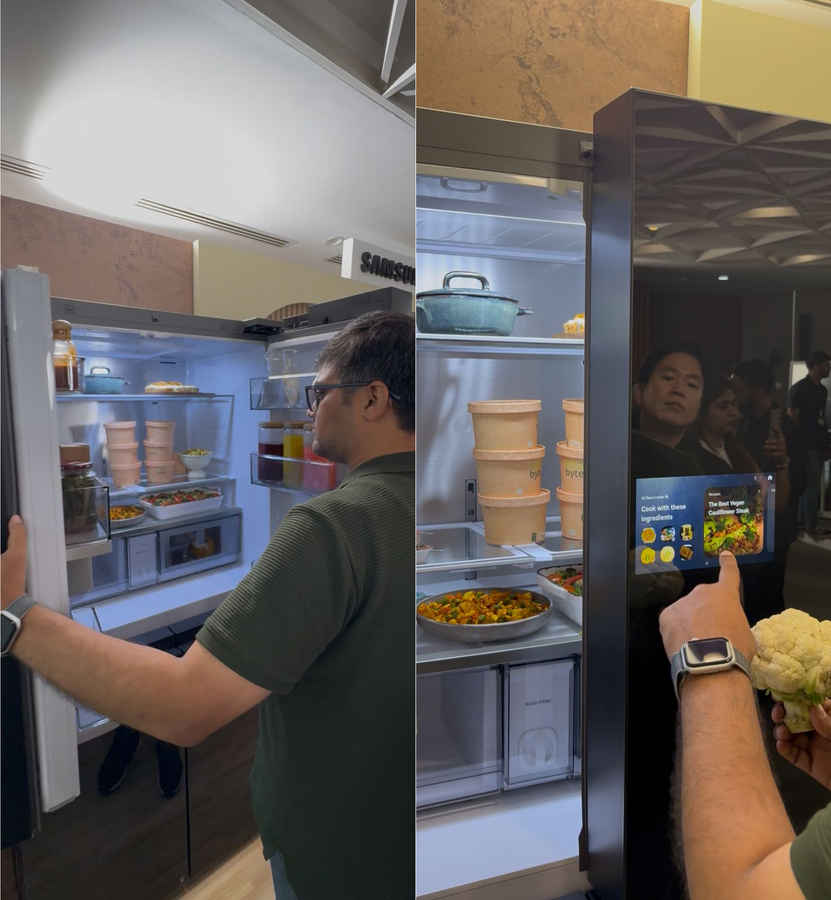
The new Bespoke AI Refrigerator includes “AI Vision Inside,” a feature that uses cameras to recognise fresh food items. It can identify up to 37 types of fresh food and 50 types of packaged items. The fridge tracks expiry dates and suggests recipes to reduce food waste. There’s also a 9-inch display that acts as a smart hub for notes, schedules, and media.
It can connect to other appliances and display a map view of your entire smart home. You can talk to it using Bixby and control everything without your phone.
It’s a clever idea, and the recipe suggestions could genuinely help reduce waste. But it also depends on how well the recognition system works. Fridge cameras are not new, and previous attempts haven’t always worked well. During our limited hands-on time, the Samsung refrigerator seemed pretty consistent with recognising both packaged and raw items Samsung had on display.
Samsung also announced the Bespoke AI WindFree Air Conditioner and Top Load AI Washers. The AC uses AI to adjust the compressor speed based on usage patterns. It also has a “WindFree” mode that disperses air through 23,000 tiny holes instead of direct vents. This is supposed to prevent harsh cold blasts and save up to 30% energy.
The top-load washer offers automatic fabric recognition and AI-powered cycle optimisation. There are also features like Ecobubble, AI VRT+, and Super Speed modes for faster cycles.
Machine learning-based cycle recommendations have existed before, but what’s new here is Samsung’s attempt to pull all of it together into one connected “ecosystem.” The WindFree AC starts at ₹36,000, and top-load washers begin at ₹24,500.
All these devices are held together by AI Home, Samsung’s updated interface that runs across appliances. There’s tight integration with SmartThings, Samsung’s home automation platform. You can check appliance usage, control them remotely, and monitor energy and water consumption.
There’s also Samsung Knox, a suite of technologies built in for data security. This matters because as more smart devices enter the home, so do more security risks. Samsung says some of its products have even received a ‘Diamond’ level IoT security rating, which means better assurance of protection for your smart home ecosystem.
One interesting feature is Smart Forward, which is a system that lets these appliances get software updates, so you don’t have to buy new ones just to get new features. If Samsung delivers on this, it could help reduce e-waste and give consumers better value over time.
One area where Samsung deserves credit is accessibility. The new products support screen readers, have larger fonts, and can give voice alerts. Doors open automatically, and control panels are more inclusive. These changes might not be the headline features, but they could make a big difference for elderly users or people with disabilities.
There’s no question that Samsung has built a cohesive and polished ecosystem. The AI Home interface looks good. The automation features are thoughtful. The design is modern and consistent across products.
Most of the features themselves aren’t exactly new, but we are hoping AI will help make them more dependable and useful.
For now, most of these impressive AI products are premium. The AC starts at ₹36,000. The smart refrigerators begin at ₹44,000. These are not mass-market appliances yet. They are targeted at urban, tech-friendly buyers who already live in connected homes.
If you already use SmartThings, own a Galaxy phone, and want everything in your home to be part of one system, these appliances will probably feel like a natural upgrade. If you’re looking for reliable performance, efficiency, and a few time-saving features, the new lineup does offer value.
But if you’re on a budget or don’t care about whether your fridge knows your grocery habits, there’s not much here that will change your life.
Samsung’s Bespoke AI range is well designed and ambitious. It offers a glimpse of what connected living could look like. But like most smart appliances, it still has to prove that intelligence makes everyday life easier, not just more expensive.