If you’ve followed Qualcomm over the years primarily for their Snapdragon chips – the ones inside your phone, your laptop, maybe even your XR headset – you’re forgiven for wondering why the company suddenly wants to talk about programmable logic controllers, panel PCs, and “ruggedized enclosures that survive 105°C.”
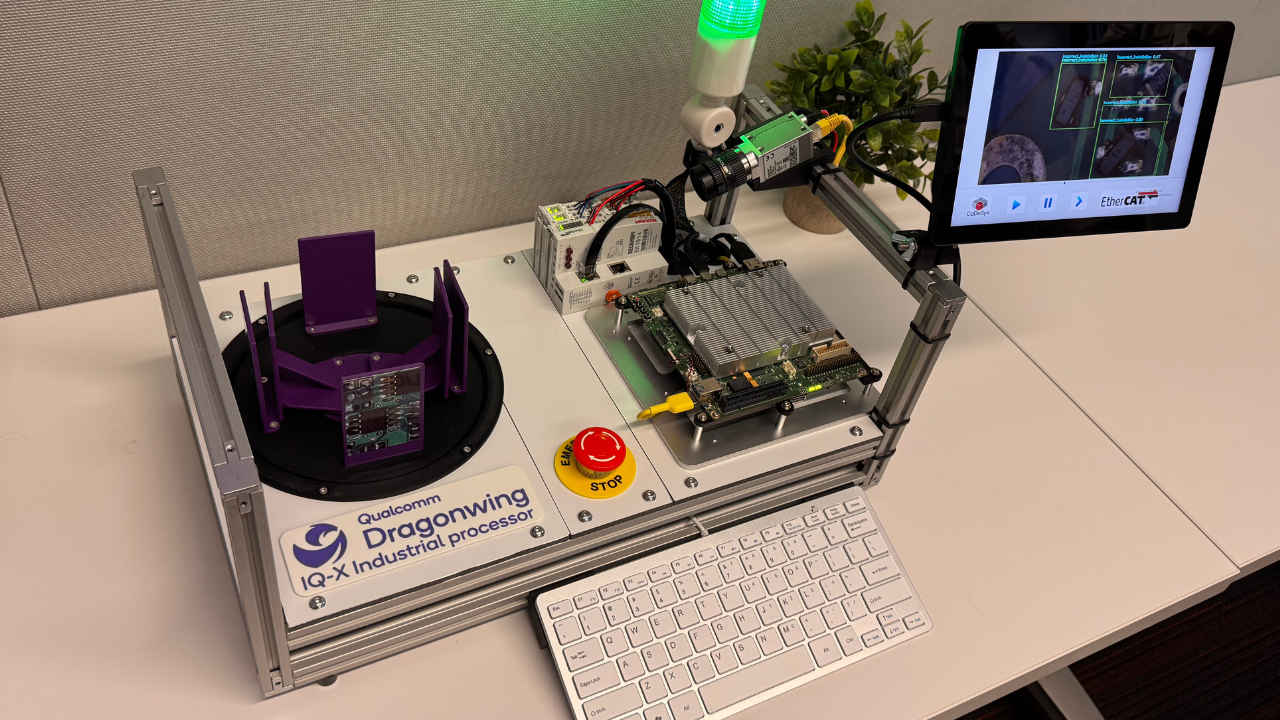
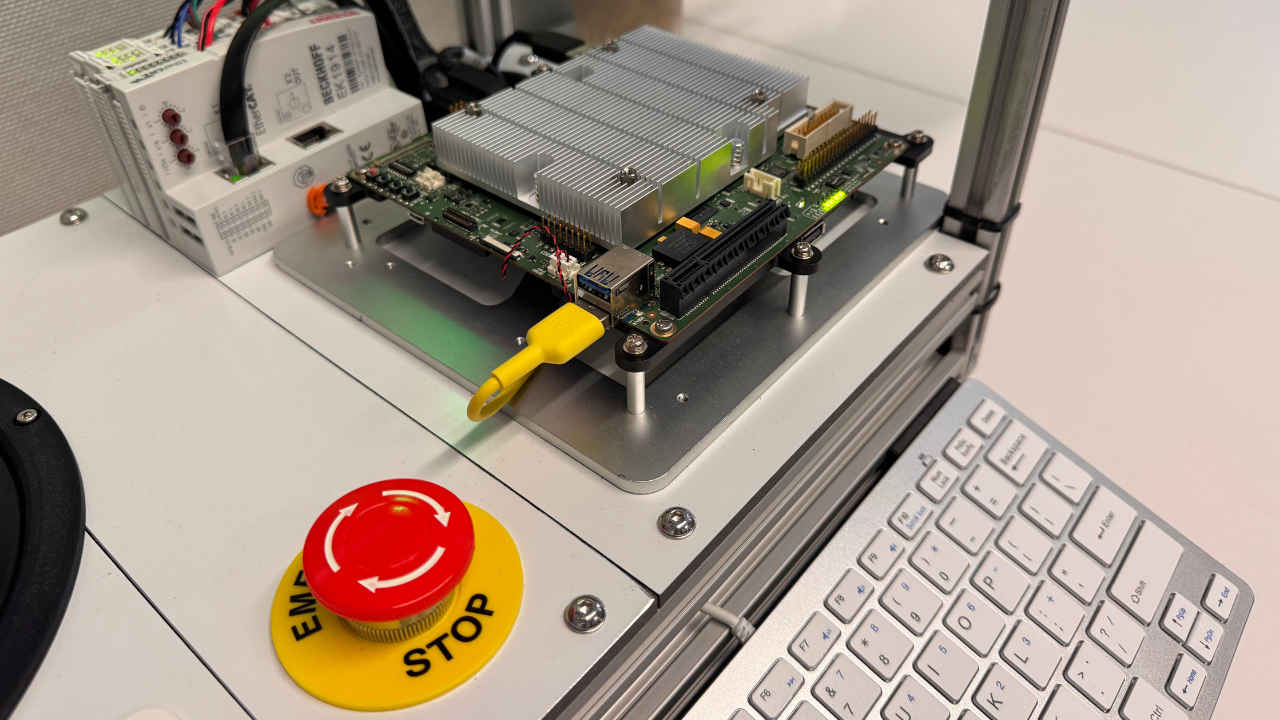
I had the same reaction when I sat through the briefing of the new Qualcomm Dragonwing IQ-X Series, an industrial-grade processor family aimed at smart factories and edge controllers. It’s a world where phrases like IP65, fanless chassis, and predictive maintenance get executives excited. Not exactly the stuff that usually gets headline treatment.
But it’s worth paying attention to, because what Qualcomm’s doing here is essentially exporting two decades worth of mobile-compute innovation into one of the last big frontiers still running on legacy silicon. Best way to contextualise this is to think of factories as the world’s slowest smartphones which are finally getting a much-needed upgrade.
For years, Qualcomm’s biggest story has been performance-per-watt, about how much computational muscle you can squeeze out of a Snapdragon chip without guzzling power or overheating. It’s why your phone can shoot 4K video, run onboard AI, and edit photos without sounding like a jet engine.
Industrial PCs that keep production lines humming were never part of that conversation. They chug along in dusty corners, running Windows on old-school x86 chips because nobody wants to risk downtime by changing what already works.
The Dragonwing IQ-X Series is Qualcomm telling all those factory owners that it’s high time to upgrade or miss out on severe AI-led productivity and efficiency gains.
Built on the company’s custom Oryon CPU, which is also at the heart of Snapdragon 8 Elite Gen 5 and X2 Elite (Extreme) chips, Dragonwing scales up to 12 high-performance cores and pushes up to 45 TOPS of AI processing. It’s essentially “Snapdragon for factories” – the same efficiency-focused architecture, but designed to survive extreme temperatures from –40°C to 105°C. Think Ladakh winter to Rajasthan summer, inside a metal box bolted to a machine that never sleeps.
Here’s the most disruptive part of this whole announcement: Qualcomm is making industrial chips that run Windows 11 IoT Enterprise LTSC. Something that was unthinkable just a few years ago!
Yes, ARM + Windows + industrial control workloads. This is a big part of how Qualcomm plans to wedge itself into an industry traditionally dominated by Intel and AMD. OEMs can use their existing Windows software stacks, their tried-and-tested tools – CODESYS, EtherCAT, Qt – and deploy them on a board that sips significantly lesser power but delivers significantly higher AI throughput. In simple terms, Dragonwing lets industrial OEMs drop something very modern into the exact same slot where their old x86 module used to be.
As far as I can remember hearing about industrial IOT solutions, factories have been trying to get “smart” for years – predicting failures before they happen, spotting defects on assembly lines, analyzing vibration or sound to flag anomalies. Their fundamental problem was that running AI models next to machines is hard when your hardware is basically a beige box from 2010. But at the tail end of 2025, the story has changed significantly, especially in the GenAI era.
Dragonwing brings the Qualcomm AI Stack, ONNX and PyTorch support, and the kind of NPU acceleration that’s been powering AI features on smartphones long before “AI PC” was a marketing buzzword.
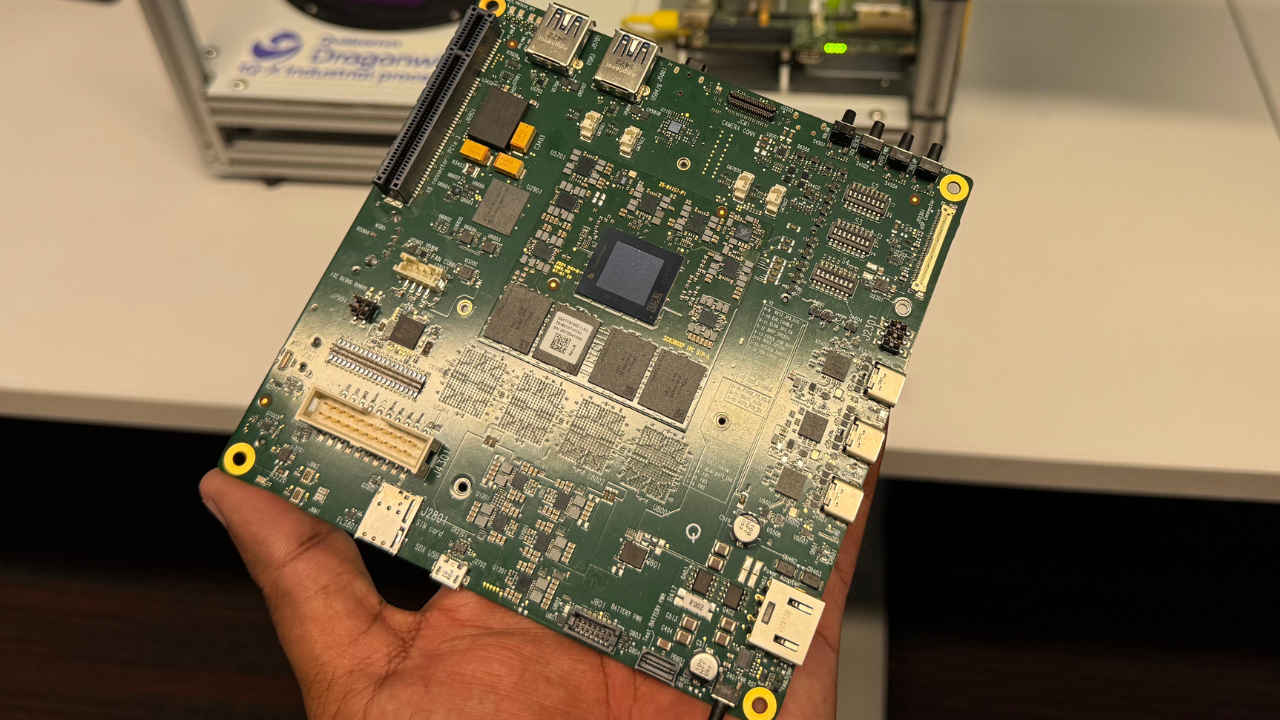
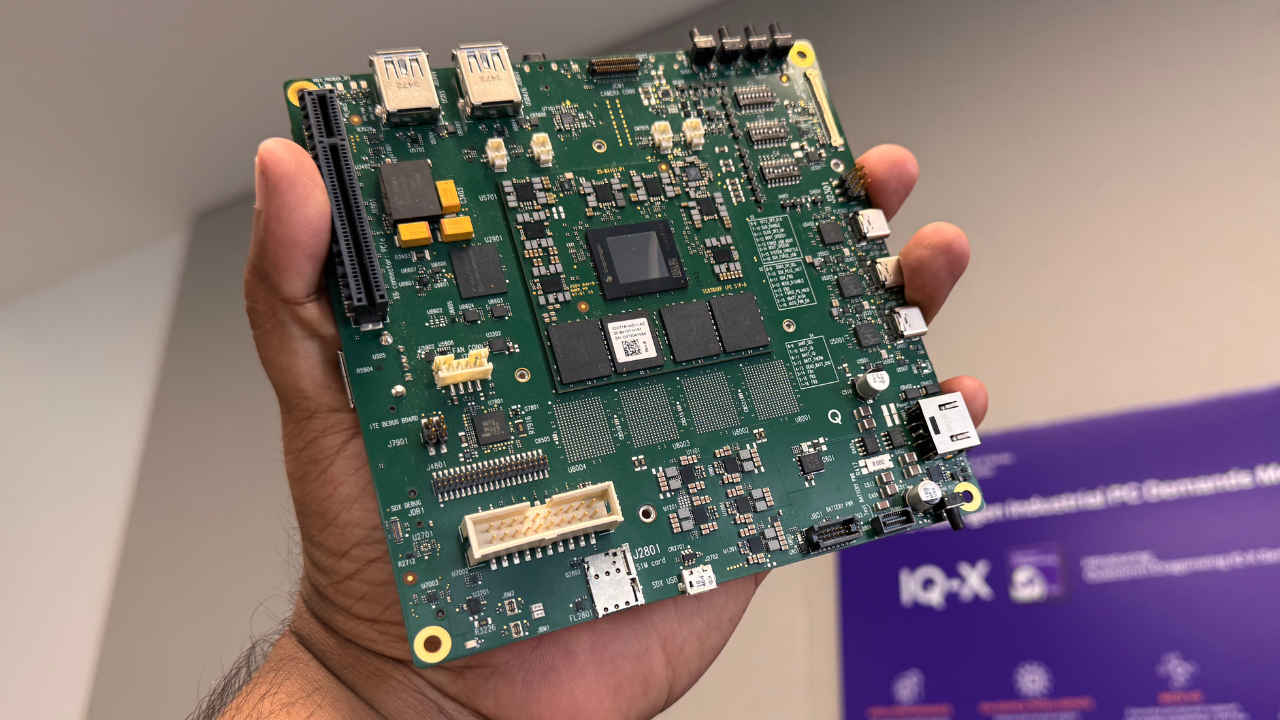
Suddenly, tasks that required a dedicated accelerator or GPU can run on a single, power-efficient module the size of a credit card.
This is how you shrink AI into the real world, as far as I’m concerned. Not by building gigantic cloud clusters, but by letting the machinery inspect itself in real time, with the same ease your phone uses to identify a dog in your photos.
And if you’re wondering how this all fits into the slow, clockwork-like cadence of industrial deployments, Qualcomm executives say that’s precisely the point of it all. “Generally these are 15-year engagements,” one of them told me.
“So we will be able to offer long-term support for those timelines. And in terms of refresh cycles, it varies. So for non-factory automation customers – medical PCs, for example – it is a faster refresh cycle, a four- or five-year cadence. But for industrial automation, these are fairly longer refresh cycles that we are looking at,” Qualcomm’s spokesperson said.
Let’s be real for a minute, because most of us will never buy an industrial PC. But the effects of this crucial step will eventually ripple outwards. Smarter factories build better phones, better cars, better appliances. Supply chains get more predictive. Downtime reduces. Quality improves. We all benefit as consumers in the long run.
Dragonwing is Qualcomm placing a very confident bet that the same principles that reshaped consumer computing will do the same for industry next. And if Qualcomm wins this round, the next revolution in the factory floor might look suspiciously like the one that happened in your mobile device.
Also read: Qualcomm highlights edge AI, 6G and developer innovation at IMC 2025