CES is where brands preview the direction of consumer technology. Not every product shown reaches the market quickly, and not every ‘world’s first’ changes buying behaviour overnight. But these announcements matter because they show where companies are investing engineering effort, and what they believe will differentiate their products in the next cycle. So, as CES 2026 comes to a close, we looked at the most notable products that brands explicitly positioned as a ‘world’s first’, either for a specification, a certification, or a new product category. This roundup covers ten such products across TVs, monitors, audio, mixed reality, and computing. This article explains what each ‘world’s first’ actually means and why it matters, as in how it could affect users over time.
These products are arranged in no particular order.
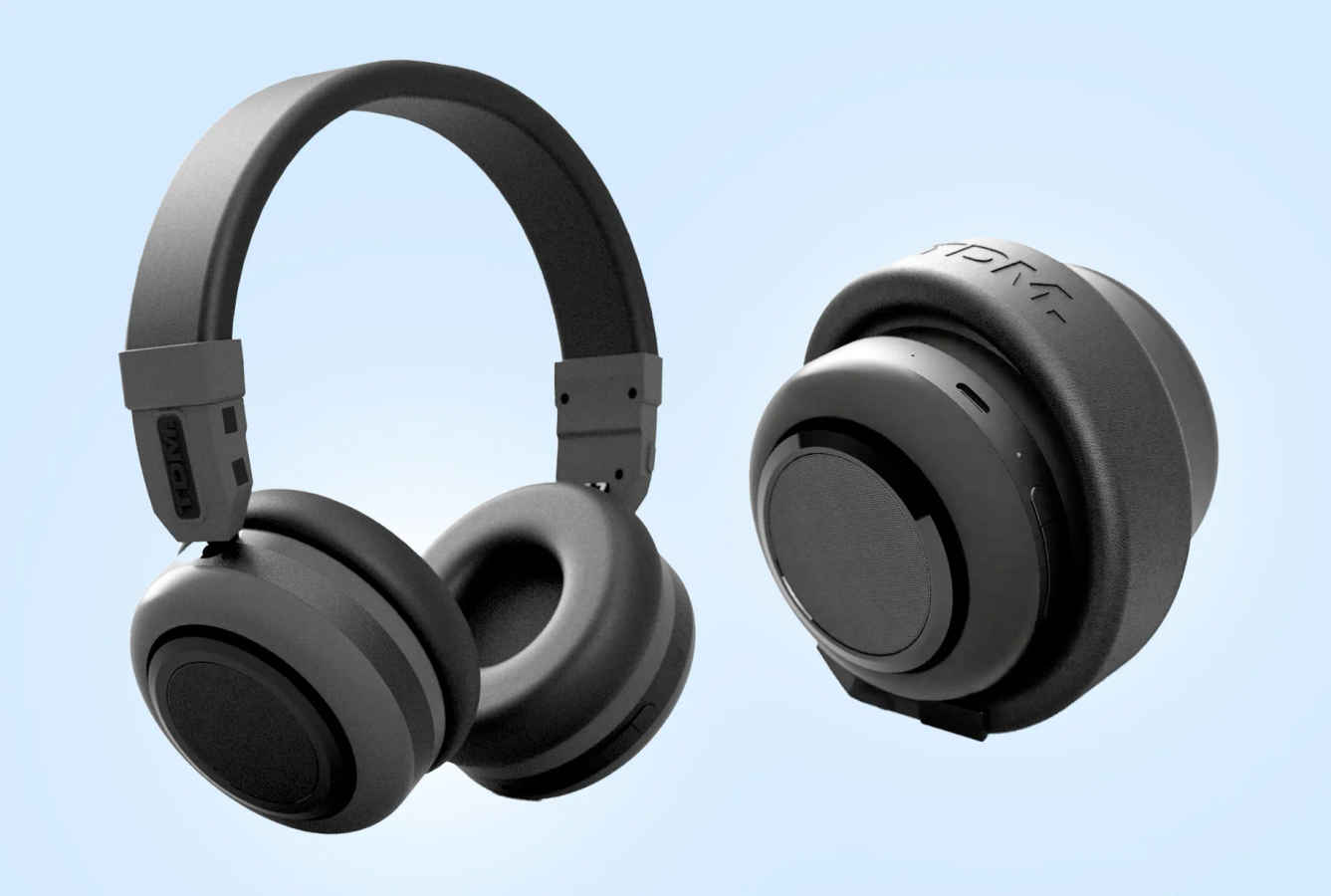
The TDM Neo Hybrid is an over-ear headphone that can be twisted into a portable Bluetooth speaker. The design activates different drivers depending on the mode, with two inward-facing 40mm drivers used for private listening and two outward-facing 40mm drivers taking over in speaker mode. It doesn’t have ANC.
Other highlights include Bluetooth 6 with multipoint pairing and Auracast, up to 200 hours in headphone mode and around 10 hours when used as a speaker, and USB-C fast charging. The TDM Neo Hybrid is set to launch on Kickstarter later this month in the US, priced at $249 (Rs 23,000), and will be available in black and white colours.
Samsung unveiled a 130-inch Micro RGB TV, which it describes as the world’s first television to use a Micro RGB architecture at this scale. Instead of using colour filters, each pixel is formed by individual red, green, and blue LEDs.
This matters because colour filters reduce brightness and colour purity. By removing them, Samsung claims higher colour volume and better efficiency. While the TV is clearly aimed at ultra-high-end buyers, it signals Samsung’s long-term display strategy beyond Mini LED and conventional Micro LED.
LG is positioning the Gram Pro 17 (17Z90UR) as the world’s lightest 17-inch laptop. The company says it delivers the performance of a conventional 17-inch RTX-powered machine in a chassis closer to the size of a typical 16-inch laptop. The device features a 17-inch WQXGA display with a 2560 x 1600 resolution, aimed at users who need a large screen for extended productivity and media consumption without the usual increase in bulk.
The Gram Pro 17 is expected to be powered by an Nvidia GeForce RTX 5050 laptop GPU with 8GB of GDDR7 memory. This places it in the performance segment, suitable for graphics-intensive creative work, AI-assisted workloads, and light gaming. LG’s focus is on combining this level of performance with the Gram lineup’s lightweight design, and if the company’s weight claims hold true, the Gram Pro 17 could stand out among large-screen laptops showcased this year.
Breggz launched the Zohn-1, claiming it as the world’s first in-ear headphones to receive IMAX Enhanced certification. The certification focuses on dynamic range, tonal balance, and spatial presentation, rather than raw loudness.
IMAX Enhanced is trying to establish a recognisable audio baseline across devices. For users, whether that translates into a consistent listening experience will depend on how widely the standard is adopted.
The Samsung Odyssey 3D G90XH is positioned as the world’s first 6K glasses-free 3D gaming monitor. It uses eye-tracking combined with a lenticular lens layer to deliver a stereoscopic image without external glasses.
This matters because previous attempts at glasses-free 3D suffered from low resolution and narrow viewing zones. A 6K panel allows Samsung to split resolution between both eyes while maintaining detail. The real test will be comfort during extended use.
Also Read: CES 2026: Convenience tech gadgets that spoils you to a whole new level
Samsung also introduced the Odyssey G6 G60H, claiming it as the world’s first gaming monitor capable of reaching a 1,040Hz refresh rate in dual-mode operation. The monitor switches between ultra-high refresh rates at lower resolutions and more conventional modes at higher resolutions.
This feature targets competitive esports players. Extremely high refresh rates reduce motion blur and input latency, even if the visual gains are subtle. While niche today, it sets a technical benchmark for future gaming panels.
Dell revealed a 52-inch UltraSharp monitor with 6K resolution, which it claims is the world’s first Thunderbolt display combining this size and resolution. It is designed for productivity rather than entertainment.
The value here is workspace efficiency. A single large 6K panel can replace multiple monitors while preserving sharp text and detailed timelines. Thunderbolt connectivity also allows it to function as a docking station for laptops.
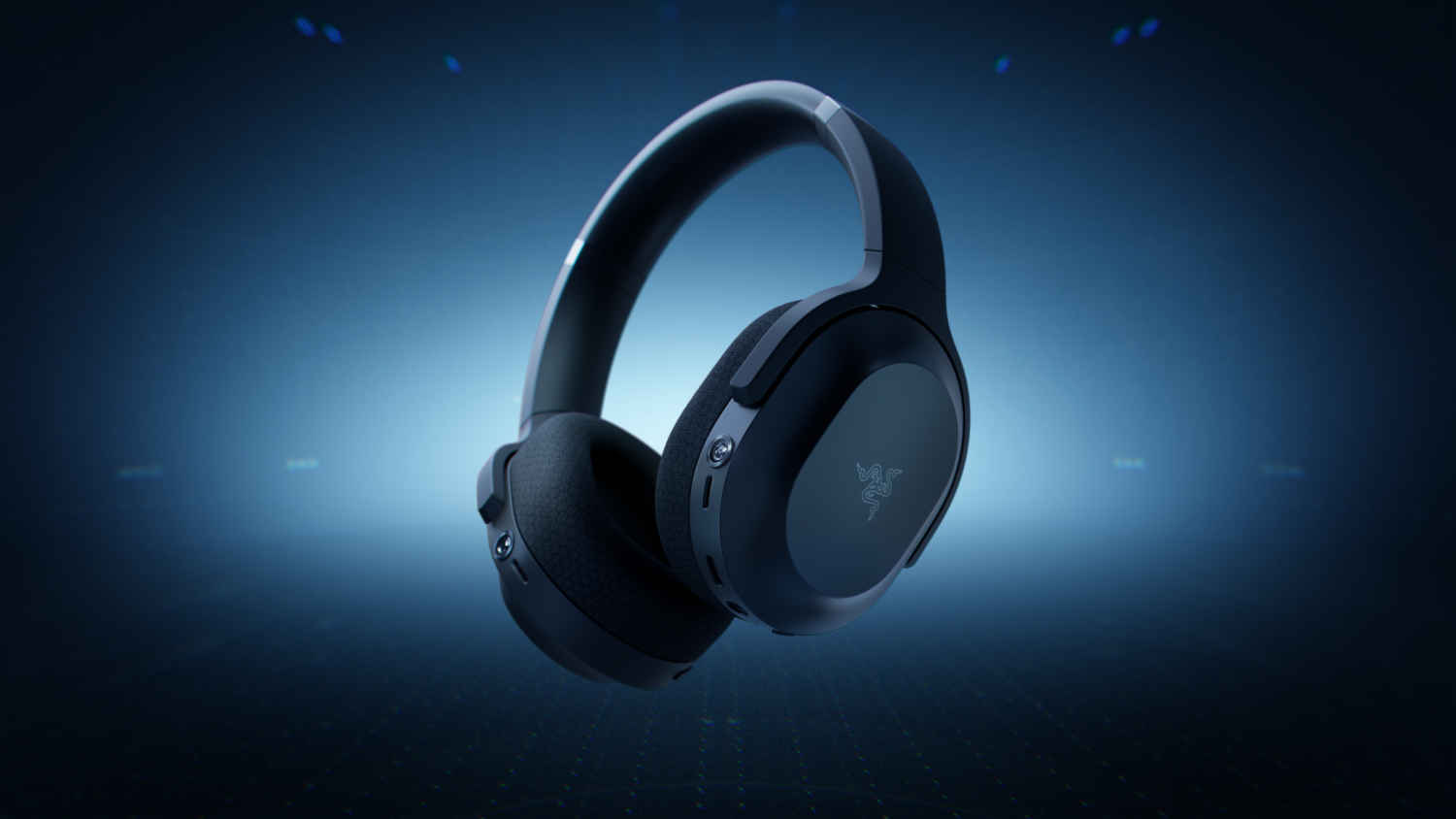
Razer’s Project Motoko is an AI-native wireless headset concept powered by an unspecified Snapdragon processor. The concept positions the headset as a hands-free AI interface rather than a conventional audio device. It can process vision and audio data in real time, allowing it to interact with the physical world as the user sees and hears it.
The headset features dual first-person-view cameras placed at eye level for object and text recognition, translation, and document summarisation, supported by a stereoscopic vision system that extends awareness beyond normal human peripheral vision. It also includes dual far and near-field microphones for voice commands, conversation capture, and environmental sound detection. Razer claims broad compatibility with major AI platforms, including Grok, OpenAI, and Gemini, and describes the headset as an adaptive AI assistant that learns from user behaviour.
RayNeo introduced the Air 4 Pro smart glasses, which it claims are the world’s first AR glasses to combine full-colour Micro OLED displays with on-device AI processing, HDR10 support and B&O speakers in a lightweight form factor.
The key point here is portable personal cinema. Many mixed reality devices rely on external compute units. By handling more processing locally, RayNeo is attempting to make AR glasses closer to everyday wearable tech rather than accessories.
Asus announced the world’s first Snapdragon-powered AIO called V400. The system features a 24-inch Full HD display with 178-degree viewing angles, with an optional touchscreen aimed at more direct interaction for work, study, and everyday entertainment.
The underlying Snapdragon X processor is said to allow the V400 AiO run quietly with low-power while handling multitasking, light creative workloads, casual gaming, and the full suite of Copilot AI features. The company highlights on-device AI acceleration rated at up to 45 TOPS, reducing reliance on cloud processing. Audio is handled by dual 3-watt speakers with Dolby Atmos support, while the compact all-in-one layout and streamlined ports make the V400 AiO a space-efficient option for modern home and office setups.
HP unveiled the EliteBoard G1a, a compact AI PC built directly into a keyboard. It has a 12 mm thin profile with a weight of around 750g, and connects to external displays and integrates dual microphones and speakers.
It is powered by an AMD Ryzen AI 300 Series processor, has CoPilot+, and delivers over 50 TOPS of on-device AI performance for Copilot and other AI-assisted tasks. HP adds adaptive power and thermal management, and optional battery support.
These products are less about novelty and more about direction. Some will remain niche, others will quietly shape mainstream products over the next few years. For readers, the value lies in understanding what these claims mean before they turn into buying decisions.
Keep reading Digit.in for more CES related stories.
Also Read: CES 2026: Sucking on this lollipop gadget will play music in your ears, no jokes