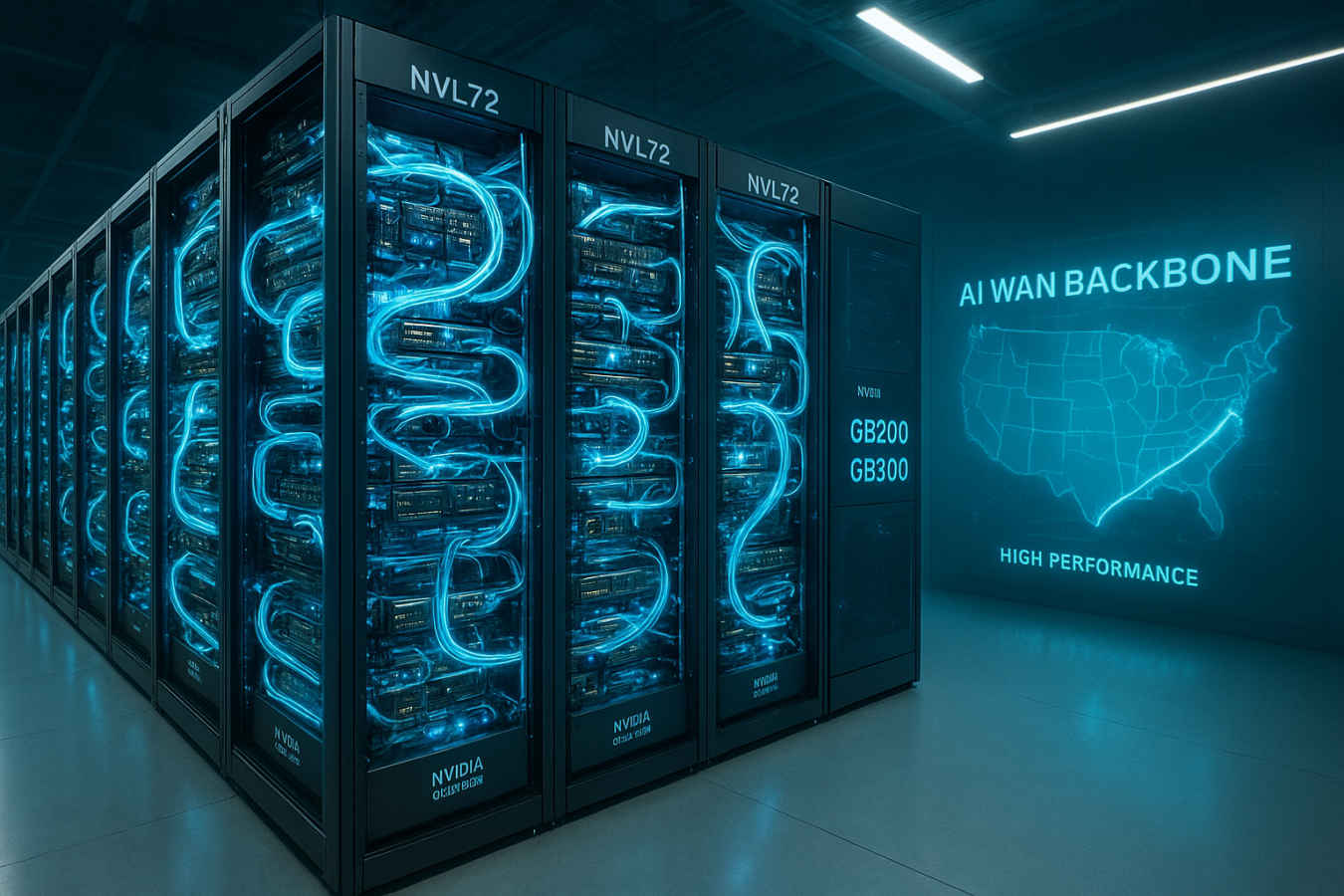
There’s an irony in calling it a “super factory.” Artificial intelligence is supposed to live in code, not concrete. Yet outside Atlanta, Georgia, Microsoft has built something very real, a one-million-square-foot complex stretching across 85 acres. It’s part of a new class of infrastructure the company calls the Fairwater network, a system of AI-optimized data centers designed not to store photos or emails, but to manufacture intelligence itself.
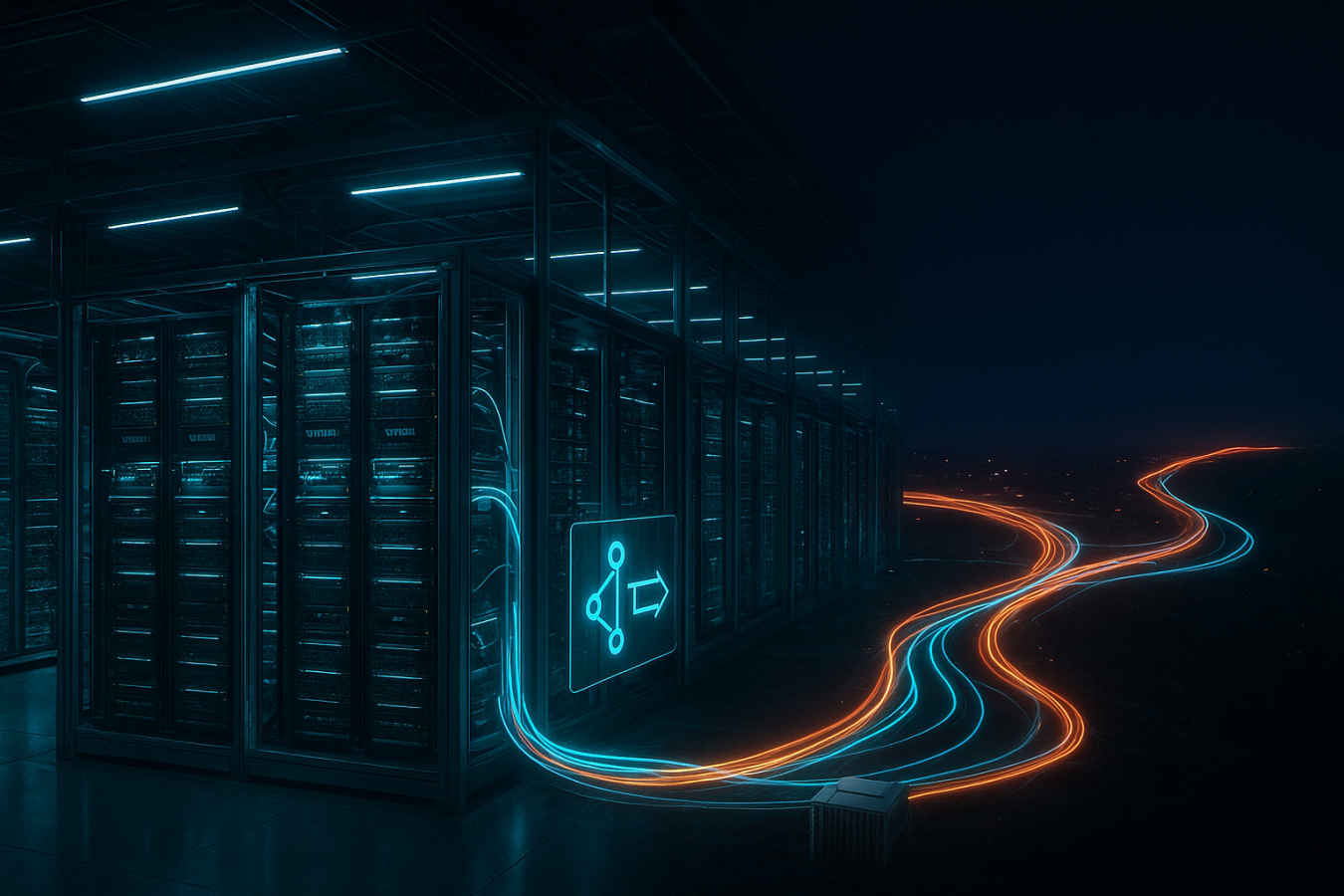
This new AI Super Factory marks Microsoft’s latest leap in the race for computing dominance. Instead of hosting smaller, cloud-based workloads, Fairwater is built for frontier-scale AI training – the kind needed by OpenAI, Mistral AI, and xAI. Each facility in the network links together through a 120,000-mile fiber-optic web, allowing them to function as a single, distributed brain. It’s not a data center anymore; it’s an assembly line for algorithms.
Also read: AI isn’t about bigger models: Snowflake’s Jeff Hollan on agentic AI future
Most data centers are flat, single-floor halls filled with racks of servers. Fairwater isn’t. Microsoft has built a two-story structure, an unusual move in an industry where heat and weight management typically limit vertical design. The benefit? Speed.
By stacking thousands of NVIDIA GPUs closer together and interlinking them through short, dense fiber runs, the system dramatically reduces latency, a crucial factor when massive language or vision models need to exchange data across millions of parameters. Each rack reportedly handles up to 140 kW of power, and rows can draw more than 1,300 kW, cooled through a closed-loop liquid system.
That system, Microsoft claims, uses about as much water per year as 20 U.S. households. While that sounds sustainable, critics note that scaling this model across dozens of such sites could multiply water use into significant volumes. The trade-off between compute and consumption remains the industry’s uneasy secret.
Fairwater symbolizes a deeper evolution inside Microsoft’s cloud empire. Traditional Azure data centers handle millions of smaller client requests. The new generation, however, is specialized for AI workloads, dense racks of GPUs focused purely on training large models, reinforcement learning, and fine-tuning loops.
In other words, Microsoft isn’t just renting servers anymore; it’s building dedicated AI manufacturing plants. And the strategy is deliberate. With rivals like Amazon’s Project Rainier and Meta’s GPU-rich facilities, the company knows that compute capacity, not just algorithms, is the new currency of dominance.
Also read: Iconic voices for hire: ElevenLabs opens AI marketplace for celebrity audio licensing
Executives have hinted that Microsoft plans to double its data-center footprint within two years, pouring billions into infrastructure that will power everything from Copilot in Office to advanced research at OpenAI.
Fairwater’s distributed network has a second advantage: it spreads the enormous energy demand across multiple states. Sites like Atlanta and Wisconsin were chosen for their resilient local grids and access to renewable energy. This helps Microsoft manage the power burden, and the optics, of running what are effectively digital steel mills.
Still, the math is staggering. Each site can consume hundreds of megawatts of electricity, and the chips themselves require specialized cooling and continuous maintenance. The company says the closed-loop system and fiber design make the operation more efficient, but environmental groups argue that large-scale AI compute remains resource-intensive by nature.
There’s also the geopolitical angle. Concentrating massive AI power in U.S. hubs could deepen the gap for international users, including those in markets like India, where data-locality laws and latency issues might complicate access to frontier AI models.
Beyond the engineering spectacle, Fairwater represents something: the physical infrastructure of the next generation of intelligence. These machines will train the models that simulate traffic systems, design autonomous vehicles, and predict battery behavior for EVs, areas that link directly to future industries and research.
For media and journalism, too, this is where the algorithms behind recommendation systems, automated writing, and analytics are born. The “factory” metaphor isn’t just poetic – it’s literal.
If the last century’s factories built machines, this one builds minds. Microsoft’s AI Super Factory is where the intangible becomes tangible, where intelligence takes shape in silicon and steel.
Behind every chatbot, translation engine, or creative AI tool sits a humming warehouse like Fairwater, cables glowing, coolants cycling, and GPUs crunching numbers at unimaginable speeds. It’s a reminder that the future of intelligence won’t float in the cloud. It will be forged on the ground, one data rack at a time.
Also read: AI vs. artists: What Germany’s copyright ruling against OpenAI means for creativity and tech