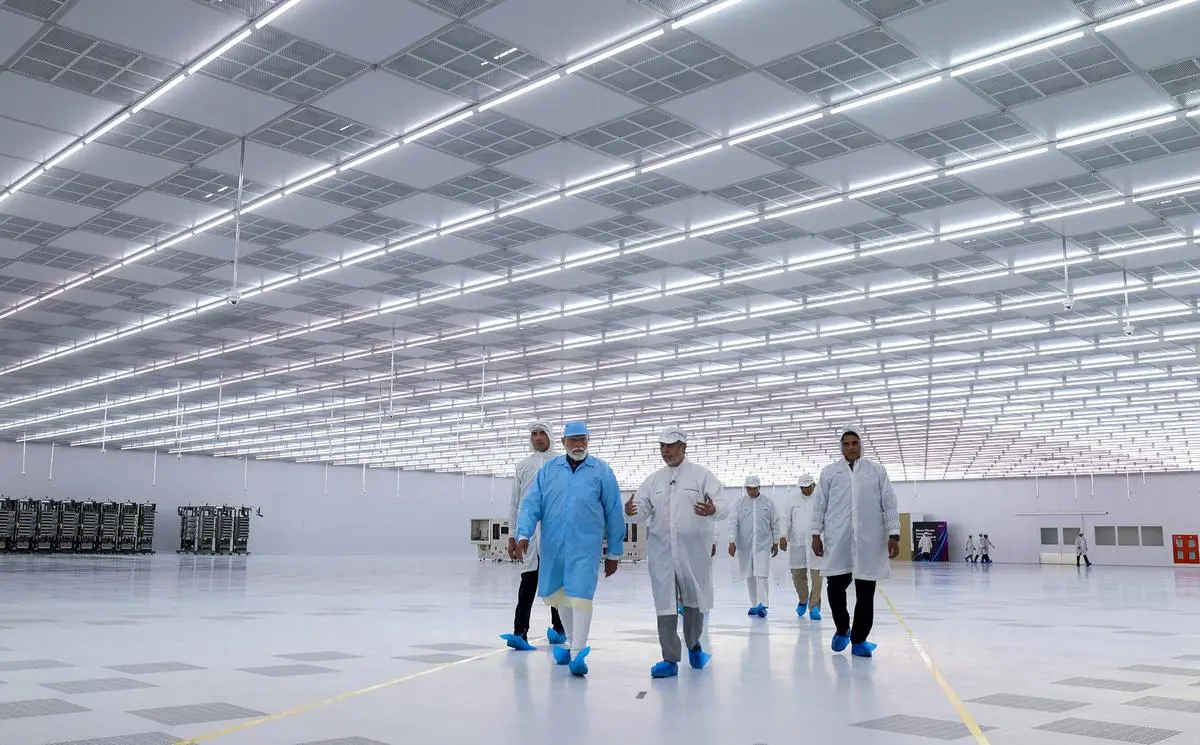
We have been using chips in India for decades. However, those chips that powered our phones, laptops and data centers were birthed in far-away lands – etched in Taiwan, assembled in Malaysia and then shipped halfway across the world. But not anymore. On the 28th of February, 2026, Sanand, Gujarat became the home for Micron’s newest and India’s first Semiconductor assembly and test facility. This moment holds consequences that stretch far beyond the factory floor.
Also read: Dario Amodei refuses AI safety compromise: Why it matters
Just the numbers by themselves tell a story. According to Micron, the Sanand Plant should house over 500,000 square feet of cleanroom space, making it one of the biggest single-floor assembly and test cleanrooms in the world. DRAM and NAND wafers from Micron’s global manufacturing network will be brought in and then converted to finished memory and storage products. The same ones that are burning a hole in the wallets of gamers and that power your laptops and full-fledged AI data centers.
Assembly has already begun with Dell receiving the first shipment of made-in-India memory modules at the grand opening. Micron claims to ideally assemble tens of millions of chips here in 2026 and scale it to hundreds of millions by 2027.
Micron CEO Sanjay Mehrotra was emphatic on the fact that this is anything but a conventional factory saying, “This is smart manufacturing, powered by AI automation, real-time analytics, and advanced robotics.” It is designed to match the pace and precision that is required by the AI-driven demand for memory.
Also read: Anthropic lost the battle, OpenAI won the war?
Alongside this stellar performance, the plant is also engineered for sustainability meeting LEED Gold standards and running on zero liquid discharge tech with 100% water reuse.
The factory is AI automated but at the end of the day, a factory without a workforce is just real estate. Micron has a trained team of nearly 1,500 people with many having hands-on experience via some overseas postings. Micron has also partnered with universities such as PDEU and Namtech reaching 10,000 students through STEM and AI literacy programs. Micron is using this to cultivate the talent pipeline that India’s semiconductor ambitions needs.
The facility in Sanand is the outcome of a combined investment of around $2.75 billion from Micron and government partners. However, the significance is beyond just that dollar figure. It is the cornerstone of India’s entry in the global semiconductor supply chain at the moment when chip concentration has become too concentrated in east Asia. For Micron, India is not just another hub for R&D and office operations anymore. It is now becoming an integral part of their chip manufacturing network. For India, this is just the opening act of our global semiconductor ambitions.
Also read: OpenAI gets 110 billion dollar boost: How much Amazon, NVIDIA invested?