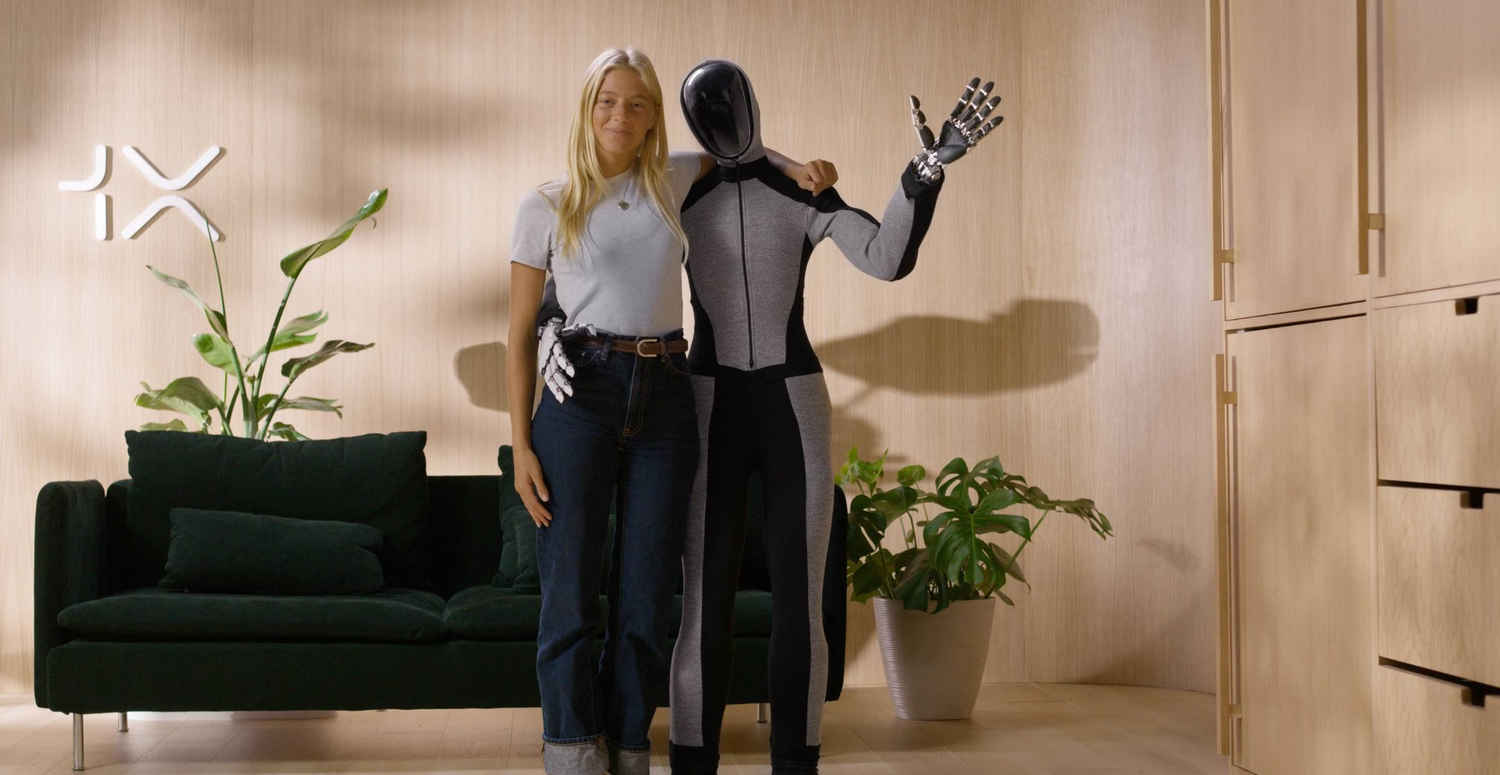
The future of domestic help isn’t just a smart speaker or a wheeled vacuum – it’s a bipedal robot that can fold laundry, tidy your shelves, and even fetch you a snack. That future is arriving with NEO, the flagship humanoid from Norwegian-American robotics company 1X Technologies, and it’s poised to enter homes with a price tag estimated around ₹18 lakh (approximately $20,000).
NEO is a general-purpose, 165-cm (5’5″) tall robot designed not for the factory floor, but specifically for the chaotic, unstructured environment of a human home. Unlike its industrial-focused rivals, NEO’s core mission is to be a non-intimidating, safe, and ultimately useful domestic companion. By focusing on household utility and safety from the outset, 1X Technologies believes it can outpace competitors in delivering a truly mass-market humanoid.
Also read: NVIDIA’s investment in Nokia: How it will impact future of 6G telecom networks
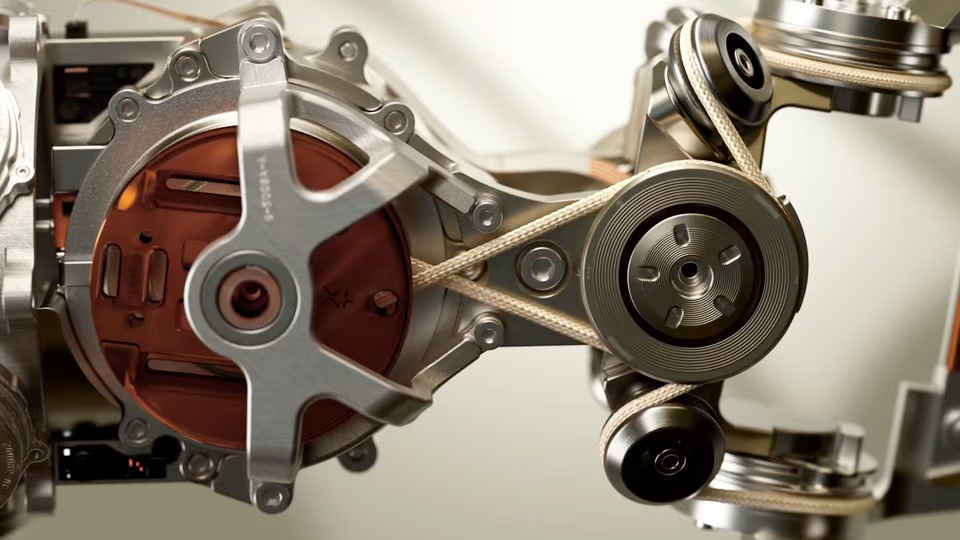
NEO’s ability to operate safely in close proximity to people is its most crucial feature, and it stems directly from the proprietary Tendon Drive actuation system. This mechanism is a radical departure from the heavy, rigid gearboxes (like harmonic drives) typically used in robotics.
The Tendon Drive is biologically inspired, mimicking the structure of human muscles and tendons. Instead of placing heavy motors directly at the joints, 1X routes cables – or tendons – from powerful, high-torque density motors positioned higher up in the robot’s torso. This transmission method offers three profound advantages for a domestic robot:
This unique hardware platform allows NEO to be both strong – capable of lifting up to 70 kg and carrying 25 kg – and soft, providing the dexterity needed in its 22-DoF hands for everything from picking up a smartphone to gently folding laundry.
Also read: Apple accuses Oppo of using stolen Apple Watch secrets from an ex-employee
NEO’s intelligence is driven by an advanced AI system leveraging a built-in Large Language Model (LLM) and a concept called “embodied learning.” This means the robot’s AI is trained not just on massive text datasets, but on real-world actions, allowing it to fuse conversational intelligence with physical, contextual awareness.
Using its Audio and Visual Intelligence, NEO can recognize when it’s being addressed, identify objects (like ingredients on a kitchen counter), and use its memory to personalize interactions. Its core utility, however, rests in the ‘Chores’ feature. Owners can verbally give NEO a list of tasks, schedule them, and return to a tidier home. NEO is designed to handle the “robotic slop” – the imperfect but ultimately useful work of tidying up the world’s most variable environment: the home.
Despite its sophisticated AI, 1X is taking a pragmatic approach to deployment by relying on a ‘human-in-the-loop’ system called ‘Expert Mode.’
When NEO encounters a novel or complex task its autonomous systems can’t solve, the owner can enable this mode. A human teleoperator from 1X Technologies can then remotely supervise and guide the robot, seeing what NEO sees and piloting it through the unfamiliar task. This provides two benefits: it ensures the chore gets done, and more importantly, it generates critical training data to teach NEO’s AI to handle that task autonomously in the future.
This approach creates a “social contract,” as CEO Bernt Børnich describes it. For early adopters (who start receiving units in the U.S. in 2026), the trade-off for getting a highly capable robot that constantly improves is agreeing to share the visual data from their homes during these guided learning sessions. 1X has stated that user consent is explicit, and protocols are in place to ensure privacy, but the inherent exchange of domestic data for enhanced utility marks a pivotal moment in consumer robotics.
With a consumer-friendly design, human-safe hardware, and a learning model built for exponential improvement, NEO is positioning itself to be much more than a gadget, it’s aiming to be the world’s first true robotic companion.
Also read: Yann LeCun warns of a Robotics Bubble: Why humanoid AI isn’t ready yet