Asimov the AI Agent for coding
Software development thrives on creativity, collaboration, and deep understanding, yet it’s often bogged down by the complexity of sprawling codebases and the unwritten “tribal knowledge” held by a select few. Reflection AI’s Asimov is here to change that narrative. This code research agent goes beyond generating lines of code, it dives into the heart of software ecosystems. It absorbs everything from code repositories to architecture documents, GitHub threads, emails, and Slack conversations. By building a comprehensive knowledge base that captures not just the “what” but the “why” behind technical decisions, Asimov is revolutionizing how engineering teams operate, making software development faster, smarter, and more accessible to everyone from developers to support staff.
Also read: OpenAI, Google, Anthropic researchers warn about AI ‘thoughts’: Urgent need explained
Traditional AI coding tools often focus on churning out code, sometimes missing the nuanced context that defines robust software. Asimov, however, is designed to understand. It ingests entire codebases and supplementary materials, creating a holistic view of a project’s technical and business logic. Its multi-agent architecture is key: smaller “retriever” agents scour diverse data sources, code, documentation, communication threads, while a central “reasoning” agent synthesizes this information into clear, contextually accurate responses.
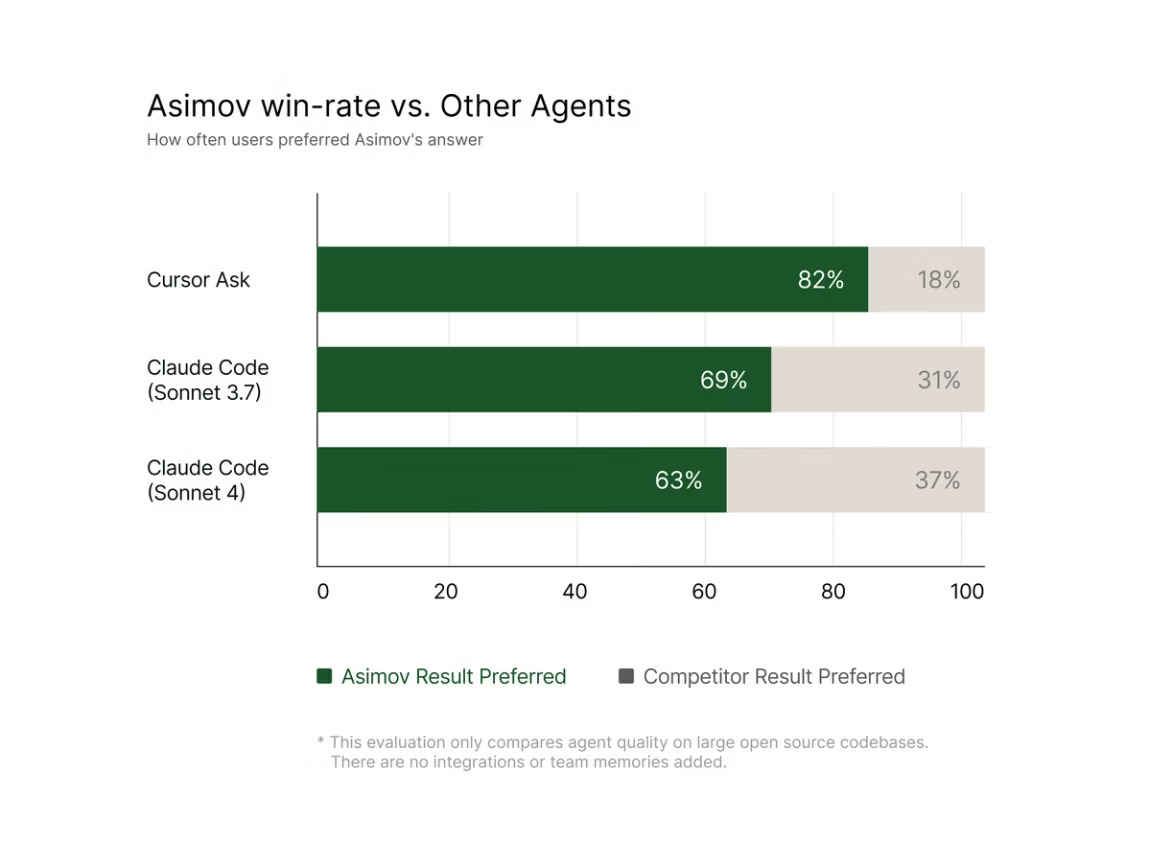
In blind tests against Claude and Cursor, Asimov’s answers were preferred 60-80% of the time by users. For developers wrestling with legacy systems or intricate dependencies, Asimov slashes the time spent by up to 70%, deciphering code, allowing them to focus on building innovative solutions. Its ability to recall the reasoning behind past decisions also ensures that critical insights remain accessible, even as teams evolve.
Asimov isn’t just powerful, it’s practical. Designed with enterprise security in mind, it can be deployed within a company’s virtual private cloud (VPC) through partnerships with AWS, Microsoft, and Google. A permissioned Role-Based Access Control (RBAC) system allows teams to manage who can update Asimov’s knowledge base. They are maintaining strict control over proprietary information.
Also read: Mark Zuckerberg says AI will write most of Meta’s AI code by 2026
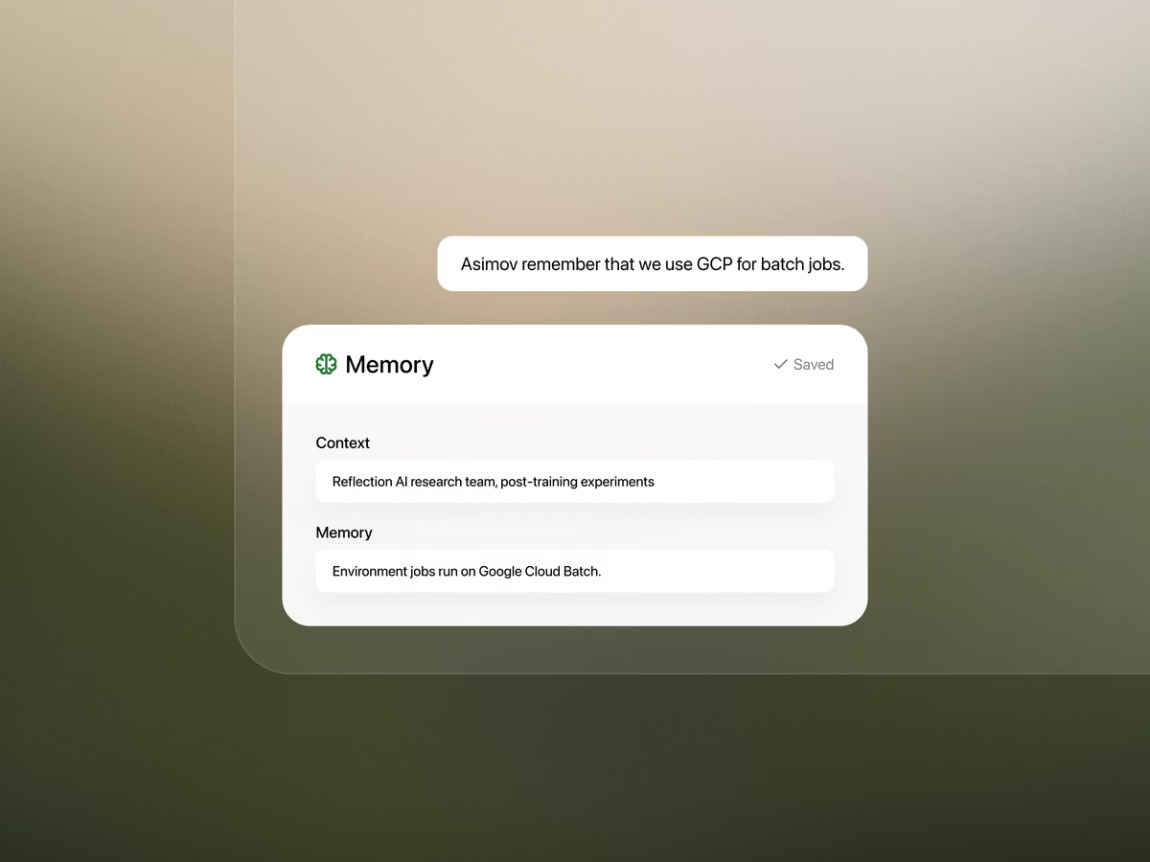
Engineers can easily enrich its memory with commands like “@asimov remember X works in Y way,” effectively distributing senior developers’ expertise across the organization. This scalability extends beyond engineering teams. Technical sales and support staff can tap into Asimov’s insights without burdening developers, streamlining workflows and fostering cross-departmental collaboration. By reducing the cognitive load on engineers and preserving institutional knowledge, Asimov empowers organizations to operate more efficiently, regardless of size or complexity.
Reflection AI, founded by ex-Google researchers, sees Asimov as a stepping stone to superintelligent AI. Trained with reinforcement learning and human feedback, it leverages third-party models but is being enhanced with custom models for more performance. The long-term vision is transformative: an AI “oracle” capable of not only answering complex queries but autonomously building, repairing, and innovating software, potentially inventing new algorithms or products. Asimov’s ability to retain and share critical knowledge ensures that no decision is lost to turnover or time. This makes it an indispensable asset for modern software teams.
Reflection AI, founded by ex-Google researchers, positions Asimov as a step toward advanced AI systems. Using reinforcement learning and human feedback, it currently relies on third-party models while developing custom ones for improved performance. The long-term goal is an AI capable of answering complex queries and handling software tasks, such as building code. Those interested in exploring Asimov can join the waitlist on Reflection AI’s website. As a tool under development, its full capabilities are yet to be publicly tested. However, it shows promise to support software development by enhancing efficiency and accessibility for diverse teams.
Also read: Grok 4 is full of controversies: A list of xAI’s misconduct