India relies heavily on imported Liquefied Petroleum Gas (LPG), the cooking fuel, as around 60% of its annual demand is sourced from overseas markets. Most of these imports come from Gulf countries and pass through the Strait of Hormuz, one of the world’s most strategically sensitive energy shipping routes. Due to ongoing tensions between Iran, the United States and Israel, the shipments through this route slowed, and supply uncertainty and fear ensued. So, a combination of geopolitical conflict in the Middle East, supply chain disruption through the Strait of Hormuz, and domestic price inflation has triggered an LPG shortage across major Indian cities. The crisis became visible in early March 2026, when households in cities such as Delhi, Mumbai, Bengaluru, Kolkata, and Chennai began facing delayed cylinder deliveries, rising prices, and strict booking restrictions. Although the government has said the public need not panic, you can prepare if the situation worsens.
Technology is rapidly stepping in as a workaround. Induction cooktops or stoves and electric pressure cookers are reportedly selling out like hot cakes on quick commerce apps. So, let’s learn about the crisis and how technology can come to the aid.
The immediate cause is the escalation of geopolitical tensions in West Asia, which disrupted shipping routes used for transporting LPG and other energy products.
The Strait of Hormuz, which connects the Persian Gulf to the Arabian Sea, is a narrow maritime corridor through which a large share of global oil and gas shipments travel. When tensions in the region intensified in early 2026, shipping through the corridor slowed, and insurers increased risk premiums for vessels passing through the region.
India’s energy structure makes it particularly vulnerable to this kind of disruption as it consumes more than 30 million tonnes of LPG annually. While domestic refineries produce some of the supply, imports cover a majority of demand. Historically, most of these imports come from Gulf Cooperation Council countries such as Saudi Arabia, Qatar, the UAE and Kuwait.
Once supply shipments slowed, the domestic market began experiencing delays and price increases. Oil marketing companies started passing some of the import costs to consumers. Demand and supply dynamics at play. Economics 101.
In March 2026, the price of domestic LPG cylinders rose by around Rs 60 across major cities. Commercial cylinders used by restaurants and hotels saw an even steeper rise. When restaurants reduce operations or close temporarily due to fuel shortages, food delivery platforms also get adversely affected.
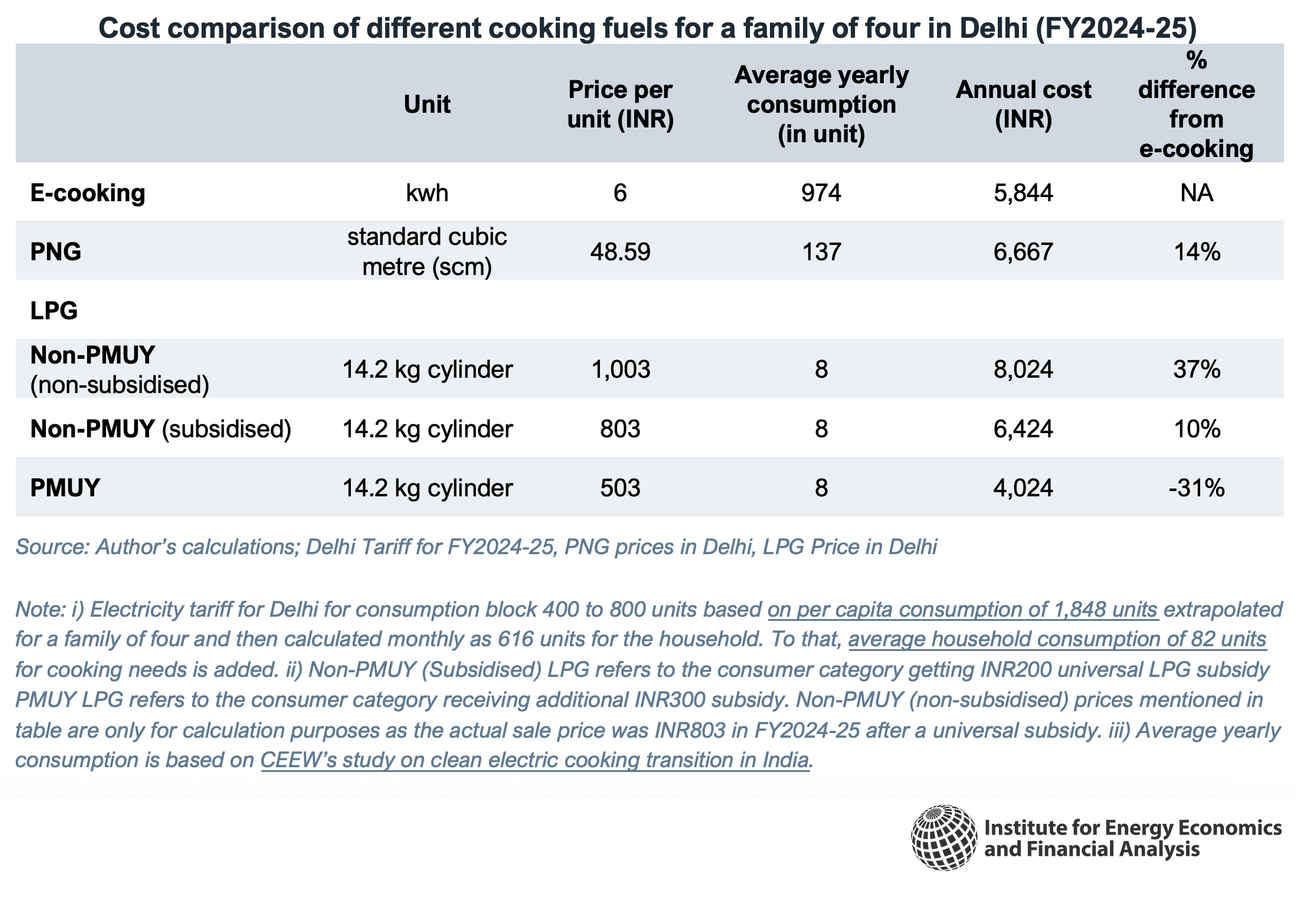
The government has attempted to protect the general public, especially low-income households, from the full impact. For example, the beneficiaries of the Pradhan Mantri Ujjwala Yojana continue to receive subsidies that offset the price increase.
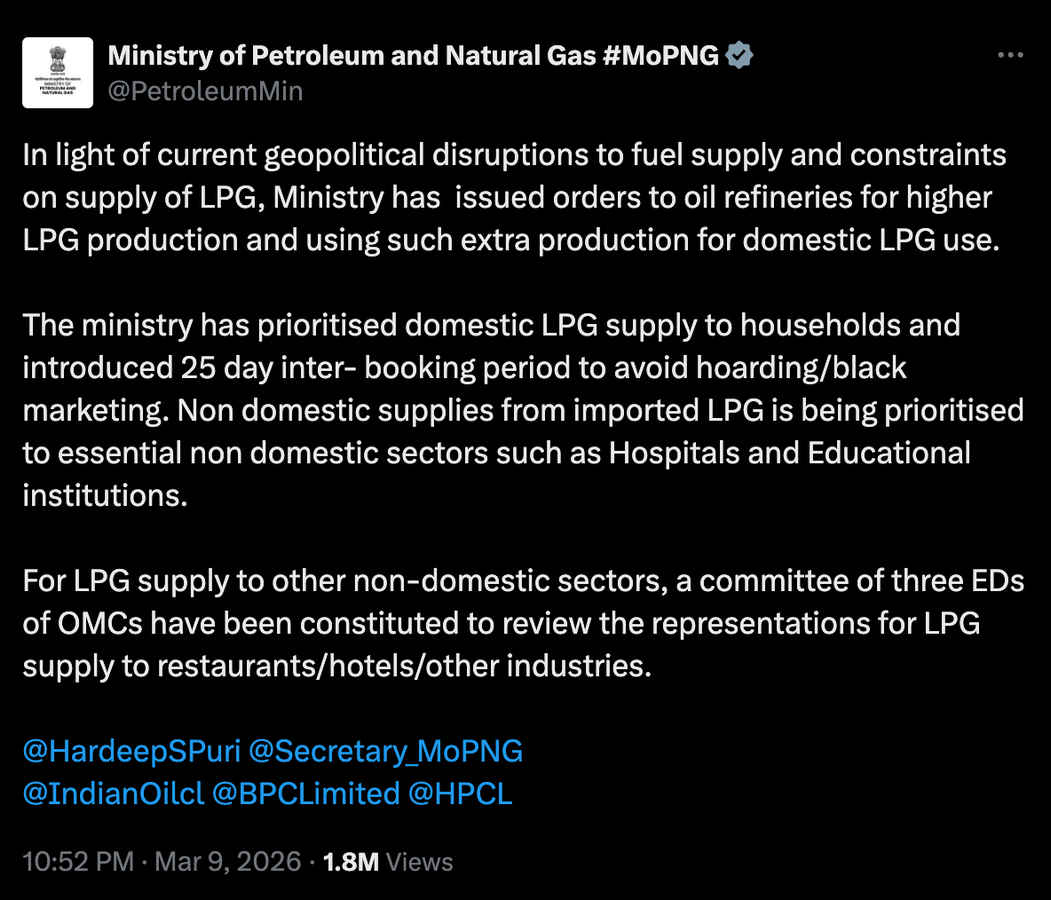
However, availability remains a challenge. The government has increased the minimum waiting period for booking LPG cylinders to 25 days from 21 days. If you try booking a refill before the mandatory waiting period expires, the system automatically rejects your request. The 25-day rationing is meant to stop hoarding and black market players. It is applicable to LPG service apps such as Indane, HP Pay and Bharatgas.
In the absence or shortage of cooking fuel, people turn to electric cooking equipment. Induction cooktops, electric pressure cookers, and air fryers are practical alternatives. These appliances, particularly Induction cooktops, are reportedly selling out quickly on quick-commerce apps like Blinkit.
So, in the current situation, it is not about upgrading their kitchen. Rather, it is about ensuring they can continue cooking even if LPG deliveries are delayed.
Induction cooktops rely on electromagnetic heating rather than open flames.
Inside an induction stove is a copper coil that generates a rapidly changing magnetic field when electricity flows through it. When a compatible metal vessel is placed on the cooktop, the magnetic field induces electrical currents inside the cookware.
These currents generate heat directly in the base of the vessel. The pan itself becomes the heating element, rather than the stove.
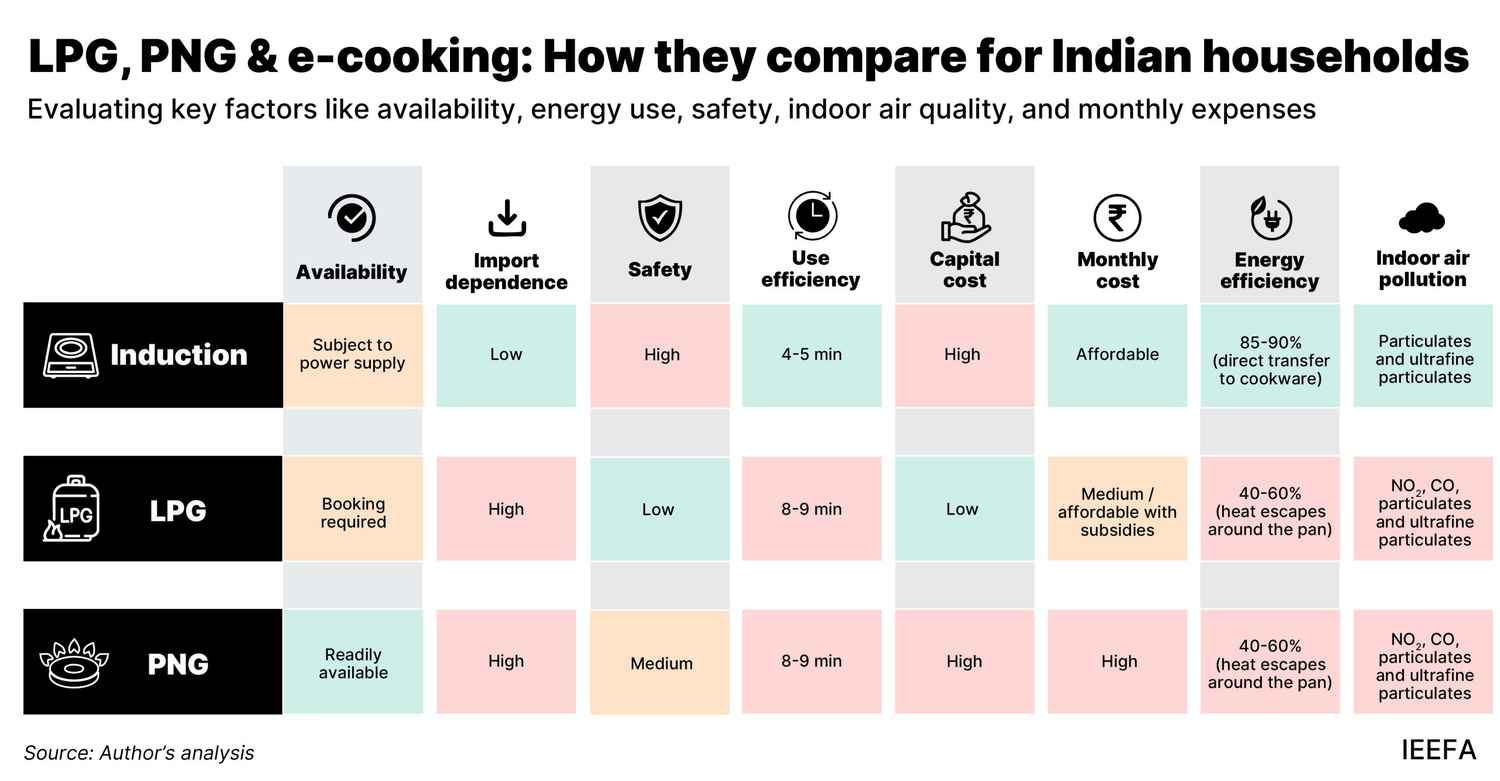
Induction cooking offers several advantages:
These factors make induction cooktops particularly useful during fuel shortages.
However, when switching from LPG to induction cooking, there are a few practical limitations and cookware requirements to keep in mind:
For cooking rice, lentils, and curries, electric pressure cookers can be more energy efficient than conventional stovetop cooking.
Air fryers have also become popular during the shortage. These appliances circulate hot air to cook food and can replicate many deep-frying results without using large quantities of oil or gas.
If the LPG crisis prevails, many Indian households may start adopting these electric alternatives. This shift represents a major opportunity for manufacturers or companies in this space. Demand for smart kitchen devices could rise significantly in the coming years.
But if and when the crisis ceases, technology would still play a key role in managing both LPG distribution. India’s LPG distribution system has become heavily digitised over the past decade. Consumers now book cylinders through mobile apps and online portals linked to providers such as Indane, Bharatgas and HP Gas. These platforms allow users to schedule refills, track deliveries, and manage subsidy payments. Those who use these platforms need not queue up in front of cylinder agencies.
For households dealing with the current shortage, the main takeaway is simple: do not rely on just one cooking fuel. The situation may also signal a broader shift, where India’s decades-old gas-based kitchen setup slowly moves toward electric and technology-driven cooking solutions. Let’s see.
Keep reading Digit.in for similar stories.
Also Read: Your next TV upgrade may cost more than expected: Here’s why