AI Benchmarking Kaggle Arena
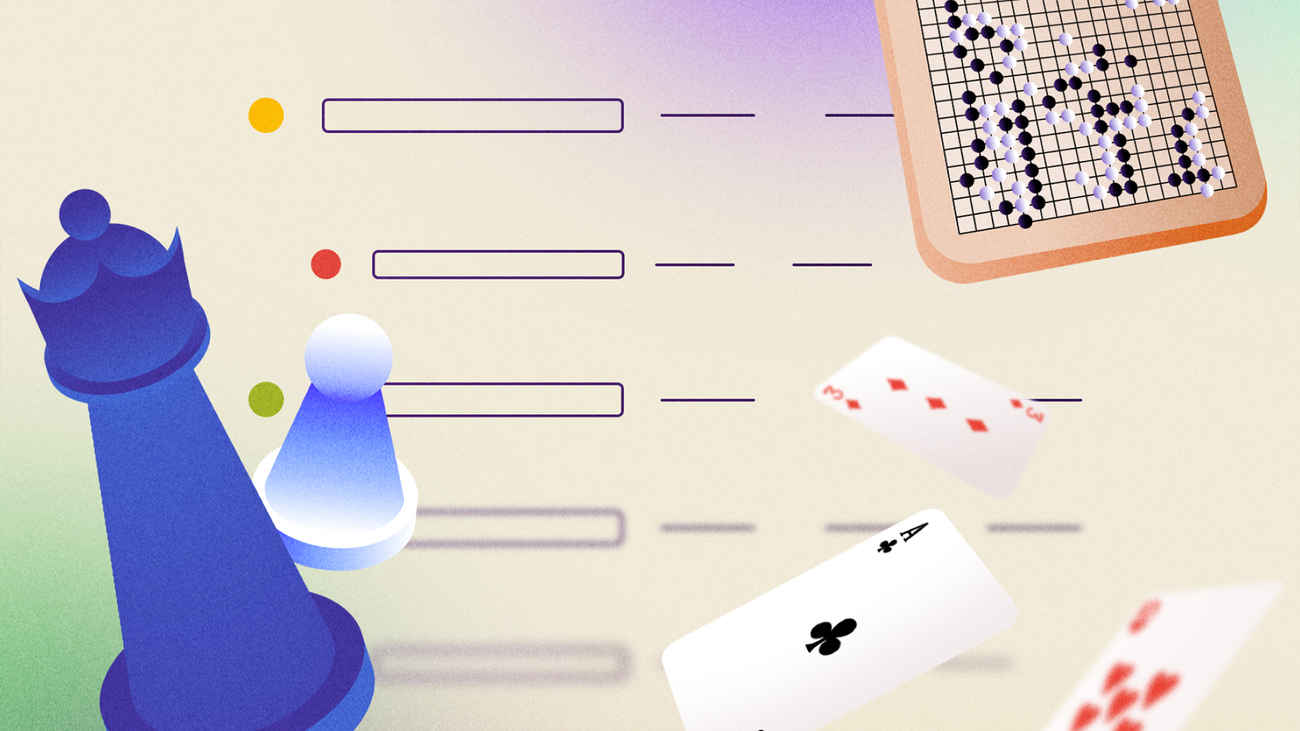
In a major step toward rethinking how AI is measured, Google DeepMind and Kaggle have launched the Kaggle Gaming Arena. A new public benchmarking platform designed to evaluate the strategic reasoning skills of leading AI models through competitive gameplay. Moving away from traditional, static datasets, the Arena introduces an evolving, dynamic testing ground where models play complex games like chess, Go, and poker to showcase real-time decision-making and adaptive intelligence.
AI progress may be tracked in the years ahead, not just by accuracy on predefined tasks, but by how well systems reason, adapt, and plan in adversarial environments.
Also read: ChatGPT will now remind you take breaks during long chat sessions
For years, the AI community has relied on benchmarks like ImageNet, GLUE, and Massive Multitask Language Understanding (MMLU) to track progress. These datasets helped fuel remarkable leaps in AI capability. But as top models begin approaching near-perfect scores on these benchmarks, their usefulness as meaningful indicators of real-world intelligence is fading.
Kaggle Gaming Arena was born from this limitation. Games, by contrast, offer rich, open-ended environments where success isn’t measured by a single output, but by consistent performance against diverse opponents over time. A model must adapt to new strategies, anticipate behavior, manage uncertainty, and execute complex plans, all without knowing exactly what it will face.
With the Arena, Google DeepMind is proposing a new kind of benchmark: one that centers on interactive reasoning instead of just static prediction. The core of Kaggle Gaming Arena is its persistent, all-play-all benchmarking system. Every agent that enters is matched against every other in hundreds of automatically simulated games. The outcomes are used to generate dynamic Elo-style ratings, ensuring that results reflect broad skill rather than fluke wins.
The entire system is built for transparency and reproducibility. All games are played using open-source environments and publicly available “harnesses,” the interface layer between models and the game engines. Any researcher, developer, or lab can replicate results or build upon the platform to test their own models.
The platform is also designed to evolve. New games will be added regularly from classic turn-based strategy like Go and chess to incomplete-information challenges like poker and Werewolf. Over time, the Arena aims to support increasingly complex environments that test planning, collaboration, deception, and long-term foresight.
To kick off the initiative, Google DeepMind is hosting a three-day exhibition tournament focused on chess, a game long associated with AI milestones. Eight leading AI models are participating: Google’s Gemini 2.5 Pro and Gemini 2.5 Flash, OpenAI’s o3 and o4-mini, Anthropic’s Claude Opus 4, xAI’s Grok 4, DeepSeek-R1, and Moonshot’s Kimi 2-K2 Instruct.
Also read: Apple’s new “AI answers” team: A Google rival in the making?
Unlike previous AI chess milestones where models used dedicated chess engines, these models are language-first systems. They must play autonomously, generating all moves themselves without calling external engines like Stockfish. Each move must be produced within 60 minutes, and illegal moves are penalized after three retries.
The format is single-elimination, with each matchup consisting of up to four games. The entire event is being broadcast live on Kaggle.com, with grandmaster-level commentary from chess figures including GM Hikaru Nakamura, IM Levy Rozman, and world champion Magnus Carlsen. While this tournament brings attention and excitement, it also serves a deeper function. It offers a real-time, human-auditable window into how top AI models actually reason under pressure.
The Chess Exhibition is just the start. The real heart of the Gaming Arena lies in its persistent leaderboard, a constantly updating ranking system based on automated simulations across all submitted agents.
Unlike static test results, this leaderboard reflects ongoing performance. As new models are released and old ones are retrained, their rankings will shift. This creates a more durable and flexible benchmarking system, one that evolves alongside the models it measures.
Importantly, Kaggle Gaming Arena isn’t just for elite labs. Anyone can submit an agent and compete, making it a rare example of an open, public testbed for general AI reasoning.
The broader implication of the Arena is significant. AI systems have begun to generalize across modalities, understanding text, vision, speech, and more. The question of how to meaningfully evaluate them becomes increasingly difficult. Standard benchmarks fall short of capturing the fluid, strategic, often ambiguous nature of real-world problems.
Games, however, come closer. They contain long-term goals, short-term tactics, hidden information, and adversaries. They reward planning, collaboration, and creativity and they punish brittle logic or shallow reasoning. These are exactly the kinds of challenges that generalist AI models must learn to overcome.
Kaggle Gaming Arena doesn’t claim to be the final answer. But it is a clear signal that the industry is looking for better, more robust ways to measure progress and that future AI systems will be judged not only by what they know, but by how they think.
More games, more agents, and more open-source tools are on the roadmap. With community involvement and transparent methodology at its core, Kaggle Gaming Arena has the potential to become a foundational piece in the next era of AI development.
Whether in chess or in complex multiplayer simulations, the real test of AI is shifting from accuracy to agility – from solving known problems to navigating new ones. And now, there’s finally an arena built for just that.
Also read: Bill Gates says AI is moving at “great speed” on the jobs market: Here’s why