Ambrane is a known brand in the Indian consumer tech space. What began as an Rs 10 lakh experiment is now a scaled accessories business competing across power, charging and lifestyle categories. In this conversation, Ambrane Co-Founder and Managing Director, Mr Ashok Rajpal, reflects on the different phases of growth, from cracking distribution to choosing manufacturing early. He explains how market timing, hands-on consumer learning and local production shaped the brand’s strategy, and why reliability, after-sales support and steady iteration matter more than aggressive marketing in building long-term trust with Indian consumers.
Ambrane began as a Rs 10 lakh start-up and is now one of the most popular mobile accessories brands in India. What were the toughest phases in that journey, and what did you get right at the right time?
Ashok: When we started Ambrane, which is now a 14-year-old journey, the category itself was still evolving. In the early days, distribution was the biggest challenge. Penetrating the traditional retail market was very tough. At the same time, online marketplaces helped us significantly during the initial phase. I would say the traditional market was difficult, but online channels supported our growth a lot in the early years.
What made you start this journey? What was the prime motivation behind entering this segment?
Ashok: Around the year 2000, mobile phones became the biggest technological revolution of our time. Smartphones started becoming accessible, and people began adopting technology very quickly. Seeing this shift, we were keen to enter the market and understand consumer behaviour. Initially, we started small. We opened a shop in a local area to understand the customer mindset, expectations, product needs, and features. That learning phase motivated us to enter this segment seriously.
Also Read: We have opened the doors of kitchen automation: Beyond Appliances’ Rakesh Patil
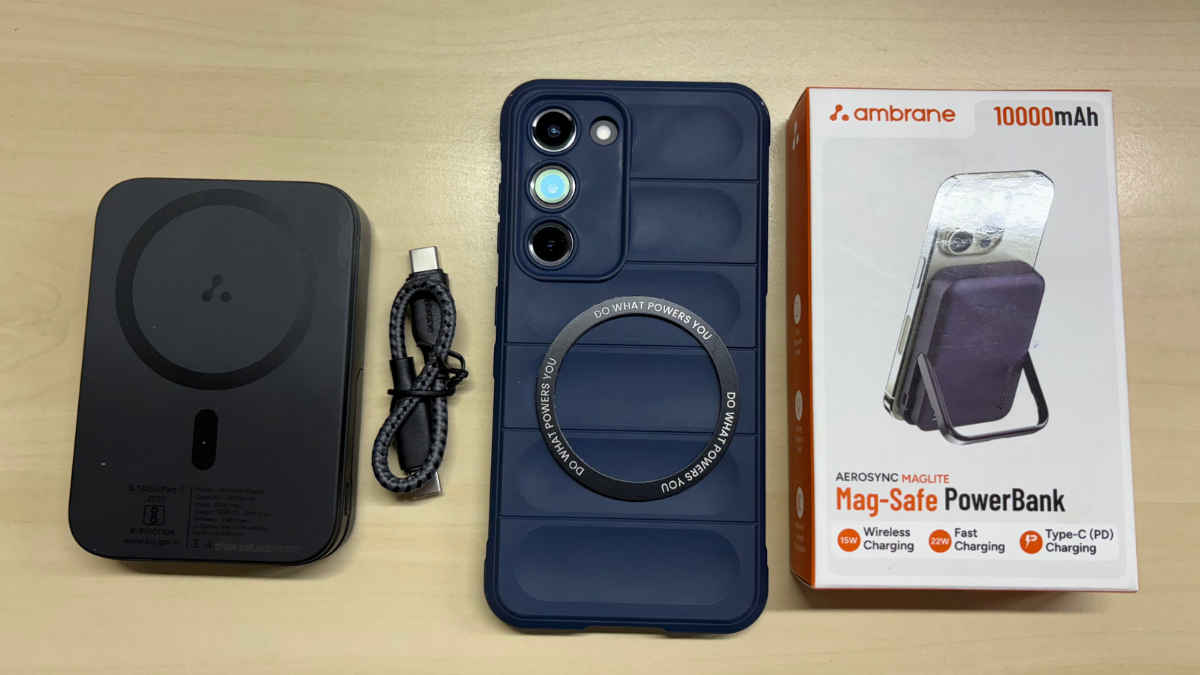
I recently travelled with the Ambrane Aerosync Maglite 10,000mAh power bank and found the design, stand and dual (wired + wireless) flexibility useful in real situations. How do user scenarios like travel, commuting, and multi-device use shape your product design decisions?
Ashok: We have a strong R&D team, along with dedicated design and product teams. All these teams spend time in the market to understand requirements and identify what features customers expect. Many people in our organisation belong to Gen Z, so they are very aware of lifestyle usage patterns. They actively contribute inputs on how a product should fit into daily life. This internal feedback helps us make products that are practical, logical, and relevant for consumers.
MagSafe worked seamlessly on the iPhone, while Android required more precise alignment, and wired charging ultimately proved to be the more reliable option. How do you think about these practical differences when designing for such a diverse user base?
Ashok: Most technologies in this category are initially driven by Apple, but we ensure that products are tested and validated across platforms, including Samsung and other Android devices. Typically, validation takes four to six months before a product is launched. Only after thorough testing across devices do we bring a product to market.
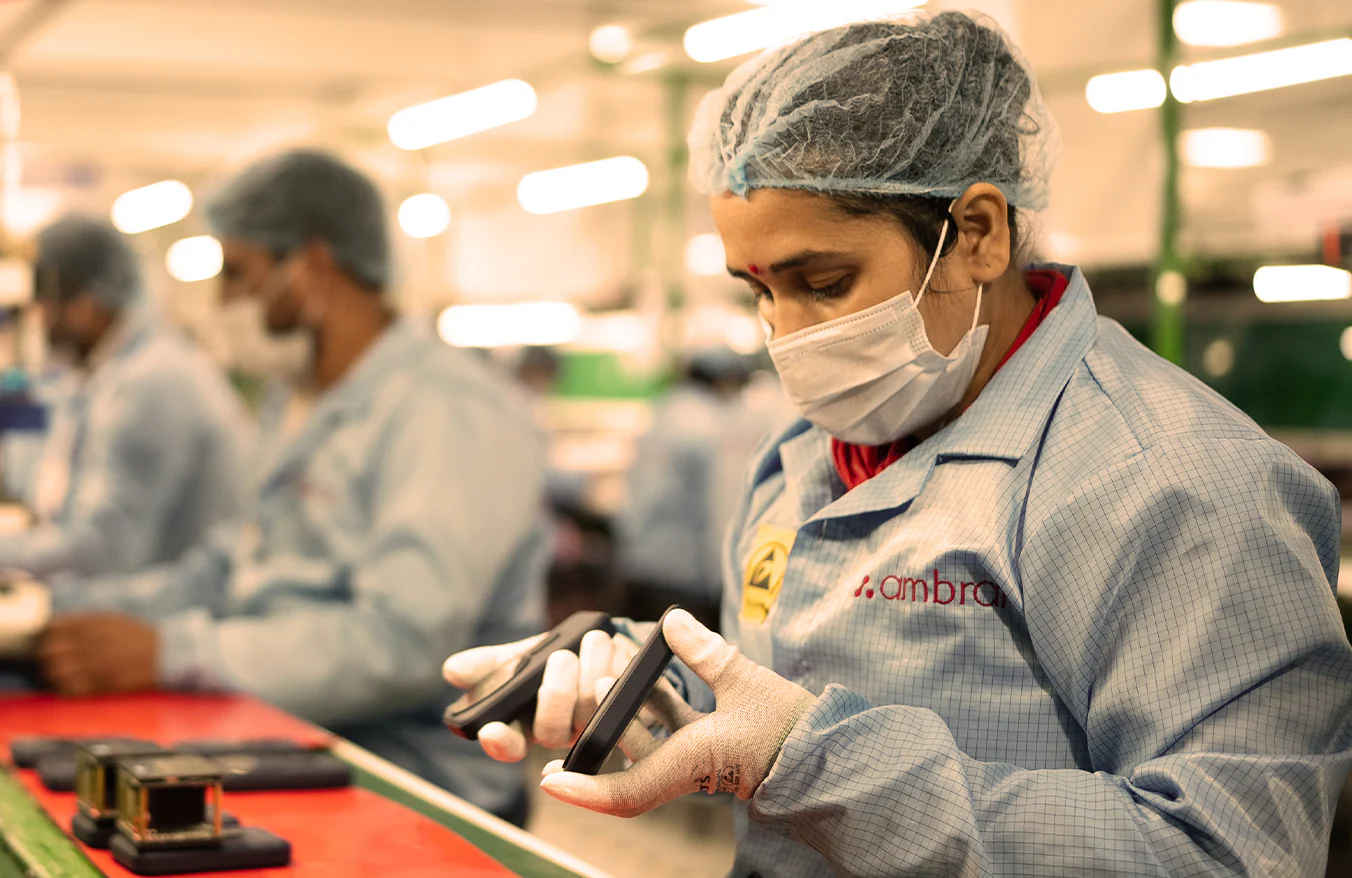
Ambrane states that it has its own manufacturing unit in Delhi. So, how has local manufacturing changed cost structures, agility, and product quality for Ambrane?
Ashok: Local manufacturing gives us much greater control over quality. Indian consumers today are very informed. They research products, features, and specifications thoroughly. Because of this, continuous product upgrades are necessary. Manufacturing locally allows us to implement changes quickly. It also strengthens the supply chain, reduces lead times, and enables us to serve the market faster.
When manufacturing is done in-house and at scale, it also helps control pricing, making products more affordable.
How’s competition from low-cost Chinese imports? And with it, how do you balance pricing pressure with quality, safety certifications, and long-term brand trust?
Ashok: There are two types of markets globally. One is the organised brand market, and the other is the unorganised market. We do not compete with the unorganised segment. In the brand market, we are comfortable competing because we can offer better quality, controlled manufacturing, and reliable supply chains. Having manufacturing in India gives us an advantage here.
As a local manufacturer, do you benefit from any government schemes?
Ashok: Currently, there are no specific government schemes applicable to the products we manufacture.
How do you act on the feedback from your customers? And during the R&D phase, what problem areas do you focus on solving?
Ashok: Our R&D team spends time daily at service centres, sometimes for one to two hours, listening to customer feedback. They examine faulty products returned by customers and analyse issues in detail. Based on this feedback, changes are implemented directly into the manufacturing process. R&D inputs come both from market research and service centre feedback, which helps us continuously improve products.
Distribution has become a big strength for you, with 400+ service centres and presence across major retail chains. How does after-sales support shape repeat customers and brand loyalty in India?
Ashok: Yes. When customers face an issue and see it resolved properly, it builds trust. That naturally leads to word-of-mouth recommendations. We have not relied heavily on aggressive marketing. Our products speak for themselves, and customer recommendations have played a big role in our growth.
Ambrane has experimented across multiple product categories over the years. Can you share an example of something that didn’t work as planned, and what it taught you about the Indian consumer mindset?
Ashok: No category completely failed, but we did pause certain segments. We performed well in smartwatches between 2022 and 2024, but the market was volatile, so we stepped back temporarily. The grooming category was also well received, but our focus shifted towards expanding the power and charging categories, along with the SHA category. We may revisit these segments in the future.
Power accessories often degrade over time, especially in Indian conditions. How does Ambrane test for long-term reliability, battery health and safety beyond just short-term performance?
Ashok: We never compromise on component quality. We started manufacturing in India in 2014, even before the Make in India initiative. From the beginning, safety and quality were top priorities. At that time, we were among the few brands using Samsung and LG battery cells.
Later, when these companies shifted focus to EVs, we moved to Chinese suppliers, but only those with strict quality control. Every supplier and component is evaluated thoroughly, including electronic circuit boards. Combined with customer feedback and process control, this allows us to deliver reliable products.
In the case of power banks, we conduct ageing tests and multiple protection tests, including over-voltage and over-current protection. Thermal safety features are also integrated during assembly. Every product goes through strict testing and dual inspection before reaching the market.
On e-commerce platforms like Amazon and Flipkart, customers see many similar products. How does Ambrane stand out?
Ashok: We believe in marketing, but not in a way that overshadows customer experience. We rely more on customer recommendations and word-of-mouth. Today, Gen Z consumers openly share product opinions, and that organic feedback has helped us grow.
As you expand into audio and wearables while strengthening the charging category, what should customers expect from Ambrane’s next wave of products in terms of safety, performance, and everyday usability?
Ashok: We continuously upgrade products as new safety technologies and protection standards emerge. With over 14 years of industry experience, we understand these requirements well. Recently, we have also started using LG battery cells again to enhance safety and performance.
We are expanding further in the charging category. We are also growing the SHA category. We have already launched vacuum cleaners, and we plan to introduce more SHA products, such as dash cams and other everyday-use devices.
We are already present across major online platforms. Now, we are strengthening offline distribution through modern trade, large-format stores, and a deeper reach into tier one, two, three, and four cities. We also exhibited at GITEX Dubai in 2025 and are planning to expand into export markets. We aim to grow across all relevant segments.
We started our manufacturing setup in 2014 with a 5,000 square foot facility. Today, our manufacturing area has expanded to around 83,000 square feet. In the next two years, we plan to move to a new facility of approximately 500,000 square feet.
Some readers may still have questions around quality, consistency and safety, particularly in a category where products are used daily and often unattended. We put this concern to Ambrane to understand how the company differentiates between isolated failures and broader quality-control issues.
The brand said it reviews usage conditions, traces manufacturing batches and component lots, and looks for repeat patterns across platforms, regions, and timeframes. According to Ambrane, if a concern appears repeatable, it is escalated beyond customer support into a deeper quality investigation, including testing returned units, stress-testing affected batches, strengthening factory-level quality checks, and making corrective changes where required. The company maintains that the intent is not limited to refunds or replacements, but to prevent recurrence and protect long-term user safety and trust.
Keep reading Digit.in for more such interactions.
Also Read: We want to deliver a Rs 20,000 experience at one-third the cost: Noise co-founder Amit Khatri