Unlike ChatGPT’s explosive kick to the front door to grab the world’s attention, GenAI’s inroads into software development have been more inconspicuous. But somewhere between autocomplete and collaboration, AI slowly became the default in programming. And if GitHub’s data is any indication, India isn’t merely adapting to this new reality, it’s actively shaping its future.
In a wide-ranging conversation with Karan MV, Director, International Developer Relations at GitHub, I tried to understand what the company is seeing across its global developer ecosystem, especially when AI becomes foundational to how software is built. Karan confirmed several key trends related to AI as a baseline expectation, agents as collaborators, open source as a force multiplier.
In all of this, India is an increasingly central pillar of global software innovation as we move toward 2026 and beyond, suggests GitHub.
At a global level, the sophistication of AI tools at developers’ disposal isn’t the most striking observation from GitHub. It’s how quickly developers have stopped treating them as optional.
“On a yearly basis, we publish what we call the Octoverse report… and what we are seeing is that there are more and more developers who are embracing AI today, a whole lot more than ever before,” Karan says.
One data point captures that transition with startling clarity. “Almost 80% of new developers use Copilot within the first week itself, showing that it’s almost like a baseline expectation that many developers have.”
That statistic matters because it reframes AI adoption entirely. New developers aren’t “trying” AI. They assume it’s there, the same way they assume version control exists or syntax highlighting works. What began in 2021 as intelligent autocomplete has expanded across the entire software lifecycle.
Karan says, “From just an auto-complete to today where AI and Copilot is a part of every part of the lifecycle – whether you’re thinking about writing code, reviewing code, securing code, etc.”
This isn’t confined to a particular slice of the industry either. “This is happening across open source, across enterprises, across students, academia as well.” What this means is that AI isn’t reshaping software development on the fringe or in niche corners. It’s quietly becoming the foundational baseline.
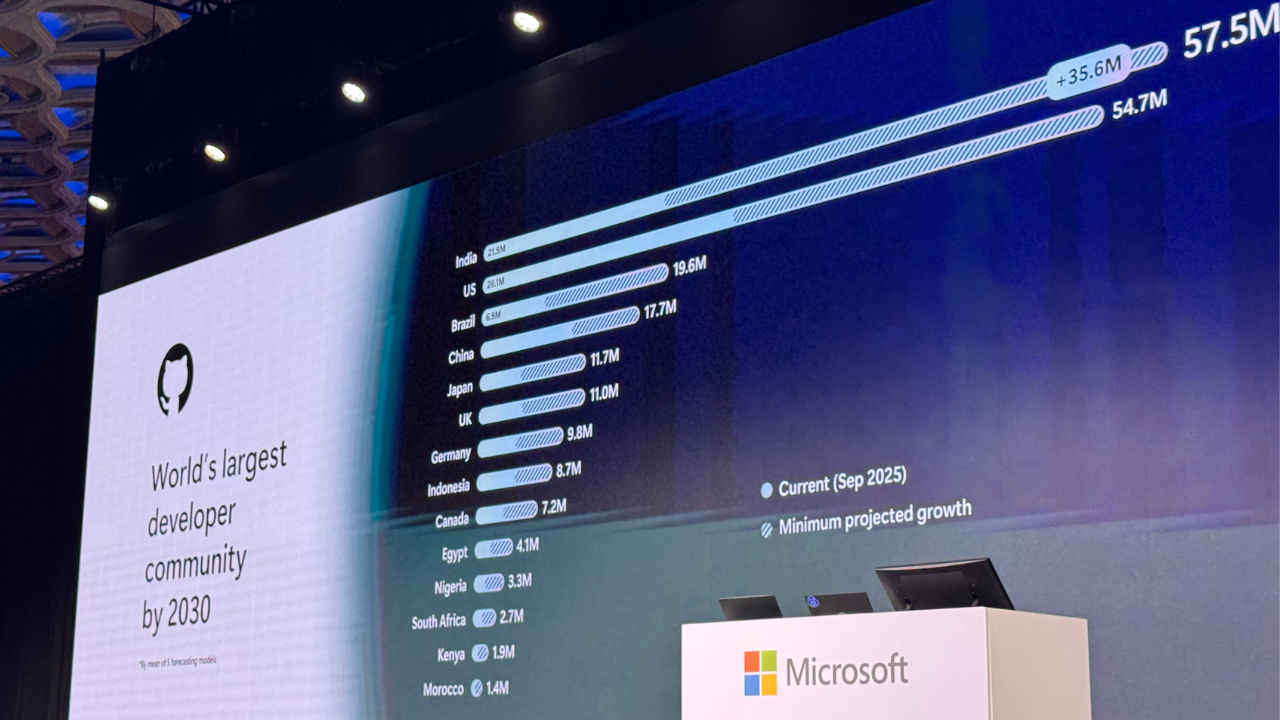
“In this past year itself, there were more than 5 million developers who joined GitHub just from India,” Karan notes. If AI is redefining development everywhere, India is amplifying that change through sheer participation – and increasingly, contribution. That surge has placed India in rare territory.
“India is our single largest source of new developers on GitHub this year… and the second largest developer community on GitHub itself.” But presence is only the opening act. What truly matters is what developers do once they arrive. “For the very first time ever, India has the highest number of open source contributors… overtaking the US as well,” mentions Karan, with a wide smile.
That milestone is easy to gloss over, but it’s profound. Open source is where modern software standards are negotiated, tested, and normalized. Leading there means shaping how software is built globally. India’s influence extends directly into AI innovation too. “India is the second biggest source of contributions to AI-related repositories as well.”
For GitHub and Karan, this convergence of scale and contribution signals something structural. “AI is almost like the baseline expectation that developers have… and India has a very unique position where so many developers are able to contribute back to global projects,” he says.
The combination of AI lowering barriers and India’s massive developer base is creating a compounding effect – one that’s difficult to replicate elsewhere.
When I asked Karan where AI is now breaking new ground – from planning to deployment – his answer couldn’t have been more blunt. “Earlier… it was largely around… ‘I want to use AI to write that code.’ But today AI is breaking ground across all aspects,” he says.
“Using AI even to plan how this can be accomplished… then using AI to code it… improving the code… even securing it.” That’s the most consequential shift is cognitive, where AI is now helping developers think through problems before a single line of code is even written. And at the centre of this transformation is agent-based development.
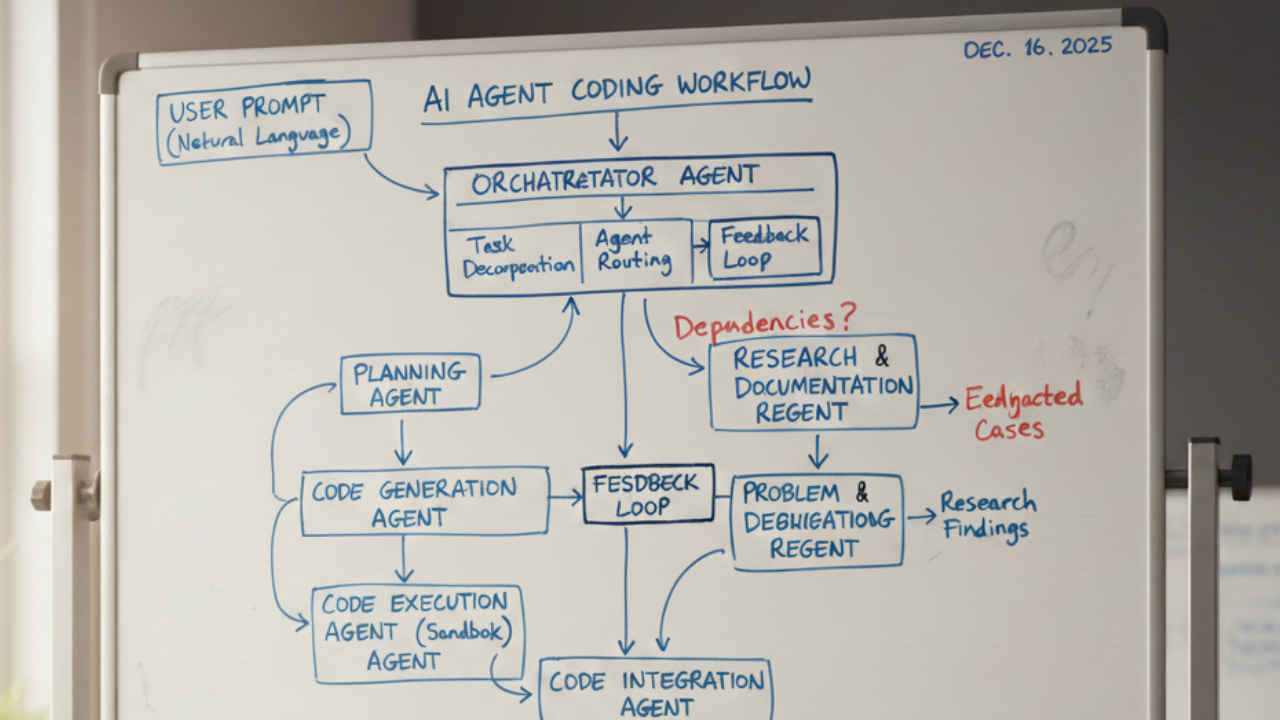
“Agents are helping a lot… that’s definitely the frontier of how AI is helping developers,” according to Karan. He explains by drawing a compelling parallel to GitHub’s own origins. “Earlier, collaboration was with other developers, but today collaboration is not just with developers, but also with agents themselves.”
This agentic future changes the rhythm of work. Tasks can be delegated asynchronously. Karan says that it helps developers orchestrate rather than execute every step themselves. “The future of development is going to look like… things are agentic, things are async… and there is collaboration wherever you need it,” he believes.
Also read: GitHub Agent HQ explained: How it aims to create specialized AI agents for developers
AI is great, but doesn’t that infuse a bit of sloppiness into software development? With the rise of vibe coding and no-code tools, AI makes it possible for more people to build software, but what about safety and security I ask Karan?
“It’s undeniable that AI is really helping not just developers, but even people who weren’t previously coding to build their own solutions,” Karan responds, underlining how responsibility doesn’t disappear.
“What is important is that there are the same level of checks and controls… security controls, quality controls, governance controls. To that end, AI is really only augmenting a developer, and ultimately it’s the developer who’s at the driver’s seat,” emphasizes Karan. It makes sense, and reassuring to think humans will still be held responsible for bugs and faulty apps!
If AI is accelerating development, open source is multiplying its impact. One of the quiet revolutions AI enables is learning-by-doing at scale, Karan points out.
Previously, contributing to a complex open source project meant wrestling with documentation, setup scripts, and institutional knowledge. Today, developers can simply ask. “Help me set this up locally. Explain how this works,” Karan says. The learning curve that once discouraged participation has flattened dramatically.
This matters enormously in India, where developers span geographies, institutions, and languages. GitHub’s approach emphasizes choice – of models, workflows, and increasingly, language.
“Copilot supports many Indian vernacular languages,” Karan notes. One student’s story stayed with him: the student prompted Copilot in their native language, received responses in the same script, and suddenly the barrier wasn’t comprehension, but simply imagination.
Looking ahead, GitHub projects that by 2030, one in three new developers globally will be from India. That scale will bring not just more code, but new problem spaces, cultural contexts, and priorities into global software.
Agentic AI will only amplify this, according to Karan. “Developers are able to delegate entire tasks to agents… and orchestrate a fleet of them.” The model is collaborative, not autonomous, he highlights. “Teams of developers working with a swarm of agents, while a developer really orchestrates and ensures everything is going right,” suggests Karan, based on his expectations of how Agentic AI will increasingly manifest in software development going forward.
Karan’s advice to India’s next generation of developers distills this moment simply. He highlights his ABCD – Anybody Can Develop, something Karan and GitHub truly believes in. Karan says everyone should AI fearlessly as a learning tool without worrying about judgement. “There has never been a better time to become a developer,” he says. The cost of entry is no longer infrastructure or formal gatekeeping. “The actual cost is just the interest,” he concludes.
AI isn’t removing developers from the equation – it’s expanding who gets to be one. And as GitHub’s data shows, India is no longer just along for the ride, but increasingly steering where global software development is headed.
Also read: From Office to GitHub: Microsoft’s complete GPT-5 overhaul