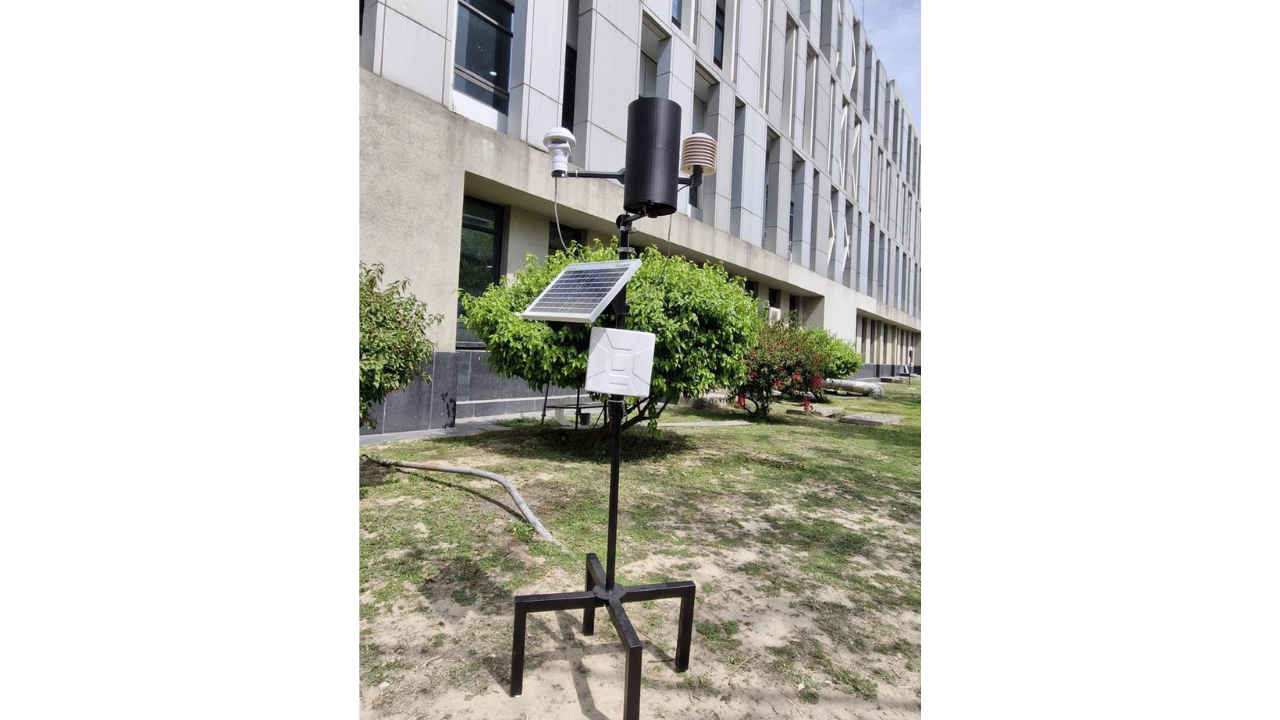
The technological landscape of Indian agriculture is standing at a historic crossroads, moving away from generalized “best guesses” toward a future defined by hyper-local precision. At the India AI Impact Summit 2026, a bold roadmap was laid out to bridge the digital divide for the nation’s 10 crore farmers. The cornerstone of this revolution is a unique marriage of low-cost hardware and high-level intelligence: a ₹15,000 weather station paired with specialized AI agents designed to speak the language of the soil.
Also read: Microsoft’s Puneet Chandok says India must build AI for all
For decades, the primary barrier to precision agriculture in India has been the prohibitive cost of infrastructure. High-end sensor networks were often reserved for large-scale corporate farms or research institutes. However, IIT Ropar has disrupted this status quo by developing a multi-dimensional weather station that brings elite-level data to the small-holder. At a price point of just ₹15,000, these units offer 99% accuracy, validated by the IMD, measuring critical variables such as soil temperature, humidity, radiation, and wind speed. This is not just a gadget; it is the fundamental data engine required to fuel the next generation of artificial intelligence in the field.
The true power of this data is unlocked by “Agri-LLM,” a Large Language Model specifically trained on agricultural datasets. Unlike generic AI, Agri-LLM is built to understand the nuances of Indian crop cycles and regional dialects. It acts as a digital agent in a farmer’s pocket, capable of processing the live stream of data from the ₹15,000 station to answer the most vital question: “What does my farm need today?” By lowering the barrier to entry, this initiative envisions a world where a farmer in Punjab or Andhra Pradesh can receive a personalized irrigation or pest-control schedule based on the specific micro-climate of their own gram panchayat.
Also read: India AI Impact Summit 2026: Arinox and KOGO’s sovereign agentic AI-in-a-box
The summit also spotlighted the intensifying collaboration between India and Israel, a partnership that is essentially a “scale-meets-precision” powerhouse. Israeli innovations like N-Drip, a gravity-powered micro-irrigation system that requires zero energy, are already being integrated with Indian AI frameworks. This combination allows for a level of management previously thought impossible at scale. Instead of irrigating an entire field based on a weekly schedule, AI agents can now guide farmers to irrigate plant-by-plant, ensuring that every drop of water contributes to the final yield. With 80% of India’s fresh water currently consumed by agriculture, the stakes for this efficiency could not be higher.
Yet, as the panel of experts from Salesforce, Hunch Ventures, and C-Fund noted, the ultimate success of this mission depends on “institutional trust.” Farmers must be able to rely on the AI’s advice without fear of losing a season’s crop to an algorithmic error. This is why the focus is shifting toward “explainable AI” – models that don’t just give a command but explain the reasoning behind it.
By leveraging India’s robust Digital Public Infrastructure (DPI), the goal is to create a transparent, co-created ecosystem where technology is an assistant, not a replacement. As these ₹15,000 stations begin to dot the rural landscape, they represent more than just a win for “Make in India” – they signify the moment the 10 crore farmers were finally given the tools to lead the global AI revolution from the ground up.
Also read: From factories to bazaars, what the India AI Impact Summit’s skilling panel is really arguing for