How do you try to make sense of Google’s TurboQuant tech, especially if you’re not a cutting-edge tech pro? The tech behind what Google’s trying to do seems so impactful, but what good is it if it doesn’t make sense, right? Connecting it to tech powering images and pictures we see on a daily basis seems like a good place to start.
Also read: OpenAI discontinuing Sora AI video: What went wrong for ChatGPT maker?
Think about what happens when you save a photo as a JPEG. The file trims away details that your eyes won’t notice anyway. Tiny variations in color, subtle textures, things that don’t really change how the image looks to you. The result still looks the same to you, but the file size drops massively. The real trick isn’t what it keeps, it’s knowing what it can safely throw away. That’s what TurboQuant also does on a very different scale.
When an AI model processes a long conversation or a large document, it stores everything in its working memory as a huge grid of numbers. These numbers are extremely precise, and that precision comes at a cost. More memory means more computing power, more energy, and ultimately higher costs.
Also read: Best smartwatches with WhatsApp calling and messaging in 2026
What TurboQuant does is surprisingly simple in concept. It asks the same question as JPEGs, how much of this detail actually matters? Instead of keeping everything at high precision, it compresses those numbers. We’re talking about shrinking them from 32-bit precision down to just 3 or 4 bits. Which, when you say it out loud, sounds like a huge loss that could break everything. However, there is nuance to it. It adds a tiny correction layer, just one extra bit, to fix any important errors that might creep in.
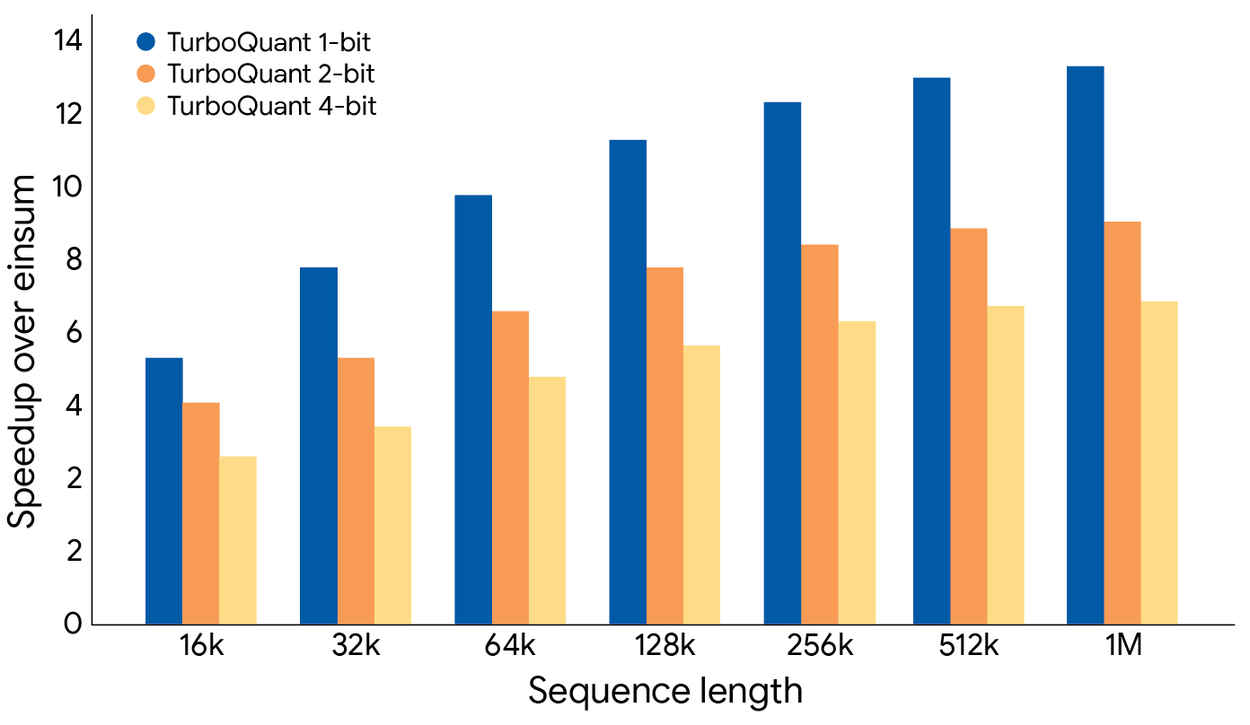
The result is kind of wild. Memory usage drops by up to six times. Processing becomes significantly faster. And somehow, the model still performs almost exactly the same.
What I find most interesting isn’t just the efficiency gains. It’s how familiar the idea feels.
This isn’t some completely alien breakthrough. It’s a principle we’ve been using for decades. JPEG did it for images back in the early 90s. TurboQuant is doing it for AI today. Progress in tech doesn’t always come from adding more. Oftentimes, it comes from knowing what you can afford to lose.
Also read: OpenAI and Microsoft: From friends to enemies, what went wrong?