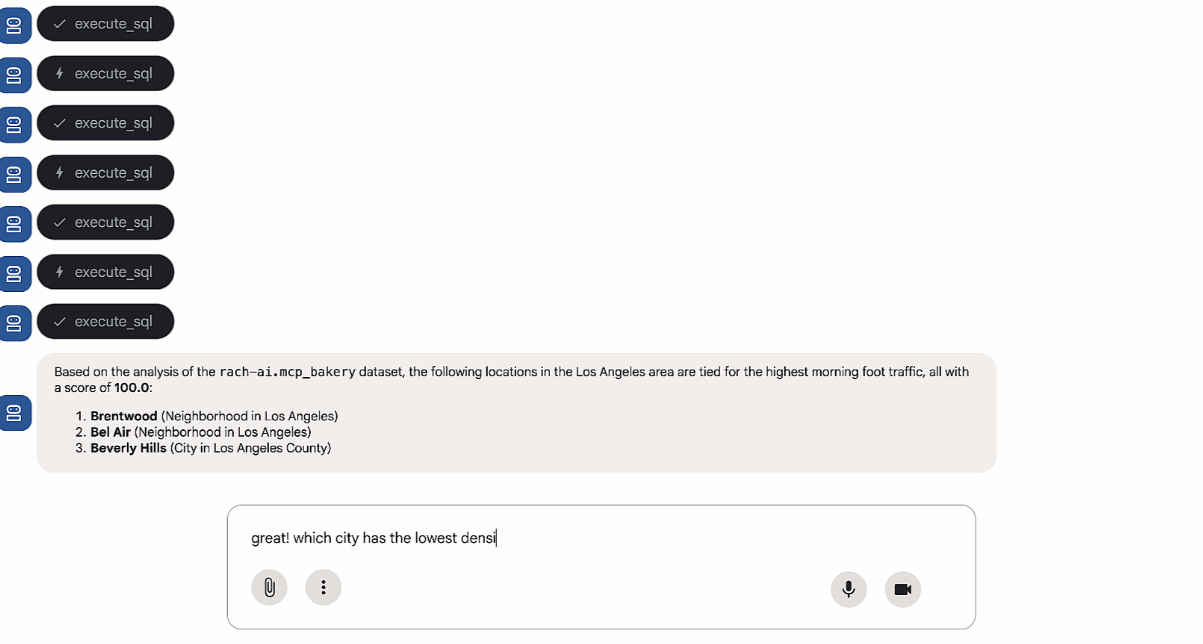
Google has taken a major step toward making its cloud ecosystem fully ready for autonomous AI agents. The company has rolled out official support for the Model Context Protocol across key services, along with new managed MCP servers that give AI agents direct, structured access to tools like BigQuery, Google Maps, Compute Engine and Kubernetes Engine. The update positions Google Cloud as a native environment for agentic workloads without the messy connectors or brittle workarounds developers relied on until now.
Also read: OpenAI’s ChatGPT can now edit your images using Adobe Photoshop, here’s how
The Model Context Protocol is emerging as a common language that lets AI agents communicate with external tools and data sources. Instead of translating natural language into unpredictable API calls, MCP gives agents a clean, machine-readable way to discover capabilities, issue commands and process responses. By adopting MCP as a first-class interface, Google makes its most widely used services instantly accessible to any MCP-capable model.
For developers, this means an AI agent no longer needs custom scripts to query BigQuery, plan routes with Maps or manage infrastructure. The agent can connect to a standard MCP endpoint, authenticate and begin executing precise, auditable operations.
Google’s managed MCP servers are hosted, production-grade endpoints designed for AI scenarios where reliability and governance matter. These servers expose the core functions of a Google service through a uniform MCP schema, avoiding the need to manually wrap APIs or maintain fragile integrations.
BigQuery lets agents run SQL tasks and fetch results. Maps supports geospatial lookups, routing and location metadata. Compute Engine and Kubernetes Engine expose infrastructure actions for provisioning, scaling or managing deployments. Google has also tied MCP into its API management layer, giving enterprises a way to expose internal APIs as MCP tools through Apigee with full IAM and policy controls. The result is a cloud environment where AI agents can operate with the same clarity as human operators but with higher speed and less ambiguity.
Also read: Android users can now share live video in emergencies, but there’s a catch
The shift signals a broader push across the industry toward agent-ready infrastructure. Instead of limiting AI to text generation, MCP-equipped agents can read structured outputs, plan workflows and take actions inside cloud systems. Google’s adoption moves the protocol from a promising standard to a practical foundation for enterprise automation, data operations and intelligent services.
Companies building AI-driven applications can now assemble workflows that combine large model reasoning with operational tools without relying on custom glue code. This reduces failure points and keeps agents aligned with enterprise security rules.
Google says more services will receive MCP support in the coming months, expanding coverage across databases, storage, security and observability. As MCP becomes a default interface on Google Cloud, developers will be able to build agentic systems that interact with nearly every layer of the stack using a unified protocol.
Also read: US attorneys general warn OpenAI, Google and other AI giants to fix delusional chatbot outputs