If the last two years of technology were defined by AI learning to write poetry and generate surreal imagery on our screens, 2026 is the year AI gets a body. As CES opens its doors in Las Vegas this week, a distinct shift in the narrative is already clear: the era of purely digital generative AI is ceding the spotlight to “Physical AI.”
For years, the promise of the Jetsons-style future – where robots handle chores and machinery operates itself – has been just over the horizon. At CES 2026, that horizon is finally coming into focus. The overarching theme driving the massive expo is the transition from AI that creates content to agentic AI systems that perceive, decide, and act in the real world.
Also read: LG to unveil the world’s lightest 17-inch laptop at CES 2026: All we know
From agricultural machinery tilling soil autonomously to humanoid robots designed to navigate the living room, the phrase “from fields to fridges” isn’t just catchy marketing; it’s an accurate map of the technology permeating the show floor.
The most immediate and impactful applications of Physical AI are not found in the suburbs, but in the industrial heartland, where traditional heavy industries are leveraging silicon to solve labor shortages and efficiency ceilings.
Leading the charge in the “fields” sector is agricultural giant John Deere. Building on previous pilots, Deere is showcasing its latest autonomy kits, now equipped with 16-camera perception arrays powered by NVIDIA Orin processors. The upgrade is significant: by processing visual data locally on the machine, Deere aims to drastically reduce the latency that has previously limited the speed of autonomous tillage.
Beyond self-driving, the company is doubling down on its “Operation Center” technology. The vision presented at CES is one where tractors act as roving sensor hubs, analyzing soil moisture and nutrient levels to propose agronomic strategies in real-time, effectively turning farming into a data science initiative.
Similarly, Siemens AG is continuing its push into the “Industrial Metaverse.” The company is expected to highlight how digital twins – virtual replicas of real environments – are evolving from static models to active simulations. By integrating AI, these systems aim to predict equipment failures before they manifest physically, a direction CEO Roland Busch has consistently championed as the future of manufacturing.
In the consumer space, the “fridges” side of the equation, the definition of a “smart home” is undergoing a radical upgrade. We are moving past the era of passive smart speakers waiting for a voice command. The 2026 smart home is proactive, using sensors to anticipate needs.
Also read: First RGB-stripe QD-OLED and OLED monitors announced: Asus and MSI lead the rollout
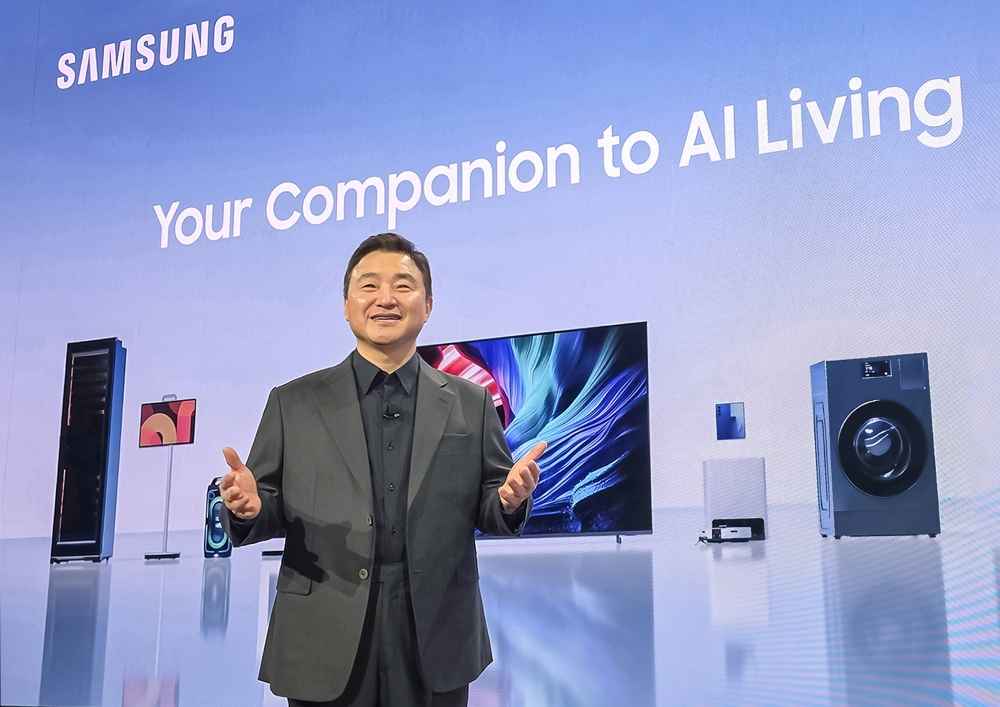
Samsung and LG are at the forefront of this shift, unveiling appliances that act autonomously. A prime example is Samsung’s new WindFree air conditioner, which utilizes radar-based AI to sense user presence in a room. By detecting occupancy without using intrusive cameras, the system claims to optimize cooling automatically and significantly reduce energy consumption.
However, vision technology is entering the kitchen in smarter ways. Samsung’s new Bespoke AI Family Hub refrigerator is leaning heavily on generative AI integration. While previous iterations struggled with object recognition, the new models promise “AI Vision” capable of identifying a wider range of ingredients and suggesting recipes based on current inventory, a clear step toward the “self-managing kitchen.”
Perhaps the most ambitious interpretation of “Physical AI” in the home comes from LG’s debut of the CLOiD, a humanoid robot with articulated arms. Framed as part of LG’s “Zero Labor Home” vision, CLOiD is designed for complex manipulation tasks. While widespread availability may still be years away, LG’s demonstrations of the robot’s dexterity signal a move beyond simple vacuuming discs toward assistants capable of delicate chores.
Powering this explosion of embodied intelligence is a fierce battle among silicon manufacturers to provide the necessary compute power at the “edge” – on the device itself, rather than in the cloud.
NVIDIA is cementing its position as the infrastructure backbone for robotics. The company is highlighting the Jetson Thor platform, a dedicated robotics SoC (System on Chip) boasting 2070 FP4 TFLOPS of compute. This massive on-device power is critical for humanoid robots that need to run complex simulation models safely in real-time, without relying on laggy internet connections.
Meanwhile, Qualcomm is positioning its Snapdragon 8 Elite chip as the connective tissue for “agentic AI.” The company argues that the same intelligence powering high-end smartphones can be scaled to control the next generation of smart home devices and service robots, creating a unified mesh of intelligence in the home.
As AI becomes physical, it is also encroaching into deeply personal spaces like healthcare. Samsung has signaled ambitious long-term plans to use the sensors we already carry to perform medical-grade analysis. The company is exploring how data from smartphones and wearables, such as changes in gait (walking speed) or fine finger movements, could eventually serve as biomarkers for early detection of conditions like dementia.
As CES 2026 kicks off, the industry message is clear: The digital brains built over the last few years are finally getting hands, wheels, and eyes. The challenge now shifts from building capable models to proving these physical agents can navigate our world safely, reliably, and usefully.
Also read: Samsung to announce brighter QD-OLED, 130-inch Micro RGB TV, and more at CES 2026