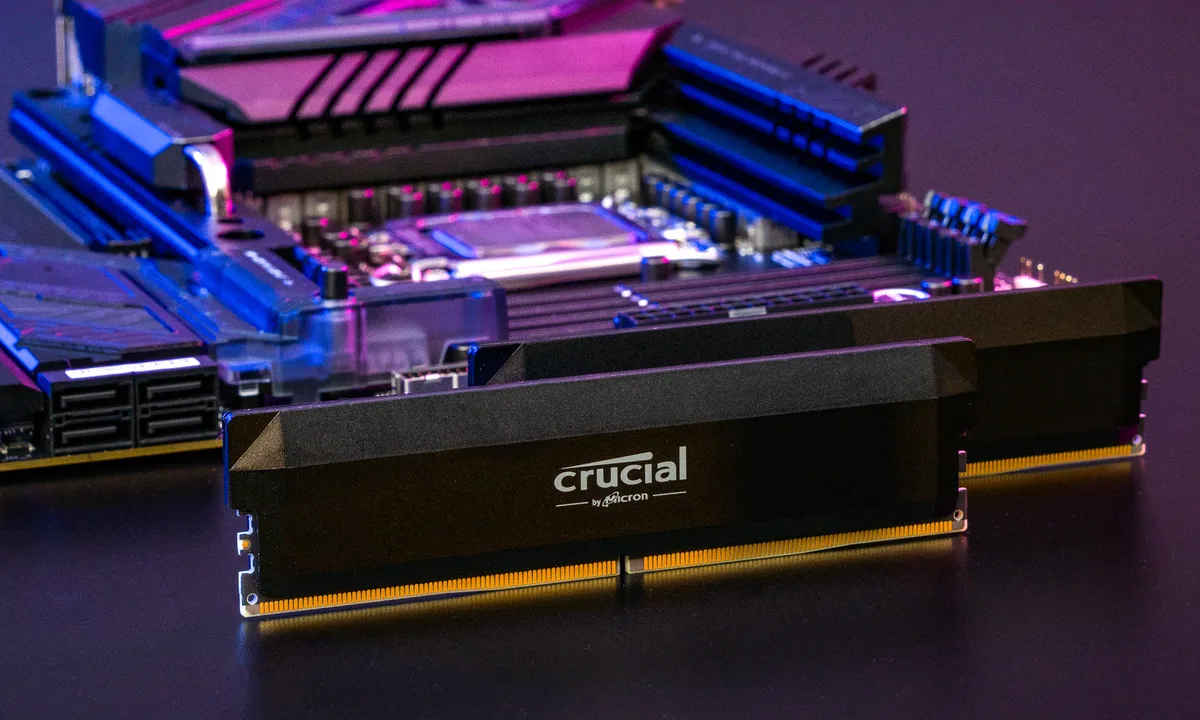
For years, Crucial RAM sat on the shelves of college hostels, repair shops, and DIY workbenches as the dependable upgrade that made old machines feel new again. Its green sticks of memory were almost a rite of passage for first-time builders. Which is why Micron’s decision to shut down the entire Crucial consumer line feels bigger than a routine corporate exit. It captures a moment when the memory business is being pulled away from the everyday user and toward something far more demanding.
What pushed Micron to walk away from a beloved consumer brand is not falling demand for RAM, but rising demand for a very different kind of memory. AI systems place extraordinary pressure on DRAM and storage architectures. Training and inference workloads depend on enormous parallel throughput that only high-bandwidth memory and next-gen DRAM can deliver. Producing these components requires advanced packaging, more complex manufacturing steps, and significantly more wafer allocation.
Also read: Claude 4.5 Opus ‘soul document’ explained: Anthropic’s instructions revealed
In other words, every chip Micron turns into consumer RAM is a chip it cannot turn into AI memory. With HBM shortages visible across the industry, allocating supply to the consumer market now brings lower reward and higher opportunity cost.
Crucial was always the friendly face of Micron, a way to translate the company’s manufacturing muscle into something students, freelancers, and small creators could buy. But it never drove revenue the way enterprise products do. Selling RAM kits and SSDs through retail channels meant marketing costs, distribution complexity, and margins that barely justified the effort.
Inside Micron, a different reality was forming. Data center clients were asking for more capacity, more bandwidth, and more consistency. AI clusters needed memory with characteristics Crucial products could never offer. Backing away from the consumer shelf became less about abandoning a brand and more about focusing on where the company’s engineering mattered most.
For people who build or fix their own machines, Crucial’s disappearance removes a reliable choice from a market that is already consolidating. Fewer vendors in consumer RAM could mean more price swings and fewer midrange options. Crucial was often the part you picked when you didn’t want to overthink it. That safety net is gone.
It also affects system builders who depended on Crucial’s consistent supply. Small repair shops and local PC assemblers, especially in markets like India, often relied on Crucial because it balanced affordability with predictable performance. Losing that option places more weight on competitors who may not match Crucial’s mix of price, availability, and brand trust.
Also read: Trainium 3 explained: Amazon’s new AI chip and its NVIDIA-ready roadmap
The deeper story is a shift in priorities across the semiconductor world. AI has become the center of gravity, pulling resources away from consumer segments and toward data centers. Micron is not alone in rewriting its roadmap around training clusters, accelerators, and model-centric compute stacks. Memory is no longer defined by consumer workloads. It is defined by whatever keeps AI systems fed.
Crucial’s end is a reminder of where the industry stands today. Companies once built memory for millions of personal devices. Now they build it for thousands of machines that run the world’s most demanding models. The pivot is logical. It is profitable. But it also marks the quiet fading of a brand that helped countless users learn, repair, build, and tinker.
Crucial RAM is gone, and AI didn’t just play a part. It set the direction for the entire memory landscape, leaving consumers to adjust as the industry chases a future built for machines that think.
Also read: ChatGPT Ads: Sam Altman’s dangerous road to boost OpenAI profits, will it work?