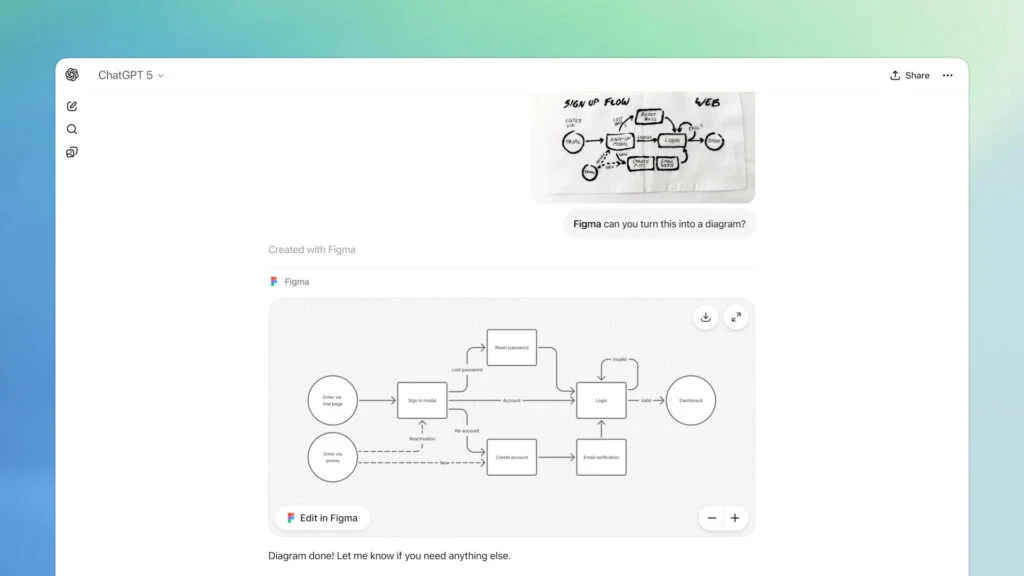
ChatGPT is no longer just a destination for conversations. With OpenAI now allowing developers to submit apps directly to ChatGPT, the platform is evolving into a full-fledged application marketplace, one where AI-powered tools live inside the chat experience itself. For users, this means access to specialised apps without leaving ChatGPT. For developers, it opens up a new distribution channel backed by one of the fastest-growing consumer AI platforms in the world.
At its core, the ChatGPT app marketplace is OpenAI’s attempt to turn ChatGPT into an ecosystem rather than a single product. Instead of users juggling multiple websites, plugins, or browser extensions, apps can now be discovered, launched, and used directly within ChatGPT conversations. These apps range from productivity tools and data analysis workflows to design helpers and developer utilities.
Also read: ChatGPT is king of AI in India: Gemini, Perplexity lag far behind in daily users
Developers build apps using OpenAI’s Apps SDK, which allows them to define how their tool behaves, what inputs it accepts, and how it responds within a chat-based interface. Once an app is ready, developers can submit it for review through OpenAI’s developer platform.
After approval, the app becomes discoverable inside ChatGPT’s app directory. Users can browse apps by category or invoke them contextually during a conversation. Instead of opening a separate interface, the app operates inside the chat itself, responding to user prompts and exchanging information seamlessly with ChatGPT. This tight integration is the key difference from traditional app stores. The AI acts as both the interface and the orchestrator, passing relevant context to the app when needed.
OpenAI also places emphasis on safety and quality. Submitted apps go through a review process that checks for policy compliance, security issues, and overall reliability. This ensures that apps interacting with user conversations meet a baseline standard before reaching a wide audience.
The biggest incentive for developers is distribution. ChatGPT has hundreds of millions of users, and the app marketplace offers direct access to this audience without the usual friction of downloads, installations, or user onboarding. If an app solves a real problem, users can start using it instantly inside a conversation.
Also read: AI won’t replace humans: Google to OpenAI, big tech CEOs agree
Discovery is another major benefit. Instead of relying entirely on external marketing or search engine rankings, apps can surface organically when users look for relevant tools within ChatGPT. This lowers the barrier for smaller developers and startups that may not have large marketing budgets.
There is also the promise of monetisation. While OpenAI’s long-term revenue model for apps is still evolving, the marketplace sets the stage for paid features, subscriptions, or usage-based pricing in the future. For developers, this creates a potential business pathway that is native to the ChatGPT ecosystem rather than bolted on externally.
Finally, developers gain access to richer context. Apps can work with user intent, conversation history, and AI-driven reasoning, allowing them to deliver smarter, more adaptive experiences than traditional standalone software.
In effect, the ChatGPT app marketplace is less about competing with mobile app stores and more about redefining how software is discovered and used. For developers willing to build conversational-first tools, it represents an early opportunity to shape what the next generation of applications looks like.
Also read: World’s smallest programmable robot: 5 crazy things it can do