The education technology sector has long struggled with a specific problem. While online courses make learning accessible, keeping students engaged remains difficult. Completion rates for massive open online courses (MOOCs) are notoriously low, often hovering in the single digits. At CES 2026, a new platform called Chalk aims to solve this retention crisis by fundamentally changing how information is delivered.
Developed by FirstHabit, Chalk was named a CES 2026 Innovation Award Honoree in the EdTech category. Unlike standard learning management systems that rely on static video lectures or text-heavy slides, Chalk is built on a proprietary “Visual LLM” (Large Language Model). This technology transforms passive studying into what the company calls “Conversational Lectures,” using generative AI to create a visual, dialogue-based learning environment.
Also read: CES 2026: The 7 most futuristic smart home gadgets you can actually buy
Current generative AI in education mostly focuses on text. You ask a chatbot a question, and it returns a paragraph of explanation. Chalk differentiates itself by integrating visual data directly into the language model’s output.
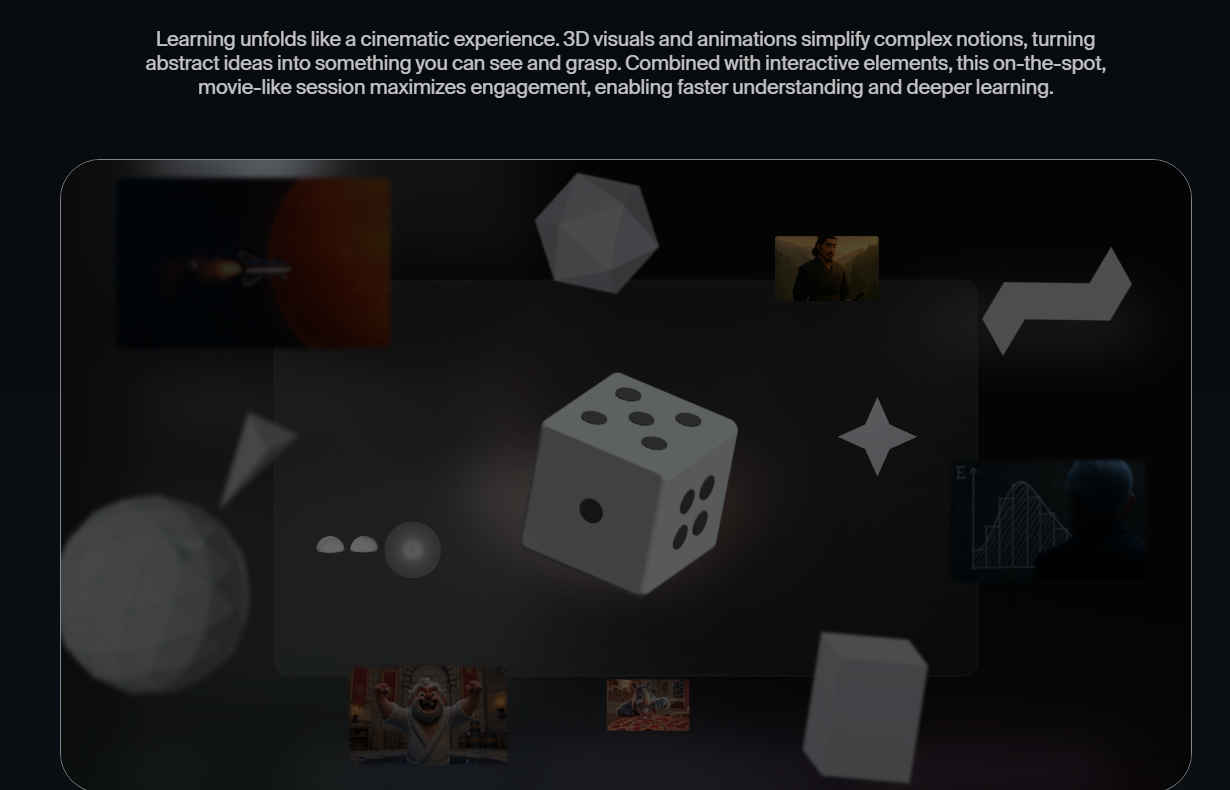
The core technology behind the platform allows the AI to generate 3D visuals and animations in real time alongside text responses. If a student is learning a complex engineering concept or a biological process, the AI does not just describe it. It generates a visual representation that breaks the idea down intuitively. This aims to reduce the cognitive load on the learner, making abstract concepts easier to grasp immediately.
The system goes beyond simple Q&A. Chalk utilizes an AI tutor trained on data from leading instructors, allowing it to simulate the teaching style of human experts. However, its most distinct feature is the “Brain Map.”
Also read: From fields to fridges: Physical AI takes center stage as CES 2026 kicks off
As a learner interacts with the platform, the AI analyzes their questions, responses, and dwell time to interpret their specific cognitive pattern. It maps out exactly what the user understands and where their knowledge gaps lie. Based on this real-time analysis, the system generates a personalized “Fast Track” through the global curriculum. This ensures that students are not wasting time reviewing material they already know, nor are they skipping ahead to topics they are not ready for yet.
To further combat the boredom associated with traditional e-learning, FirstHabit has designed the interface to resemble a video game. The experience is immersive and works across multiple devices, allowing for a seamless transition between desktop and mobile learning.
The approach appears to be effective. During beta tests conducted in 2024, Chalk reported a course completion rate of 76.4 percent. This figure is significantly higher than the industry average, suggesting that the combination of visual engagement and personalized pacing keeps users motivated to finish their curriculum.
The underlying technology has garnered attention from the academic world as well. FirstHabit has joined the MIT CSAIL Alliances, a program that connects industry partners with the Computer Science and Artificial Intelligence Laboratory at MIT. This collaboration suggests that the AI models powering Chalk are being refined alongside global researchers, ensuring the platform remains at the cutting edge of generative AI capabilities.
By moving away from static content and embracing a reactive, visual AI model, Chalk represents a shift in how educational software is architected. It treats learning not as a transmission of data, but as a two-way conversation supported by immersive graphics.
Also read: CES 2026: Top 5 amazing gaming gear you will want to buy