Calcom Vision’s five-decade journey mirrors the broader evolution of India’s electronics manufacturing sector, from early black-and-white televisions to today’s LED lighting and energy-efficient appliances. In this conversation, Mr Abhishek Malik, Executive Director at Calcom Vision, reflects on how the industry has changed, the impact of government policies such as PLI and Make in India, and the realities of local manufacturing versus global competition. The discussion also explores consumer behaviour, smart technology adoption, quality standards, and why long-term policy support and workforce upskilling will be critical if India is to seize its next manufacturing opportunity.
Vasan: Let’s start with Calcom Vision. The company has been in the industry for many years. How have you seen the electronics industry evolve, especially in 2025?
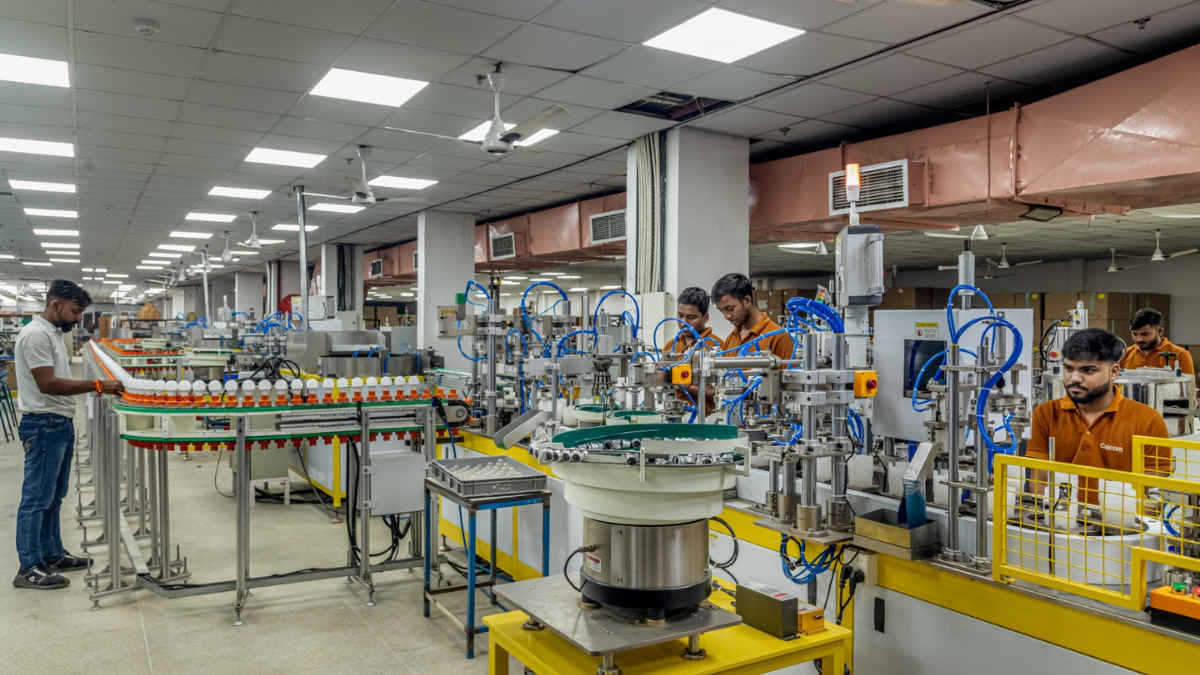
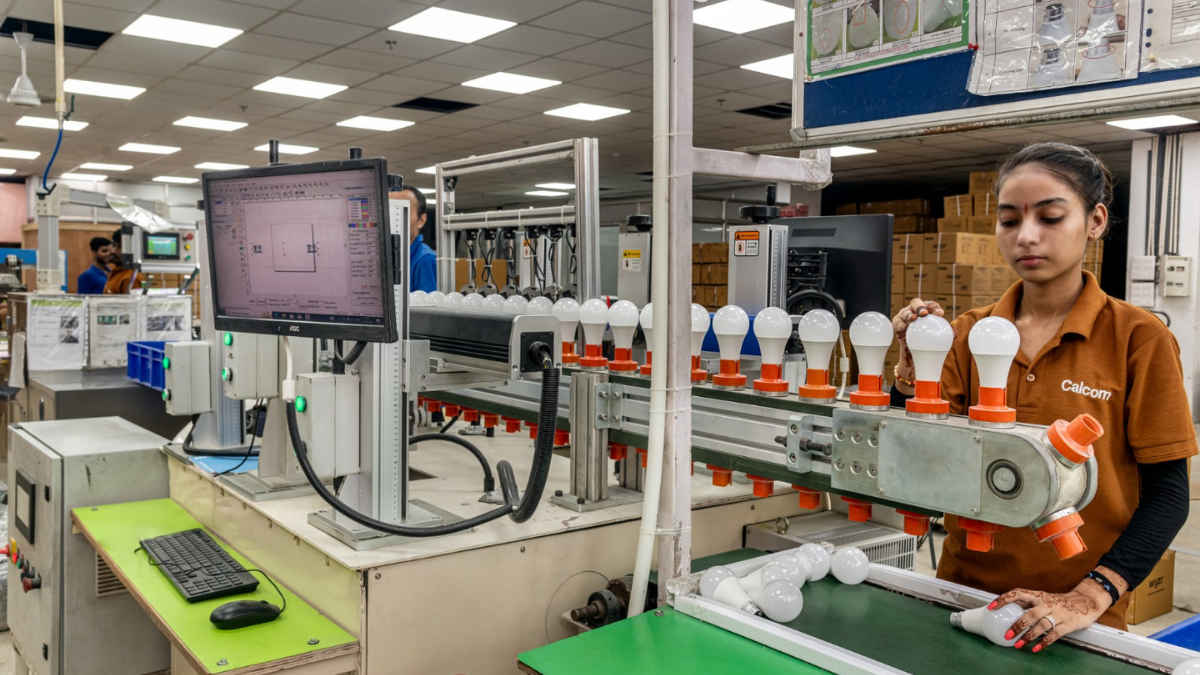
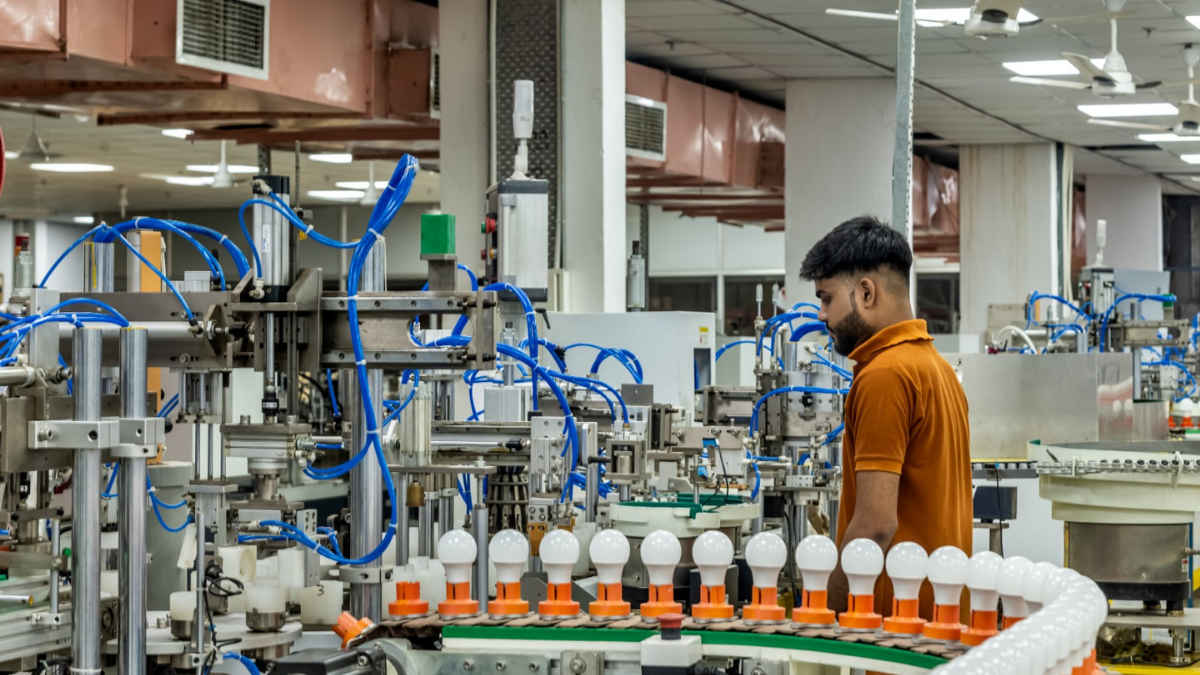
Abhishek: Calcom will complete 50 years next month, so we have been in the consumer electronics space for five decades. We began with calculators, then moved into televisions, home appliances, and more recently, LED lighting. We initially focused on indoor lighting and have since expanded into outdoor and solar lighting. Another key diversification has been BLDC fans, where we entered into a joint venture with a Korean company that specialises in BLDC motors, while we handle the electronics.
Electronics has always been our core strength. Anything we do must have a strong electronics component to make it viable for us. In 2025, electronics are everywhere. Devices that were once luxuries, such as mobiles and laptops, are now necessities. Home appliances are digitally controlled and connected, cars are increasingly electronic, and EVs are almost entirely electronics-driven. As technology integrates deeper into daily life, the demand for electronics will only grow.
Vasan: Your website mentions manufacturing up to one million TV sets annually and supplying brands like Philips. Could you share more context around this?
Abhishek: This is historical, but important. We entered television manufacturing around 1980–81, when black-and-white TVs in wooden cabinets were common. My father, the founder, did not come from a business background, so capital was limited. While we had a licence to manufacture TVs, we did not have the resources to build a consumer brand or distribution network.
Instead, we pioneered the B2B manufacturing model in India. At the time, most manufacturers launched their own brands. We chose to supply other brands. We also differentiated by launching a 14-inch plastic-bodied TV that was portable, battery-operated, and came with an indoor antenna. This worked well.
Between 1982 and the late 1990s, we grew at roughly 86 percent CAGR, from a turnover of Rs 30 lakh to nearly Rs 500 crore. We supplied brands like BPL, Philips, and Thomson. However, towards the end of the 1990s, the shift from CRT to flat-panel TVs, combined with unfavourable duty structures, effectively killed CRT manufacturing in India. Large players shut down, and we had to diversify, which led us into LED lighting.
Also Read: The demand for bigger TV sizes is increasing: Arjun Bajaj, Director, Videotex International
Vasan: With initiatives like Make in India and PLI, more components are being made locally. Where does India still need to improve?
Abhishek: Make in India is a good concept, but in practice, it is still largely assembled in India. While some PCBs and components are made locally, the scale is limited, and costs are not competitive. In many cases, importing from China, even with duties and freight, is still cheaper.
Consistency of quality is another issue. Batch-to-batch variation remains a challenge, and systems are not yet robust enough for high-end electronics. LEDs, for example, are still almost entirely imported. I expect this dependency on China to continue for at least the next five to ten years.
Vasan: How has the PLI scheme changed competition and capacity for Indian manufacturers?
Abhishek: PLI has been a positive step. It created an incentive to invest in manufacturing. We are also beneficiaries of the scheme, and it has helped us expand capacity, increase market share, and diversify. For example, our move from indoor to outdoor lighting is linked to investments enabled by PLI.
That said, PLI is a five-year scheme. If India wants to become a global manufacturing hub, support cannot stop after five years. The scheme is already in its fourth year. What happens after that? Long-term policies are essential to sustain investment momentum.
Vasan: Have there been any signals about an extension?
Abhishek: No, there is no information about any extension at this point.
Vasan: Consumers are seeing more smart and connected products. What are customer expectations, and how are manufacturers responding?
Abhishek: Most smart technology today is basic integration with smartphones. TVs, air conditioners, and air purifiers can be controlled via apps. This is still a very basic level of smart functionality.
In India, adoption is slow because affordability is a major factor. Smart products cater to a small segment of the population. Even with energy-efficient products, consumers prioritise upfront cost over long-term savings. For example, despite the government’s push for five-star LED bulbs, most buyers still choose one-star bulbs because they are cheaper and offer the same warranty. If energy savings are a real priority, lower-rated products should be phased out entirely.
Vasan: Does Calcom offer a connected ecosystem across its products?
Abhishek: In lighting, we offer smart bulbs, downlighters, and panels that can be controlled through a smartphone. Users can adjust brightness, colour, scheduling, and group multiple lights. Remote access is also possible.
However, these products are niche. A smart bulb typically costs three times more than a standard bulb. Consumers may buy one or two out of curiosity, but they are unlikely to replace all the lighting at home due to the cost difference.
Vasan: How does Calcom differentiate itself from other ODMs in India?
Abhishek: Lighting is not a highly differentiated product category. Our key strength is quality consistency. We manufacture for global brands like Panasonic and Philips, which have stringent quality standards. The same processes and checks apply to products we make for Indian brands.
Many manufacturers relax standards for domestic brands, but we do not. Whether it is for exports, multinational brands, or Indian partners, our products go through the same quality protocols.
Vasan: What technology trends do you see in LED lighting and fans?
Abhishek: Lighting is a low-value, low-innovation category. Technologies evolve when there is a problem to solve. Incandescent bulbs lasted over 100 years. LEDs have been around for about 15 years and are still evolving in efficiency and cost.
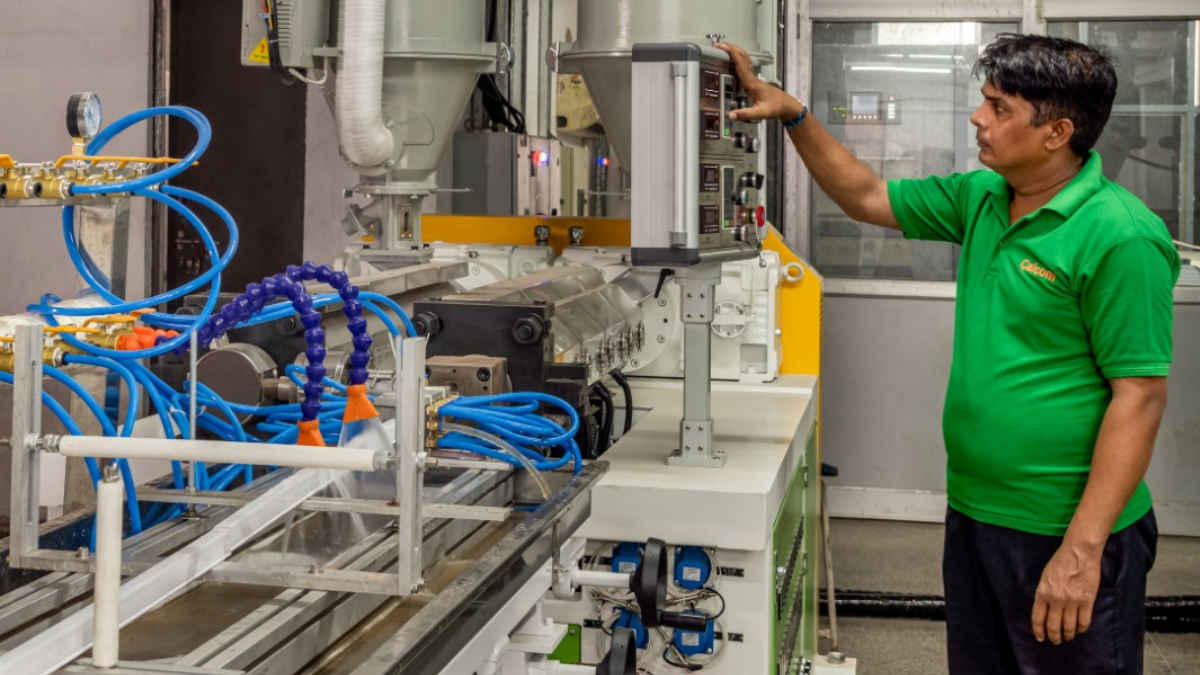
For the next decade, LED innovation will focus on better efficiency and performance rather than new technologies. In fans, we are seeing a shift from induction motors to BLDC motors. The innovation is already here, but adoption is slow due to pricing and a lack of incentives. Government-led subsidies, similar to those used during the CFL-to-LED transition, would help accelerate adoption.
Vasan: Do you see a need for upskilling to meet global standards?
Abhishek: Absolutely. A large part of India’s workforce lacks formal training. To meet global standards, upskilling is essential. At Calcom, we run a six-month training programme with both theoretical and practical components, along with a stipend. Successful trainees are absorbed into the workforce.
However, this is at a limited scale. At a national level, large-scale skill development is critical if India wants to compete globally.
Vasan: China moved faster in this area, especially in electronics.
Abhishek: Yes. China invested heavily in subsidies, export incentives, worker training, and automation. Thirty to forty years ago, India and China were at similar levels. Today, China supplies companies like Apple and Tesla. India still relies primarily on low-cost labour. To truly compete, we must upskill this workforce and provide long-term policy support.
Vasan: Finally, how do you manage safety standards and compliance?
Abhishek: BIS certification is mandatory for most electronic products and ensures baseline safety. In addition, BEE standards apply to brands for energy efficiency. Both are essential to sell legally.
Beyond compliance, we track field returns and analyse failures. When we entered LED lighting, our return rate was around 4–5 percent. Through R&D and quality control, we have reduced this to below 1 percent. Products must perform reliably across India’s varied climates and voltage conditions. Our internal quality and testing labs conduct daily checks, and only approved products are shipped.
Vasan: Thank you. Any final thoughts?
Abhishek: India has another opportunity to establish itself as a global manufacturing hub. We have missed such chances before. The next ten years are critical. With proactive government support and industry participation, we can change India’s global manufacturing image. I hope we do not miss this opportunity again.
Keep reading Digit.in for similar insightful interactions.
Also Read: We want to deliver a Rs 20,000 experience at one-third the cost: Noise co-founder Amit Khatri