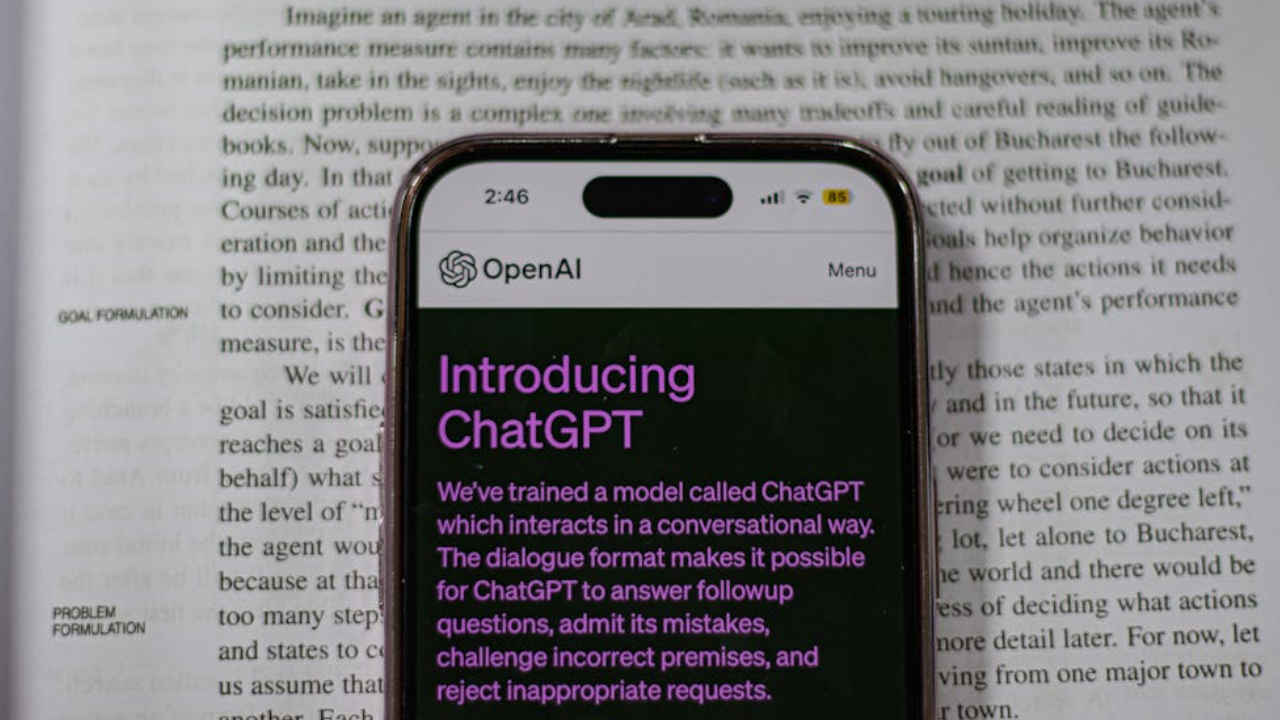
From the panic that “AI will replace us,” to the optimism that “AI will set us free,” I’ve heard and seen it all since early 2023, just months after ChatGPT changed our world forever. And somewhere in between those extremes lies the uncomfortable truth we’re living through right now – a crucial period of caution and excitement as AI quietly alters not just the landscape but also the bedrock of how we work.
Fear vs Facts: Two years after the AI revolution began
Case in point is the newly released Anthropic Economic Index, a study by the creators of Claude (which competes with OpenAI’s ChatGPT) that attempts to measure AI’s real-world effect on employment and the job market overall. What it found is less about alarmist takeovers and more about subtle ways AI’s reshaping how we all earn a living – now and into the future. Below are five key learnings from the study that stood out for me.
According to the Anthropic Economic Index, 57% of AI usage is about augmentation – that is helping humans complete tasks – while only 43% deals with outright automation. Instead of robots marching in to replace entire occupations, what we’re witnessing is more like the birth of a digital sidekick. That means if you’re a writer, maybe AI is helping you with rough drafts or grammar suggestions, rather than taking over your entire job. If you’re a customer service rep, it might handle routine FAQs, leaving you to handle the trickier, human-touch cases.
What’s particularly telling is that the AI promise here isn’t about sacking armies of employees, but about offloading mundane tasks, and letting us focus on more creative or strategic work.
The second key finding of the report is that analyzing entire jobs as a whole is misleading. The Index zeroes in on tasks within a role – like budgeting, drafting emails, or coding feature modules. Through this lens, AI might excel at a handful of tasks but falter at others, according to Anthropic. So, yes, an office assistant could rely on AI for scheduling and quick data analyses, but the same AI might struggle with a personal conversation that requires empathy or a complicated negotiation.
Also read: Sam Altman’s AI vision: 5 key takeaways from ChatGPT maker’s blog post
This is a critical insight that should give us pause before we say “AI is taking over X job” ever in the future. In reality, it’s taking over certain tasks, while the rest remain in human hands. The future of work is, in large part, about picking which tasks can be offloaded and which remain purely ours to perform.
Interestingly, the Index points out that AI usage is most prevalent in two main areas: “computer and mathematical” tasks (like coding) and creative fields (think writing and media). If you’ve scrolled the web lately, you’ve likely noticed a slew of AI-driven code completion tools, plus AI writing assistants churning out content for marketing sites or corporate blogs.
This concentration also implies a future direction for AI adoption. If you’re in a more physical or interpersonal job – like a nurse or a chef – it’s less likely you’ll be replaced by AI tomorrow. But the creative and tech spaces are seeing a wave of partial automation. People there – myself included – are learning to integrate AI as a “second set of eyes,” or as a “junior developer” that solves straightforward tasks.
While the hype may scream that AI is everywhere, the Index says it’s actually present at a significant level (covering at least a quarter of tasks) in only 36% of jobs. Even more telling is that only a mere 4% of roles let AI handle the vast majority of tasks – over 75%. So no, entire occupations aren’t being wiped out en masse.
Also read: From AI agents to humanoid robots: Top AI trends for 2025
It’s a gentle reminder that the “AI is coming for your job” storyline is both true and false. Some roles – particularly those that revolve around routine tasks – are more susceptible. But in general, we see a slow infiltration. One might call it “gradual transformation.”
Finally, the Anthropic Economic Index highlights that AI usage is higher in mid-to-high wage occupations, such as coding or data analysis, while roles on either extreme – very low-skill or very high-skill – see less AI integration. That might be due to low-skill roles not being reliant on advanced software, or high-level executive tasks requiring intangible leadership and complex decision-making that AI can’t replicate easily.
If you’re a mid-level programmer, you may see your productivity soar (and with it, your earning power). But if you’re stuck in a job that AI can’t help but also can’t replicate – say, a fine-dining chef – the immediate AI boost just might not apply. The short-term effect is uneven benefits, though that could shift as AI’s price plummets and it creeps into more corners of work, as Sam Altman suggested in his blog post recently.
Overall, the Anthropic Economic Index gives a good behind-the-scenes snapshot of AI’s actual footprints. On one hand, we see a technology that can truly free us from tedious tasks, enabling us to focus on creativity and deeper strategy. On the other, certain tasks or entire job categories might watch the partial automation wave erode them bit by bit.
That means everyone from policymakers to tech leaders to the workers themselves should stay agile. If you’re in that “36%” slice, you might already be feeling the shift. If you’re in the “4%” where AI is close to full coverage, your day-to-day might feel drastically different – and soon.
Also read: Navigating the Ethical AI maze with IBM’s Francesca Rossi