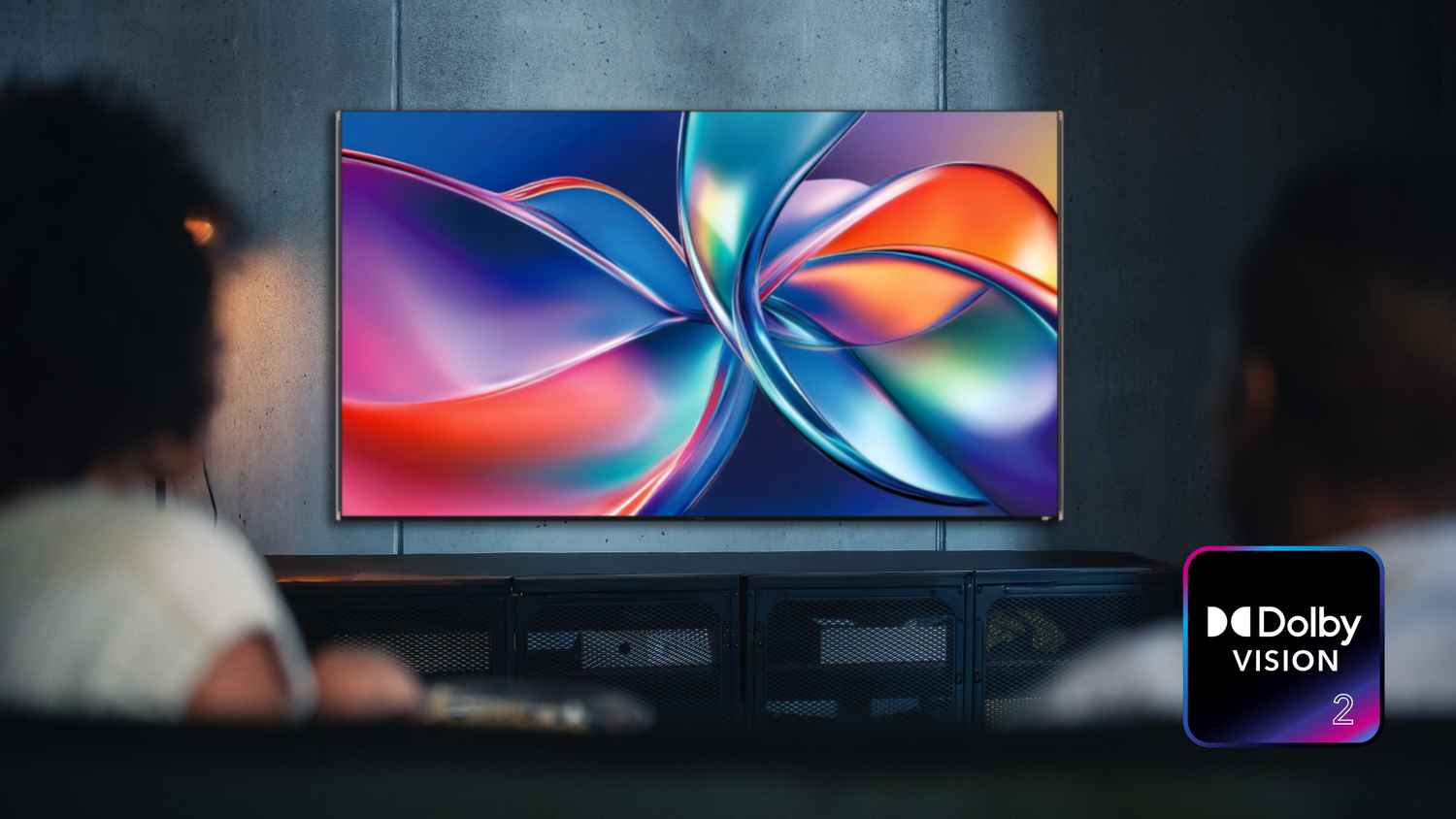
Dolby Vision 2 was officially announced in September 2025 as the next evolution of Dolby’s flagship HDR technology. It has been more than 10 years since Dolby Vision launched, and display technology, content creation, and consumer expectations have advanced significantly, creating a need for more precise brightness, colour, and motion handling to fully utilise modern TVs and deliver a noticeably improved viewing experience. The company claims the new update is designed to unlock the full capabilities of modern TVs, while giving content creators more precise control over picture quality. The key enhancements include a redesigned image engine, AI-driven Content Intelligence, bi-directional tone mapping, and motion enhancements tailored for movies, live sports, and gaming. While the first TVs with Dolby Vision 2 are yet to arrive, this comparison looks at the on-paper upgrades and what they could mean for viewers and gamers.
| Feature | Dolby Vision 1 | Dolby Vision 2 |
|---|---|---|
| Launch year | 2014 | 2025 |
| Core HDR format | Dynamic metadata SMPTE 2084 (PQ), BT.1886 or Gamma 2.4 EOTF, BT 2020 colour gamut | Same foundation, but with a redesigned image engine for higher efficiency |
| Peak brightness support | Up to 10,000 nits | Enhanced tone mapping for brighter displays |
| Colour depth | Up to 12-bit | Improved colour reproduction with new metadata |
| Dynamic metadata | Scene-by-scene/frame-by-frame adjustments | Expanded multi-level metadata for more precise adjustments |
| Ambient light adaptation | Limited support | Light Sense for real-time adjustment based on room lighting |
| Motion handling | Standard motion handling | Authentic Motion for cinematic motion control |
| Tone mapping | Scene-by-scene / frame-by-frame tone mapping | Bi-directional tone mapping for enhanced brightness, contrast and colour |
| Content intelligence | Basic content analysis | Advanced Content Intelligence for optimised picture quality |
| Tiers | Standard Dolby Vision | Dolby Vision 2 and Dolby Vision 2 Max (premium tier) |
| Device compatibility | A Dolby Vision-capable display, streaming device, or source device with a compatible video decoder. | Exclusive to Dolby Vision 2-capable displays. On older HDR displays, Dolby Vision 2 content will work like regular Dolby Vision. |
Also Read: Lumio Arc 5 and Arc 7 Projectors launched with Google TV, HDR10, and Netflix
Dolby has introduced two tiers: standard Dolby Vision 2 for mainstream adoption and Dolby Vision 2 Max for premium models. While the standard variant gets the core features, the Max variant offers additional features like Authentic Motion and pushes brightness, colour, and tone mapping.
TVs with Dolby Vision 2 are not yet available, though. Hisense is confirmed to support this tech in its flagship TVs, and other brands are also likely to adopt it before long.
So the true difference between the two Dolby Vision versions, and between Dolby Vision 2 and its predecessor, can only be assessed after testing. Based on available information, however, Dolby Vision 2 offers a more future-proof upgrade, even though supported content and platforms will initially be limited.
Against rivals like HDR10+ and HLG, which still have their place, Dolby Vision 2 stands out with AI-driven picture optimisation and motion enhancements that can deliver a better visual experience on modern bright, wide-colour displays.
Based on the details available, the standard version should improve brightness, colour, and motion handling, while Dolby Vision 2 Max is aimed at early adopters who want the most advanced HDR features. The two-tier approach may cause some confusion, but it gives users a choice depending on the level of picture quality they want. On paper, Dolby Vision 2 appears to be the next step in immersive HDR. Whether casual viewers and mid-range TV owners can continue with Dolby Vision 1 will be clearer once proper testing is done. We will share more impressions after hands-on experience.
Keep reading Digit.in for more audio-video explainers and comparison pieces.
Also Read: Dolby Cinema debuts in India: Here’s what makes it different from a regular theatre