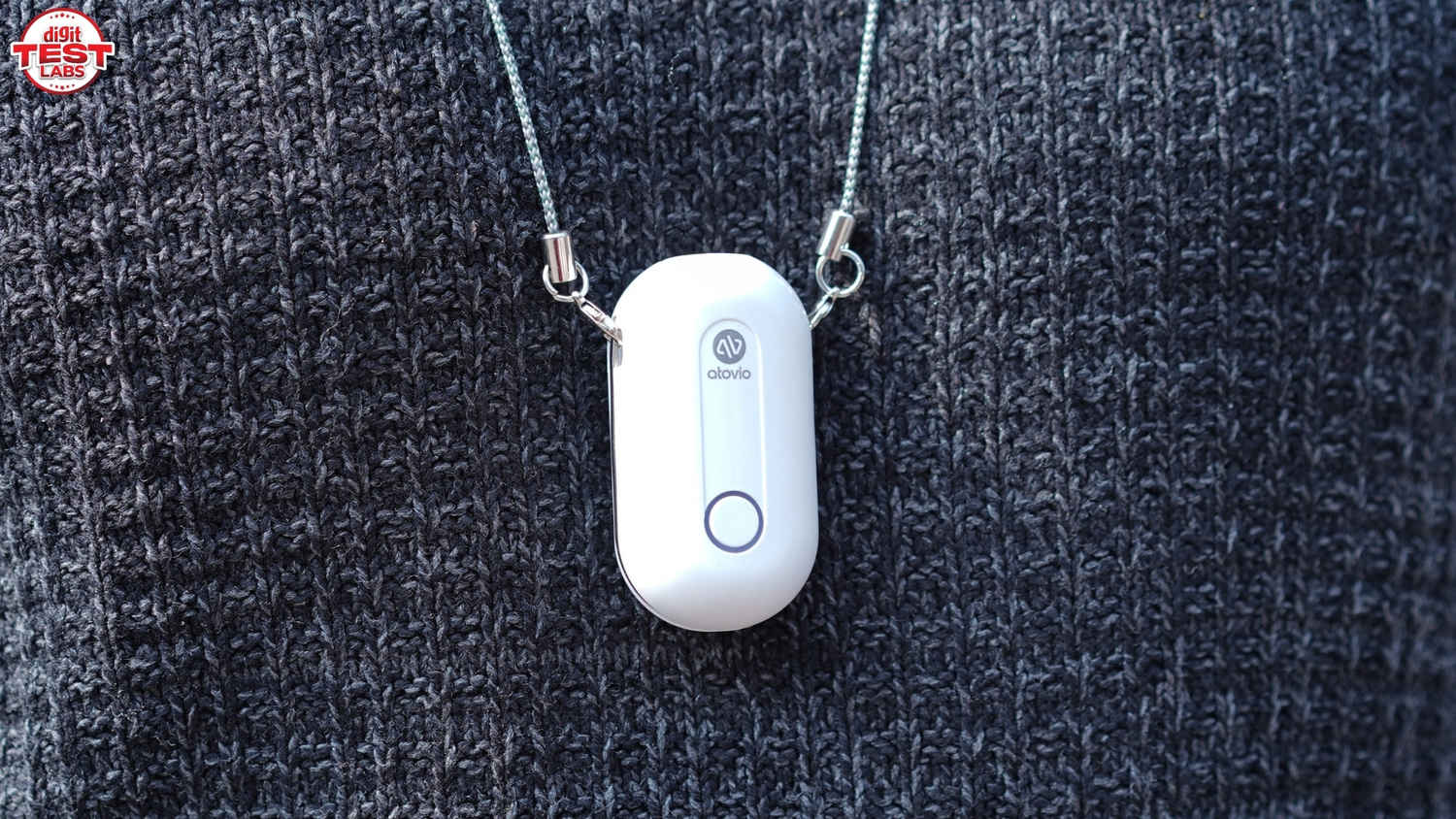
Air quality in Delhi-NCR has reached a point where it no longer feels episodic. It is persistent, peaking and increasingly being managed through technology. Room air purifiers have become standard fixtures in urban homes, and masks remain the most effective outdoor defence. The Atovio Pebble enters this ecosystem as a personal, wearable purifier designed not to clean rooms or streets, but the narrowest and most critical space of all, the air you breathe.
After using the Atovio Pebble consistently across indoor workspaces, cafés, meetings, and daily movement within the city, the question becomes less about its novelty. Does the Pebble do what it claims to do, and does it fit realistically into how people live in polluted cities?
Also Read: Top Air Purifiers to buy under Rs 15,000 in India
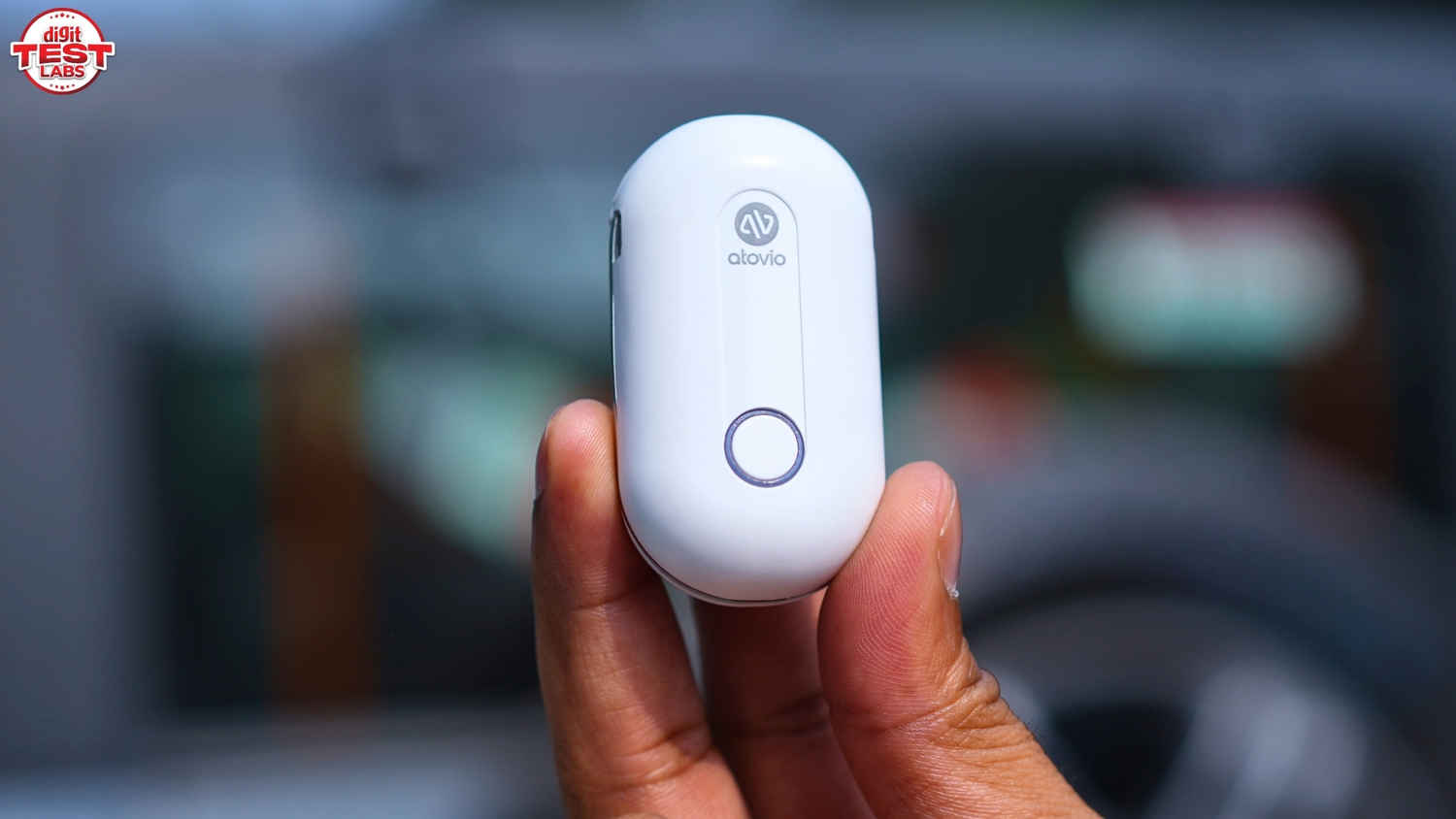
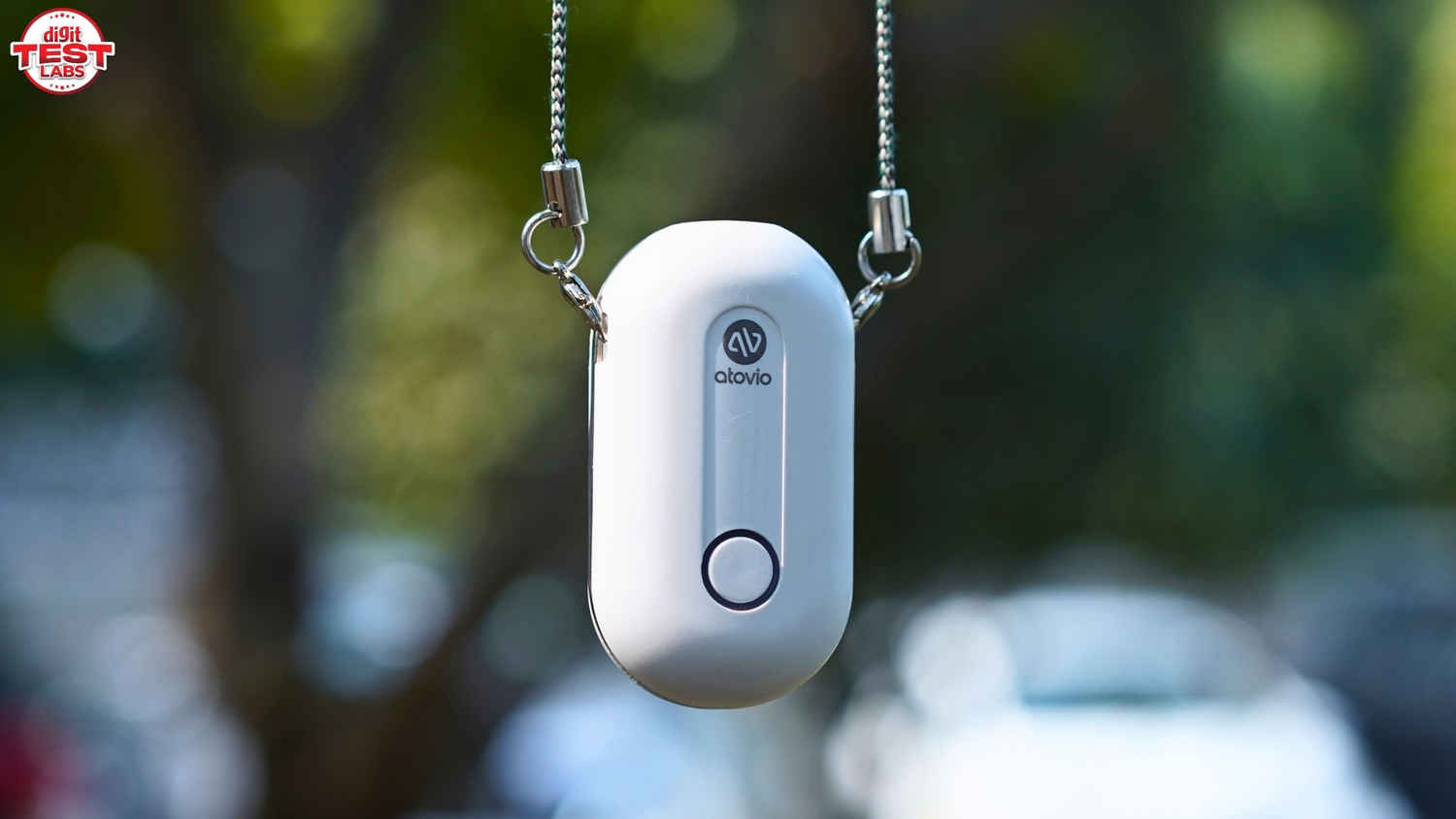
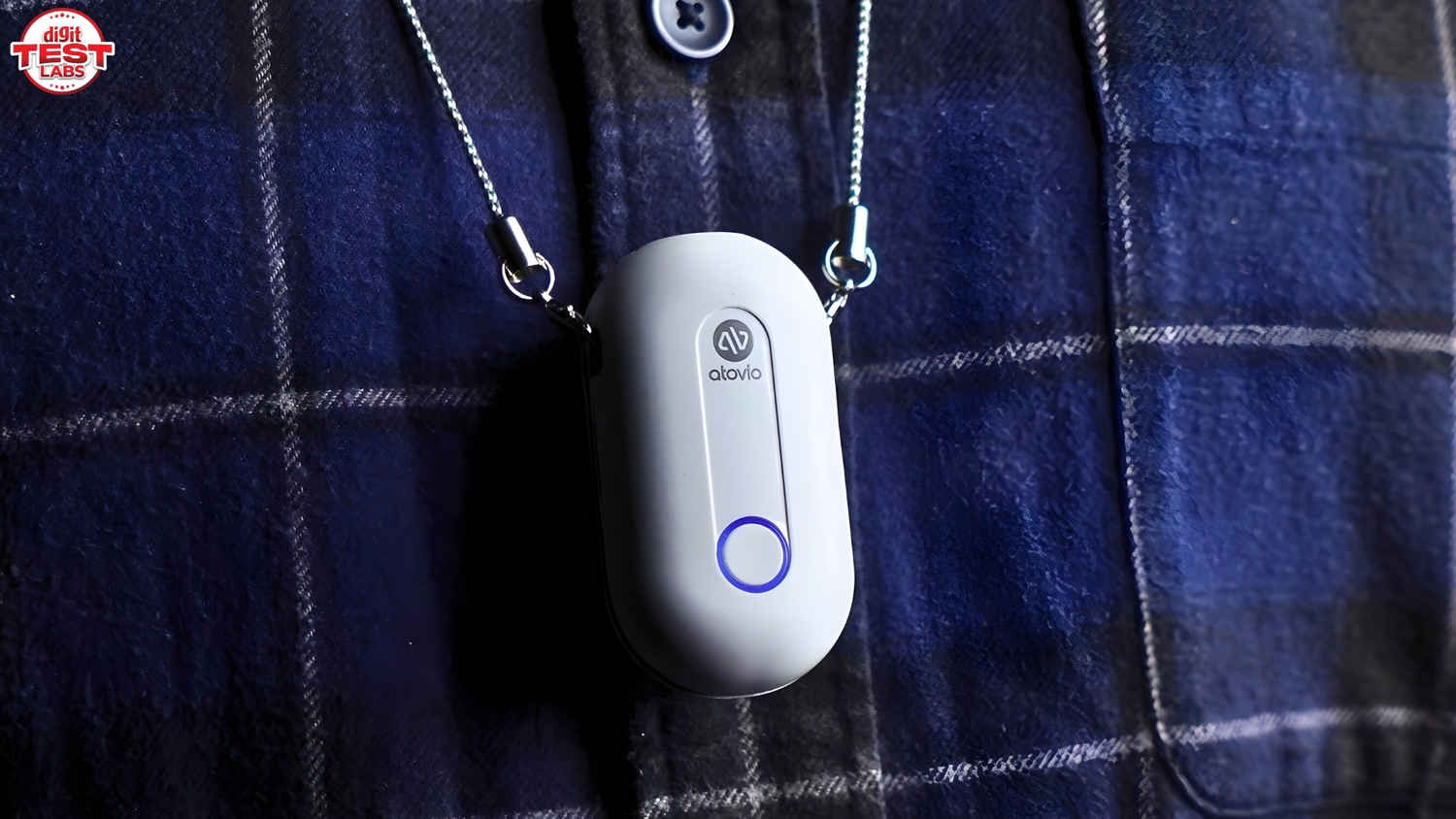
The Pebble’s design makes an immediate statement about its priorities. This is not a medical-looking device, nor does it borrow from industrial air purifier aesthetics. It is compact, rounded and visually neutral enough to blend into daily wear. Importantly, it is light enough to forget you are wearing it, which is critical for any device meant to be worn for hours at a stretch.
There is a single-button interface with two operating modes, no visible vents and no fan noise. The absence of moving parts gives the device a sense of permanence and reliability and it removes the maintenance anxiety associated with filters and periodic replacements.
Unlike conventional air purifiers that pull air through filters, the Atovio Pebble uses negative ion generation to act directly on airborne pollutants. These ions attach themselves to particulate matter that includes PM1, PM2.5, PM10, dust, pollen and smoke aerosols, causing the particles to cluster and settle out of the immediate breathing zone.
The Pebble does not attempt to clean a room or circulate air. Instead, it focuses on creating a small, localised zone of cleaner air around the wearer’s face. While this approach acknowledges a basic limitation of the wearable technology, it also makes a more honest promise.
Ion-based purifiers often raise concerns around ozone generation, which can irritate the lungs. Atovio addressed this through independent testing at IIT Kanpur, which confirmed that ozone levels remained extremely low and well within international safety limits during continuous use.
The Pebble performs best in environments where the air is relatively still. In indoor settings like work desks, meeting rooms, cafés and shared office spaces, the effect is subtle but consistent. Over extended use, the air feels less oppressive and the familiar symptoms associated with prolonged exposure to polluted indoor air, such as throat dryness or mild headaches are noticeably reduced.
This aligns with controlled test data showing strong particulate reduction in static environments, but more importantly, it matches lived experience. The device does not create a dramatic sensory shift, but it reduces discomfort over time.
An unexpected insight came from observing how parents respond to the Pebble. Its lightweight, silent operation and confirmed safety make it feel approachable as a personal air-safety layer for children, particularly in schools or activity spaces where large purifiers are not always present.
In cities like Delhi and Noida, where parents are constantly balancing exposure risks, the Pebble offers something intangible but important: reassurance. The knowledge that a child has some level of continuous personal protection, however limited in scope, has value beyond raw performance metrics.
Without noise or airflow, the Pebble becomes an ambient device. It is always present but never distracting. It integrates easily into workdays that already involve screens, calls, and long hours indoors.
Outdoors, the Pebble’s effectiveness is constrained by airflow. In mild to moderate pollution levels, particularly when stationary or walking short distances, it offers a degree of relief. However, in heavy smog conditions with constant air movement, the ion cloud disperses quickly.
This is not a design flaw so much as a physical reality of ionisation technology. The Pebble should be seen as a supplementary device outdoors, not a substitute for certified filtration masks when air quality deteriorates sharply.
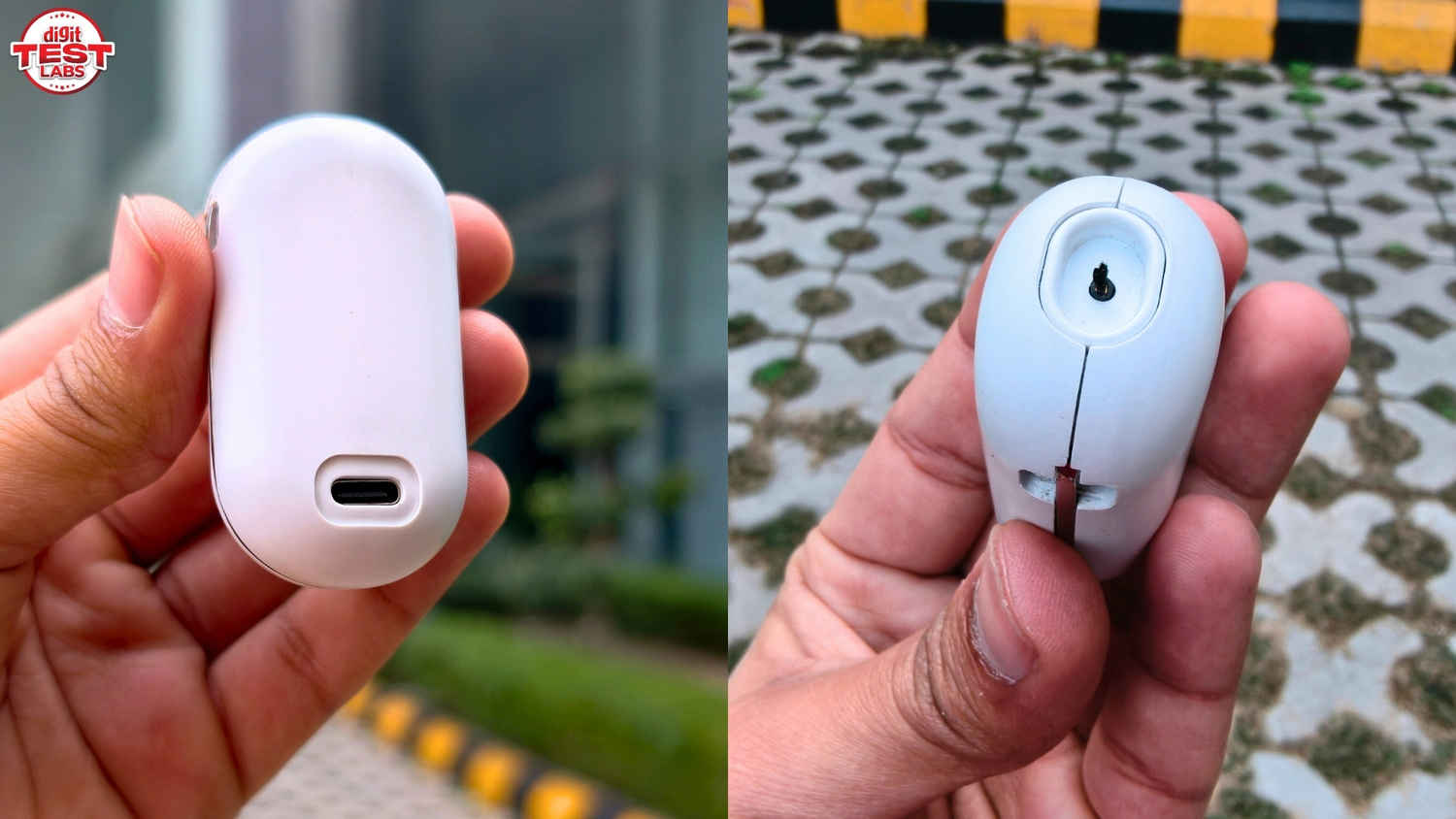
Battery performance is one of the Pebble’s quieter strengths. A full charge comfortably lasts a full working day and often extends beyond it. Charging via USB-C is straightforward and consistent with modern device expectations.
The one usability gap I feel lies in how a wearer can know if the air around them is being treated. In addition, basic information like battery percentage and operating mode would benefit from clearer on-device indicators. In addition, the makers should also look into a dedicated app for these details that will in turn reduce mental load and strengthen its proposition.
The Atovio Pebble does not attempt to solve air pollution. Instead, it addresses a narrower, more realistic problem which is improving the quality of air you breathe during the many hours spent indoors but away from home.
It works best when expectations are aligned with its design. As an indoor personal purifier, it is effective, well-built, and thoughtfully executed. As an outdoor defence against severe pollution, it is supplementary at best. Within those boundaries, it delivers on its promise.
In a city where clean air is no longer a given, the Pebble is a shift toward personal-scale solutions. It may not transform the environment, but it does improve the experience of living within it.
Read More: Top Air Purifiers across price ranges to protect your loved ones from poor air quality