At Digit, we test a lot of TVs to pick the ‘best TV’, and a key criterion is authenticity. Anything you watch on TV should not only look good but also respect the creator’s intent. That said, the best award doesn’t always tell the whole picture. The LG G5 also came to us as a participant in the annual Digit Zero One Awards and won the Popular Choice Award. Based on our use and tests, we concluded it will appeal to most regular mainstream buyers.
In India, the 65-inch evo G5 (OLED65G56LA) currently sells for around Rs 2,25,000 and competes against the ultra-premium OLED TVs from Samsung and Sony. The LG TV brings a meaningful panel upgrade called the 4-stack Primary RGB Tandem OLED TV, and claims peak brightness of up to 4,000 nits. So, while it was impressively bright in our use, what makes the G5 stand out is not just peak brightness, but how consistently beautiful it looks across different types of content. So, we watched a wide range of content on it, for testing purposes, of course (wink, wink) and here’s our experience.
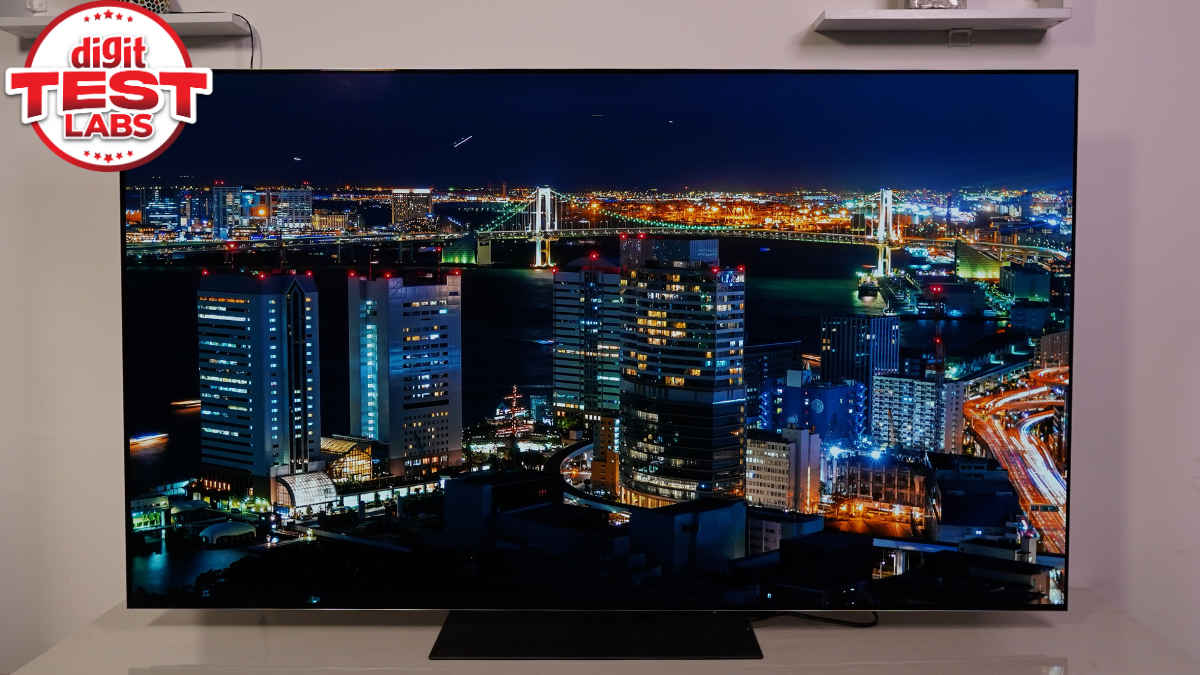
The TV looks noticeably better in person than it does in these photos.
Let’s start with the highlight feature of the G5: its premium four-layer tandem OLED panel. This uses two blue layers, including a new-gen deeper phosphor blue, and the stacked design shares load between these layers. This is said to result in 33% more brightness, 40% more colour brightness, and 20% more efficiency.
The impact of the tandem panel is apparent almost immediately. In side-by-side comparisons with its rivals, the Samsung S95F and Sony Bravia 8 M2, the LG G5 appeared brighter and more impactful.
Also Read: Samsung S95F OLED TV review: Big, bright, beautiful, and one of the best
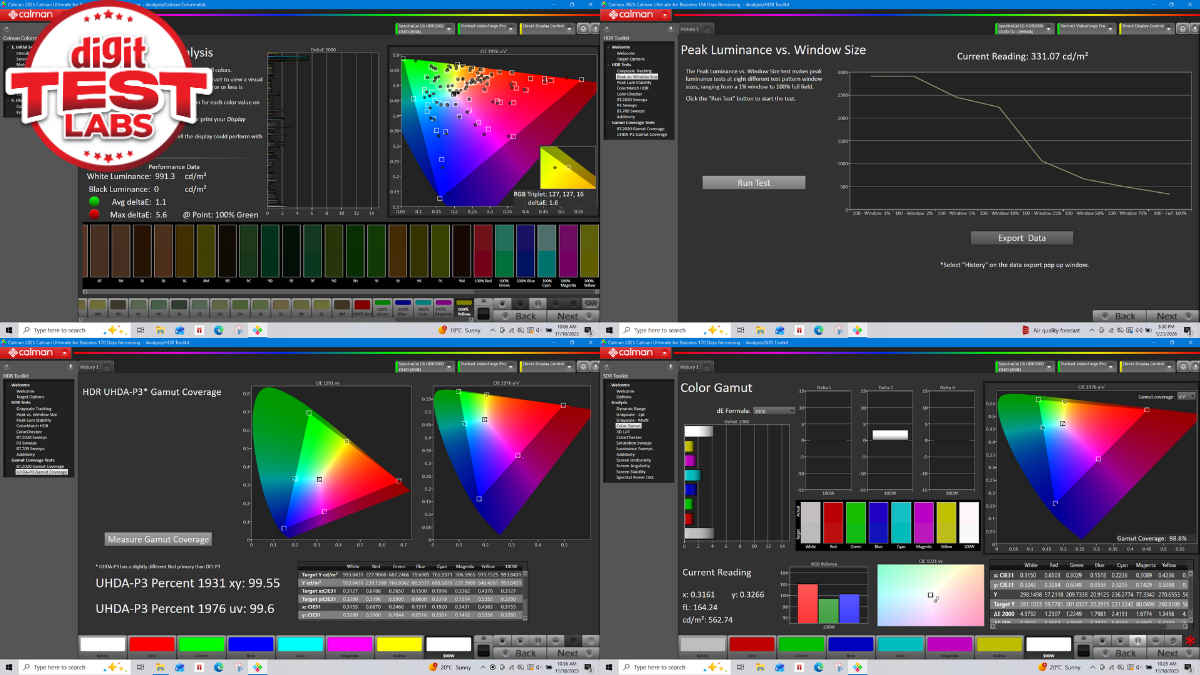
In our testing, the panel reached around 343 nits at a full 100% window, 1,050 nits at a 25% window, and close to 3,000 nits in 1% window. On the other hand, you also get 0-nit black levels, as expected from an OLED.
Thanks to the increased brightness, the G5 will be suited as a primary living-room TV. Although it has a glossy finish, the reflections were handled well for the most part. It projects bright specular highlights, blacks look inky, and I didn’t spot any glaring artefacts. Viewing angles were great, and the 4K TV presented impressive clarity and contrast.
Only in closer inspection, Sony’s Bravia 8M2 shows slightly more shadow texture in extremely dark scenes, for example, in the night camp attack of Godzilla Minus One and the submarine sequence of Mission Impossible: The Final Reckoning. Still, in the overall image, LG presents more punch and presence.
As for colours in general, everything looks vibrant without looking artificial. Samsung S95F has the latter problem.
In lab measurements, the LG panel covers 99.6% of UHDA-P3, 81.68% of BT.2020, and nearly 99% of BT.709. Average Delta E measured 1.1 in HDR and 2.1 in SDR, which is comfortably within acceptable limits for non-calibrated viewing.
Compared with the Samsung S95F, the LG trails slightly in BT.2020 coverage and peak HDR punch in smaller windows. Ever so slightly, that is. And when it comes to skin tones and textures, LG’s results are pleasant but not the most natural when compared to the Sony Bravia 8M2. The climax scenes of the first Knives Out movie are a good test to see how these three handle colours and skin tones.
LG supports Dolby Vision, Dolby Vision IQ, and HLG, but continues to skip HDR10+. We kept Dynamic tone mapping off in our testing.
The vibrant colour reproduction was also enjoyable in games like Ghost of Yotei. The colour of the skies, the reflection on water, and the detail on the black horse’s fur, which changes the tonality based on light touching it, are all still in my mind. HDR gaming was a highlight in God of War Ragnarok, too.
LG gives a 120Hz native refresh rate, similar to its two OLED rivals. Motion handling is excellent. There was no perceivable blur or judder in everyday content and sports.
Likewise, I didn’t face any input lag while playing Gran Turismo 7 on PS5. We didn’t test Xbox Game Pass Ultimate. The TV also boasts 4K 120Hz HDR Cloud Gaming and support for high-end gaming features like up to 165Hz VRR, ALLM, Nvidia G-Sync, and AMD FreeSync Premium, VRR, and ALLM. You can tweak many of the settings in real-time with the Game Optimiser overlay.
So, in practice, the LG TV often looks the most impactful. Side by side, the Sony appears more restrained and technically accurate, while the Samsung looks more aggressive. Most viewers may prefer LG’s tuning for mixed daily viewing.
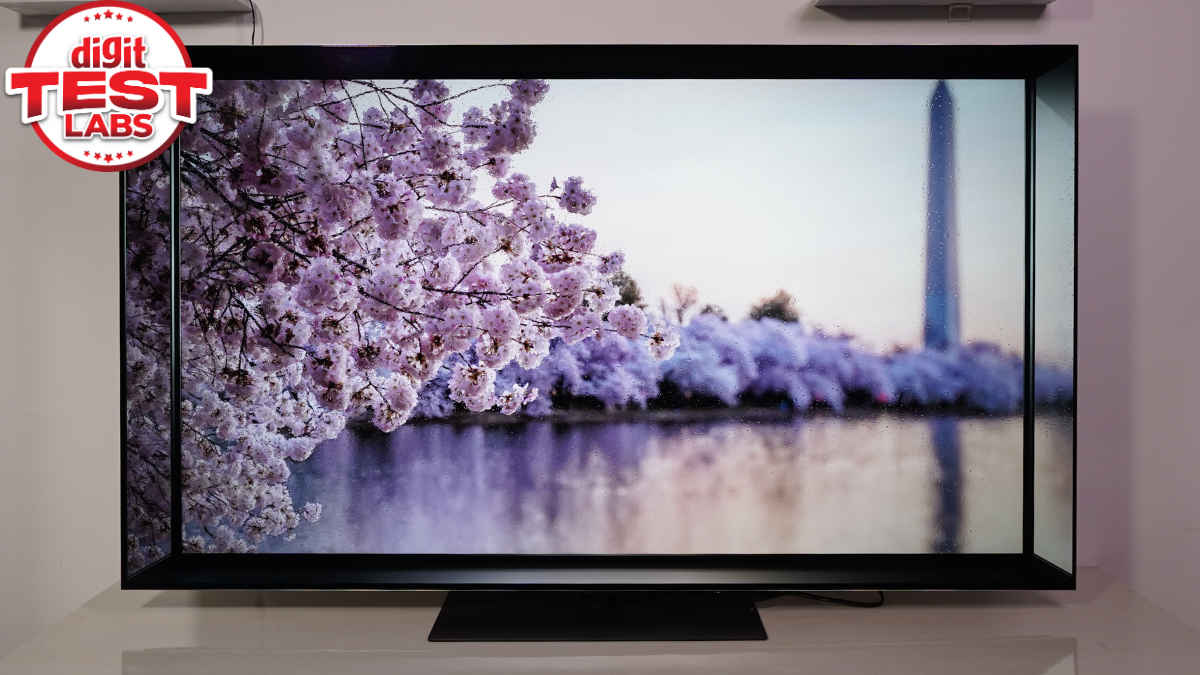
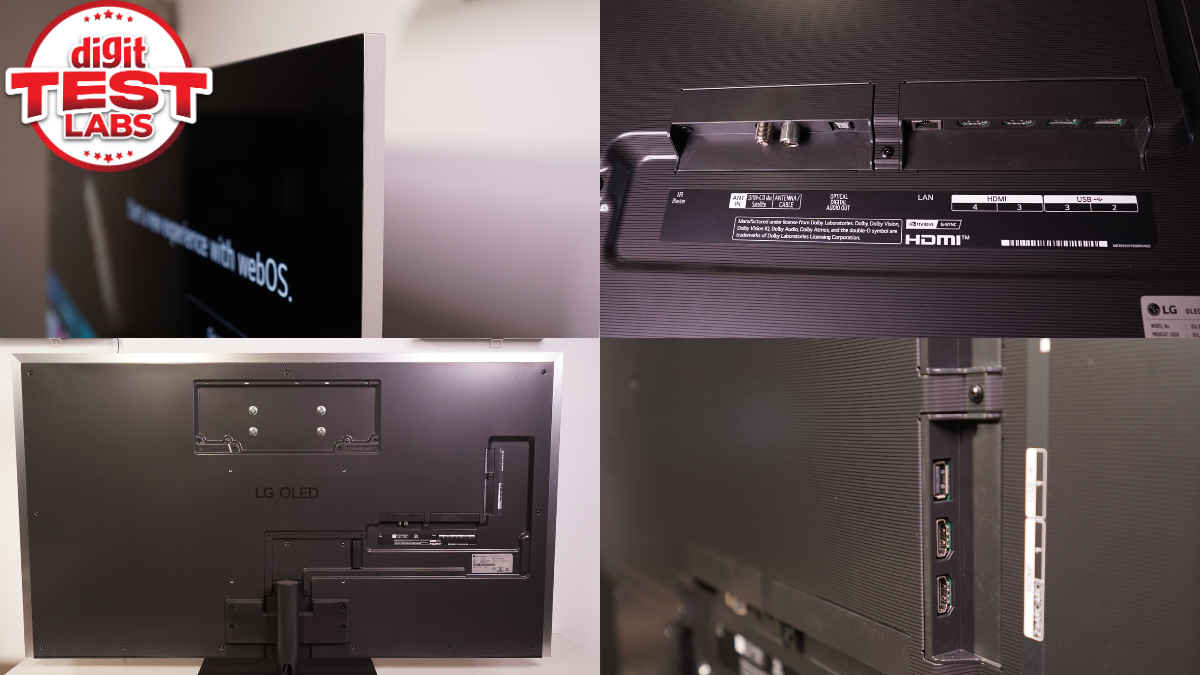
LG G5 sports the Gallery design with a lustrous frame. The panel is very thin, and it comes only in a wall-mount option. However, for testing across different lighting conditions, LG provided a table-mount stand. Because of its thinness and Gallery design, it would sit flush against the wall, as a lifestyle art TV in your living room.
The connectivity options are plenty: four HDMI ports, three USB-A ports, Ethernet, Optical Digital Audio Output, and 1 RF input (Antenna/cable). All those HDMI ports support 4K at up to 165Hz via full-bandwidth HDMI 2.1. This is an advantage over Sony, which gives HDMI 2.1 on two ports only.
Two HDMI ports and one USB-A port are side-facing, which can be useful depending on your wall-mount arrangement.
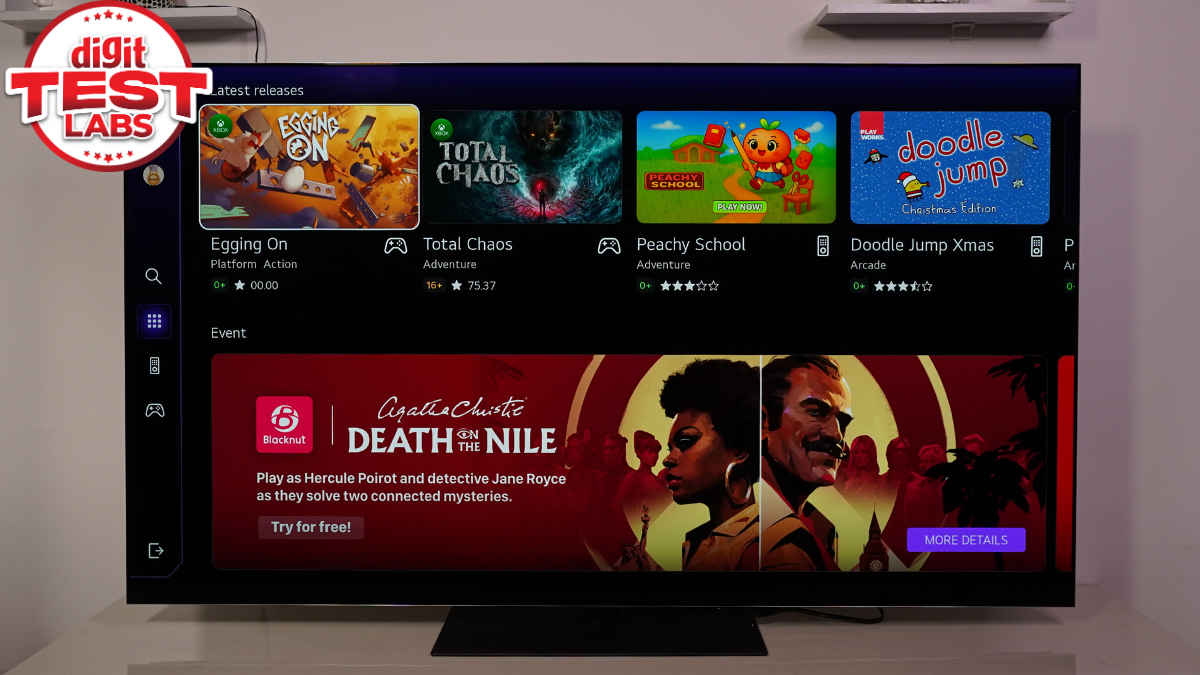
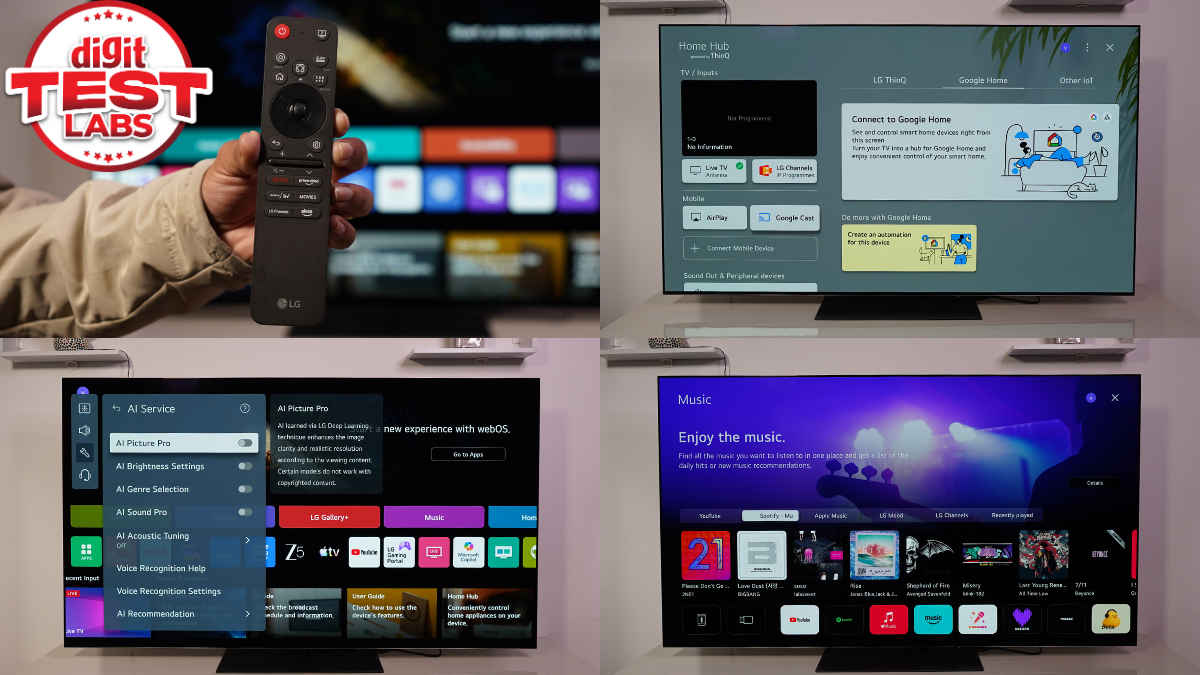
LG G5 runs on WebOS 25, and at the time of writing, it got the latest update version: 33.0.80. The company promises five years of platform updates, which is a solid commitment, second only to Samsung’s seven-year support window.
In the current state, WebOS feels mature and stable. The interface still includes ads and recommendations, but you can turn them off in the settings. The homescreen isn’t a long vertical feed like some of the competing skins, but is well organised in the card-based layout in limited space. Performance is snappy enough.
WebOS packs choke-full of features like LG Gallery+ (including Google Photos integration), a remote office feature called Home Office, LG Channels including video on demand, live TV, Alexa voice support, quick access to Settings from a left sidebar, Home Hub: ThinQ, Google Home, AirPlay, Google Cast, Split screen with Multi View, Oled care: pixel cleaning, screen move, adjust logo brightness, and Smart tips and helping information about various menus and options across the UI.
The bundled Magic Remote’s point-and-click navigation makes movements across screens easy, but sometimes it moves and clicks unintentionally, which can be annoying. It has the essential buttons and OTT hotkeys.
The built-in 60W speaker is very competent. In our comparisons, LG performed better than its rivals. It is good enough that you may not feel forced to buy a soundbar immediately. In case you buy one, the TV features Wow Orchestra that syncs audio between the TV and the soundbar.
The LG G5 is impressive in many areas. Its new four-layer tandem OLED panel delivers high brightness, strong contrast, and wide viewing angles. Colours are rich without looking artificial, and SDR and HDR performance are enjoyable in everyday use.
The motion handling and gaming performance are also strong, with support for 4K at 120Hz and key gaming features such as VRR, ALLM, and cloud gaming. Port availability is generous and practical. Audio output from the speakers is loud and clear, and the WebOS interface feels mature, stable, and feature-rich. All of these come packed in a slim and attractive Gallery design.
There are areas where the G5 could improve, though. HDR10+ support is absent, which limits compatibility with some streaming content. In very dark scenes, reflections can still be visible due to the glossy screen. Colour coverage in smaller HDR windows trails some key rivals, and skin tones are not always the most natural compared to the best-in-class options. These points matter more when you consider the TV’s premium pricing.
Still, if you have the money for it, the G5 could make sense for you. While authenticity and creator intent matter, not every buyer is a purist. Many users simply want an enjoyable, consistent viewing experience across movies, shows, sports, and games. LG’s combination of a bright and visually engaging panel, strong sound, a healthy port selection, Gallery-style design, and a stable, mature software platform comes together well for these users. For mainstream premium buyers looking for an OLED that is easy to live with every day, the LG G5 makes a compelling case.
Keep reading Digit.in for similar stories.
Also Read: Sony Bravia 5 Mini LED TV Review: Bright, accurate and built for cinematic purists