The Samsung Galaxy A17 5G arrives barely a year after the A16, and at first glance, you might struggle to tell them apart. Samsung’s A-series has long been the company’s safety net. The phones are dependable, predictable and designed for people who want a Samsung experience without paying flagship money. The A17 continues that philosophy, but this time, it feels a bit more refined rather than revolutionary.
Starting at Rs 18,999 for the base 6GB + 128GB variant and going up to Rs 23,499 for the top 8GB + 256GB model, the Galaxy A17 sits right in the same competitive Rs 20,000 bracket where phones like the CMF Phone 2 Pro and Moto Edge 60 Fusion are fighting tooth and nail for attention.
On paper, Samsung hasn’t reinvented the formula, but it has added polish where it matters. There’s Gorilla Glass Victus on the front, a sleeker fibreglass back, a promise of six years of Android updates, and a familiar but slightly more efficient Exynos 1330 chip running the show.
It’s an update that feels incremental, but the question is, does that refinement translate into a better real-world experience? Or is the Galaxy A17 just another patchwork case with a shinier finish?
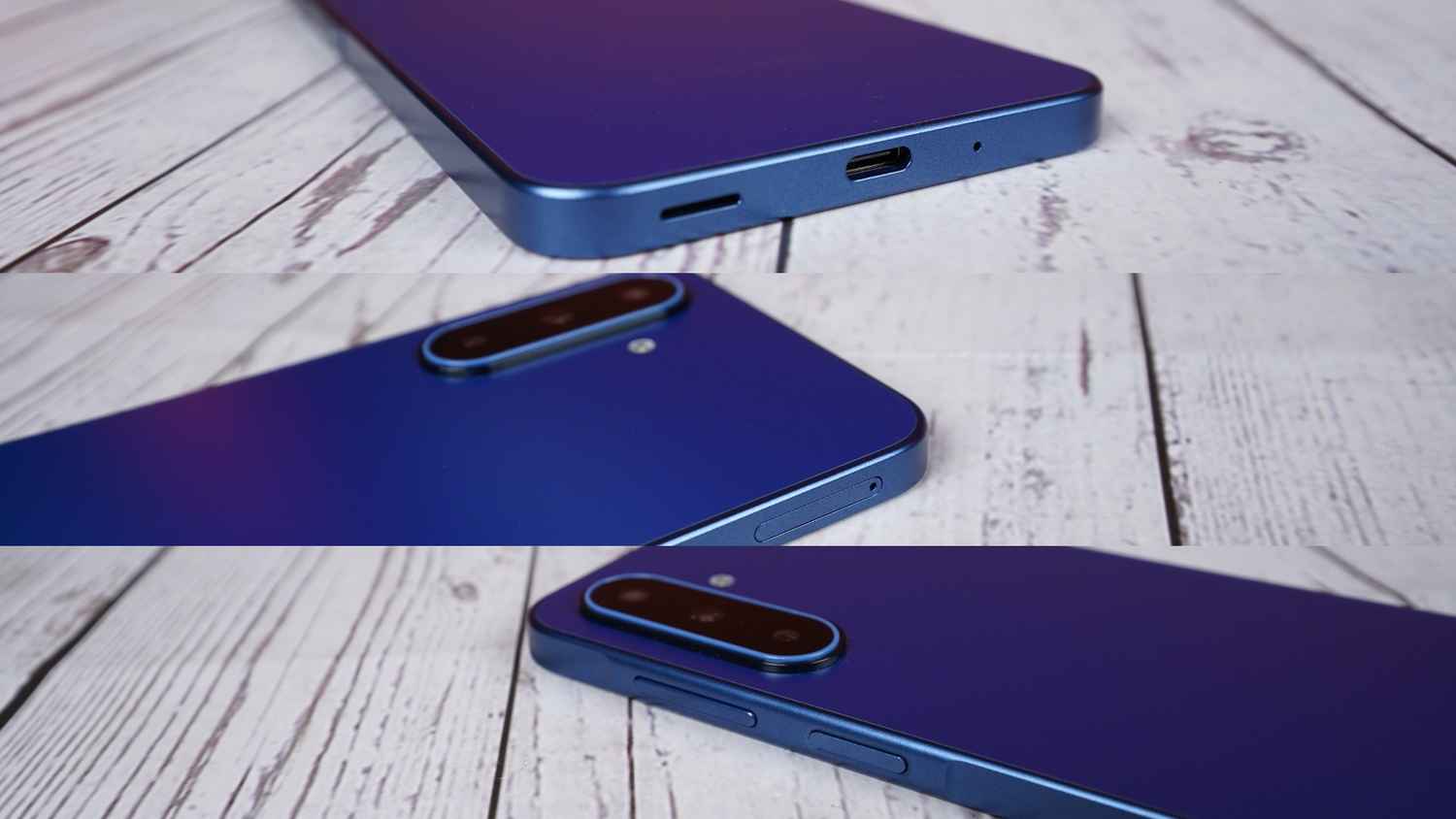
With the Galaxy A17 5G, Samsung has refined the design language just enough to make it feel more polished without losing its understated A-series identity. At 7.5 mm thin and 192 grams, it’s one of the slimmest phones in its price bracket, and the flat edges give it that boxy, confident profile that’s been trending across Samsung’s 2025 lineup.
The front is now protected by Gorilla Glass Victus, a notable step up from last year’s A16. The back panel, made from fibreglass, adds a touch of rigidity and looks far more premium than the glossy plastic used before. Fingerprints still find their way here, but the overall feel in hand is sturdier and less toy-like.
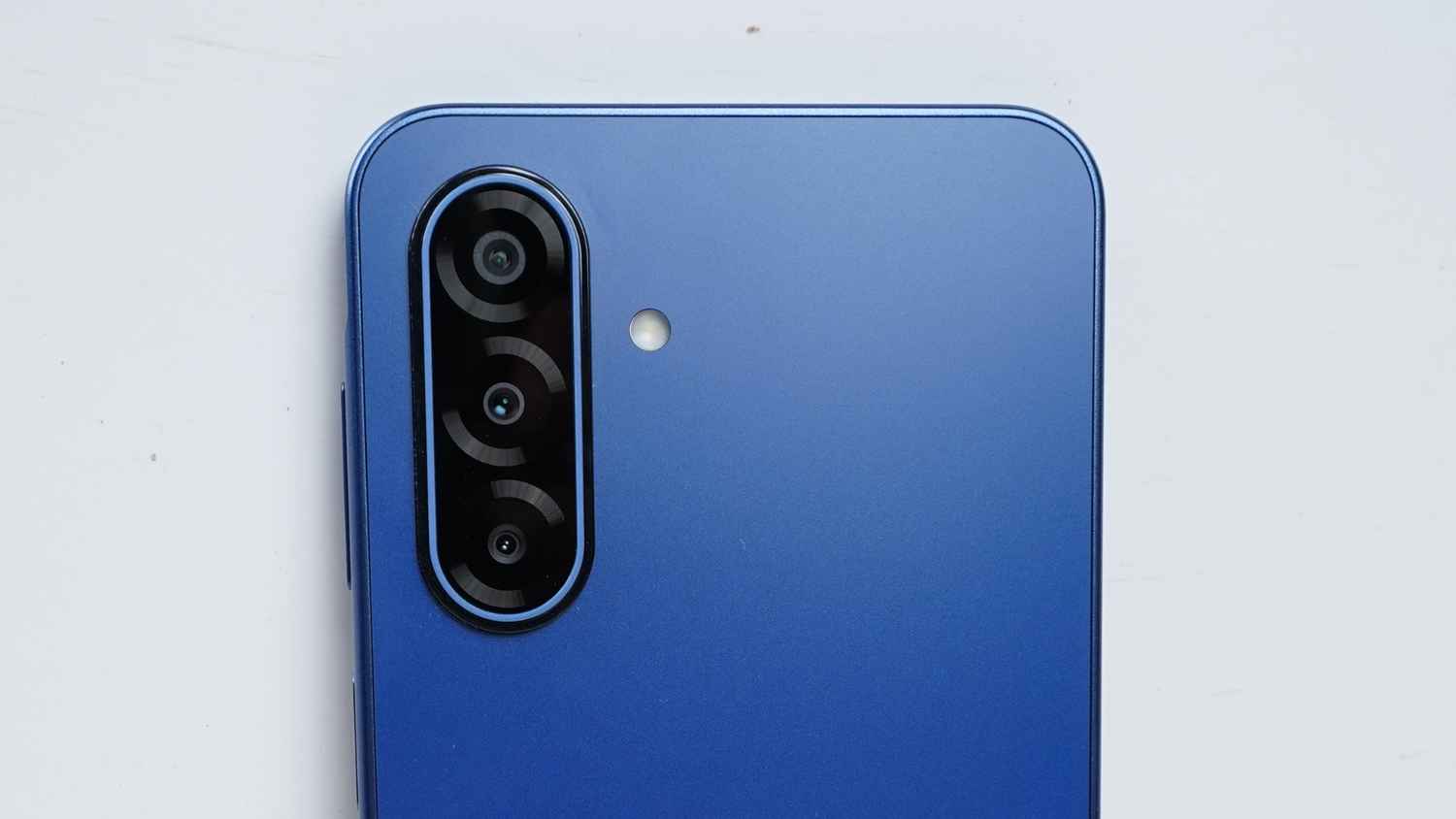
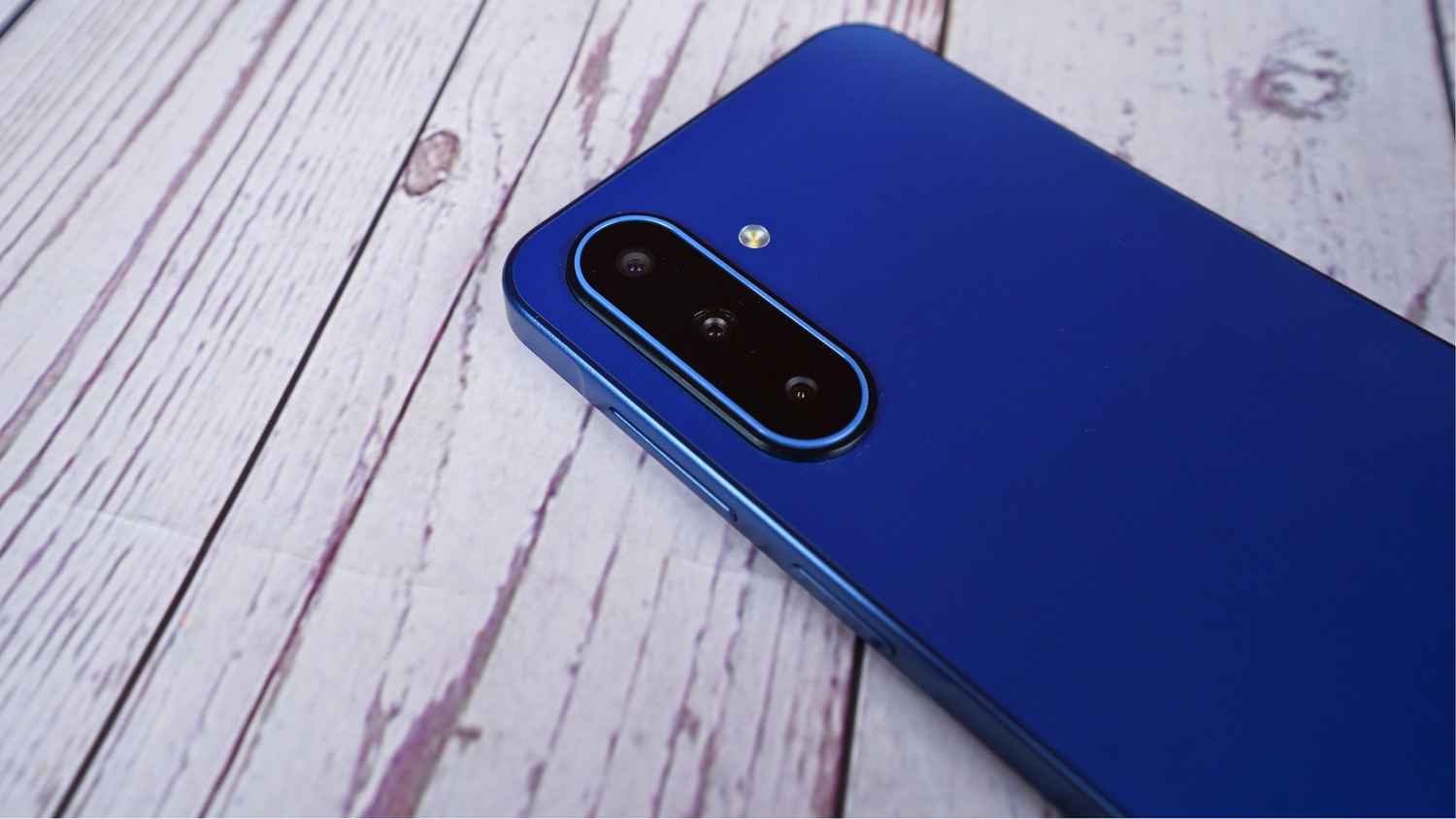
The matte finish on the Blue variant looks particularly elegant, and it reflects light subtly rather than glaring under it, while the black and grey options play it safe and corporate. The camera rings sit flush enough to avoid rocking on flat surfaces, but there’s little wobble, and the IP54 rating continues to offer basic protection against dust and splashes.
Samsung still places the power button on the right, which doubles up as a fingerprint reader, and it’s fast and reliable. There’s no 3.5 mm jack this time around, and the bottom houses a single loudspeaker along with a USB-C 2.0 port. The lack of stereo sound is noticeable, but the trade-off is a slimmer, cleaner chassis.
Overall, the Galaxy A17 feels less like a budget compromise and more like an affordable minimalism. It’s still plastic in places, yes, but it no longer feels like it’s pretending to be something it’s not.
Samsung rarely misses when it comes to displays, and the Galaxy A17 5G continues that streak, albeit with familiar limitations. It uses a 6.7-inch AMOLED panel with a 90 Hz refresh rate and 1080p resolution, similar to the A16, but this time it’s backed by Corning Gorilla Glass Victus protection and higher peak brightness of 1,250 nits in HBM mode.
In daily use, the display feels noticeably brighter than the A16. Outdoor visibility under harsh sunlight has improved significantly, and colours pop with that signature Samsung vibrancy without crossing into oversaturation. The phone still uses a 90 Hz panel rather than 120 Hz, a decision that’s starting to feel dated when even cheaper rivals have moved up. The refresh rate is fixed, too, without adaptive switching, meaning it doesn’t conserve much battery when viewing static content. The Always-On Display remains a neat touch for quick notifications and time checks.
In our Calman colour accuracy test, the A17 achieved 99.8% sRGB coverage and an average DeltaE of 1.6, which is excellent for this segment. The maximum DeltaE recorded was 3.8, suggesting only minor deviations in certain tones. The display’s white luminance measured roughly 650 nits in SDR and well over 1,200 nits peak in HDR/HBM. Colour reproduction is clean and consistent, with particularly accurate yellows and skin tones in the Natural mode.
The contrast ratio remains strong, typical of AMOLED, with deep blacks and crisp highlights. Streaming via Netflix and Prime Video benefits from Widevine L1 certification, although HDR playback isn’t supported.
There’s still a teardrop notch at the top, a minor eyesore in 2025, but it doesn’t distract much during content viewing.
Overall, the Galaxy A17’s display is a solid improvement over its predecessor. It’s not the smoothest in the category, but it’s certainly one of the most colour-accurate and brightest panels in this segment.
Samsung has kept faith in its Exynos 1330 chipset for the Galaxy A17 5G, the same SoC used in last year’s A16 (global version). Paired with up to 8 GB of RAM and 256 GB of UFS storage, the phone runs Android 15 with One UI 7 out of the box, and Samsung promises an impressive six years of OS updates, matching even its premium S-series lineup.
In everyday use, the A17 feels smoother than the A16. There’s no visible lag when scrolling, multitasking, and switching between social media and camera apps. The CPU Throttling Test result of 92% confirms that thermal management is quite stable, with minimal performance dips during extended workloads.
Coming to benchmarks, the Galaxy A17 posted an AnTuTu score of 604,936, a healthy jump over the A16 running on MediaTek Dimensity 6300 (~409K). In Geekbench, it achieved 970 points in single-core and 2,140 in multi-core, and on PCMark Work 3.0, it scored 12,543, which translates to very good day-to-day performance for productivity, social media, and light editing.
The 3DMark Wild Life score of 1,382 shows that the Mali-G68 GPU is capable but not gaming-focused. Games like Call of Duty: Mobile and BGMI run smoothly at medium settings, but expect some frame drops during intense firefights or extended play sessions. The phone warms up slightly near the camera module after 20–30 minutes of gameplay, but it never crosses into uncomfortable territory.
Samsung’s One UI 7 is one of the cleanest Android skins available with fluid animations, refined haptics, and AI touches like the Google Gemini assistant integration. There is minimal bloatware compared to most rivals, and RAM management is fairly conservative, keeping battery life in check.
Overall, the Galaxy A17 delivers reliable mid-range performance. It’s not a powerhouse, but it’s stable, efficient, and consistent.
Battery life on the Galaxy A17 5G is dependable but not exceptional. The phone retains the 5,000 mAh capacity from its predecessor, supports 25 W wired charging, and, for a change, Samsung includes the charger in the box.
In our PCMark Battery Life test, the A17 lasted 11 hours and 48 minutes, which is respectable but slightly below what you might expect from a 6 nm chipset and AMOLED display. In real-world use, it comfortably lasts a full day with mixed usage, including browsing, streaming, social media, and light photography, but heavy gaming or camera use can drain it faster.
The charging speed hasn’t seen any upgrades either. The 25 W charging takes around 95 minutes to fill the battery from 0 to 100%, which feels slow in 2025 when several phones in this segment now offer 45 W or even 67 W charging.
On the upside, Samsung’s adaptive battery mode intelligently limits background processes for rarely used apps, and idle drain is minimal. The Exynos 1330’s thermals are also well-tuned, meaning the phone stays cool even during charging or extended video playback.
The Galaxy A17 carries forward Samsung’s familiar triple-camera setup: a 50 MP primary sensor with OIS, a 5 MP ultrawide, and a 2 MP macro shooter, paired with a 13 MP front camera. On paper, it doesn’t look like a major leap from last year’s A16, but in practice, Samsung has clearly fine-tuned its image processing to favour vibrant, social-media-ready output.
In good lighting, the Galaxy A17 performs confidently. Colours are punchy, contrasty, and distinctly Samsung. The deep blues of the sky, the lush greens of foliage, and the bright reds and yellows of city scenes pop instantly on screen. It’s not aiming for strict realism, and there’s a hint of oversaturation, but the results are consistently eye-catching.
Detail retrieval is strong for this segment. Textures like concrete, grass, and fabric are cleanly resolved without aggressive over-sharpening. The HDR algorithm works reliably in standard mode, maintaining a good balance between highlights and shadows. In tricky compositions like the palm tree against a bright sky, the phone managed to retain sky colour while keeping midtones intact.
The 5 MP ultrawide camera performs adequately in daylight, though it’s a clear step down in dynamic range and sharpness. It’s usable for travel shots or group photos, but not a lens you’ll rely on frequently. The 2 MP macro remains largely a novelty.
The portrait Mode is where the Galaxy A17 actually shines. It offers excellent subject separation, producing a soft and natural bokeh that flatters both human and object subjects. Faces stay crisp and detailed, and skin tones look balanced, warm but not artificially pinkish. Samsung’s edge detection handles most scenes confidently, even with tricky hair or accessories.
That said, it’s not perfect. Complex outlines like curly hair or glasses can show minor haloing, and portraits taken against very bright backgrounds tend to blow out highlights completely. The HDR engine seems to take a backseat when portrait processing kicks in, prioritising the subject over scene balance. As a result, some shots have immaculate subject detail but a white, detail-less sky behind them.
Still, in evenly lit or indoor conditions, the portraits look genuinely impressive. The camera nails exposure, contrast, and colour tone, giving you results that rarely need post-editing before going online.
In low light, performance is acceptable but predictable for this segment. The main sensor can pull out decent detail if there’s ambient lighting, but noise levels increase and shadow detail softens in darker scenes. The Night Mode brightens up frames noticeably, but it can introduce a slightly warmer tint and some smearing in finer textures. The OIS helps stabilise handheld shots, though it’s more effective for static scenes than moving subjects.
Video capture tops out at 1080p 30 fps for both front and rear cameras. There’s no 4K option, but OIS provides smooth, shake-free footage for casual handheld clips. Colour tone and focus transitions are steady, though exposure shifts are noticeable in scenes with varying light.
The Samsung Galaxy A17 5G is exactly what it sets out to be: a dependable, polished mid-ranger that values refinement over reinvention. It doesn’t chase benchmark numbers or spec wars, but focuses on the basics.
This phone is made for users who want a reliable everyday companion, and if you prioritise long-term software support, balanced performance and Samsung’s ecosystem reliability, the A17 fits comfortably into that lifestyle. It’s also ideal for those upgrading from older 4G or entry-level 5G phones who want a stable, no-nonsense experience.
However, power users and gamers might find the Exynos 1330 limiting, and the 90 Hz display plus 25 W charging feel dated next to rivals like the CMF Phone 2 Pro or Moto Edge 60 Fusion.