For over a decade, the Redmi Note series has been the default recommendation for the Indian middle class. It wasn’t always the flashiest phone, but it was the one that was reliable enough, the one you bought for your parents, your college-going cousin or yourself when you needed utility over vanity.
But the market in early 2026 is hostile. The sub-25,000 segment is no longer just about “value”; it is a spec-war where brands are tossing around flagship-tier hardware to see what sticks.
Into this fray walks the Redmi Note 15. On paper, it is playing a safer game. It isn’t trying to out-benchmark the performance-focused sub-brands or dazzle with design gimmicks. Instead, it doubles down on the dependability factor with lighter weight, better endurance, a cleaner camera setup and software that suggests Xiaomi expects this phone to stay in someone’s pocket for years and not mere months.
So, in a segment that’s obsessed with proving how fast a phone can be for five minutes, is there still space for a phone that just wants to be steady? That’s exactly what the Redmi Note 15 sets out to answer.
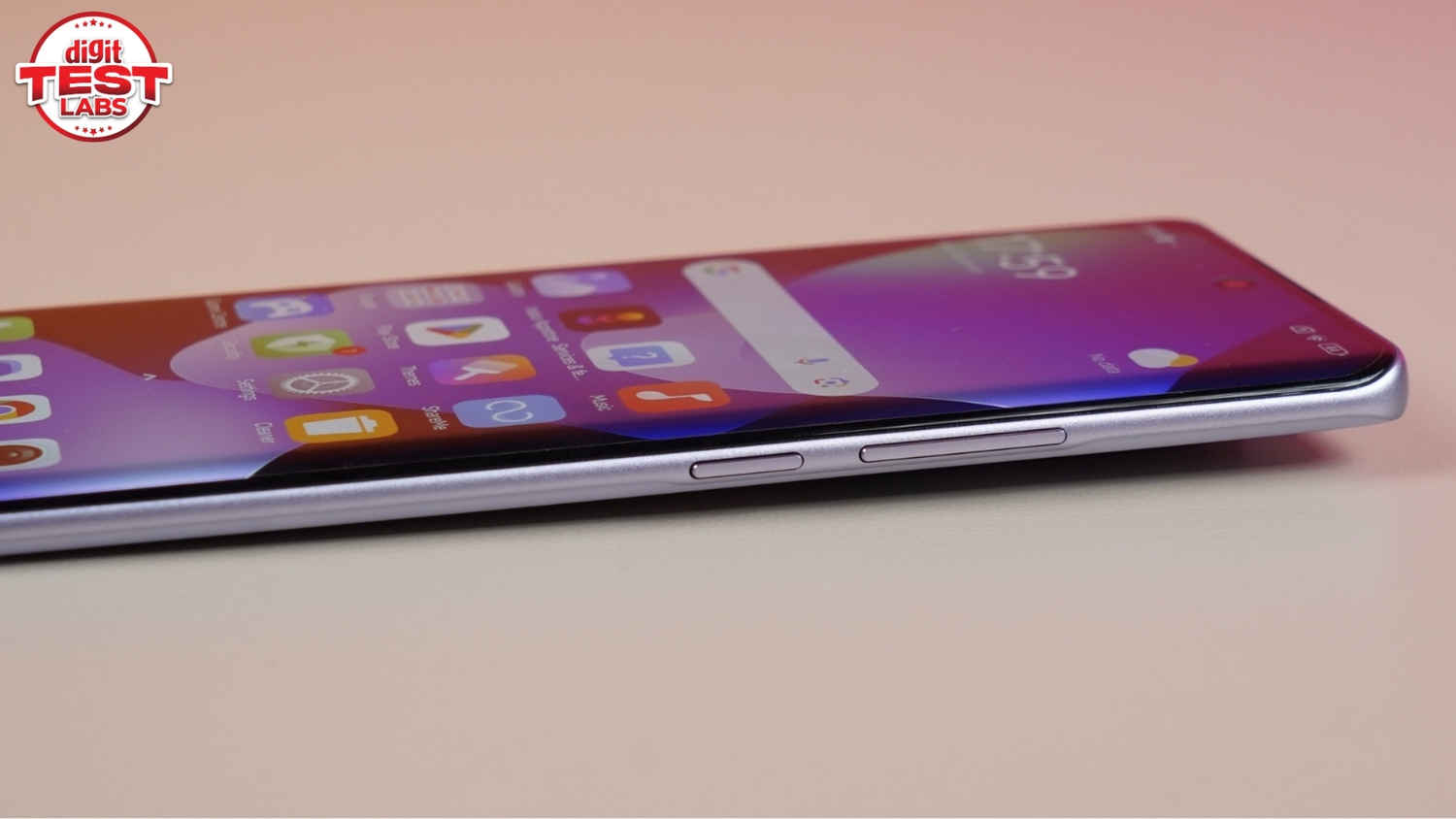
Pick up the Redmi Note 15 and the first thing you notice about it is that it has gone on a diet. One of the biggest complaints with the previous Note 14 was its heft; at 190g and 8mm thick, it felt substantial, sometimes borderline bulky. The Note 15 trims the waistline down to 7.35mm and drops the weight to 178g.
That 12-gram difference might sound trivial on a spec sheet, but in hand, this is a phone that doesn’t tug at your pocket or fatigue your fingers if you spend hours replying to emails, reading, or navigating with one hand on public transport.
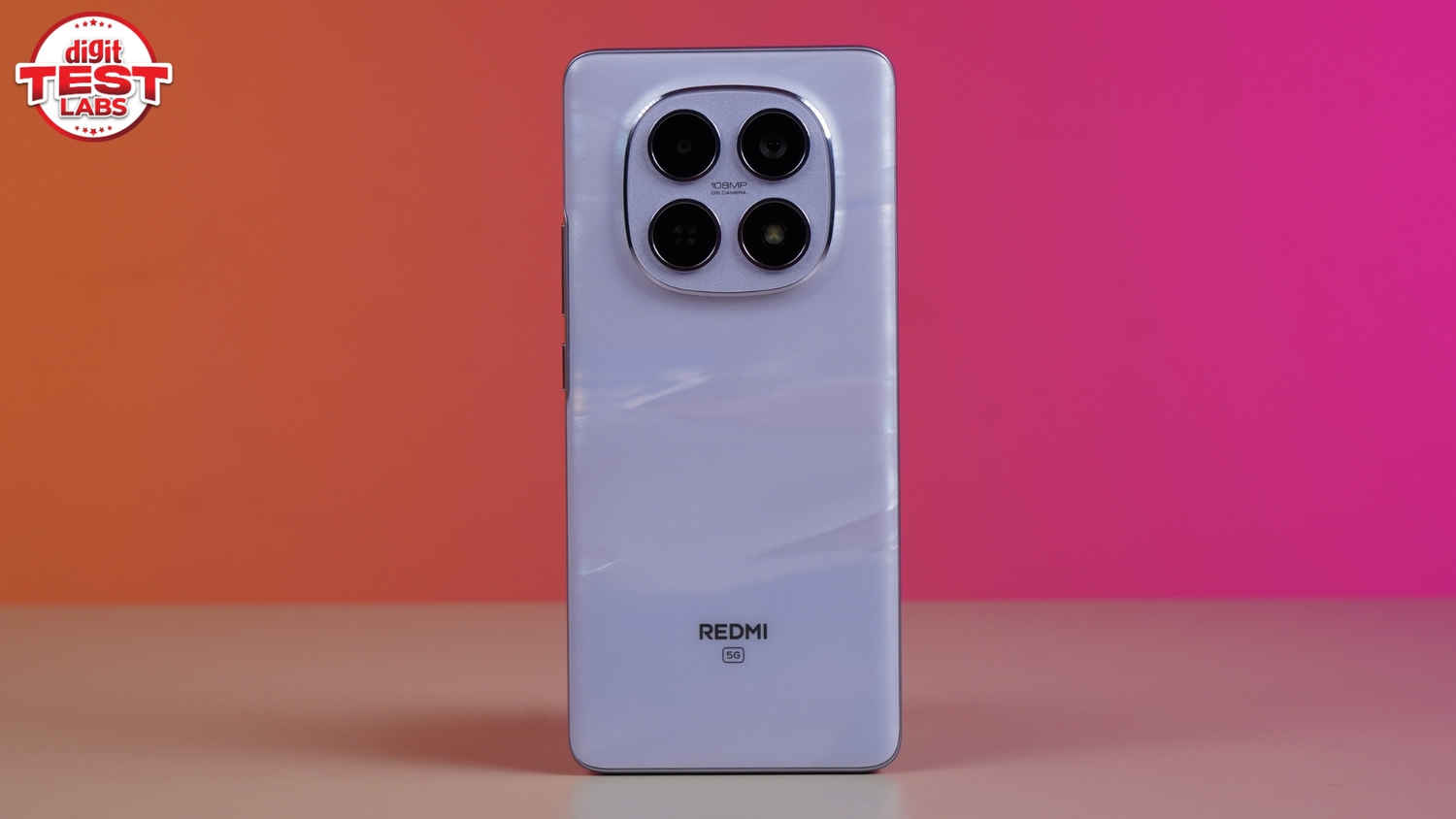
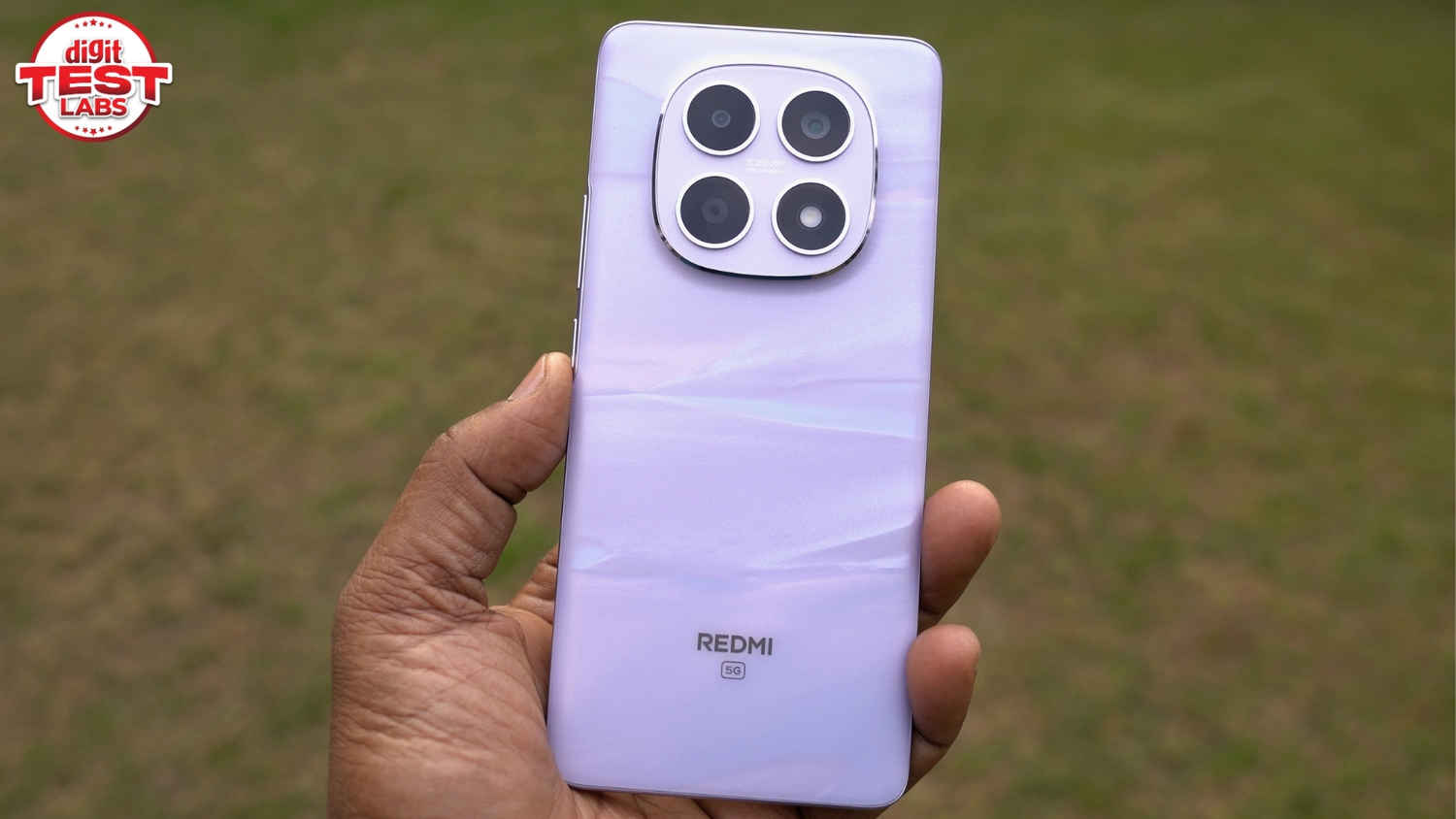
I am using the Mist Purple variant and while the frame remains plastic, it has a clean finish. There’s no flex when you press down near the centre and the matte finish resists fingerprints better than glossy backs in this segment.
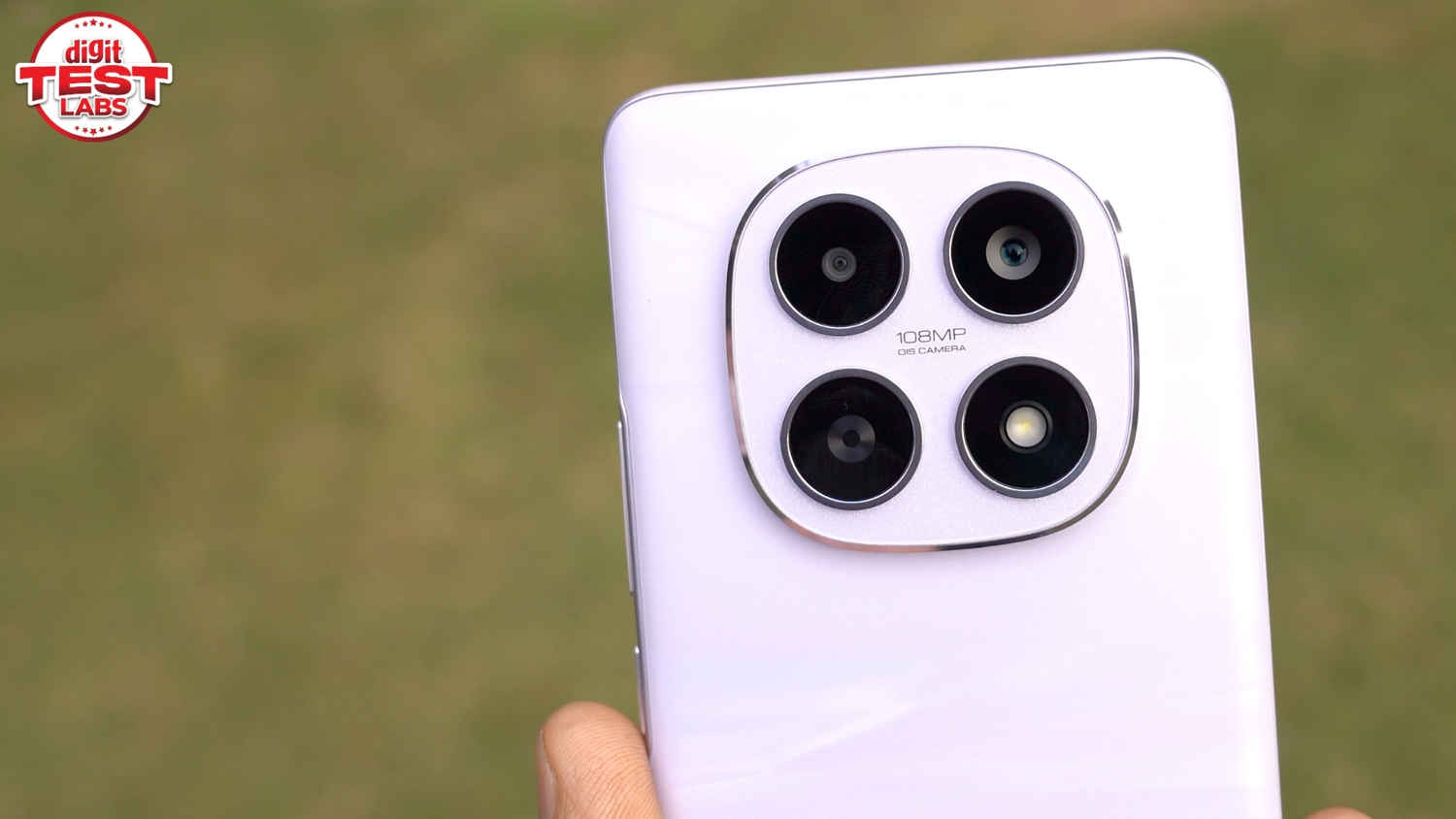
The camera module is large and square, with the 108MP branding slapped across. The layout is symmetrical, but when placed on a table, there is a slight wobble, though it’s not exaggerated.
The Note 14 settled for an IP64 rating, but the Note 15 bumps this to IP66, protecting it against “powerful water jets.” Effectively, this means you can use it in heavy rain or spill a drink on it without panic. It’s worth remembering that lab certifications aren’t magic shields, but this phone is meant to survive clumsiness.
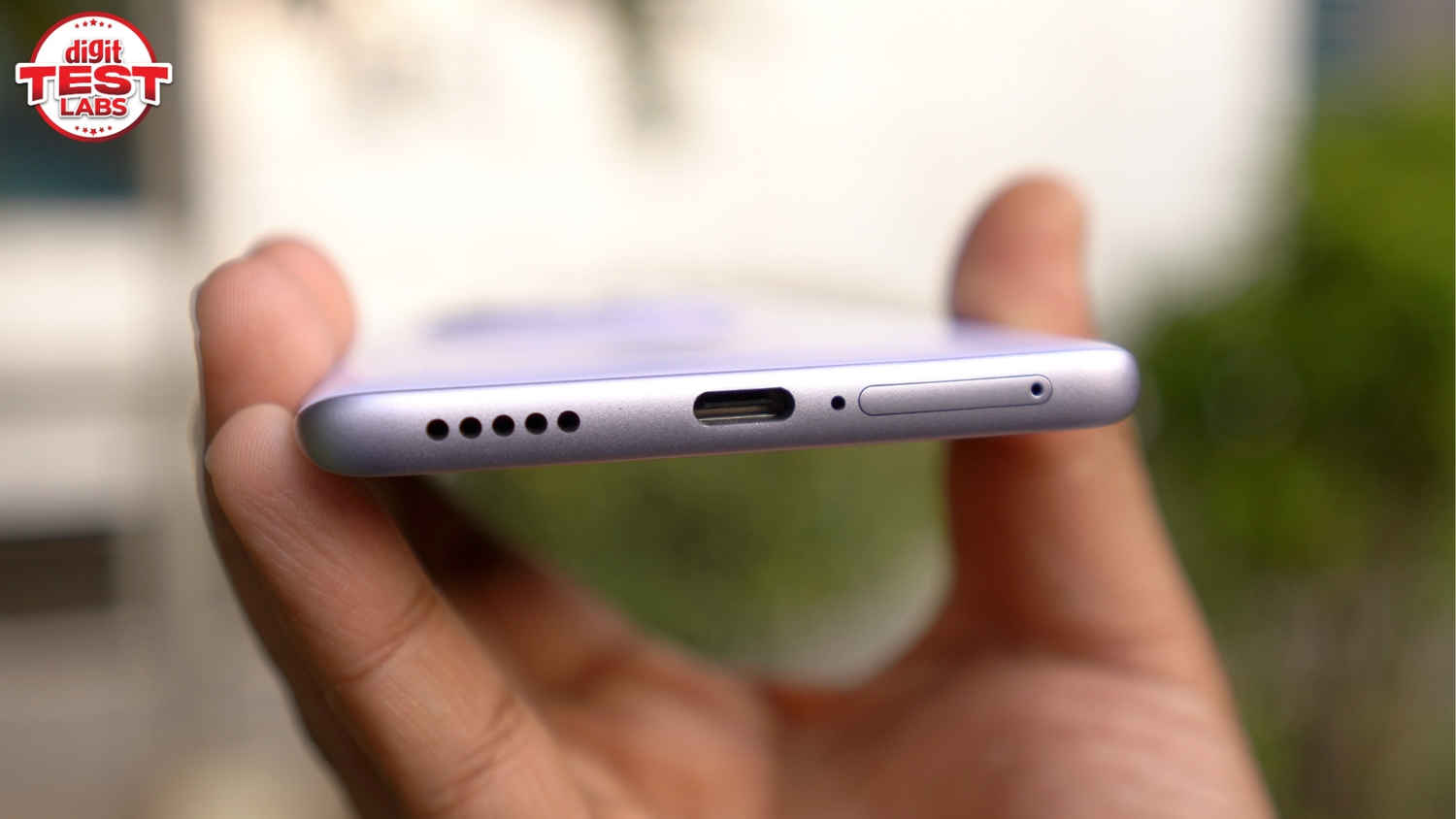
However, there is a casualty in this slimming process. The 3.5mm headphone jack, which was present on the Note 14, is gone. For the loyalists who held onto the Note series specifically for wired audio, this is the end of the road.
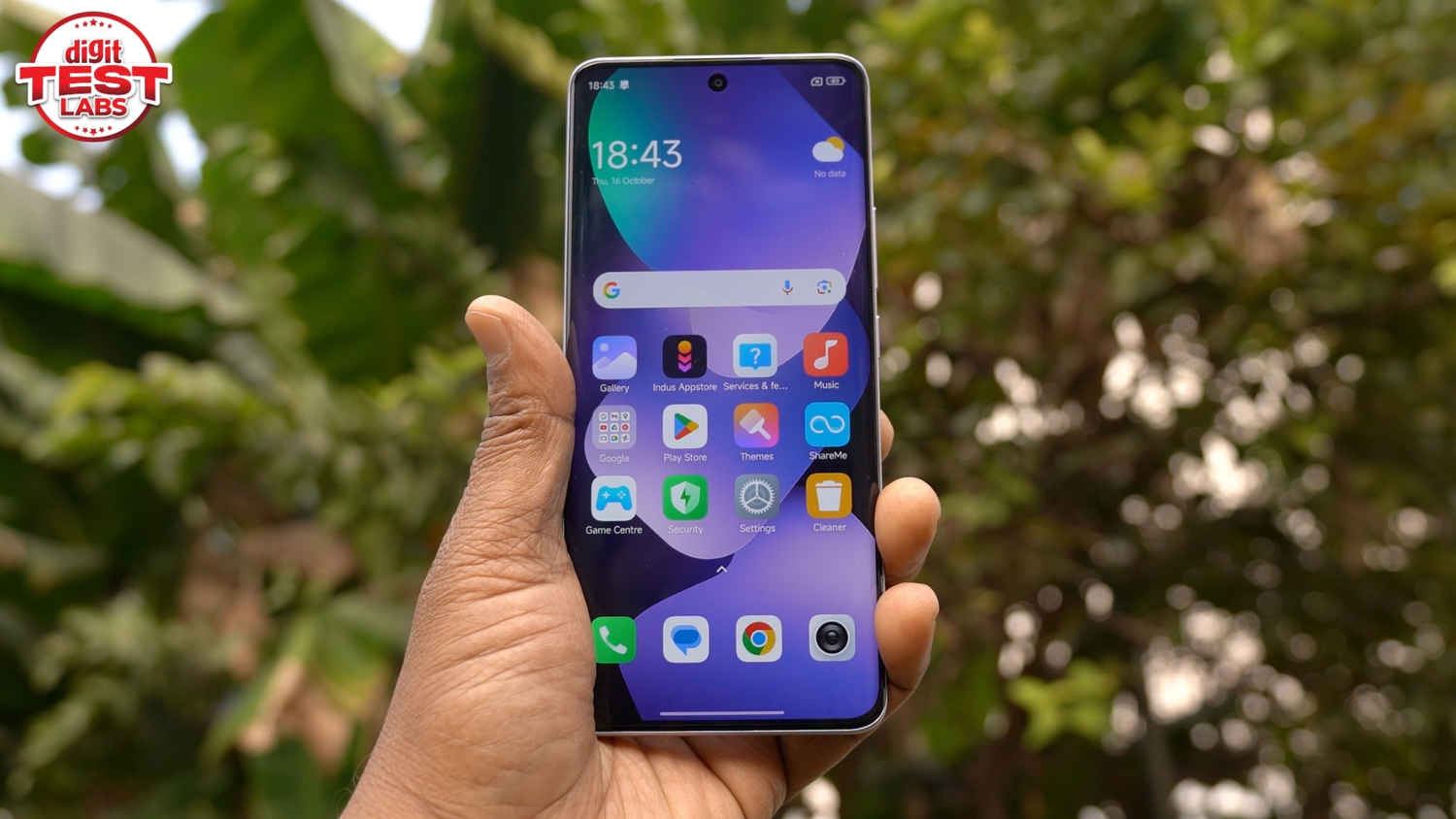
We are at a point where bad displays are rare, but mediocre ones are everywhere. The Note 15 stretches the canvas slightly, moving from the 6.67-inch panel of its predecessor to a 6.77-inch AMOLED.
The Note 14 peaked at 2100 nits, which was already respectable. The Note 15 pushes this to a theoretical 3200 nits. Let’s be clear about what that number means: that is a localised peak for HDR content, generally done at 1% window, not what you get when you open your email. However, in daily use, the panel holds its own and in our lab testing, the display brightness peaked at 1670 nits.
I used the phone under direct afternoon sun and maps, notifications and text remained legible without forcing the brightness slider to max manually. The auto-brightness behaviour is reasonably aggressive, which helps.
The 120Hz refresh rate is standard, but the touch sampling rate (up to 480Hz in gaming) makes the UI feel stickier and more responsive to your thumbs than the Note 14’s panel.
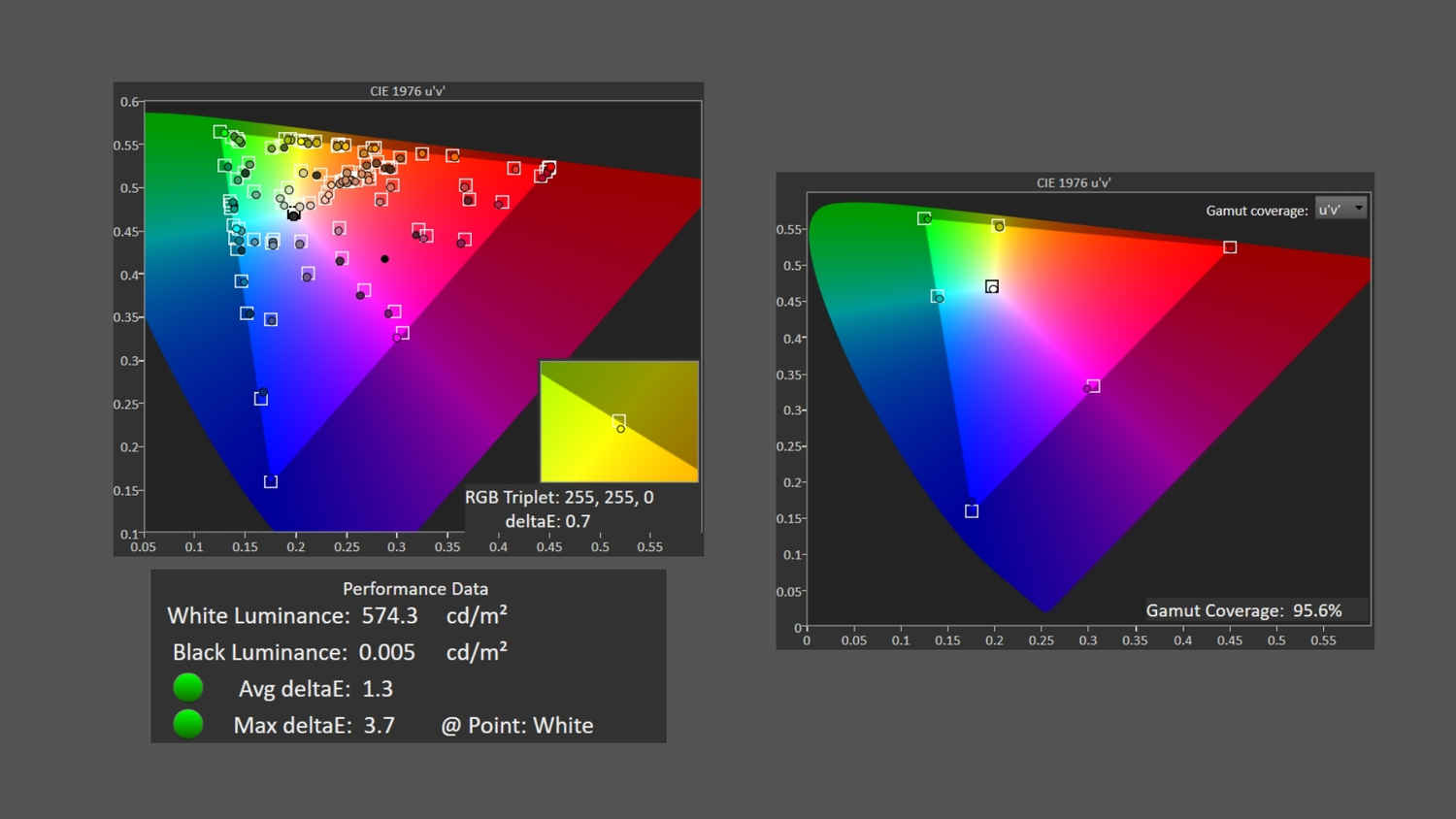
In our Calman Grayscale Multi test, the display delivered a contrast ratio of 114,774:1. Black luminance measured at 0.005 cd/m², which is effectively inky. That shows up immediately when you watch darker content or browse through night-mode photos. Blacks don’t float into grey, they sit deep and stable and shadow-heavy scenes carry more depth instead of looking washed out.
Colour accuracy is stronger than I expected at this price. The average colour error in the ColorChecker analysis came in at 1.3, with a maximum of 3.7 at white. That tells us the panel is tuned with care. Skin tones look believable and UI elements don’t carry strange tints. Whites sit close to the D65 target, with an average CCT of 6673K, which is slightly cool but not distracting.
In the Colour Gamut test, the display covers 95.6% in the u’v’ space. It does not support HDR10+, which is a limitation if you consume a lot of HDR streaming content. Still, for standard SDR content, the screen looks vibrant without tipping into oversaturation. Reds and greens are controlled, blues don’t bleed into cyan and the overall presentation feels coherent rather than artificially boosted. For everyday viewing, social media, streaming and reading, the Redmi Note 15’s panel is confidently above average in its segment.
Under the hood, we saw the Note 14 relying on the MediaTek Dimensity 7025 Ultra, a 6nm chip that was decent but occasionally ran warm under load, but the Note 15 swaps teams, opting for the Qualcomm Snapdragon 6 Gen 3.
There is, however, one bottleneck that Redmi refused to fix: UFS 2.2 storage. Both the Note 14 and Note 15 are stuck on this older storage standard. In 2026, the lack of UFS 3.1 is noticeable when you are installing large updates or moving gigabytes of file data. It’s a cost-cutting measure that won’t bother you today but might make the phone feel slower in two years.
In our testing, the phone scored 858,119 on AnTuTu. Geekbench returned 1022 in single-core and 2953 in multi-core, while PCMark Work 3.0 came in at 10,508. These are respectable mid-range figures, but they don’t compete with performance-focused devices in the same bracket.
For messaging, calling, browsing, payments, YouTube and light multitasking, the Note 15 feels stable. App launches are predictable. Social media scrolling remains smooth thanks to the 120Hz panel. Switching between apps doesn’t produce the stutter that used to plague older budget chipsets. There’s no sense of strain during casual use.
In our CPU Throttling test, the Note 15 maintained 93% of its peak performance. That’s strong stability for this segment. The phone warms up under load, but it doesn’t spike unpredictably. You won’t see dramatic frame drops after ten minutes of use. Instead, performance gently stabilises at a lower plateau.
Gaming is where the boundaries become clearer. Titles like BGMI and Call of Duty Mobile are playable at balanced settings and frame pacing stays mostly consistent during shorter sessions. But if you push heavier games or extend sessions past 25–30 minutes, performance settles. It doesn’t collapse into lag, but you can feel the ceiling. This chipset is tuned for efficiency, not sustained high-frame bursts.
The phone ships with HyperOS 2, based on Android 15. The promise of 4 years of OS updates is generous and suggests Redmi expects you to keep this phone for the long haul. HyperOS 2 itself is fast and visually dense. There are deep customisation options, aggressive battery controls, smart tools and AI integrations. It also carries Xiaomi’s usual load of pre-installed apps and occasional promotional notifications. You can disable or uninstall most of them, but it takes a few minutes of housekeeping after setup. Once trimmed down, the interface feels fluid and reasonably polished.
The Note 14 played it safe with a 50MP main sensor. The Note 15 returns to the “megapixel wars”, deploying the new 108MP Samsung ISOCELL HM9 sensor.
Daylight photos lean vibrant and warm. Reds and magentas carry extra saturation. In flower shots, especially deep reds like Ixora petals, the colour almost glows. It looks striking on a phone screen, though if you look closely, the red channel sometimes sits close to clipping. Fine texture within the petals can get slightly compressed because contrast is pushed high.
Group portraits show this tendency clearly. Skin tones are rosier, slightly polished. Faces appear lively and bright, almost pre-filtered. There is mild smoothing applied, enough to soften the texture without turning faces into plastic. It is the kind of output designed for instant sharing. If you prefer neutral, flatter colour science, you will notice the embellishment. If you want something that looks ready for Instagram without editing, this approach works in your favour.
Contrast is a defining trait here. The Note 15 keeps blacks deep and highlights punchy. Scenes with strong sunlight have weight and drama. The downside is that some shadow detail can get swallowed up in darker corners. In high-contrast subjects like car grills or textured metal, subtle mesh details may not be preserved as carefully as on more neutral cameras.
The 3x in-sensor zoom is the practical advantage of the 108MP sensor. Cropping into the Shiva statue at 3x shows a tighter frame and more dramatic compression. Background trees appear closer, giving the subject a stronger presence. Detail holds up reasonably well for a digital crop, though darker foliage reveals some fine noise, especially in shadow-heavy greens. It’s not a telephoto lens, but for this price bracket, the reach is genuinely useful.
Portrait mode pushes blur strength aggressively. Background separation is creamy and obvious. Edge detection is mostly clean around hair and shoulders, but the transition from sharp subject to blur can feel abrupt in certain lighting. In some group shots, the subject appears almost cut out from the background. It’s effective, though slightly artificial if you look closely.
Selfies follow the same philosophy. The 20MP front camera produces bright, polished output. Skin is smoothed lightly, tones are warm and backgrounds retain decent colour. The dynamic range is respectable. In bright daylight, the sky keeps a bit of its blue instead of washing out entirely. Occasionally, this balancing act results in faces looking slightly processed, especially when backlit.
The 8MP ultra-wide remains the weaker lens. In the ultrawide shot of the Shiva statue, the overall colour temperature shifts cooler, with a faint blue or magenta tint. Centre sharpness is acceptable, but corners soften quickly. Trees and fine textures near the edges lose definition and distortion becomes visible if you inspect lines closely. It is usable for group shots and landscapes in good light, but it is clearly secondary.
Video recording now supports 4K at 30fps over the Note 14, which was bizarrely capped at 1080p video recording. It’s a basic requirement that is finally met.
Redmi has packed a 5520mAh battery into this chassis, which is a decent increase over the 5110mAh cell in the Note 14.
On a typical day involving constant notifications, streaming, camera use and social media scrolling, the phone ends the night with room to spare.
The result is a true two-day phone for moderate users. The combination of the efficient 4nm Snapdragon chip and this larger cell comfortably outlasts the Note 14. I pulled the phone off the charger at 7 AM, used it heavily and still had around 30% left when I got home at 8 PM.
The 45W charging remains unchanged from the previous generation. It takes about 68 minutes to go from zero to full. It’s functional, but when competitors are offering 80W or 100W bricks in the box, sticking to 45W feels a bit conservative. There is also 18W reverse wired charging support, which is useful in specific situations, like topping up earbuds or another phone briefly.
The Redmi Note 15 is not an exciting phone. It doesn’t have a leather back and it doesn’t break any benchmark records. But excitement is often the enemy of longevity.
Compared to the Note 14, this is a refined and mature update. It prioritises comfortable design, viewing experience, battery endurance and main-camera consistency over raw horsepower.
If you are holding onto a Note 14, the differences might not force an immediate upgrade. But for anyone on an older device, the Note 15 proves there is still value in staying consistent.
Also Read: Redmi Note 15 Pro series and Xiaomi’s strategy to win back India’s mid-premium buyers