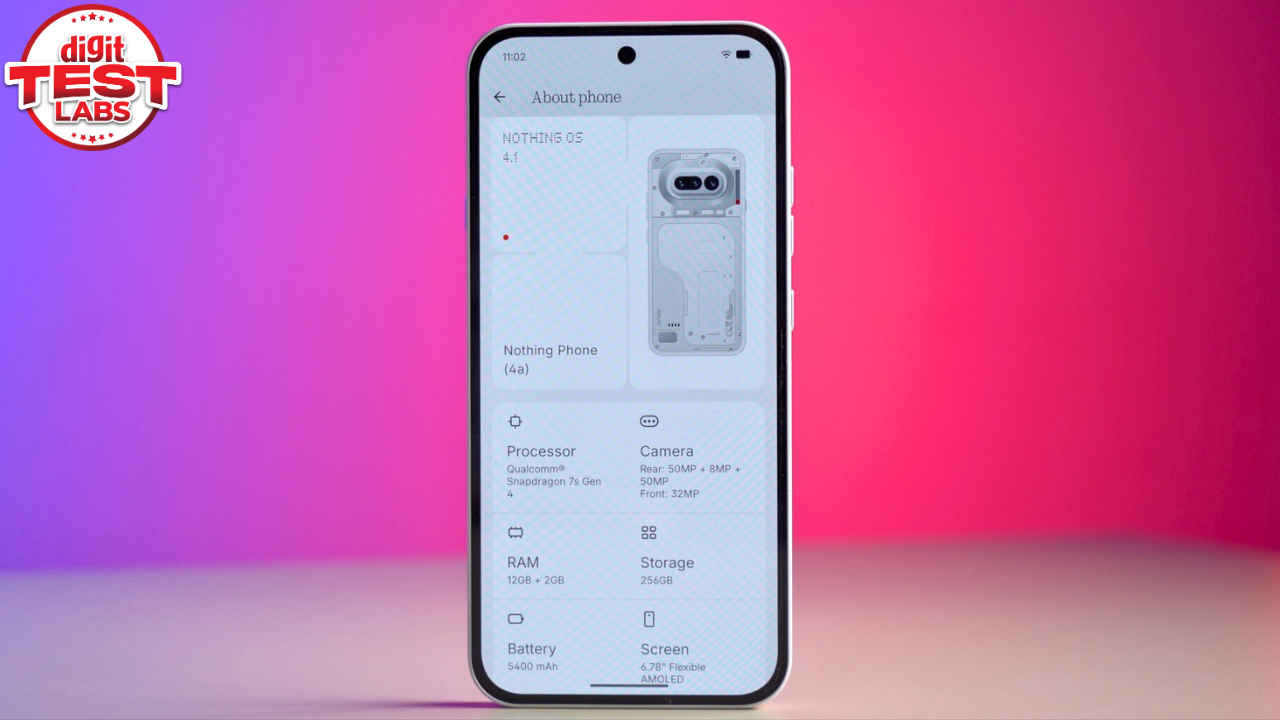
I have used every Nothing device, starting from the Phone 1 to the Phone 3a Lite, and I will admit that I do quite like what the company is doing, especially in terms of innovations, as well as what works for them. Of course, what really always catches me is their design. This time as well, the company has brought something new to their design called ‘Glyph Bar’. But this time, the Nothing Phone 4a, succeeding the Phone 3a, comes in a slightly different position. I say this because things are a bit more complicated, as there is a price jump from the Nothing Phone 3a. And at this price point, the expectations are naturally higher. At around Rs 30,000, users are not just looking for something that looks different, but also expect a phone that performs well across the board.
I’ve been using this device for the past two weeks as my daily driver. The real question becomes clear: Does the Nothing Phone 4a deliver enough for its asking price? Let’s find out.
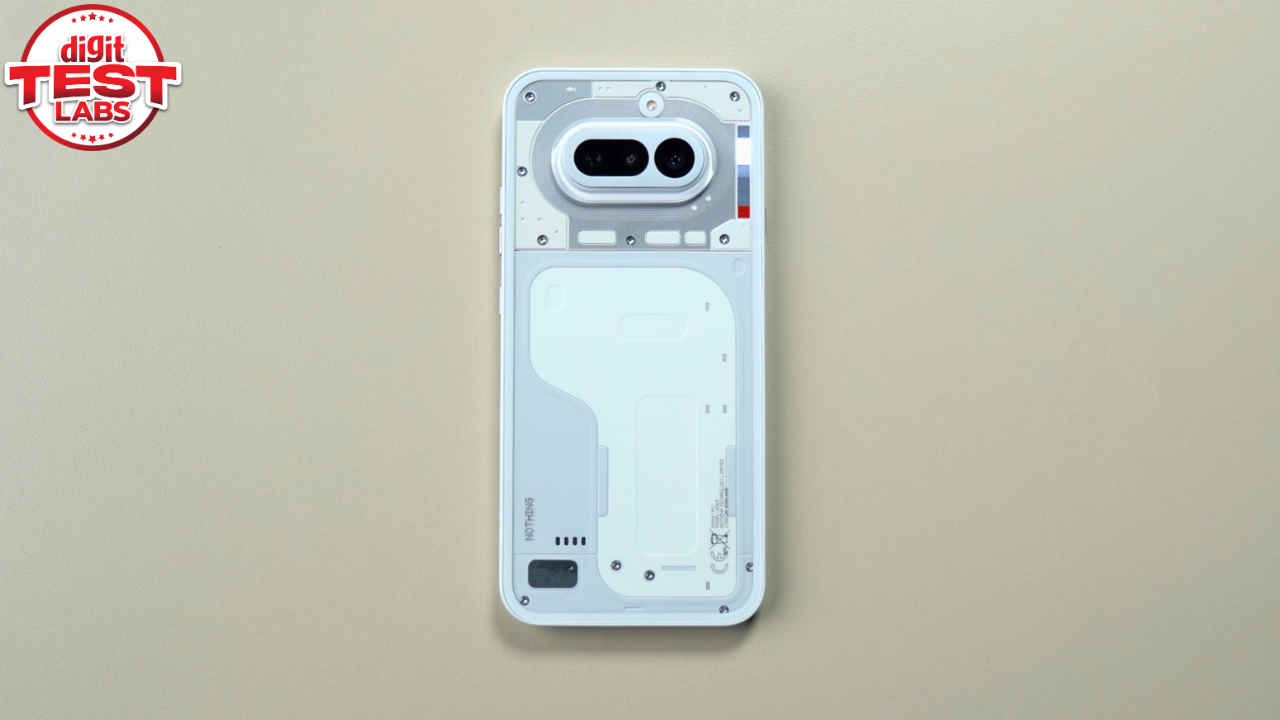
Design has always been the main characteristic of Nothing phones, and the Phone 4a continues that legacy. The transparent back panel remains the centrepiece where you can see the components and visible screws. Nothing (no pun intended) out of the ordinary for Nothing, but I will say that the Phone 4a gives the look that still feels unique in this crowded smartphone market.
That said, the back panel now feels more minimal. Instead of the full Glyph light, Nothing has introduced a Glyph Bar on the right side of the camera module. This strip contains 63 mini-LEDs arranged across seven segments. This strip can be customised within the settings, allowing users to adjust brightness levels. One of the more satisfying touches is the way the LEDs react when you adjust the volume. Another small detail is the red square indicator in the Glyph Bar, which lights up when recording begins, just like its bigger sibling, the Nothing Phone 3.
The back has a glossy finish, which looks good but tends to attract fingerprints. You can avoid smudges by using the back cover, which comes in the box itself.
From a build perspective, the Phone 4a feels solid in hand. The frame is sturdy, and the button placement has been changed as well. The volume rocker now sits on the right side, making it easier to reach in everyday use. The Essential Key has also moved to the left side, because earlier in Nothing Phone 3a, users had complaints about it getting accidentally pressed. So, that’s been fixed.
The front of the Phone 4a is protected by the Gorilla Glass 7i and the device is certified with an IP64 rating for dust and water resistance.
Overall, the Nothing Phone 4a remains one of the most eye-catching phones in its segment. Whether this design appeals to you is subjective, but there is no denying that Nothing has built out a clear identity for itself.
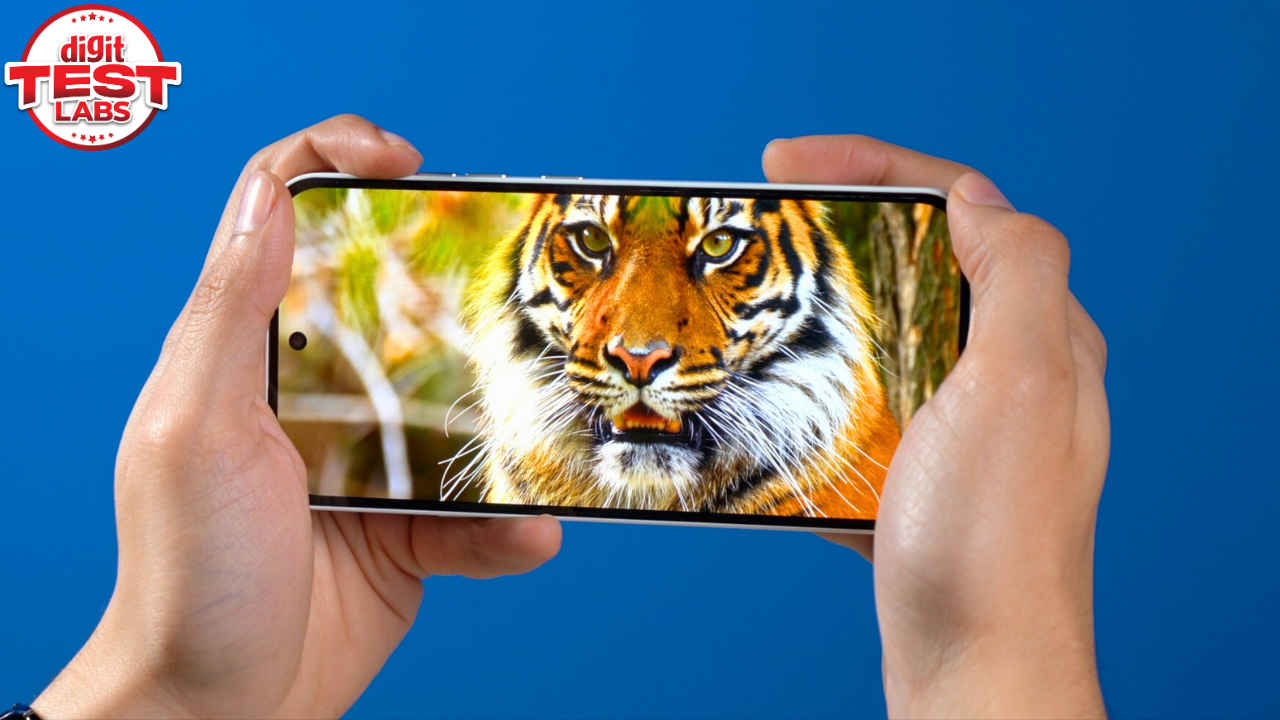
The Nothing Phone 4a features a 6.78-inch 1.5K LTPS AMOLED display with a 120Hz refresh rate that can drop to 30Hz. In daily use, the display feels smooth and responsive. Partly the reason behind the smoothness is Nothing OS 4.1 atop Android 16. The company promises 3 years of main OS updates paired with 6 years of security patches. But, more on the software in a later section. For now, when it comes to this phone’s display, I used it for all kinds of stuff. Chrome, video-calls, emails, Instagram and Twitter, switched between apps, and all felt fluid. Of course, along with the high-refresh rate screen, Nothing OS animations are also very smooth and polished.
Now, to test the display, I took the Phone 4a to our Digit Test Labs, where the display performed well. In the Calman Colour Test, the panel recorded an average Delta E of 2.4, which is okay. In the Colour Gamut test, the display achieved 99.9% coverage. Brightness is another strong point. In our testing, the panel reached 2,640 nits of peak brightness, making it easy to use under direct sunlight.
While these were the simulated tests, I am also happy to report that in real-world use, watching content, be it YouTube videos or OTT, on the panel is an enjoyable experience. The AMOLED display delivers deep blacks, the contrast is strong, and the overall clarity is excellent. I watched Taskaree on Netflix, and I enjoyed watching that series on this display. Putting it there once again, in everyday usage, the Phone 4a’s display feels sharp, bright and colourful.
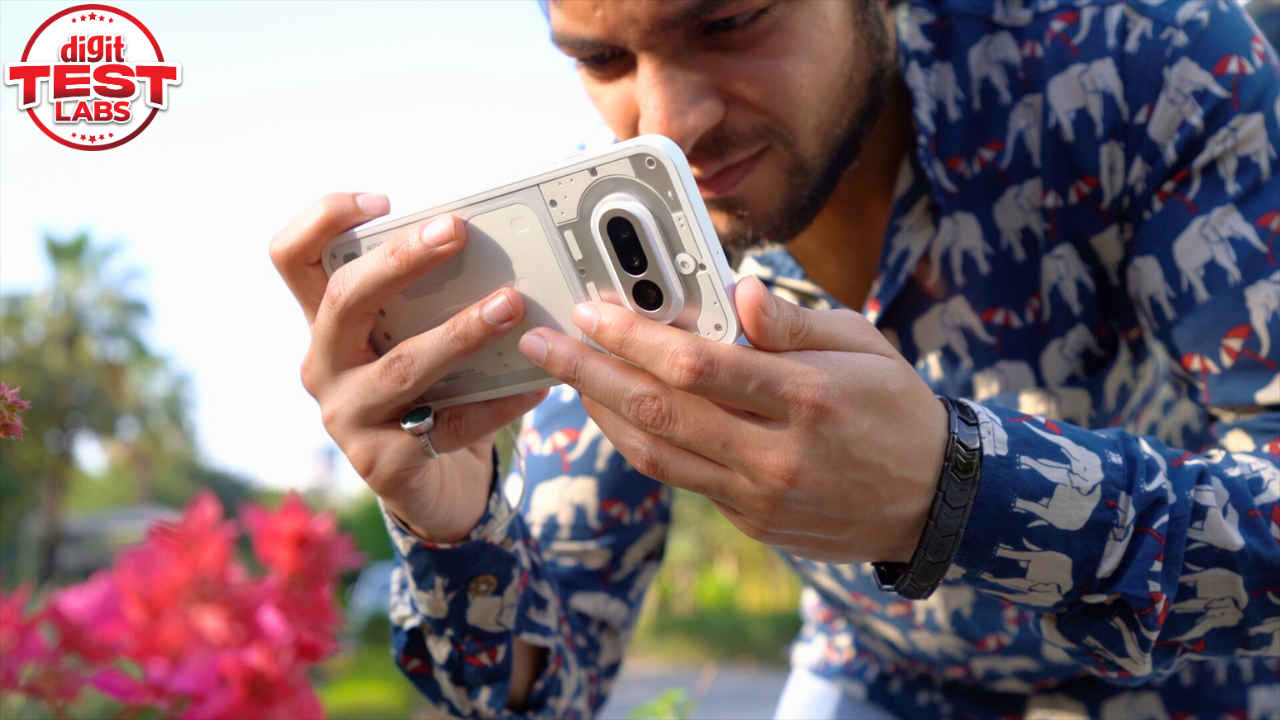
On the rear, the Nothing Phone 4a has a triple camera setup that includes a 50MP primary sensor, an 8MP ultra-wide lens, and a 50MP telephoto camera.
In daylight, the primary camera captures photos with vibrant colours. The images have a pleasing contrast that makes them social-media-ready. When capturing a human subject, the camera brightens up the subject’s face, which can sometimes make the image a bit processed. But, images as a whole come out great with good detail preservation.
Portrait photography is one of the stronger areas for the Phone 4a. The dedicated telephoto lens allows for more natural background blur. The edge detection is also accurate most times, and the bokeh effect is creamy.
The ultra-wide camera performs well, too. The sensor captures images with details and there is not much of a colour shift compared to the main camera.
On the front, Nothing Phone 4a comes with a 32MP selfie camera. The selfies turned out to be natural with a good amount of detail. The portrait selfies also perform well, with pleasing background blur.
Under the hood, the Nothing Phone 4a features the Snapdragon 7s Gen 4 processor. This is paired with up to 12 GB of LPDDR4X RAM and up to 256 GB of UFS 3.1 storage. In day to day usage, the device feels stable and smooth. Now, while I see a bunch of phones in this budget, the beauty of using this particular phone is the solid software optimisation. Fundamentally, it is still very close to stock Android, all while having the proprietary Nothing goodness that doesn’t really get in the way to bog down the fluid experience.
Generally, app opening times are quick and where it matters, in tasks like browsing, messaging, calling and streaming, everything works with absolute ease. Again, Nothing’s software animations also make the phone feel more responsive. The approach here remains one of the cleanest in the industry and everything feels minimal yet meaningful. And because of this tight software and hardware integration, the interface is smooth and doesn’t feel sluggish despite this being a mid-range smartphone.
That said, I do want to add a couple of bits about the Essential Key. Now, for those who don’t know, this button allows you to quickly take notes or access the Essential Space. However, personally, I still don’t find it particularly useful. I think it needs some polish, and some more customisation. Maybe, it could be more beneficial if this key was customisable but I guess that defeats the whole purpose of it being here.
But, moving on from the software, let’s talk some numbers. I am sure, while the software and hardware optimisation is what really matters and Nothing nails it, there are people who would still want to know how good or bad a phone scores on benchmarks. And I did run a few of them so that you can have a fair idea.
In Antutu, the Phone 4a achieved a score of about 1.02 million. In Geekbench, it recorded 1,255 in single-core and 3,365 in multi-core score. In the 3DMark Wildlife Extreme test, the Phone 4a scored 1,110, while the CPU throttling test showed stability of 94%.
Going by the benchmarks, one thing’s clear that this phone is not for gaming; but let’s put it this way that it performs reasonably well. You can play BGMI at up to 120fps, while CODM supports up to 90fps gameplay. Again, the gameplay experience on this device wasn’t without its fair share of frame drops and stutters. But, for a mid-range phone, which is not a gaming flagship, I’d again say, the Nothing Phone 4a performs reasonably well for its price.
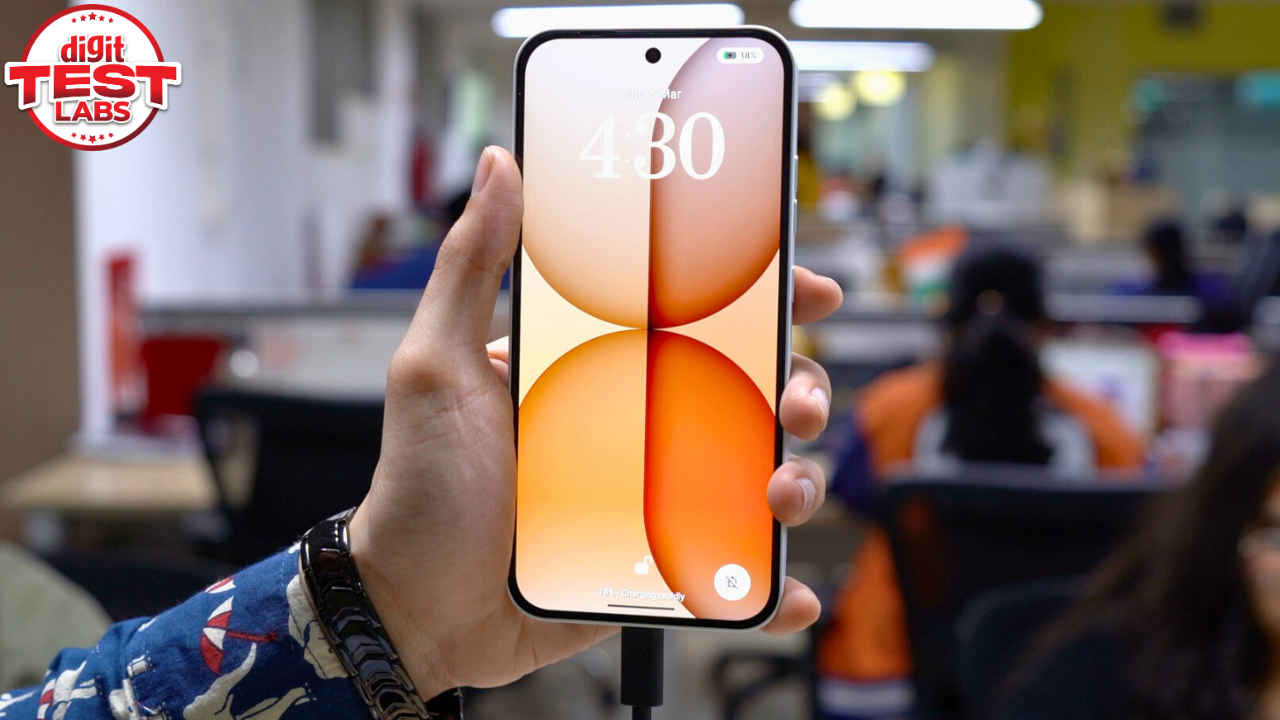
The Nothing Phone 4a is equipped with a 5,400mAh battery, which is also the biggest ever battery on a Nothing Phone. But, beyond the spec, this is an all-day phone. It runs cool, the optimisation is good, and the Snapdragon 7s Gen 4 chip isn’t the most power-hungry chip, so that really adds to the phone’s advantage. In everyday use, the Phone 4a easily lasts through a full day with moderate to heavy use and this is including calling, texting, social media browsing, video streaming and the usual stuff.
Charging speeds are decent as well. The device supports 50W fast charging. I charged the device from 0 to 100%, and it took about 60 minutes.
Of course, there are phones in the mid-range segment with batteries as high as 10,000mAh. Does the Phone 4a match that kind of endurance? No. That said, it can easily survive a full day of use without giving you that battery anxiety and then fully top-up in a decent amount of time before you leave for work the next morning. Isn’t that what really matters?
Summing up, the Nothing Phone 4a feels like a more confident step for the brand. Sure, at a starting price of Rs 31,999, it is launching at a higher asking price than the Phone 3a. But, for what it’s worth, the design remains the core strength here and the phone feels balanced. To count its wins: the display is bright, the cameras are quite versatile, and the software remains one of the cleanest experiences you can get on any Android phone across segments. But dialling back, the pricing does place the Phone 4a in a more competitive segment.
Granted, interested buyers could be looking for more raw performance in a phone at this price point. But, for what it offers, and to the audience this device is appealing to, the Nothing Phone 4a feels different in a sea of options and prioritises usability.