Discovered in August 2025 by Hawaii’s Pan-STARRS Observatory.
The 19-meter asteroid will accompany Earth until about 2083 before drifting away.
Experts clarify that quasi-moons only appear to orbit Earth but actually circle the Sun.
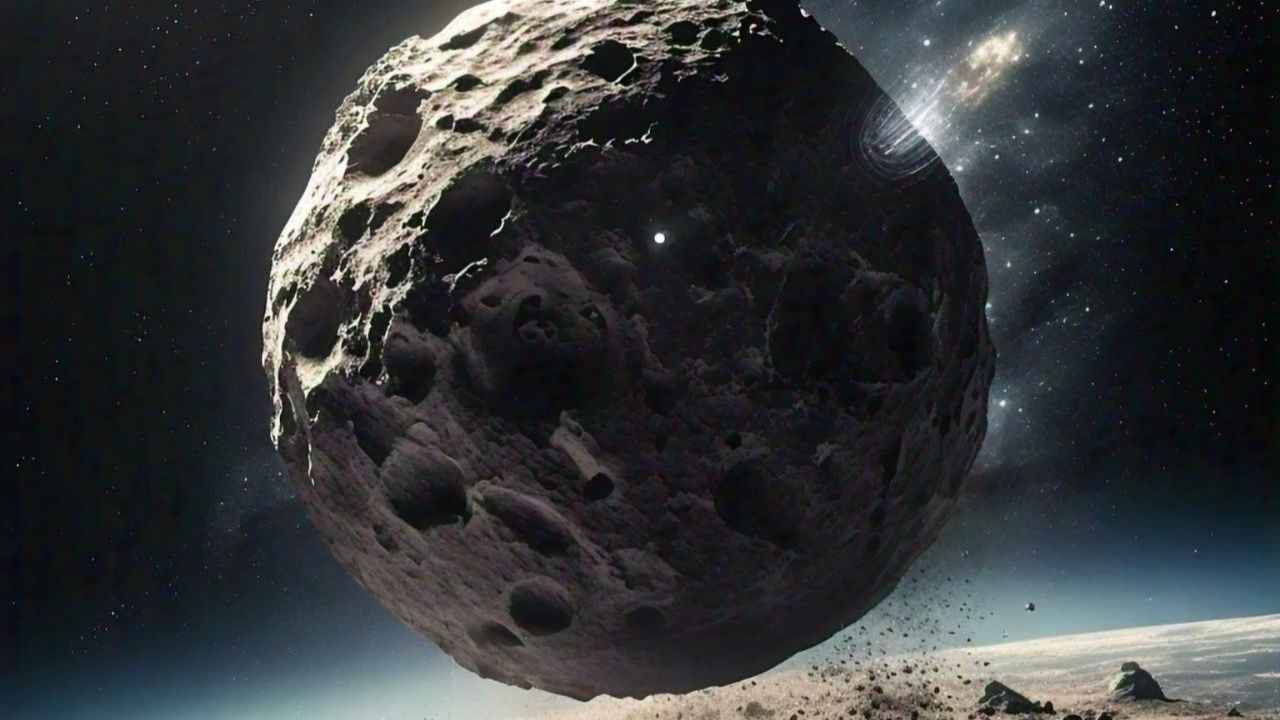
People on social media are both fascinated and perplexed, as astronomers confirm the presence of a new quasi-moon, basically an asteroid called 2025 PN7, which is currently accompanying Earth in its orbit around the Sun. It was discovered in August by Hawaii’s Pan-STARRS Observatory and is expected to orbit Earth for nearly five decades, according to an American Astronomical Society report.
Despite viral claims that Earth now has two moons, scientists have clarified that 2025 PN7 is not a true satellite like our Moon, an Economic Times report stated. Instead, it’s a quasi-satellite, which is an asteroid that travels in a sun-centered orbit that is closely synchronised with Earth’s, giving the appearance that it is orbiting our planet, the report added.
Asteroid 2025 PN7, which measures approximately 19 meters (62 feet) across, has been hovering near Earth’s orbit since the 1950s, but it was only confirmed this year due to its faint brightness and small size. According to the researchers, it will most likely remain in this orbital dance with Earth until around 2083, at which point it will drift deeper into space.
Astronomers Carlos and Raúl de la Fuente Marcos reported that the asteroid’s dim magnitude (around 26) made it difficult to detect, exceeding amateur telescope capabilities. Its discovery provides insight into how small near-Earth objects behave in our planet’s orbital neighbourhood.
Quasi-moon, unlike Earth’s permanent natural satellite, has no gravitational attraction to the planet. It roughly follows Earth’s path while maintaining their own independent solar orbit. This means that, while it appears to circle Earth, they are actually orbiting the Sun alongside other planets, the report added.
Experts say that 2025 PN7 joins a small but interesting list of quasi-moons, including Kamoʻoalewa and 2023 FW13, which have shown similar orbital behaviour in recent decades. What makes the 2025 PN7 different is its longevity. It can be earth companions for nearly half a century before parting ways.