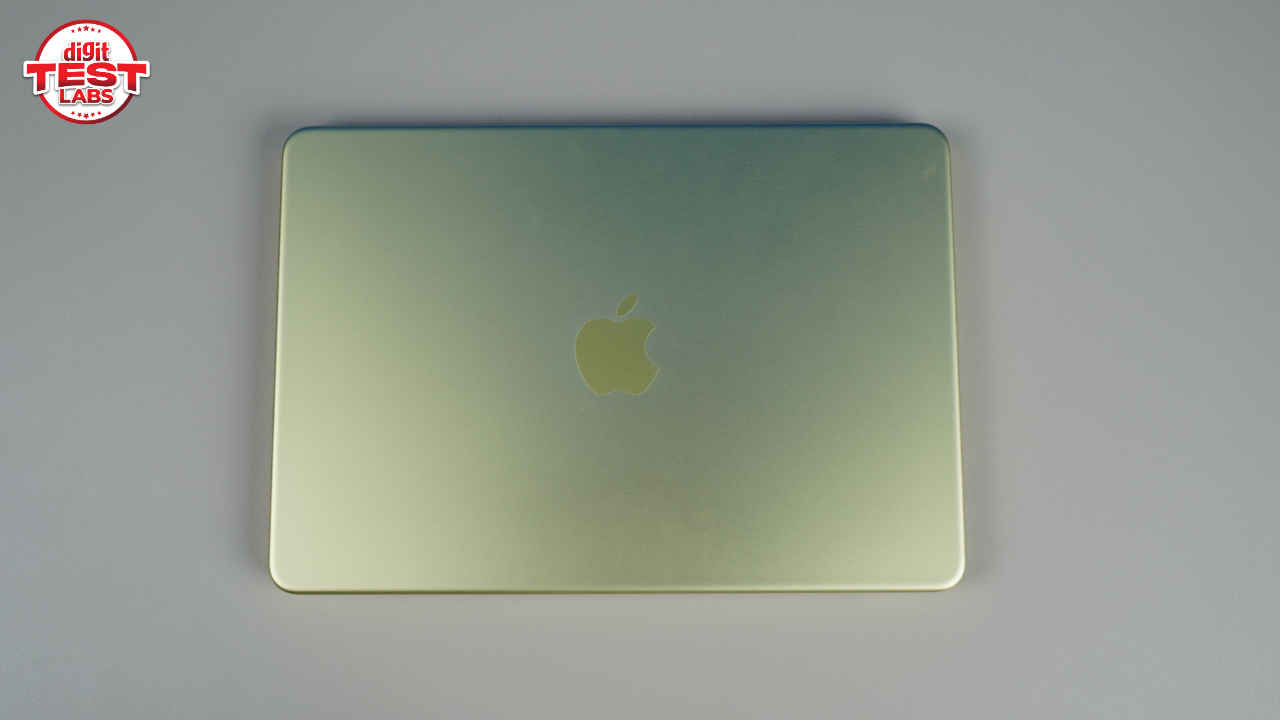
After the iPhone 17 lineup unveiling last month, all eyes are now on Apple’s next big hardware refresh. The Cupertino-based tech giant is working on the next MacBook Pro and iPad models. And they will likely be powered by the yet-to-be-unveiled M5 chip. Ever since Apple’s iPhone unveiling event wrapped up, rumours about the upcoming MacBook Pro have been surfacing. Apple, on the other hand, hasn’t yet confirmed the arrival of the new MacBook or the M5 chip this year. Now, even though we don’t yet know exactly when the new laptop will arrive, the US Federal Communications Commission (FCC) has published filings that point to an unreleased MacBook Pro model, fuelling speculations.
Also read: Which is the right MacBook Air in 2025 for you: M2, M3 or M4?
What the FCC filings reveal
Among the device codes listed in the FCC documents is model number A3434, which does not match any existing Apple laptop. Industry watchers are linking this directly to the upcoming MacBook Pro refresh, expected to feature Apple’s next-generation M5 processors. Typically, such filings appear only a few weeks before launch, suggesting Apple may be gearing up for an announcement in the near term.
Although details are scarce, the documents confirm testing of wireless standards. Interestingly, unlike the M5 iPad Pro models which are expected to debut with Wi-Fi 7 support, the M5 MacBook Pro filing does not list the same. It is unclear whether this reflects a hardware limitation or simply the specifics of the tested configuration.
What to expect from the new MacBook Pro
According to multiple reports, the M5 MacBook Pro will be more of an internal upgrade rather than a major redesign. Apple last overhauled the MacBook Pro’s design in 2021 with the return of MagSafe, an upgraded display, and additional ports. Since then, the company has largely stuck with this form factor, and insiders suggest the M5 series will continue this trend.
Instead, the main talking point is the silicon upgrade. The M5 chip is tipped to bring a performance boost of around 15–25% compared to the M4, along with improved energy efficiency. Apple is also expected to release multiple configurations, including standard M5, M5 Pro, and M5 Max variants. Codenames reportedly in development include J714 and J716 for the MacBook Pro series.
Connectivity could also see modest improvements. Analysts expect the adoption of Apple’s N1 chip, already used in the iPhone 17, which supports Wi-Fi 7, Bluetooth 6, and enhanced features for AirDrop and Personal Hotspot. Thunderbolt 5 is also on the cards for higher-end models.
When will MacBook Pro M5 release?
Traditionally, Apple refreshes its MacBook Pro lineup in October every year, following the iPhone launch. However, reports indicate that the rollout might be delayed this time, potentially pushing the release window into early 2026. Bloomberg’s Mark Gurman has noted that mass production of the new laptops is “nearing,” which hints that Apple is still targeting late 2025 or early 2026 for availability.
The M2 Pro and M2 Max MacBook Pros were launched in January 2023, breaking away from the usual October schedule. Apple could follow a similar path this time around.
Also read: Apple MacBook Air 2025 available for under Rs 80,000, how to grab the deal