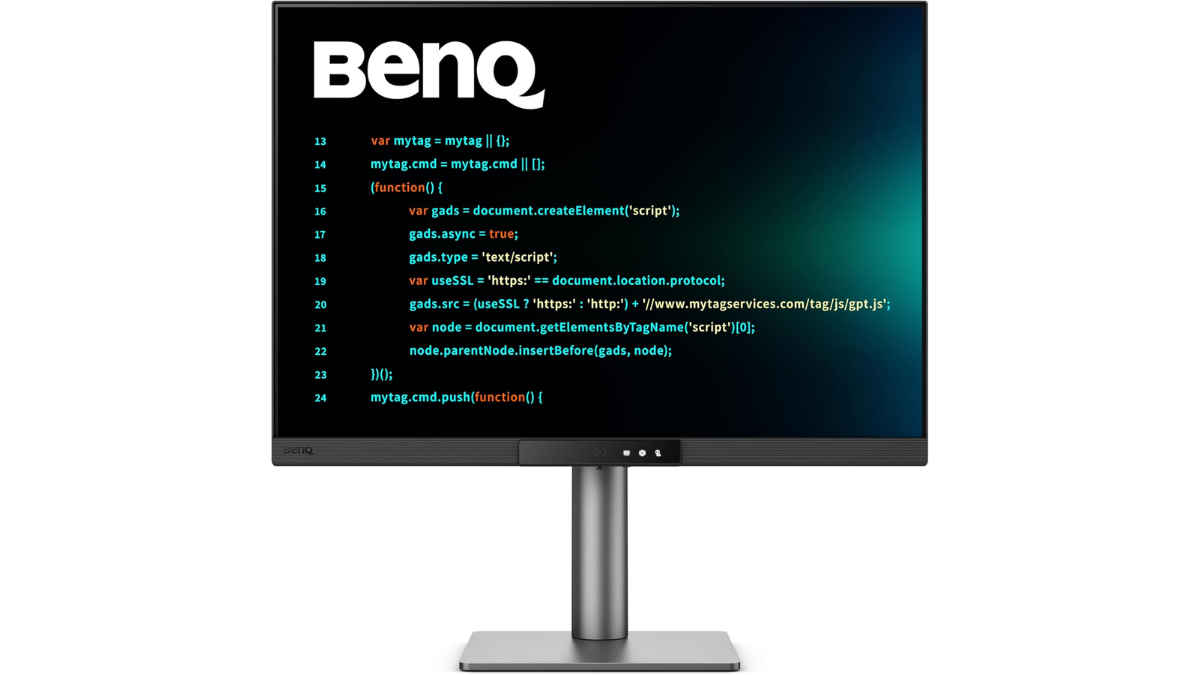
AOC’s leaked lineup includes a dual-mode 500Hz/1000Hz display.
OLED panels may still offer better motion clarity despite lower refresh rates
CES 2026 likely to bring first public demos of these LCD 1000Hz monitors.
Taiwan’s AOC and China’s AntGamer are said to be developing the first gaming monitors capable of 1000Hz refresh rates, with launches expected in 2026. If confirmed, these would surpass today’s fastest 750Hz displays and represent a new benchmark in high-speed esports screens. Still, refresh rate alone doesn’t guarantee smoother motion, and early specifications suggest some trade-offs.
Early details
AntGamer has outlined plans for a 1000Hz model built in collaboration with AMD. The monitor is aimed at fast-paced titles like Counter-Strike 2 and PUBG, using a TN LCD panel with black frame insertion and limited LED zone dimming. The full specifications, including resolution and pricing, remain under wraps.
Meanwhile, leaked information from AOC’s 2026 product roadmap points to the company working on a 27-inch display that can switch between 500Hz at QHD and 1000Hz at 1080p. The company’s roadmap also mentions a separate 27-inch screen featuring Nvidia’s G-Sync Pulsar system, which claims to simulate a ‘1000Hz effect’ via frame interpolation. However, as FlatPanelsHD notes, the Pulsar rollout has been delayed multiple times, leaving questions about its real-world benefits.
Should you wait
Crossing 1000Hz is a technical milestone, but the improvement may not translate directly to visible gains for most players. TN panels are fast but typically weaker in contrast and colour reproduction than IPS or OLED displays. OLED panels, for example, can achieve similar motion clarity at lower refresh rates due to near-instant pixel response times, meaning a 720Hz OLED can still look cleaner than a 1000Hz LCD.
TCL has already demonstrated a 1000Hz 4K LCD prototype in 2024, but scaling such panels for retail production could take time. Bandwidth is another limitation: DisplayPort 2.1 supports 1080p at 1000Hz only with compression and reduced HDR performance, while the upcoming HDMI 2.2 standard, with up to 96Gbps throughput, might offer a better route when available.
For competitive players seeking the absolute minimum input lag, these early 1000Hz monitors could be worth watching. For most users, however, current 360Hz and 500Hz displays already deliver more than enough fluidity, with minimal perceptible difference beyond that range.
AOC and AntGamer are likely to showcase their first prototypes at CES 2026 in January, offering the first real-world look at whether quadruple-digit refresh rates are the next frontier—or just another headline figure.
Keep reading Digit.in for similar stories.