OLED remains the most compelling display technology for premium TVs in 2026. Unlike LCD, QLED or even Mini LED screens, OLED uses self-lit pixels that switch on and off independently. This allows for inky blacks, excellent contrast, and uniform picture quality across wide viewing angles. The HDR performance is generally strong, with support for formats such as Dolby Vision and HDR10+, and motion handling and upscaling have improved with advanced processors from manufacturers. So, if you are someone who values the picture quality offered by an OLED TV, here are some of the best picks from leading OLED TV makers.
We have not tested all these TVs. The ranking is based on the descending order of prices for their 55-inch models. The prices are subject to change over time.
Price: Rs 2,08,990
The Sony Bravia 8 M2 is aimed at viewers who prioritise picture accuracy. Sony’s OLED tuning focuses on natural colours, smooth gradients, and strong near-black detail, making it well-suited for films and high-quality streaming. Peak brightness is lower than comparable OLED models from Samsung and LG, but Sony’s conservative tone mapping keeps highlights controlled and consistent.
The XR processor continues to be a key strength. It handles upscaling, motion, and noise reduction with a level of refinement that benefits both SDR and HDR content. Dolby Vision is supported and works well with content from platforms such as Netflix and Apple TV+.
Also Read: Digit Zero1 Awards 2025 honours best tech gadgets: List of full winners
Gaming support includes HDMI 2.1 and VRR, but the overall setup is more restrained, with fewer high-bandwidth ports than rivals like the Samsung S95F and LG G5. Audio is delivered through Sony’s Acoustic Surface Audio system, which uses the screen as the speaker. Dialogue is clear, and sound placement feels accurate even without a soundbar.
Google TV provides a familiar interface and wide app support.
Price: Rs 2,03,990
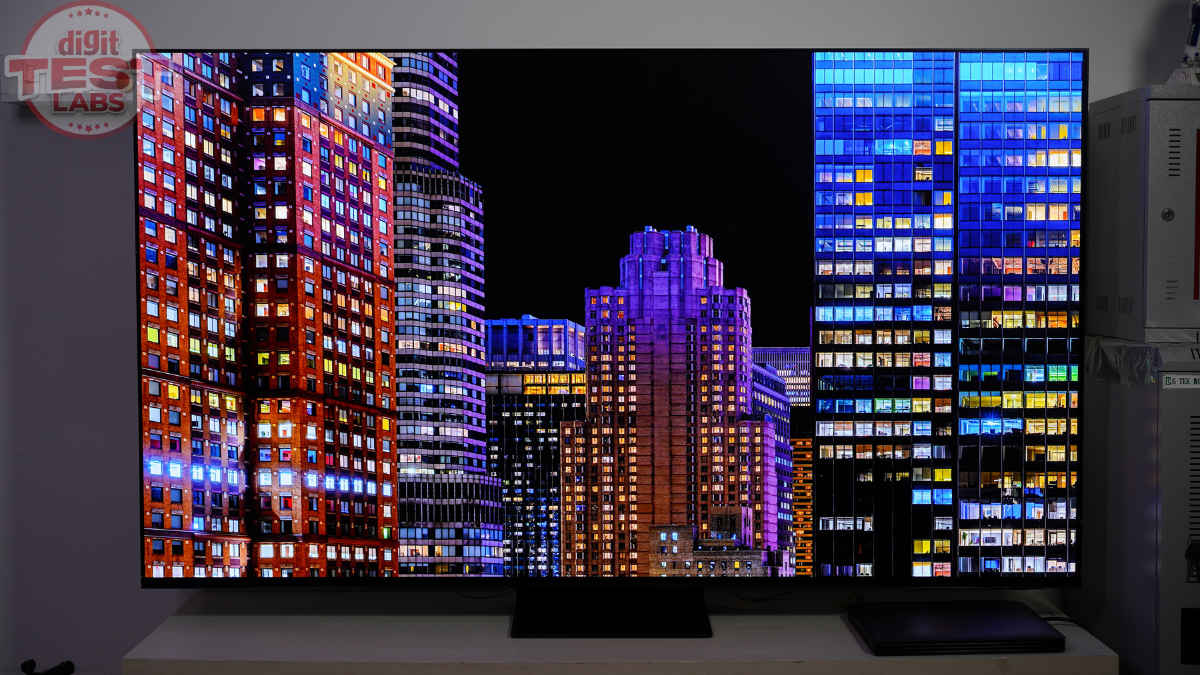
The Samsung S95F (review) is Samsung’s most refined QD-OLED TV so far and addresses a major OLED concern in bright living rooms. Its OLED glare-free matte coating reduces reflections.
QD-OLED technology delivers higher colour volume than traditional WRGB OLED panels, resulting in vibrant visuals. The brightness levels are strong for OLED, and the HDR performance is strong. Samsung offers HDR10+ support, not Dolby Vision.
Samsung’s One UI Tizen interface is feature-rich, including AI-based picture and sound optimisation. SmartThings integration allows the TV to function as a home automation hub. Gaming features include a native 120Hz refresh rate, VRR, ALLM, and low input lag. The connectivity ports are present on a separate One Connect Box. This should offer better cable management and a cleaner aesthetic.
Also Read: Samsung’s 2026 OLED TVs and Odyssey monitors get Nvidia G-Sync support for smoother gaming
Price: Rs 1,64,990
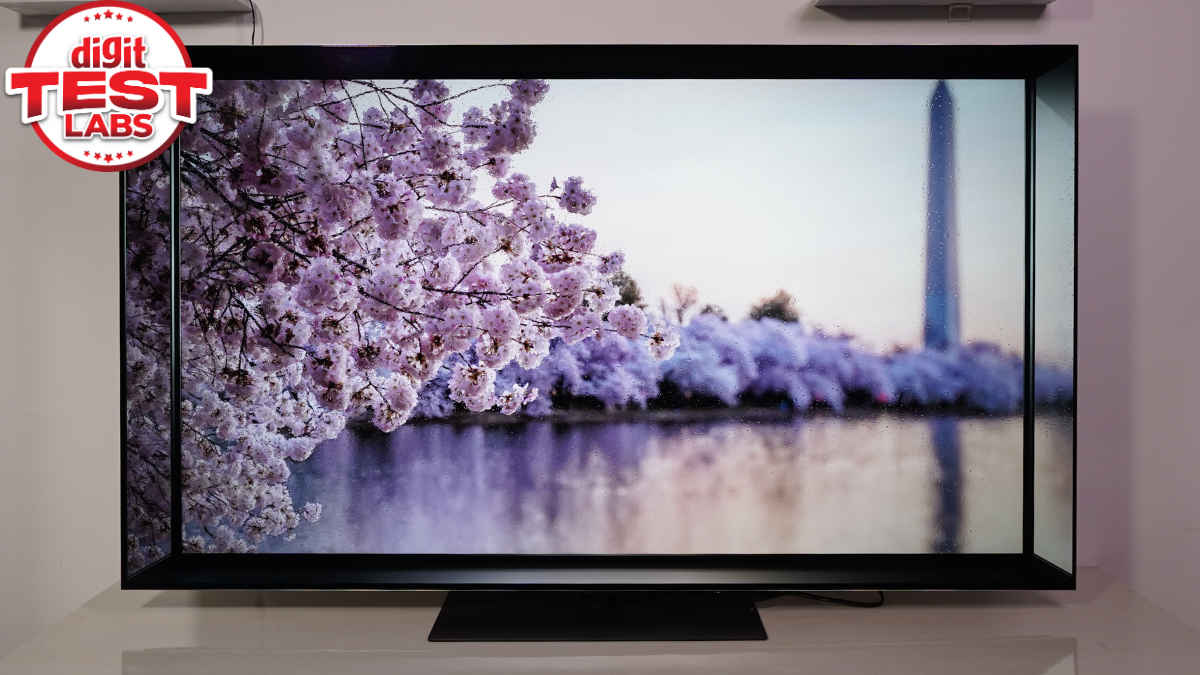
The LG OLED evo G5 (review) represents LG’s most advanced OLED TV for 2025. It builds on the Gallery Series design, offering a flush wall-mount-only form factor alongside improved processing and meaningful technical upgrades.
It is a highly bright panel with rich colours, which don’t look artificial. Black levels and pixel-level contrast remain core OLED strengths. The HDR performance is impressive with Dolby Vision and HDR10+ support. The visually engaging panel is complemented by strong sound. You also get a versatile port selection and a mature and feature-rich webOS software.
A key highlight is the 165Hz refresh rate, clearly targeting high-end PC gamers. Combined with HDMI 2.1, VRR, G-Sync, FreeSync Premium, and near-instant response times, the G5 doubles as a large-format gaming display.
Price: Rs 1,83,990
The Panasonic TH-55LZ950DX is part of the LZ950 series, and comes with a clear focus on colour accuracy and controlled picture processing. Panasonic’s AccuView Display and pixel-level dimming should provide precise light control, while the 4K Studio Colour Engine is tuned for natural colours and stable brightness. The Hexa Chroma Drive further enhances colour depth, particularly in HDR content.
The TV supports HDR10 and Dolby Vision. Noise reduction and 4K upscaling help improve lower-resolution sources such as cable TV and older streaming content. Audio output is rated at 20W and includes Dolby Atmos support.
The TH-55LZ950DX runs Android TV based on Android OS 10. This is older compared to Google TV and other UIs in this space. It supports hands-free voice control, Google Assistant, and Amazon Alexa smart speakers. Chromecast and Panasonic’s MirAIe platform are also supported for screen sharing and connected home features.
Connectivity includes three HDMI ports with HDMI 2.1 and ARC support, Auto Low Latency Mode for gaming, two USB ports, an optical audio output, and a built-in media player.
Price: Rs 1,44,490
The Haier H55C95EUX features HDR10+ and Dolby Vision IQ. Dolby Vision IQ allows the TV to adjust picture output based on ambient lighting conditions. The TV supports a 144Hz refresh rate, making it suitable for fast-moving content, including sports and compatible gaming setups.
The TV runs on Google TV, offering a content-led interface with access to the Google Play Store. This means you also get built-in Chromecast and hands-free Google Assistant voice control.
Audio is handled by front-firing stereo speakers tuned by Harman Kardon, delivering a combined 50W output. This is backed by Dolby Atmos support for a wider sense of immersion.
Connectivity options include four HDMI ports, two USB 2.0 ports, Bluetooth 5.2 for wireless accessories, and an Ethernet LAN port for wired networking.
We will be updating the list with new models that launch this year. So, keep reading Digit.in.
Also Read: LG Smart TV Gaming Portal updated with new games, voice controls, and mobile gamepad support