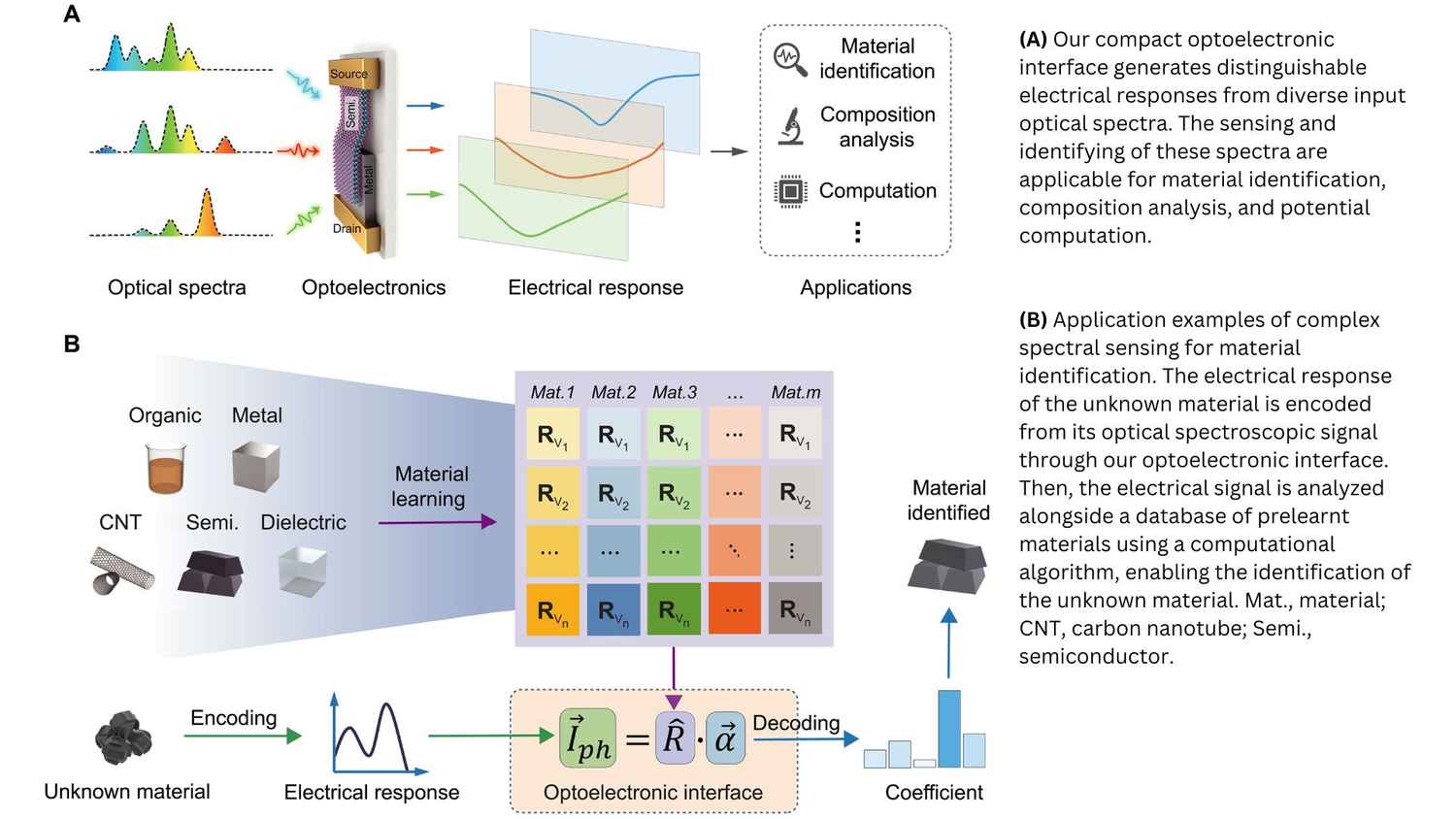
If you’ve ever explored the world of spectral sensing, you’ll know that understanding how materials interact with light has been at the core of many scientific advancements. Traditional spectrometers, though highly accurate, are often bulky, complex, and expensive. However, a team of researchers led by the researchers at Aalto University has made significant strides in overcoming these challenges by developing a revolutionary miniaturized spectral sensor. This new device integrates a tunable optical filter with a photodetector, offering high-precision spectral analysis in a compact, efficient form.
With this breakthrough, we may soon see a future where spectral sensing technology becomes as ubiquitous and accessible as the devices in our pockets. Published in Science Advances’ research paper – Miniaturized spectral sensing with a tunable optoelectronic interface, this technology promises to open up new possibilities in fields like healthcare, environmental monitoring, and food safety. Keep reading to discover how this innovative spectral sensor could transform various industries and the road ahead for its wide adoption.
Spectral sensing works by analyzing how different materials interact with light. Every substance has a unique spectral signature—a distinct pattern of light absorption and reflection. Conventional spectrometers do this job well but are usually large, complex, and expensive. That’s why researchers have been racing to create miniaturized alternatives that can match their performance without the bulk.
The new spectral sensor developed by the researchers at Aalto University does exactly that. By integrating a tunable optical filter directly with a photodetector, the device is able to selectively capture different wavelengths of light with high precision—all in a compact form factor.
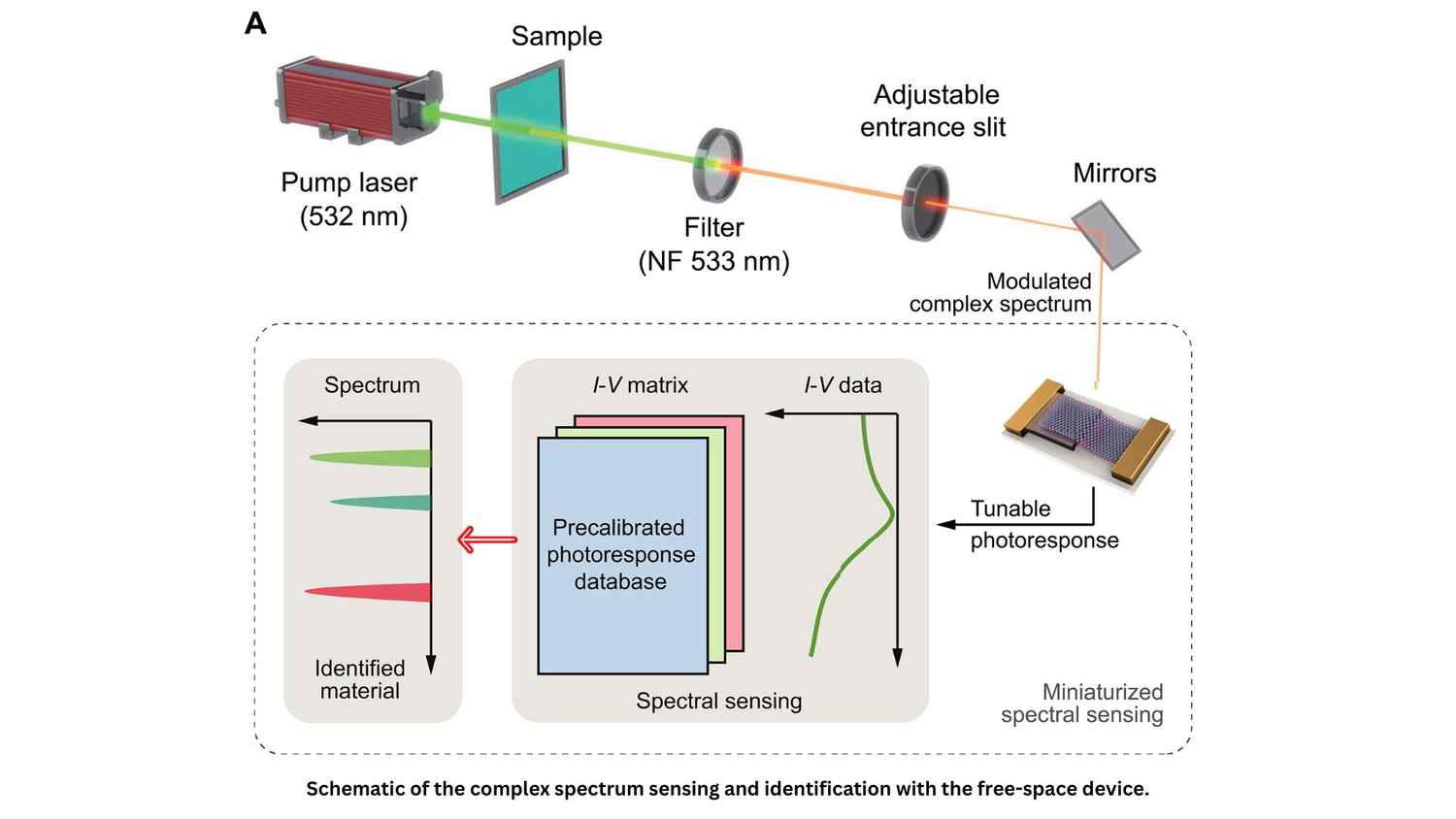
At the heart of this sensor is its tunable optoelectronic interface. The system consists of a semiconductor-based photodetector combined with an adjustable optical filter. The magic happens when an external voltage is applied, dynamically changing the filter’s transmission properties to control which wavelengths of light reach the detector.
This approach allows the device to scan through multiple wavelengths by simply adjusting the voltage, eliminating the need for moving parts. Traditional spectrometers rely on mechanical components like diffraction gratings or prism-based filters, which take up space and introduce durability issues. The voltage-controlled tuning in this sensor makes it not just smaller, but also faster and more reliable in the long run.
Also Read: Why your wireless earbuds die faster over time and what science says about fixing it?
Despite its tiny size, this spectral sensor delivers impressive performance. It achieves spectral resolution comparable to traditional benchtop spectrometers, meaning it can accurately differentiate between various materials and substances. The tunable range of the optical filter covers a large portion of the visible spectrum, making it versatile enough for numerous applications.
One of the standout features is its rapid response time. Thanks to the fast-tuning capability of the optoelectronic interface, the sensor can capture spectral data in real-time. This makes it a great fit for applications like environmental monitoring and medical diagnostics, where quick and accurate measurements are essential.
Also Read: AI adoption fail: 80 per cent of companies neglect human factors critical for AI success
Because of its compact and efficient design, this spectral sensor has a wide range of potential uses:
While the potential is huge, there are still a few hurdles to overcome before this sensor becomes mainstream:
Also Read: Humanity’s Last Exam Explained – The ultimate AI benchmark that sets the tone of our AI future
The miniaturized spectral sensor with a tunable optoelectronic interface developed by the researchers at Aalto University represents a significant step forward in the field of spectral sensing. Its combination of compactness, high spectral resolution, and rapid response positions it as a versatile tool for a wide range of applications. As research progresses, addressing the remaining challenges will be crucial for realizing the full potential of this technology in practical, real-world scenarios.
The integration of such advanced spectral sensing capabilities into everyday devices holds the promise of transforming how we interact with the world, providing accessible and actionable information across various domains. The work by the researchers at Aalto University lays a solid foundation for future innovations in this exciting and impactful field.