If I had to choose the best smartphone trend of the last few years, it has to be the improvements to mobile photography! As someone who loves taking pictures, I’ve always found full-fledged cameras a bit too much. Especially when I just wanted to take a quick snap, but now, having a powerful camera in our pockets has definitely flipped things.
For a geek like me, who likes messing around with the cameras, there hasn’t really been a smartphone in the mid-range segment that I could rely on to shoot for the entire day. However, all these thoughts changed for me the day I stumbled across the REDMI Note 15 Pro+.
Released just a few days back, this device has managed to surprise me in all aspects. From the camera hardware to the smart processing, REDMI has managed to fill in a void that has plagued the mid-range segment for a long time. Without wasting any further time, let’s take a detailed look at how the REDMI Note 15 Pro+ manages to do all this.
Also Read: Inside Snowflake and OpenAI’s $200 million plan for enterprise AI
I don’t think I need to emphasise the fact that for a camera to take good pictures, the actual sensor needs to have a lot of work put in. Sure, software plays a big role, too; however, the major foundation and the stepping stone of a good smartphone camera start from the sensor itself.
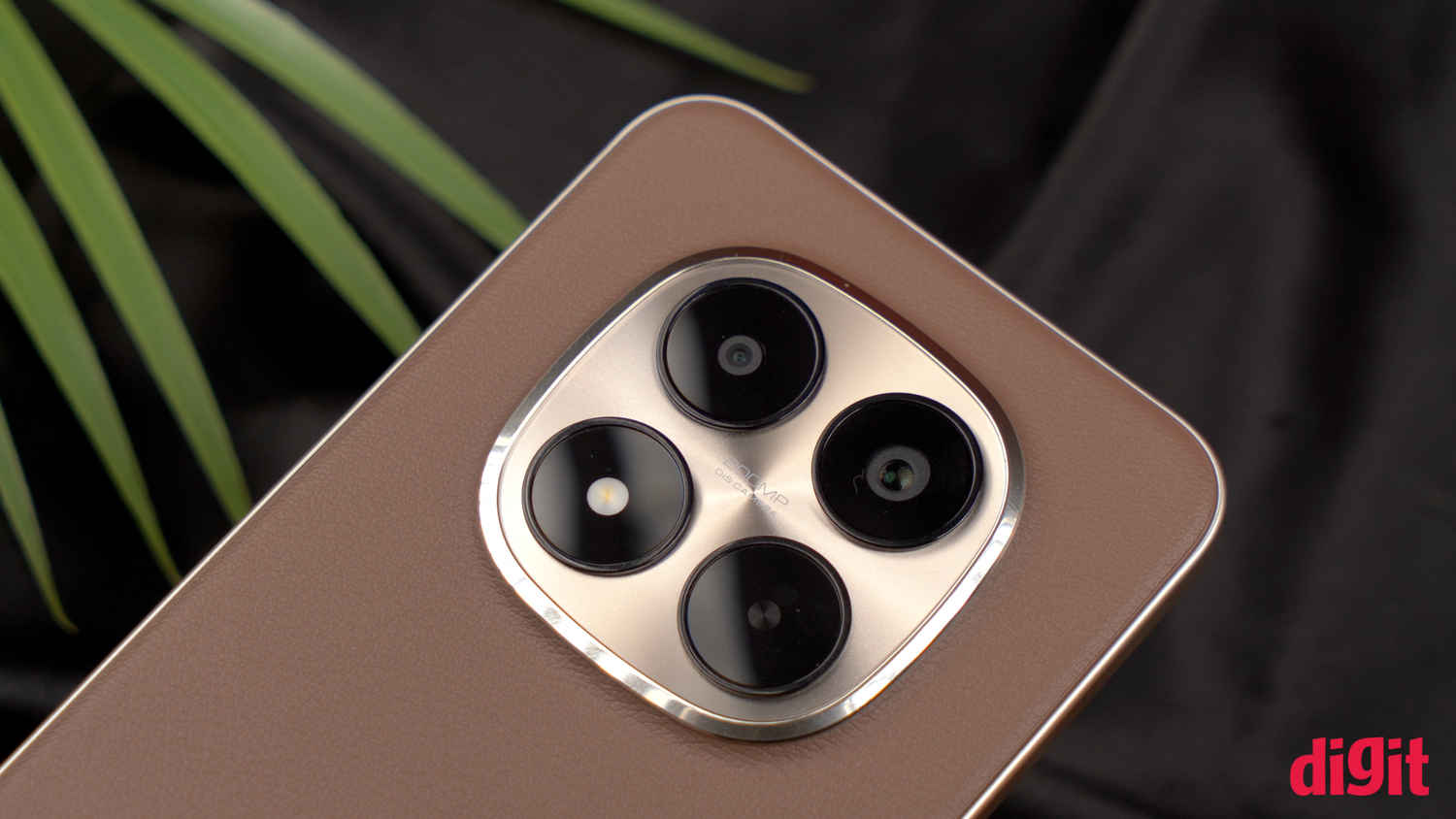
REDMI has played things interestingly, choosing to go with the exceptional 200MP Samsung ISOCELL HPE camera sensor. While this is the global debut of this particular sensor, Samsung camera sensors have always been extraordinary, and the HPE is no different.
The 200MP Samsung HPE sensor on the phone gives it a major advantage over the competition. Not only because it has better resolution than competitors like Vivo V60, which features a 50MP camera or an iPhone 17 that comes with a 48MP camera, but also because the Note 15 Pro+’s main camera has a larger sensor.
It features a 1/1.4-inch sensor against the 1/1.56-inch sensor on the main camera of a more expensive iPhone 17. This is a clear advantage in low-light photography and generally across different conditions. Think of the sensor as a plain window; so when the window is large, it allows for more light to enter the room.
Just take a look at some camera samples using the UltraHD mode of the device, which allows the phone to capture pictures at 200MP. In every image, you’d notice that the details are on point. For example, the first picture of the bricks, where it’s possible to make out even the tiniest of details, and all that is only possible due to how big the sensor is.
In this image, while you notice the clarity and the colours at first, the highlight here was the details the phone was able to make out. Due to the image being captured at 200 MP, it becomes easy to zoom in. The phone doesn’t miss any details of the subjects at all. Just zoom in, and you’d be able to spot the bicycle, and that too with a lot of clarity. The same can be said for every other picture. The fun part about having so many details in a picture is that it becomes possible to just crop it out and still not have to worry about the image quality at all.
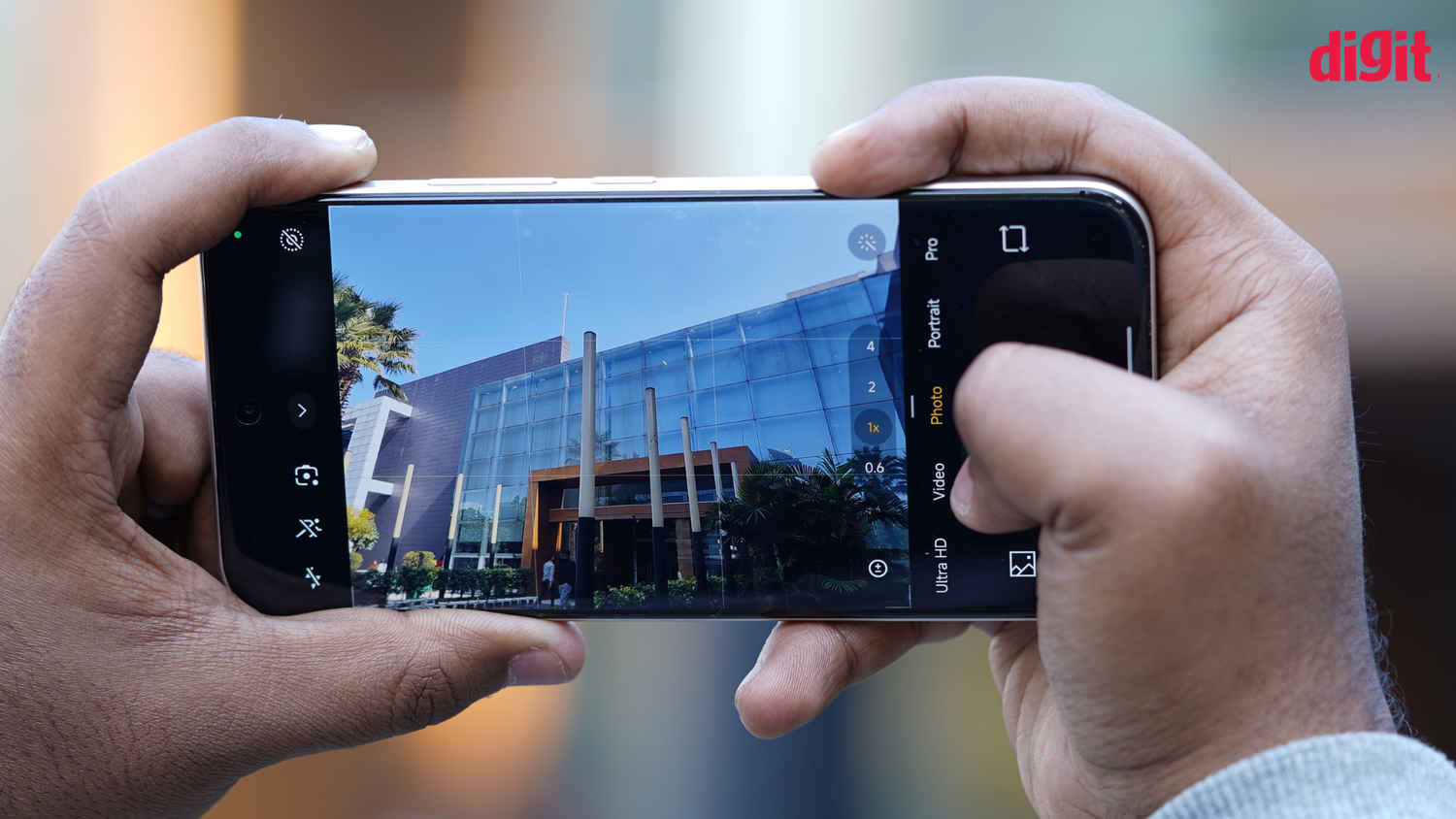
Even with a single lens, the REDMI Note 15 Pro+ does the job of multiple lenses! It is so smart that it can automatically scale up and allow for multiple focal lengths to be captured. Also, I really like how REDMI allows users to change the default mode for shooting pictures when you open up the camera app.
For example, if you don’t like the default 23mm focal length, and it feels too wide, you always have the option to switch it up to either 28mm, or 35mm, based on how comfortable you are shooting with it!
Let’s now get into the optical flexibility the device offers; for instance, at the default 1x, the device takes pictures at 23mm, which is considered to be a wide-angle shot. Used often for street photography, I found the default setting to be perfect while on the go; be it capturing the overall vibe of the streets or whenever you wanted the phone to capture the entire subject, this mode was the one to go with!
Moving onto the 1.2x zoom mode, the device then switched and captured pictures at a 28mm focal length, which is very interesting, as it is a slightly tighter crop than the default 23mm mode. It allowed the pictures to eliminate distracting elements at the edges while still having the feel of a wide frame. Having such optical flexibility gave me fewer reasons to move around the subjects while framing the shots, which overall meant that I could take better pictures.
The 1.5x zoom mode, meanwhile, is the classic 35mm frame, which is also considered a fan favourite. As a fellow 35mm shooter myself, I found myself using the 1.5x mode a lot. The thing with this focal length is that it’s tight enough to focus on a subject while also being wide enough to show the overall environment. In the third and fourth pictures, for example, I was able to focus on the subjects while also having a feel of the background, which adds more details.
In the 2x mode, here the camera switches up to a 46mm focal length, and this again is very close to the standard 50mm length. The 2x mode is even available while shooting portrait shots, and I cannot emphasise how important it is.
50mm has always been the gold standard for shooting portraits, and having the capability to shoot pictures like these makes it great to capture some perfect portraits. Be it a solo subject or a group of people, the output that the phone was able to deliver in portraits is stunning, given that all of this is happening with just a single lens.
Last but not least, I cannot forget about the 4x mode, particularly one mode which I enjoyed the most. Having a 92mm focal length, with so many details in a single lens, was not something I expected. It gave me so much freedom to play around with that I did not miss having a dedicated telephoto camera at all. 92mm delivers good results, as even when the subjects are a bit too far, you get no issues lining them up with the frame.
Having a sensor that is so big allows for a lot of light to be captured, and well, it is most noticeable when capturing pictures in low-light scenarios. The sensor holds so much light per pixel that it helps in reducing noise even further. This significantly boosts light sensitivity, hence allowing the REDMI Note 15 Pro+ to capture bright and clean images in low-light conditions.
Not only does the sensor help, but REDMI’s HyperAI plays a crucial role too. As soon as the phone detects that a photo is being taken in a dark environment, the night mode is automatically turned on. During this mode, the phone uses AI to eliminate noise and restore textures that would typically be lost to digital grain. Just have a look at some of the low-light shots below.
All in all, it is safe to say that the smart combination of the large sensor size and the optimisation makes the device a complete game-changer. The one aspect where mid-range devices have always struggled, the REDMI Note 15 Pro+ handles things much differently, making it the gold standard for low-light photography in this segment.
An excellent ultrawide camera accompanies the main 200MP camera on the Note 15 Pro+. It’s fair to say that so far our focus has been put towards the main camera so much that the device’s ultrawide capabilities haven’t been discussed properly. REDMI, though, has put equal focus on building the ultrawide camera as well. Let’s take a deep dive into the ultrawide shots now.
The device clicks some outstanding pictures with the ultrawide camera, and the focal length goes as wide as 15mm. This allows for the device to capture some expansive pictures, which is usually not possible on most mid-range smartphones. I’ve always felt that ultrawide systems on this range of devices are just there for the name’s sake.
But REDMI, on the other hand, has really put in great effort. Be it capturing those wide landscape shots during the day or those city skylines at night, the ultrawide camera performs very well both times. Just have a look at some of the shots I captured below:
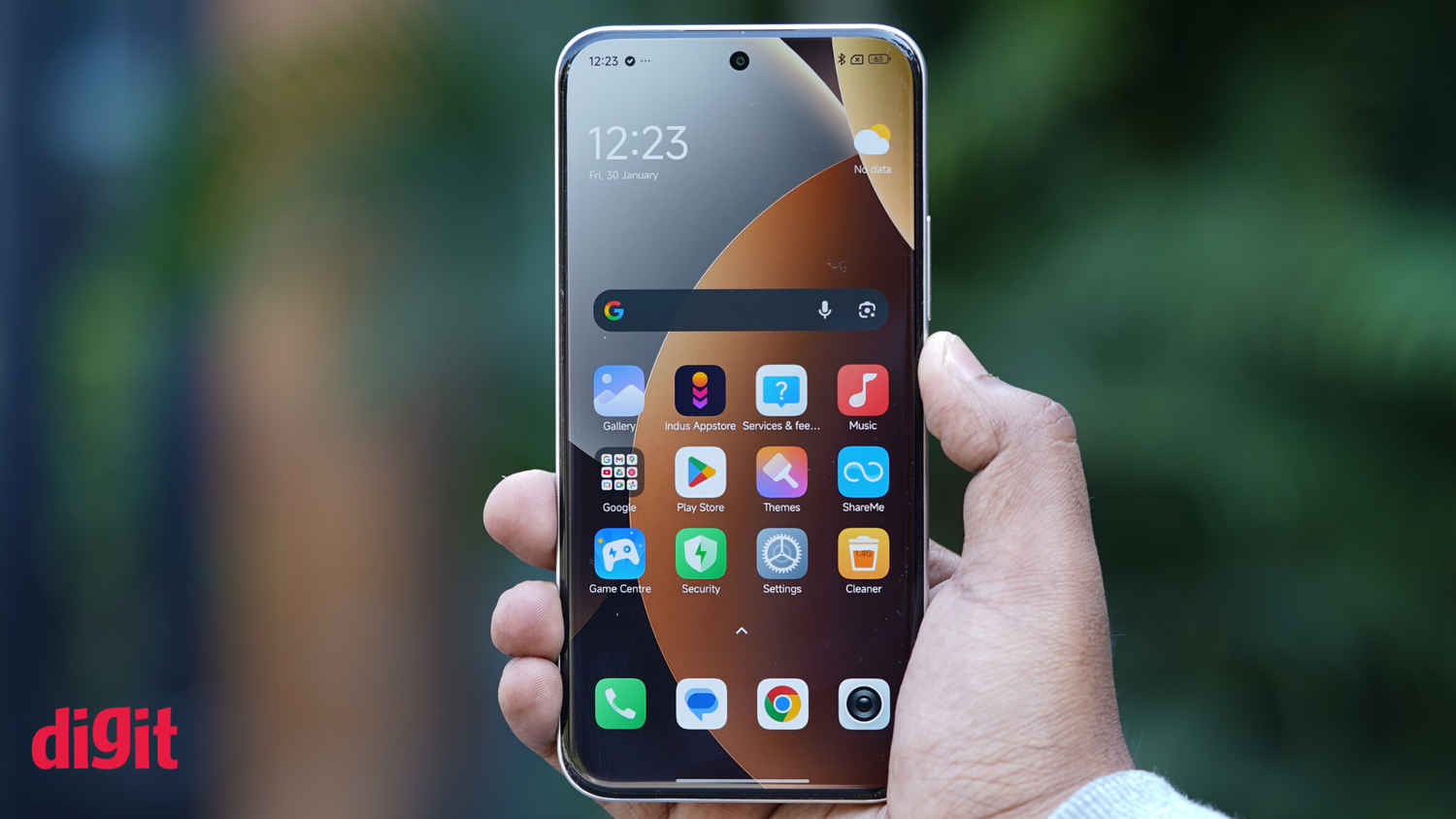
Enough talk about the camera, moving forward, let’s see the other things I experienced during my time with the device. First off, the beautiful 6.83″ AMOLED quad-curve display at the front is simply lovely. REDMI claims the display can go to around 3200 nits at its peak brightness, and well, no doubts there, as even in heavy sunlight, I had no issues using this device.
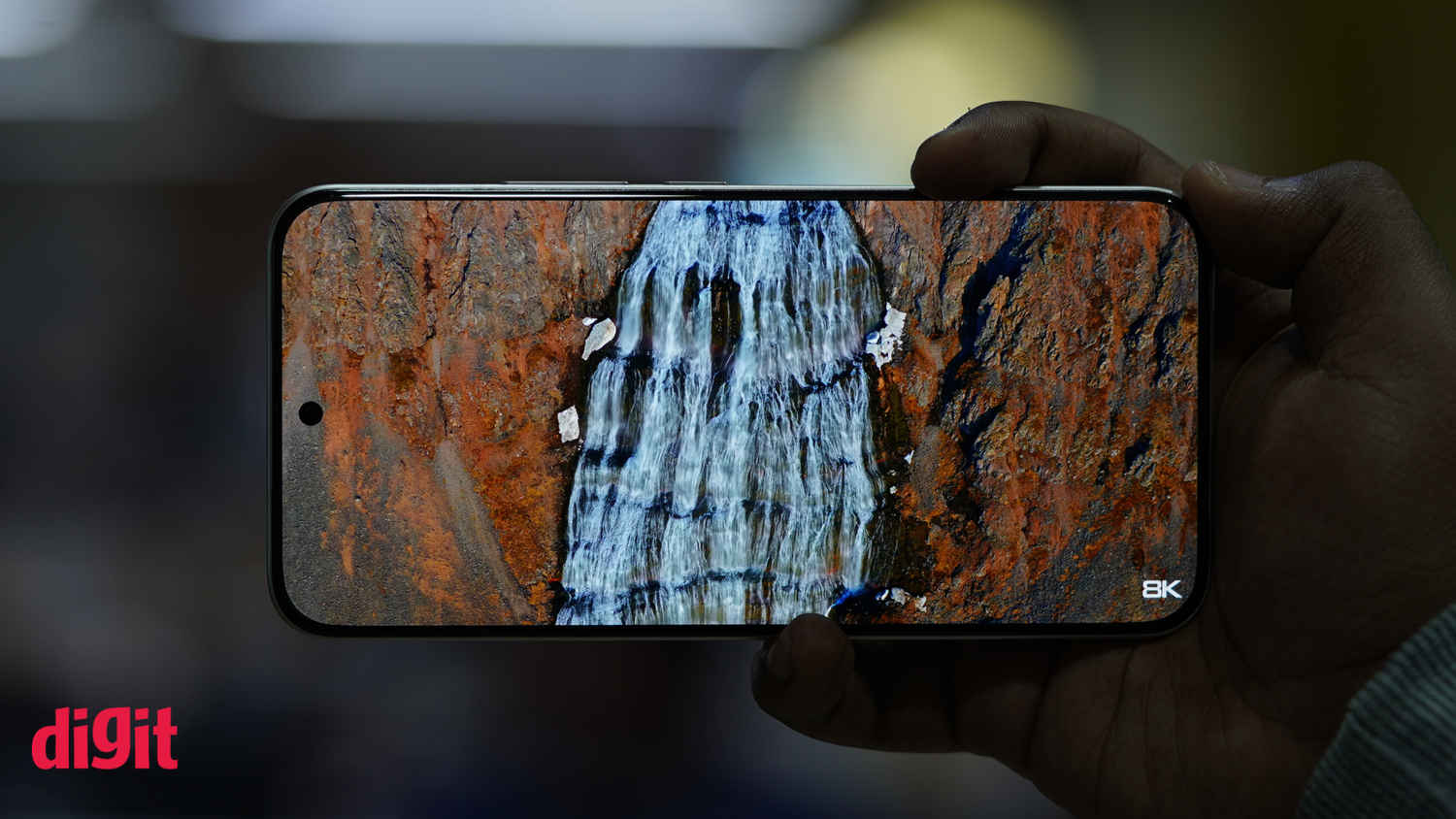
The screen comes with a 1.5K resolution, which makes bingeing content on it a total delight. Support for HDR10+ and Dolby Vision is just a cherry on top, and I cannot talk enough about the speakers. The dual speaker setup is loud and crisp; it even supports Dolby Atmos. Along with a 400% volume boost feature, which makes listening to music a joy.
Though the best part about the display for me was the protection. Look, I’ll be honest, I’m very clumsy when it comes to handling hardware. As someone who has broken multiple smartphone displays due to drops, I tried my best to be cautious with the Note 15 Pro+. But being true to myself, I did what I do best, and well, in this case, it was dropping the phone all around.
From the office floor to the hard concrete roads outside, I don’t think there’s any place left where I might not drop-test this phone unknowingly. However, even after so many drops, the device is still in immaculate condition, and well, that’s all thanks to Corning’s Gorilla Glass Victus 2. High-quality glass has always been reserved for the premium-tier devices, but it’s nice to see REDMI bringing the same to the more affordable mid-ranger segment now.
Another smartphone trend, which started in 2025 and has been a very welcome change, comes in the form of big batteries and superfast charging speeds. While a bit late, REDMI too has joined the race, and they’ve managed to make a solid entry with the Note 15 Pro+.
Powered by the massive 6,500 mAh battery, the device simply refuses to die when charged to a 100%. On a full charge, you can easily expect around two days of battery life, and that’s all thanks to smart optimisation done by REDMI. The device understands when applications need power and when the device needs to save on battery life.
But even when the battery was running low, I never really found it to be an issue. You see, the device comes with a superfast 100W charger in the box itself. Thanks to this, the battery gets charged from 0% to a 100% in just around 40 minutes. I found myself charging the device in the morning itself, for just 15–20 minutes, and it would easily last me through the entire day.
In the end, all I can say is REDMI has definitely redefined the mid-range smartphone category with the Note 15 Pro+. The camera delivers excellent images, in addition to optical flexibility, which has not been seen before with just a single camera. Along with that, the display and the solid battery life check all the boxes that it needs to, with a breeze.
Speaking of which, the REDMI Note 15 Pro+ will go on its first sale starting tomorrow, which is February 4, 2026. Buyers are eligible to get Rs 3,000 bank discounts on select cards. Check out the detailed pricing for all the RAM and storage variants below:
| Device | RAM & storage variant | Price |
| REDMI Note 15 Pro+ | 8GB + 256GB | Rs 37,999 |
| REDMI Note 15 Pro+ | 12GB + 256GB | Rs 39,999 |
| REDMI Note 15 Pro+ | 12GB + 512GB | Rs 43,999 |
Also Read: An RTX 5070 Ti GPU with a hole in it set a new world record: Here’s how