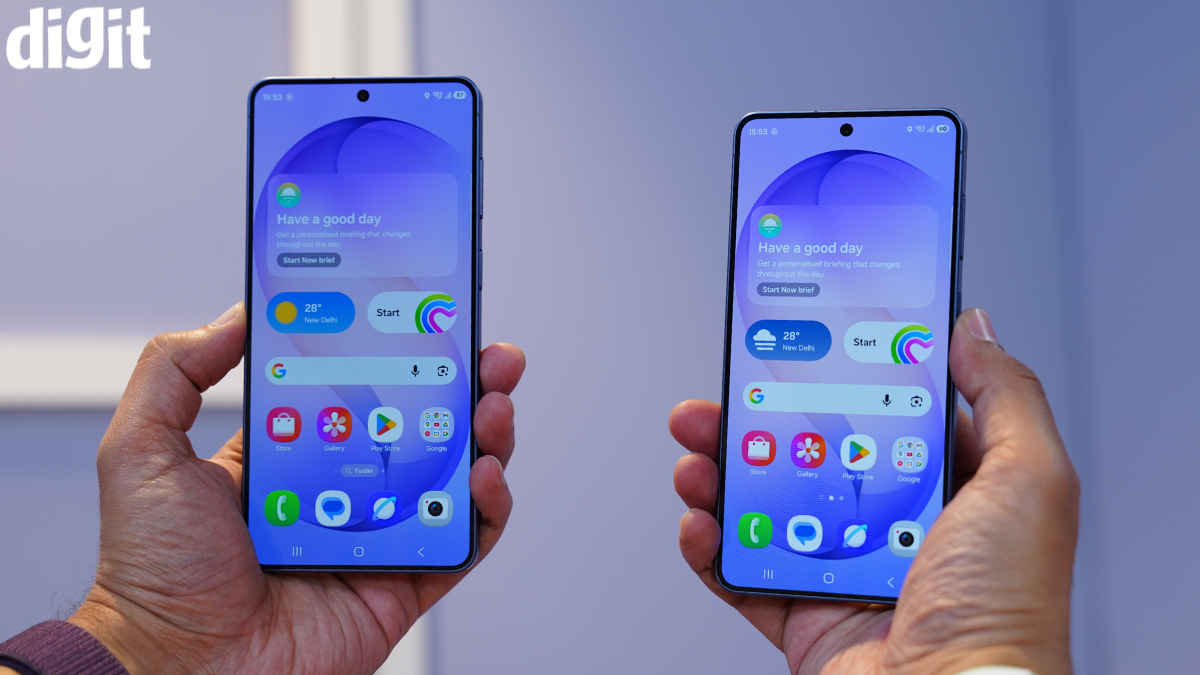
Every year, the Galaxy Ultra model grabs the headlines. It is the phone that gets the biggest upgrades and the flashy new features. But not everyone will pick the Galaxy S26 Ultra. For some, it may feel expensive. For others, it may simply feel too big. And that is where the Galaxy S26 and Galaxy S26 Plus step in. These are the standard Galaxy S models that have traditionally defined what a Samsung flagship feels like without going all in. They balance size, features and price in a way that makes them easy to recommend year after year.
After spending some time with both the Galaxy S26 and S26 Plus, there is an immediate sense of familiarity, and in a good way. The design changes are subtle, performance gets a meaningful bump, and the overall experience feels tighter and more polished.
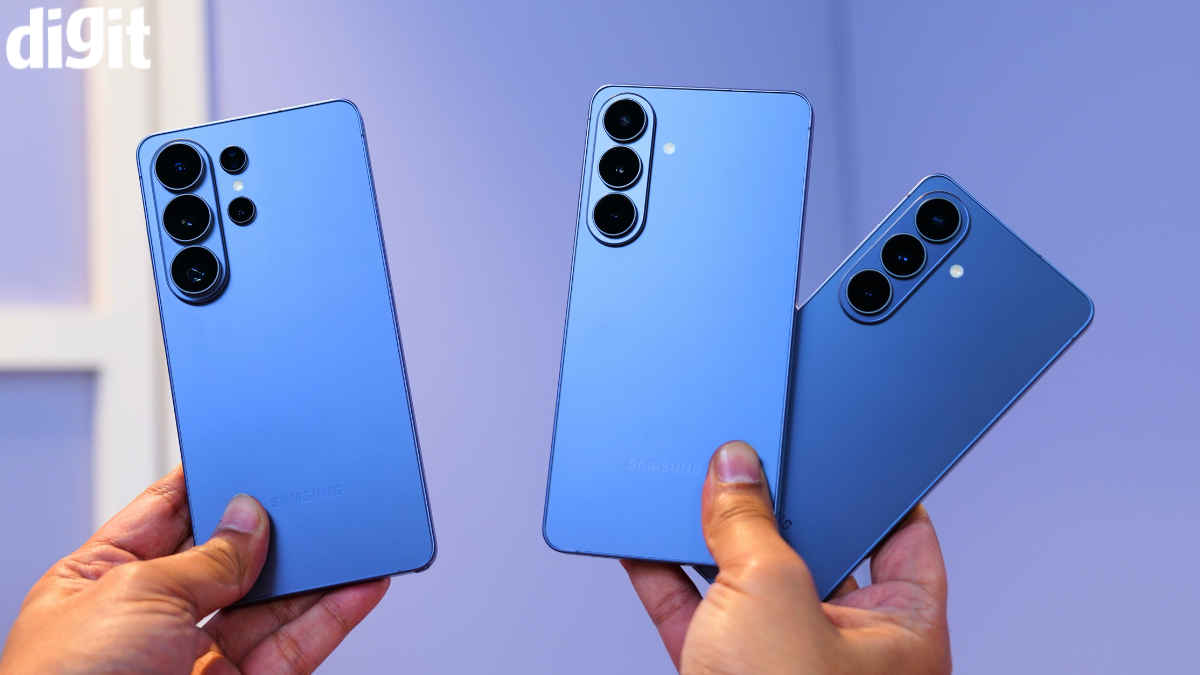
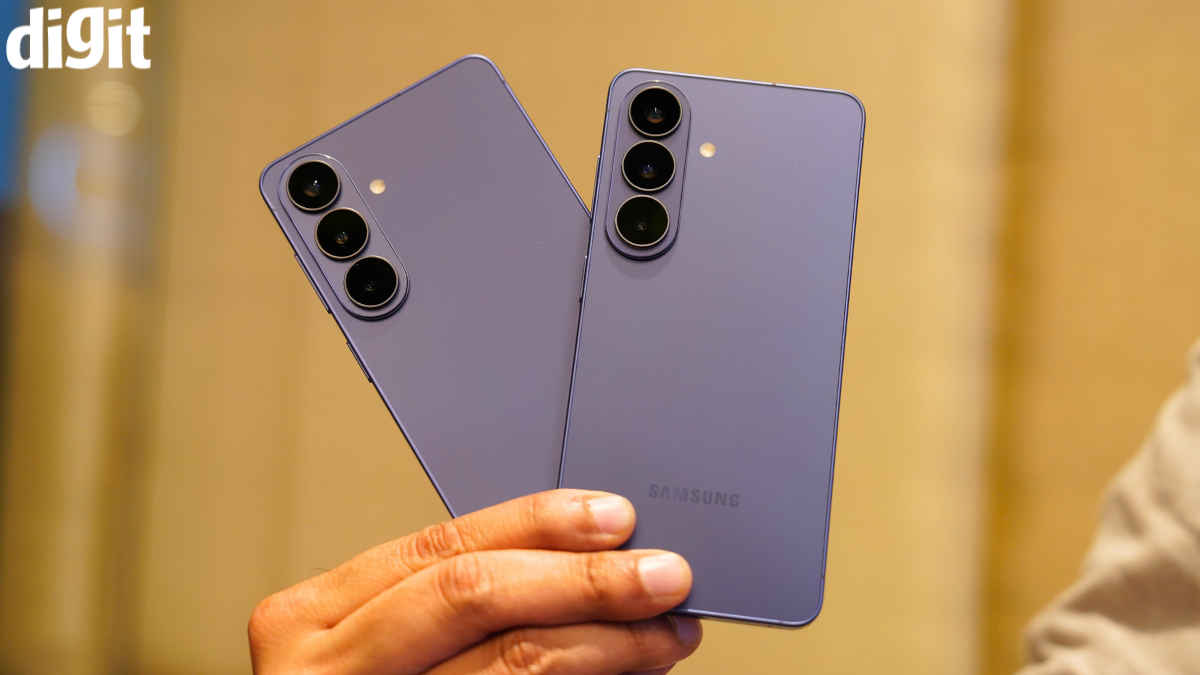
At first glance, both the Galaxy S26 and S26 Plus look familiar. You get a clean back panel and a minimal camera layout, very much in line with Samsung’s recent design language. There is a small change this year, though. The strip-style camera island around the lenses matches the Ultra, giving the entire S26 lineup a more unified look. It is subtle, but when you see all three phones together, the consistency stands out.
The Galaxy S26 comes with a 6.3-inch FHD+ LTPO display, while the Galaxy S26 Plus moves up to 6.7 inches with a QHD+ resolution. Both use 120 Hz Dynamic AMOLED 2X panels. In typical Samsung fashion, the displays are sharp and smooth. Brightness and contrast looked strong in my brief time with them, and scrolling felt fluid. If you liked last year’s screens, you will feel right at home here. Samsung has wisely stuck to what already worked.
In India, both the Galaxy S26 and Galaxy S26 Plus are powered by the new 2 nm deca-core Exynos 2600 chip, while the S26 Ultra uses the Snapdragon 8 Elite Gen 5 for Galaxy. Either way, performance is clearly one of the key upgrades this year.
In my short hands-on time, the phones felt quick and responsive. App launch times were fast, switching between apps was smooth, and there were no obvious hiccups. The bigger upgrade may actually be in the image signal processor. Even when camera hardware looks similar on paper, improvements in processing usually make the biggest difference in real-world results.
Speaking of cameras, the setup remains familiar: 50 MP primary, 12 MP ultra-wide and 10 MP 3x telephoto. I did not get enough time to properly test the cameras, so I will reserve detailed conclusions for when the phones go through proper testing at the Digit Test Labs. For now, at least on paper, the combination of the upgraded chip and improved processing looks promising.
AI has been a big part of Samsung’s pitch over the past few years, and on the S26 and S26 Plus, the features feel practical rather than overwhelming. There is a full suite of Galaxy AI tools, but to mention a few, Circle to Search can now recognise multiple objects at once, which is genuinely useful when you are trying to identify more than one thing in a frame.
The new Now Nudge and Photo Assist features, which are also present on the S26 Ultra, are available here as well. There is also an enhanced Call Screening feature that allows the AI to automatically answer and screen calls, similar to what we have seen on Google Pixel devices.
Because of the newer Exynos 2600 chip, AI tasks should respond faster. I did get a chance to try Photo Assist briefly, and edits and generations did not feel sluggish. Like the S26 Ultra, you can also choose between Bixby, Gemini and Perplexity as your assistant. Whether most people will switch between them is another question, but having the option is useful.
The Galaxy S26 packs a 4,300 mAh battery, which is a 300 mAh increase over the previous Galaxy S25 model. The Galaxy S26 Plus gets a 4,900 mAh battery. Charging speeds differ as well. The S26 supports 25 W wired charging and can reach around 55% in 30 minutes. The S26 Plus goes up to 45 W and can hit roughly 69% in the same time. Both support fast wireless charging.
Samsung is also promising seven years of software updates. For anyone planning to keep their phone for the long run, that adds real value.
The Samsung Galaxy S26 and S26 Plus may not feel like dramatic upgrades, but that is not necessarily a bad thing. Instead, they focus on refining the experience. You get a better chip, improved image processing, faster AI response and a slight design refresh.
If you are already using the Galaxy S25, this may not feel like a compelling jump. But if you are on a Galaxy S24 or older device, these feel like sensible and well-rounded upgrades. I will have much more to say once they go through full testing at the Digit Test Labs. For now, the S26 and S26 Plus come across as dependable flagships that focus on getting the basics right.
Also read: Best smart rings to buy in India