Realme GT 8 Pro vs OnePlus 15 India Price camera and specifications and features compare
The best phones under Rs 75,000 smartphone segment has quietly become the most exciting place in the flagship world. And right at the front of this race stand two heavy hitters: the Realme GT 8 Pro and the OnePlus 15. Both start at Rs 72,999. Both use the same processor. Both claim to deliver premium experiences without the premium price. And that’s exactly what makes the Realme GT 8 Pro vs OnePlus 15 comparison so compelling. But spend a week with both, and it becomes clear that they’re built for two different kinds of users and two completely different philosophies on what a flagship should feel like. If you’re torn between these two, by the end of this article you’ll know exactly which phone fits your temperament, not just your spec sheet.
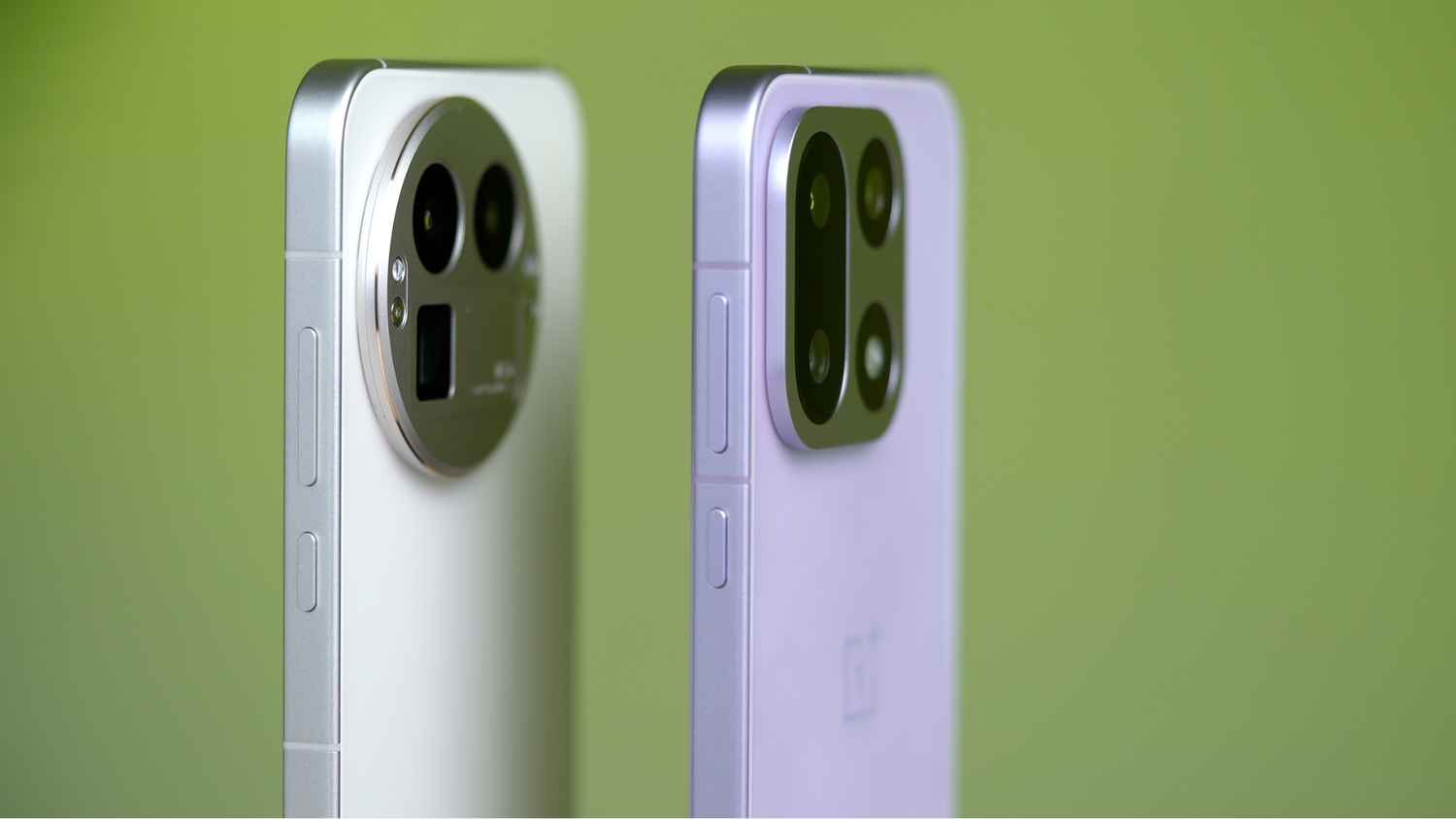
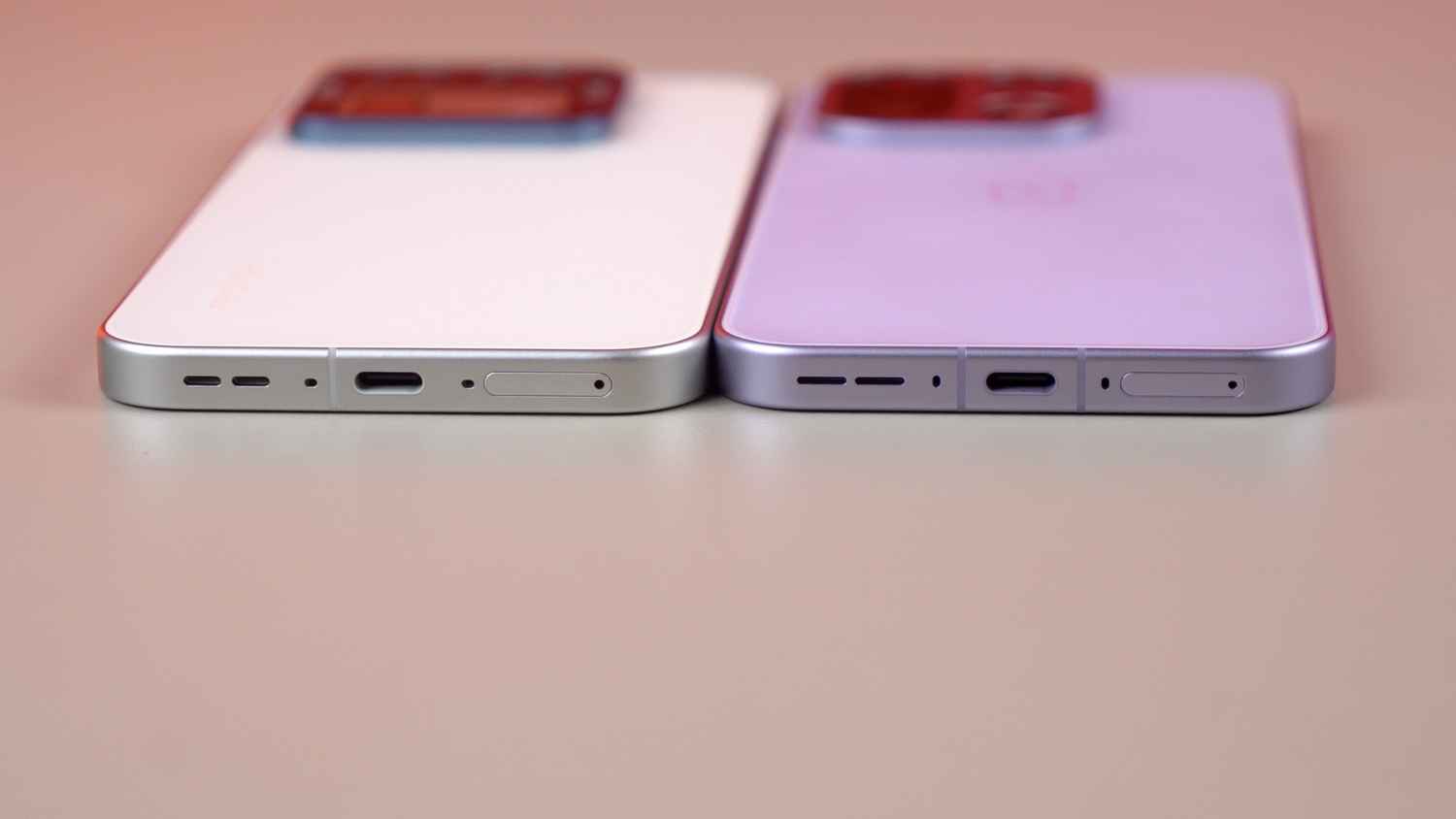
Even though both phones are nearly identical in size, they give off very different impressions the moment you hold them. The Realme GT 8 Pro measures 161.8 mm tall, 76.9 mm wide and 8.2 mm thick, and weighs either 214 g or 218 g depending on the finish. The OnePlus 15, on the other hand, comes in at 161.4 x 76.7 x 8.1 mm and weighs 211 g or 215 g depending on the back panel. These minor numerical differences wouldn’t matter on paper, but in hand they subtly influence the experience: both phones feel surprisingly light for their size, thanks to excellent weight distribution and carefully rounded edges that prevent any digging into your palm.
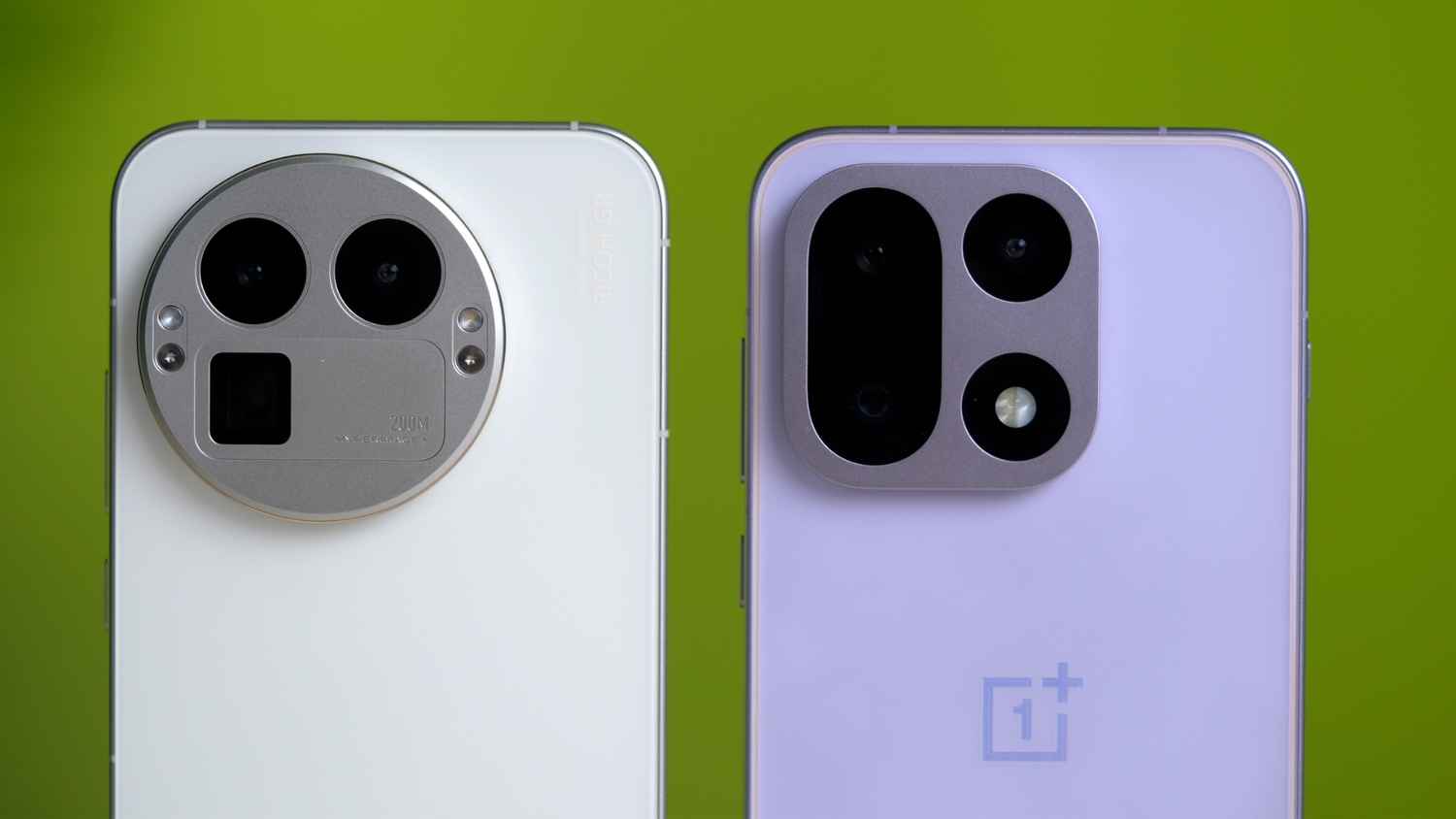
The Realme GT 8 Pro tries to stand out through its materials and personality. Its silicone polymer “paper-textured” eco leather back feels warm, grippy and genuinely distinct from the glossy or matte glass slabs we’ve come to expect from modern flagships. The trade-off is durability: the finish can scratch or scuff if you don’t use a case. It also offers a fiber-reinforced plastic option, and the aluminium alloy frame gives it a sturdy, premium structure. Then there’s the switchable camera bump which lets users toggle between a host of different modules. It’s playful, refreshing and makes the GT series instantly recognisable.
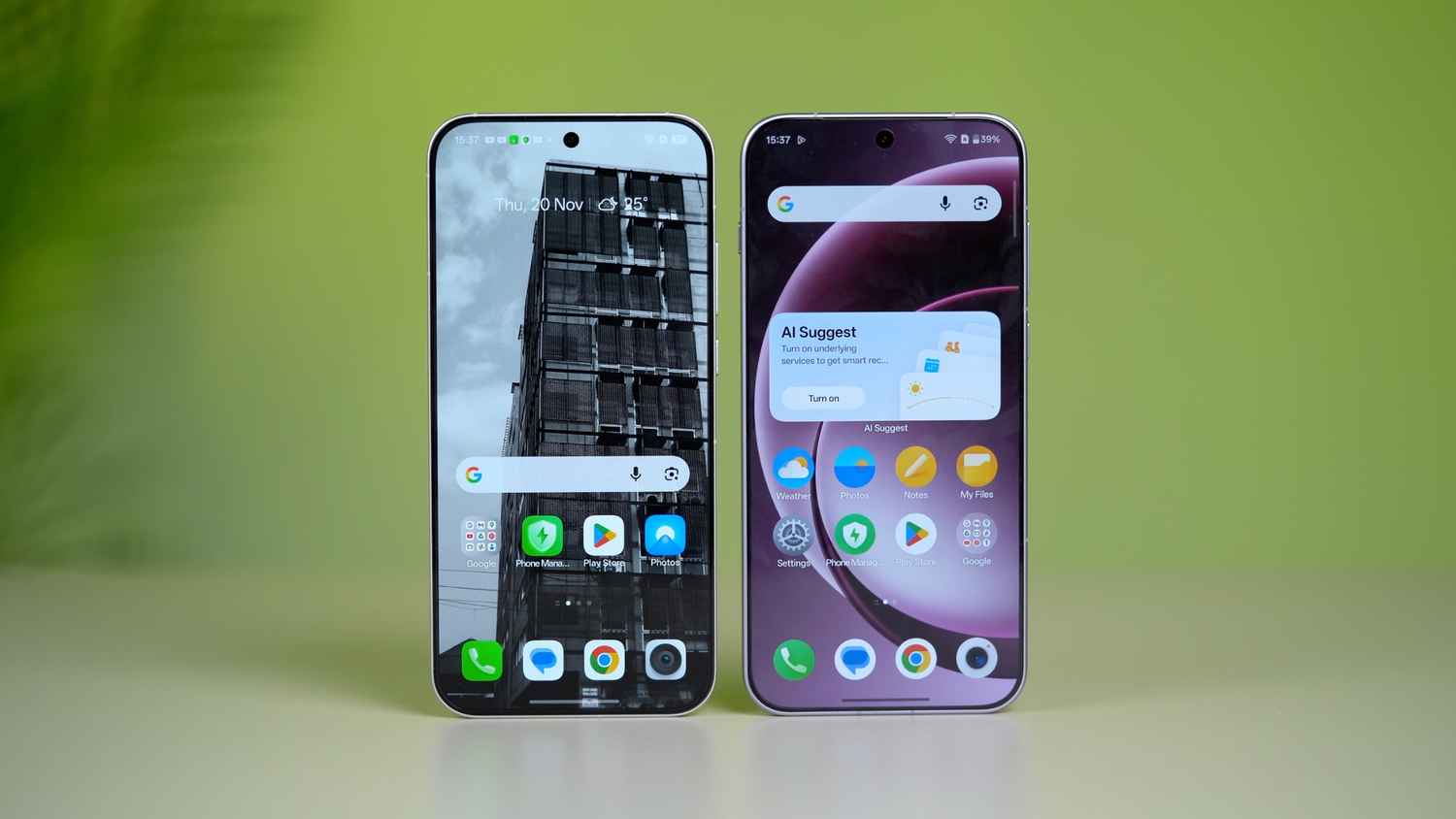
The OnePlus 15 takes the opposite route. With its Gorilla Glass Victus 2 front, Gorilla Glass 7i or Crystal Shield Glass back, aluminium alloy frame and immaculate symmetry, it feels deliberately refined. The micro-arc oxidation coating (only Infinite Black) on the rear brings a ceramic-like texture without the fragility. From the front, its razor-thin, perfectly uniform bezels lend it a premium, futuristic look that is more polished than the Realme’s slightly thicker framing. It is also the more durable phone on paper. Both devices carry IP68 and IP69 certification, meaning they can handle dust, immersion and high-pressure water jets. But the OnePlus 15 goes a step further with IP69K, which is effectively the highest level of ingress protection available on a smartphone today.
If you want a phone that looks and feels expressive, experimental and different, the Realme GT 8 Pro stands out. If you prefer a mature, timeless aesthetic with class-leading durability, the OnePlus 15 delivers exactly that.
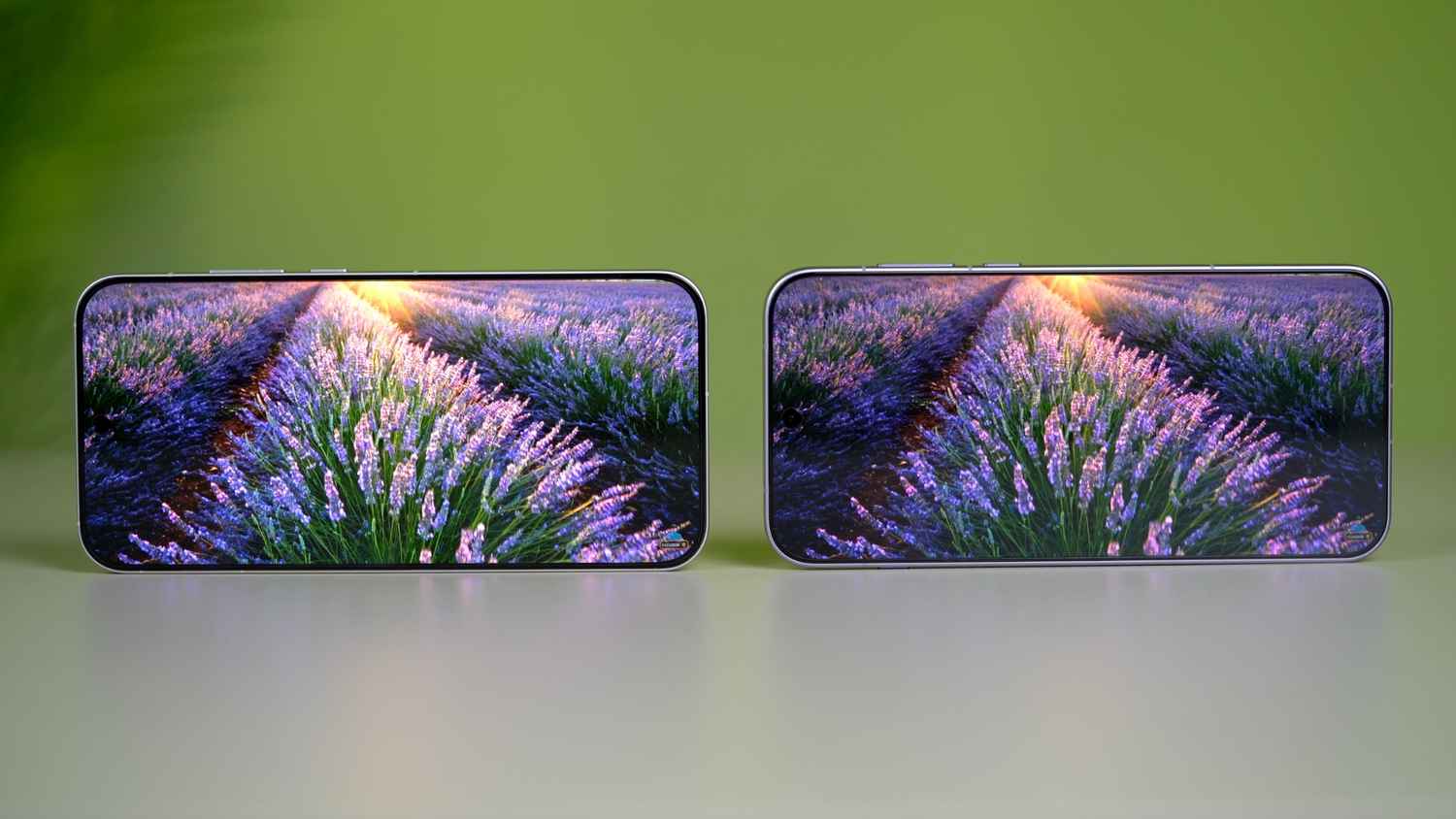
The fight becomes even more interesting once you switch on the displays, because on paper both look equally matched. The Realme GT 8 Pro features a 6.79-inch 2K AMOLED panel with HDR10+, Dolby Vision support, 1B colours, 144Hz refresh rate and a peak brightness of 7000 nits in extreme conditions. The OnePlus 15 counters with a 6.78-inch LTPO AMOLED display at 1.5K resolution, with a 165Hz refresh rate, Dolby Vision, HDR10+, Ultra HDR support and a peak brightness of 3120 nits.
Brightness
But technical specifications rarely capture the full picture. In normal brightness mode, Realme reaches around 922 nits, while the OnePlus 15 jumps far ahead at around 1400 nits. Indoors, this difference is immediately noticeable. The OnePlus display simply looks brighter and cleaner at typical usage levels, without forcing the panel into high-brightness mode. Outdoors, in peak adaptive mode, both phones comfortably cross 3000 nits and look extremely legible even under the harshest noon sunlight.
Colour accuracy is where the Realme GT 8 Pro pulls ahead decisively. Its calibrated ΔE score of 0.6 in ColorChecker tests places it firmly in professional-grade territory. The grayscale ΔE of 1.3 and near-perfect RGB balance produce whites that sit very close to the ideal 6500K target. Coverage of the DCI-P3 gamut reaches 99.3%, and the chromaticity chart shows Realme’s measured colour points aligning almost perfectly with their targets. Images and videos appear exactly the way they were mastered, with accurate shadows, midtones and highlights.
The OnePlus 15 is no slouch, but its display leans cooler. With a ColorChecker ΔE of 1.3 and grayscale ΔE of 2.2, the panel exhibits a consistent blue shift, with a white point around 6822K. This gives the display a slightly “poppier” aesthetic that some users may prefer, but it’s not as colour-accurate as Realme’s. Gamut coverage is excellent at 99.6%, and HDR content still looks stunning with deeper contrast and punch.
In motion, the difference between 144Hz and 165Hz is practically invisible thanks to LTPO scaling. Both panels feel extremely smooth, and both react instantly to touch thanks to the ultrasonic fingerprint sensors embedded beneath them.
If you want the most accurate display in this category, Realme takes the crown. If you want brightness, punch, higher legibility indoors and a more vibrant out-of-the-box aesthetic, the OnePlus 15 is the better choice.
| Benchmark Scores | Realme GT 8 Pro | OnePlus 15 |
| AnTuTu | 3,963,689 | 3,529,849 |
| Geekbench Single | 3666 | 3609 |
| Geekbench Multi | 11,050 | 10,680 |
| PCMark Work | 26,693 | 15,829 |
| 3DMark Wild Life Extreme | 5442 | 7135 |
| CPU Throttling | 75% | 85% |
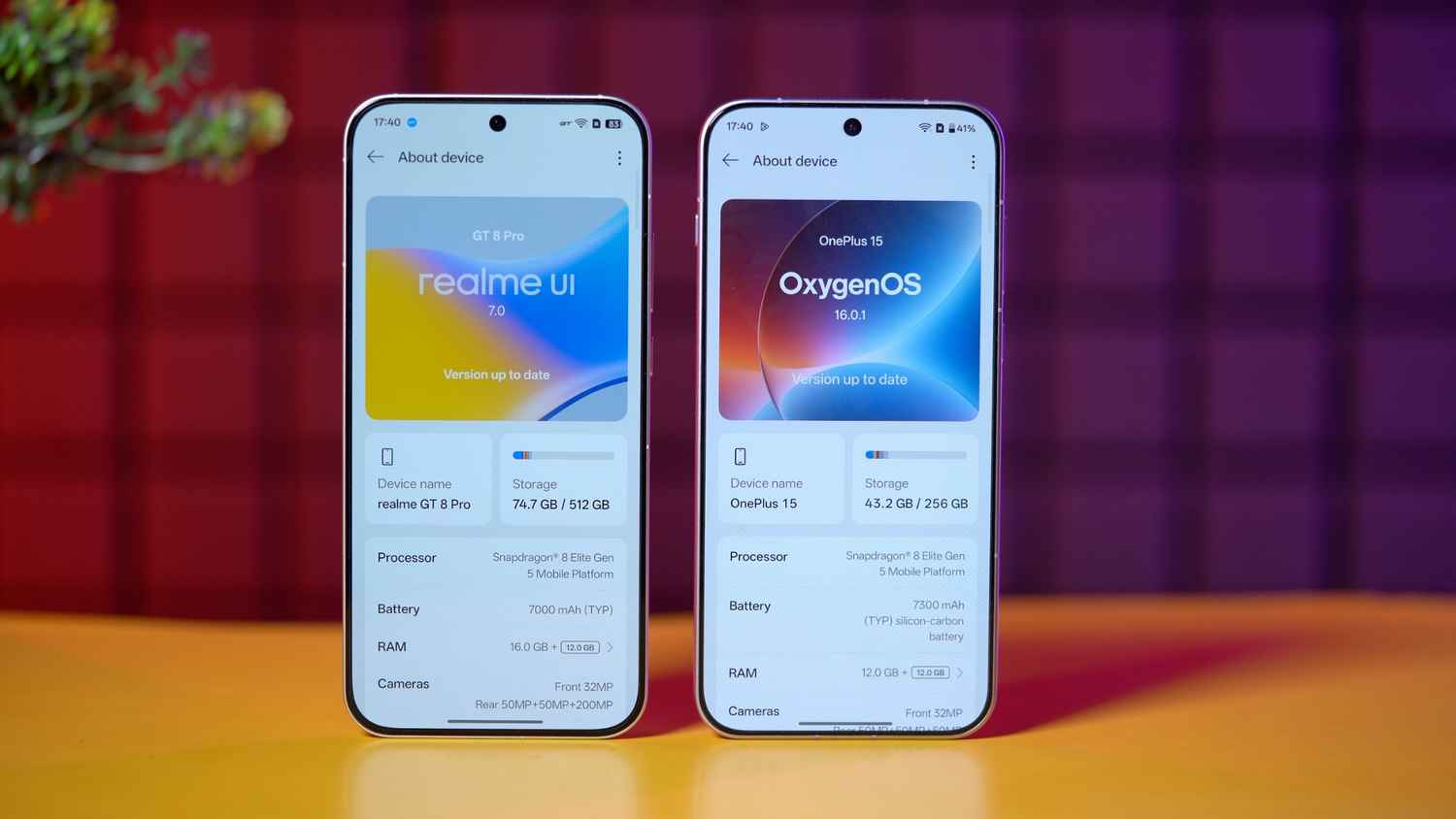
Because both phones run the same Snapdragon 8 Elite Gen 5 chipset, which is a 3 nm octa-core SoC with two 4.6 GHz Oryon Phoenix L cores and six 3.62 GHz Phoenix M cores, you’d expect their performance to be identical. But tuning, thermals and software integration make them behave very differently under load.
The Realme GT 8 Pro is tuned for peak aggression. Its AnTuTu score of 3,963,689 is significantly higher than the OnePlus 15’s 3,529,849. Geekbench single-core and multi-core scores of 3666 and 11,050 likewise edge out the OnePlus 15’s 3609 and 10,680. Everyday usage reflects this tuning: applications open faster, animations feel more eager, and UI interactions sometimes feel half a beat ahead of your touch. PCMark Work scores also back this up, with Realme reaching 26,693 compared to OnePlus’s 15,829. In other words, Realme feels consistently snappier and more energetic throughout the day.
In GPU-intensive workloads, the situation reverses. The OnePlus 15 pulls ahead in the 3DMark Wild Life Extreme benchmark with a score of 7135 versus Realme’s 5442. This translates to better frame pacing in graphically demanding titles and slightly better performance in emulation and video rendering. During the CPU throttle test, the OnePlus 15 stabilises at around 85% of peak performance, while the Realme GT 8 Pro drops to around 75% after sustained load. That slight difference becomes noticeable in longer tasks where thermal performance matters more than sheer speed.
The Snapdragon 8 Elite Gen 5 performance test on both phones reveals the same pattern: Realme hits harder initially, but OnePlus sustains performance for longer periods. The OnePlus 15 also benefits from its dedicated touch and Wi-Fi chips, which improve responsiveness and reduce latency.
| Test | Realme GT 8 Pro | OnePlus 15 |
| Average FPS | 118.5 | 116.4 |
| Maximum FPS | 121 | 121 |
| Stability | 99.8% | 97.9% |
Both phones push the envelope when it comes to gaming. In BGMI testing, the Realme GT 8 Pro averages 118.5 FPS, with a peak of 121 FPS and an almost perfect 99.8% stability score. The OnePlus 15 averages slightly lower at 116.4 FPS with 97.9% stability. However, once again, real-world gameplay paints a more nuanced picture.
In short bursts, Realme feels smoother. But after extended sessions of Genshin Impact, Wuthering Waves or BGMI at HDR Extreme settings, the OnePlus 15 maintains performance better. It heats up slower, sustains FPS for longer and feels cooler in the hand. Its thermal throttling behaviour is better controlled, resulting in fewer performance dips.
If you prefer short, high-performance gaming bursts, Realme feels more impressive. If you play competitively for long durations, OnePlus is the more consistent flagship.
This is where the Realme GT 8 Pro vs OnePlus 15 comparison takes its most philosophical turn.
The Realme GT 8 Pro’s camera system is headlined by a 50 MP main sensor, a 200 MP periscope telephoto and a 50 MP ultrawide, which benefits from Realme’s partnership with Ricoh. The colour science leans strongly toward bold contrast, vivid colours and aggressive HDR. The daylight samples all show clear evidence of Realme boosting saturation and lifting shadows to create an instantly dramatic look. The Ricoh partnership clearly influences the processing, giving photos an aesthetic that looks pre-edited and ready for Instagram.
The OnePlus 15’s triple 50 MP setup, meanwhile, leans carefully toward accuracy. Colours look more natural, skies retain their original tones, and complex shades remain properly separated instead of merging together. In portraits, the difference becomes even more pronounced. Realme’s processing adds a reddish tint to skin and smoothens textures, sometimes giving faces an overly beautified look. OnePlus retains natural pores, realistic golden undertones and a more professional separation between subject and background. The Realme GT 8 Pro Ricoh camera review notes this inconsistency, whereas the OnePlus 15 delivers predictability.
The Realme GT 8 Pro’s 200MP telephoto brings exceptional clarity and a standout telephoto macro mode that captures textures in stunning detail. OnePlus counters with a more stable periscope at 3.5x optical zoom and cleaner results at high zoom levels up to 30x.
Selfies are an easy win for OnePlus thanks to its autofocus, larger sensor and more controlled HDR. Realme’s front camera is sharp, but its tendency to brighten and smooth faces is noticeable.
The conclusion is simple: if you want dramatic, social-media-ready shots with a distinctive tone, Realme’s camera system has more personality. If you care about accurate skin tones, consistent dynamic range and better selfies, the OnePlus 15’s camera system is more reliable.
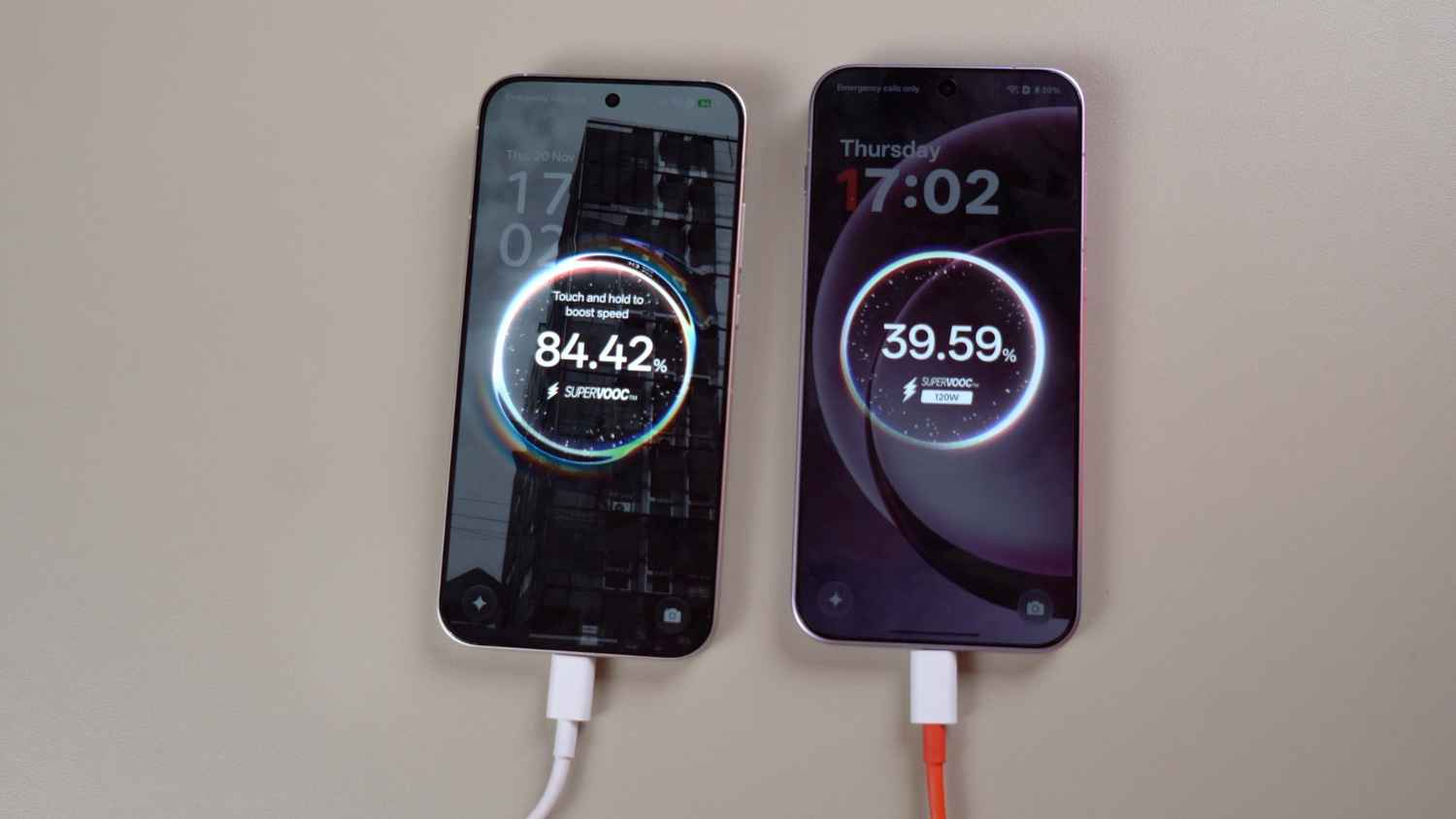
On paper, the Realme GT 8 Pro’s 7000 mAh battery looks enormous, and paired with 120W SuperVOOC fast charging, it promises an all-day endurance. In PCMark’s battery test, however, the phone lasts around 14 hours and 27 minutes. The OnePlus 15, with its slightly larger 7300 mAh cell, pushes far ahead at 17 hours and 32 minutes. This efficiency difference is not marginal, it’s the result of OnePlus’s cooler thermal behaviour, lower display resolution and smarter LTPO scaling.
Realme takes about 43–52 minutes to charge fully, while the OnePlus 15 reaches 100% in around 40–41 minutes. Both support 50W wireless charging and 5–10W reverse charging, though OnePlus’s bypass charging is a useful addition for gamers.
In practice, the OnePlus 15 comfortably lasts longer in heavy use, while Realme often dips below 20% by evening on camera-heavy or gaming-heavy days.
Realme UI 7 based on Android 16 is polished, snappy and full of customisation options. It offers extensive personalisation, multiple gesture layers and deeper theme integration. OxygenOS 16, in contrast, feels lighter, more minimal and more refined. Animations feel deliberate, transitions are cleaner and the OS feels better optimised for long-term stability.
Realme offers up to four major Android updates, while OnePlus matches that with the same update commitment but adds a more stable ecosystem.
If you enjoy personalising your phone extensively, both offer that creative freedom. But if you want a cleaner, more predictable experience with fewer quirks, OxygenOS 16 is the better choice.
The Realme GT 8 Pro is the more expressive of the two. Its display is more accurate, its CPU scores are higher, its camera system, especially the Realme GT 8 Pro 200MP telephoto, has more personality, and its design feels refreshingly different. It’s a flagship that wants to stand out.
The OnePlus 15 feels like the more mature option. Its battery life is longer, its gaming performance is more stable, its camera system is more natural and consistent, its display is brighter indoors, and its build quality feels more refined. It’s a flagship that wants to last.
Both are excellent. Both justify their price. But the type of user you are will determine the better choice.
If your priorities lean toward colour-accurate displays, bold photography, raw CPU power and playful design, the Realme GT 8 Pro is the better flagship under Rs 75,000.
If you care more about realistic photos, better battery efficiency, smoother long-term performance, refined software and class-leading durability, the OnePlus 15 should be your pick.
The OnePlus 15 is better for natural photography, battery life, long-term performance and refinement. The Realme GT 8 Pro is better for bold imaging, display accuracy, telephoto macro and peak CPU speed.
It depends on what you prefer. Realme offers punchier, Ricoh-inspired colours and a dramatic look, while OnePlus produces more natural, consistent results with better portraits and selfies.
Yes. It delivers slightly higher FPS and sharper bursts of performance. However, the OnePlus 15 sustains performance better over long gaming sessions.
Realme lasts about 14h 27m in PCMark, while the OnePlus 15 lasts 17h 32m. The OnePlus 15 is significantly more efficient in real-world use.
Upgrade to Realme if you want dramatic photos, fast bursts of performance and a more expressive design. Upgrade to OnePlus if you want reliability, battery endurance, natural imaging and long-term stability.
Realme UI 7 focuses on customisation and visual flair, while OxygenOS 16 prioritises minimalism, smoother transitions and a cleaner long-term experience.