For over a decade and a half, Lava has lived in the shadows of global giants, its name evoking nostalgia in the minds of feature phone users while the rest of the world sprinted toward foldables and silicon wars. Sumit Singh, Head of Product at Lava International Limited, has quietly watched the tides turn over the years, and what he describes in our hour-long conversation is what it takes to make an “Indian smartphone.”
Singh traces Lava’s engineering journey back to 2014, when the company began developing in-house design and manufacturing capabilities to compete with global players. “We started in 2009,” he recalls, “and by 2014, we were already investing in R&D when no Indian brand was thinking of it. Without these capabilities, it’s impossible to sustain against global brands.”
From there, Lava gradually transitioned from feature phones to smartphones, launching its first India-designed feature phone around 2017–18, followed by its 4G portfolio. The Agni series, introduced as Lava’s first 5G lineup, marked the company’s move into higher price bands and set the foundation for what would become its flagship range.
We met just weeks before the launch of the Lava Agni 4, a phone Singh calls a “real differentiator” in the sub-Rs 30,000 segment. For years, India’s smartphone market has been a graveyard of good intentions: brands promising “Make in India” ambitions only to be outpriced, outmarketed, or overshadowed by more aggressive players.
The evolution from Agni 1 to Agni 4 mirrors Lava’s broader technological growth. The Agni 2, launched two years ago, introduced a curved AMOLED display and the MediaTek Dimensity 7050 chipset. The Agni 3 experimented with a dual-display setup, designed around insights from customer research.
Singh says the company’s design process revolves around four pillars: customer understanding, competition benchmarking, supply chain capability, and internal design competence. Each generation of the Agni line has been built on these foundations.
“Till now, most differentiation was on the hardware,” he tells me. “But this time, our AI and software optimisation will be the real differentiator.”
It’s a bold claim, especially coming from an Indian brand that once built its identity on rugged, affordable feature phones. But Lava, like much of India’s tech industry, has realised that no amount of “Made in India” branding can compensate for a poor user experience.
Agni 4, he explains, will be the first Lava phone to carry deeply integrated on-device AI capabilities. “We’ve given life to the AI,” he says. “Something that sits on your screen, follows your commands, controls your apps, your brightness, your torch. It’s not an app, it’s an assistant that simplifies how you use the phone.”
He pauses briefly, almost aware of how many overpromises the word “AI” has carried lately. “The idea isn’t to make AI smarter,” he continues. “It’s to make your phone simpler.”
But even as Lava courts the future, it carries the weight of its past, an empire built on feature phones, where it still holds nearly 25 per cent share globally. Singh has a historian’s perspective on this transition. “If you go back ten years,” he recalls, “the current smartphone volume was the volume of feature phones then, and vice versa.”
The pandemic, he explains, was an inflexion point. Financing options exploded, Gen Z entered the consumer pool, and suddenly, the first phone in the family wasn’t a keypad; it was a touchscreen.
“Someone who couldn’t afford a smartphone earlier but now has a child in class 10th or 11th will prioritise buying one,” Singh notes. “For them, a smartphone has become a necessity.”
Singh explains that two main user groups still buy feature phones: “Older users above fifty, who will never switch, and people with limited financial access. They live in a cash-and-carry world. For them, documentation or credit is still a barrier.”
This insight explains Lava’s dual identity, one foot in Bharat, the other in digital India. “While the industry grows two to three percent, our growth is two or three times that,” Singh says. “Because people who trust us in feature phones are upgrading to our smartphones.”
The Agni 4 represents the culmination of Lava’s in-house R&D evolution. Singh outlines a detailed development process that begins with consumer research before moving into design, supply chain feasibility, software integration, and testing.
“In India, the ecosystem for things like PCB manufacturing is still developing,” he admits. “So while some tooling and components come from mainly China and Taiwan, the product design, testing, and software work happen in-house.”
“Developing a phone isn’t just about design,” he explains. “It begins with research. Our customer research team learns what users truly want, then the supply chain team checks feasibility, can we build it? Can it be done efficiently? We test over 5,000 software parameters and 500 hardware parameters.”
He lists them matter-of-factly: drop tests, heat tests, salt exposure, and moisture resistance. “We test for four years of real-life usage,” he says. “Because today, the average phone lifespan has increased to around 42 months, so we design with that in mind.”
In Singh’s view, the Indian market has matured past the “spec-versus-price” race. “People think like car buyers now,” he observes. “They want a product they can use for three or four years. Even iPhone users have started skipping generations. It’s not about the cheapest phone anymore, it’s about the most dependable one.”
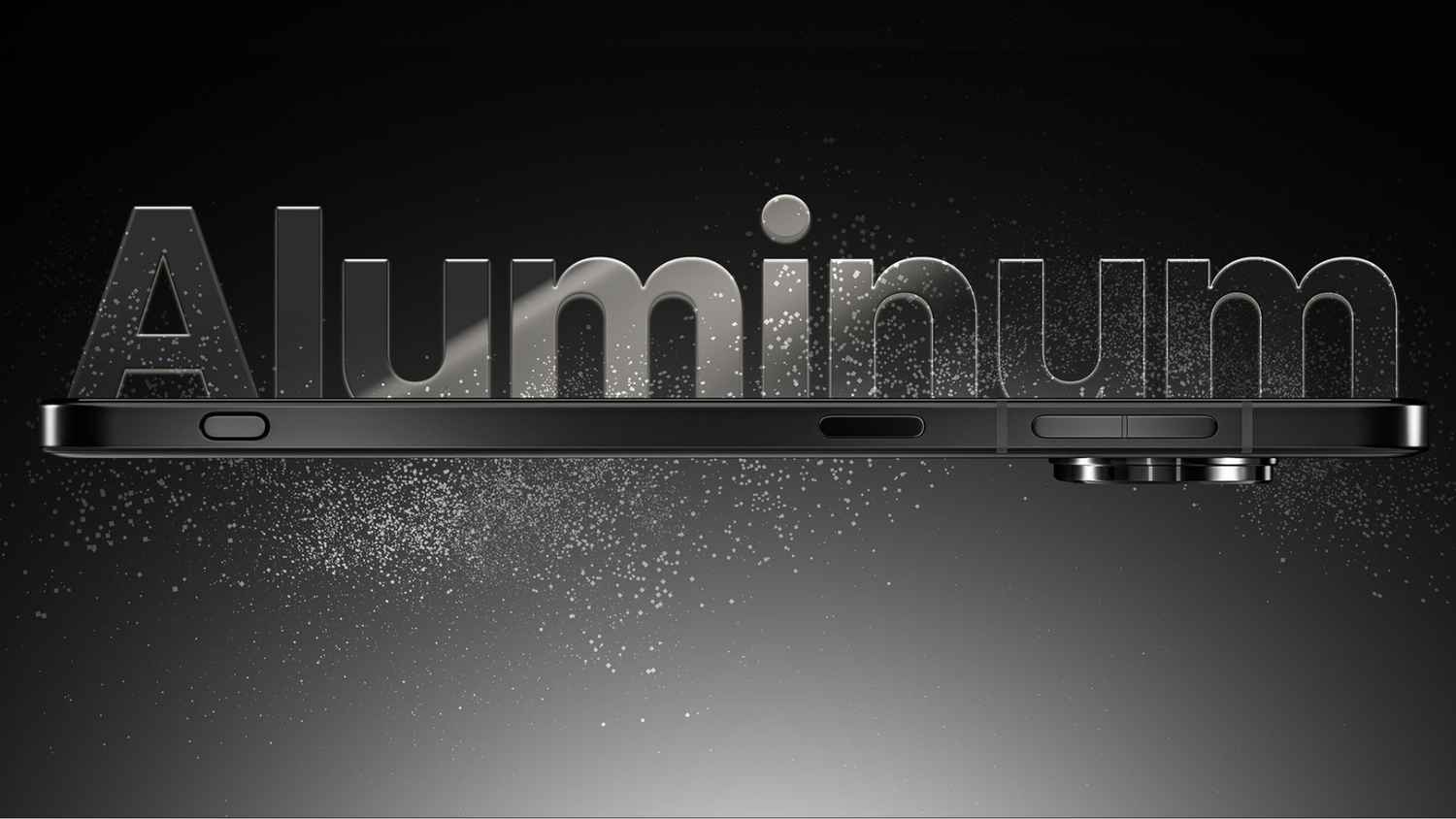
While Singh avoided revealing final specifications, he paints an intriguing picture. The Agni 4 will feature a metal body design using aluminium alloy that’s both light and durable. “It gives ruggedness and better heat dissipation without the bulk,” he says.
The metal frame also allows for improved antenna placement and faster heat dissipation, assisted by a vapour chamber cooling system governed by AI algorithms.
Under the hood, Lava is equipping the phone with DDR5X memory, mounted directly on the chipset for faster communication. Singh claims it’s “twice as fast as DDR4X” and rare in this segment. “Our goal,” he says, “was to deliver the best performance-to-value ratio under Rs 30,000.”
But what truly intrigues him is what sits above the hardware: the software. Lava’s upcoming devices will feature what Singh describes as “three types of AI modules”: interactive AI, general AI (akin to Google’s Gemini), and what he calls “expert AI”, task-specific assistants designed for deep functionality.
“The regular AI can answer general questions,” he says. “Our expert AI will specialise. Think of it like having a teacher for maths or a mentor for editing photos. It analyses across multiple LLMs and fetches the best answer.”
He emphasises that Lava’s AI integration isn’t about competing with Google or ChatGPT but creating smarter, more action-oriented user experiences. “We don’t replace Google,” he clarifies. “We go deeper in areas users care about. Our focus is on simplifying how people use their phones.”
On the camera front, Lava’s team is integrating AI algorithms that recognise regional skin tones and lighting variations to fine-tune image output. “An Indian face, an African face, or a European face all reflect light differently,” Singh says. “Our system detects these characteristics and optimises accordingly.”
Global brands, he notes, rely on chipset-level guidelines and third-party algorithms for camera tuning. Lava does too, but selectively. “We work with international algorithm experts, like everyone else,” he says, “but our tuning is done in India, based on local user trials and preferences.”
That localisation, combined with real-world testing across 200 apps and hundreds of performance checkpoints, gives Lava’s team confidence that Agni 4 can stand shoulder-to-shoulder with any global midrange competitor. “We benchmark against the best in the industry,” Singh says. “Every time we launch under Rs 30,000, we test against seven or eight leading models. Our goal is simple: meet or beat them in performance.”
The Agni 4 arrives at a time when Lava’s growth trajectory appears stronger than it has been in years. Lava, he says, is now the second-fastest-growing smartphone brand in India overall, and the fastest in the sub-₹10,000 category. Counterpoint Research’s last quarterly report pegged its growth at over 150% year-on-year in that price bracket, which is a rare feat in a market otherwise dominated by transnational giants.
Singh sees it as a validation of patience. “People who bought our feature phones ten years ago are now buying our smartphones,” he says. “They trust the quality, and we’ve earned that trust slowly.”
As our conversation winds down, Singh reflects on what’s next. “This year has been very good for us,” he says, almost modestly. “But we’re just getting started.”
He hints at a pipeline of new devices that will continue pushing boundaries in both design and software, perhaps even extending the “expert AI” system across categories.
As Singh puts it, “We’ve spent years building the foundation: R&D, design, quality testing. Now it’s time for those efforts to show.”