The budget smartphone segment has become a game of trade-offs. Some brands focus on oversized displays, others lean heavily on long-term software support, while a few still prioritise raw battery life above everything else. The Motorola G57 Power and Poco C85 5G sit right in the middle of this conversation. They are priced close enough to feel interchangeable on paper, yet different enough that the real-world experience tells a very different story.
Budget phones have also grown louder over the years, with bigger screens, larger batteries and increasingly ambitious promises. But occasionally, two devices land in the same price bracket and force a more practical question: which one actually feels better to live with every day? That is exactly what happens when you use the Motorola G57 Power and the Poco C85 5G side by side.
The Motorola G57 Power is priced at Rs 14,999 for the 8 GB + 128 GB variant, while the Poco C85 5G comes in slightly cheaper at Rs 14,499 for the same configuration. On paper, the difference looks minor. In everyday use, however, the comparison becomes surprisingly one-sided. Motorola has built a phone that prioritises stability and endurance, while Poco leans towards size and longer software support.
Here is a closer look at how they compare.
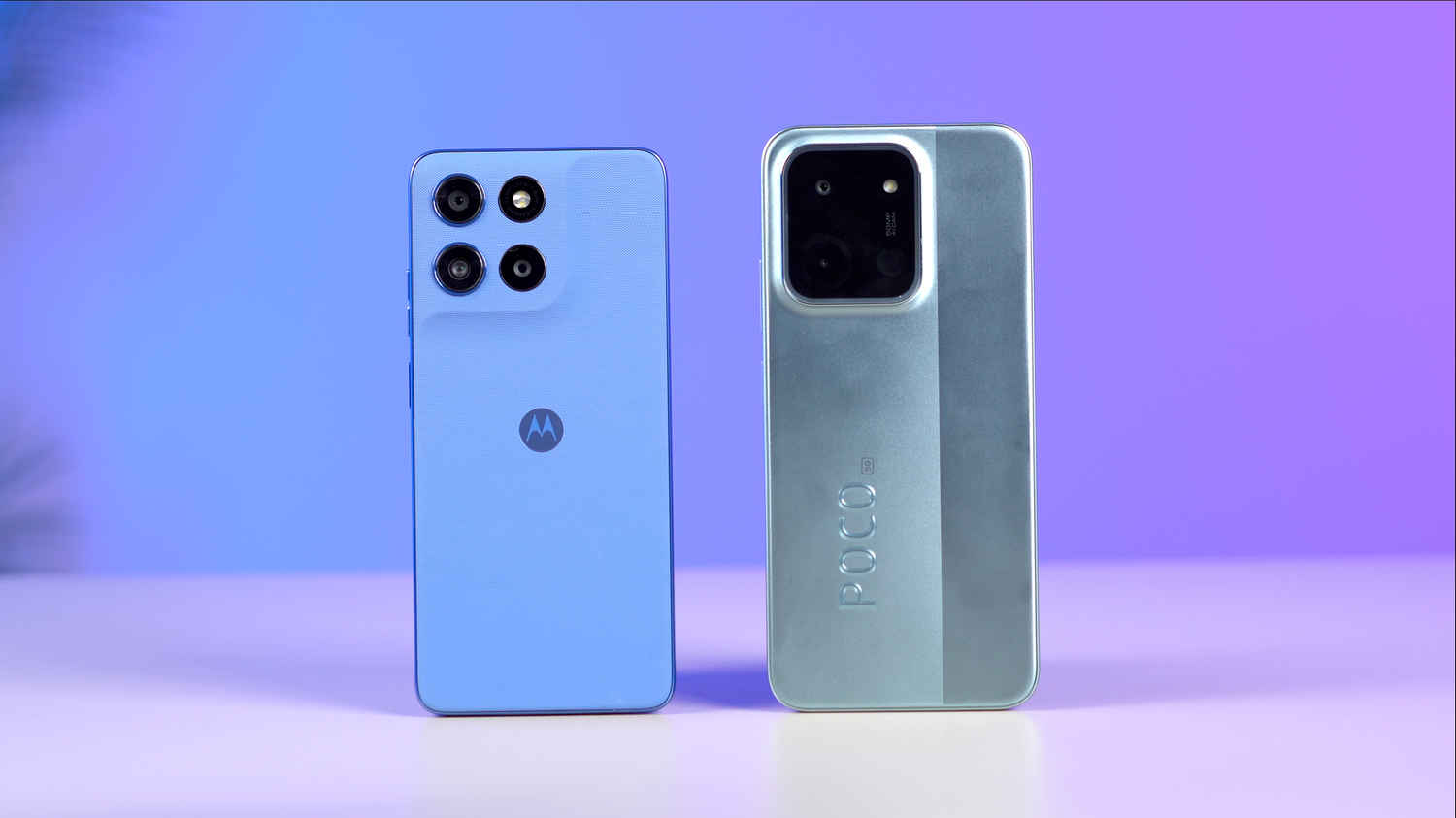
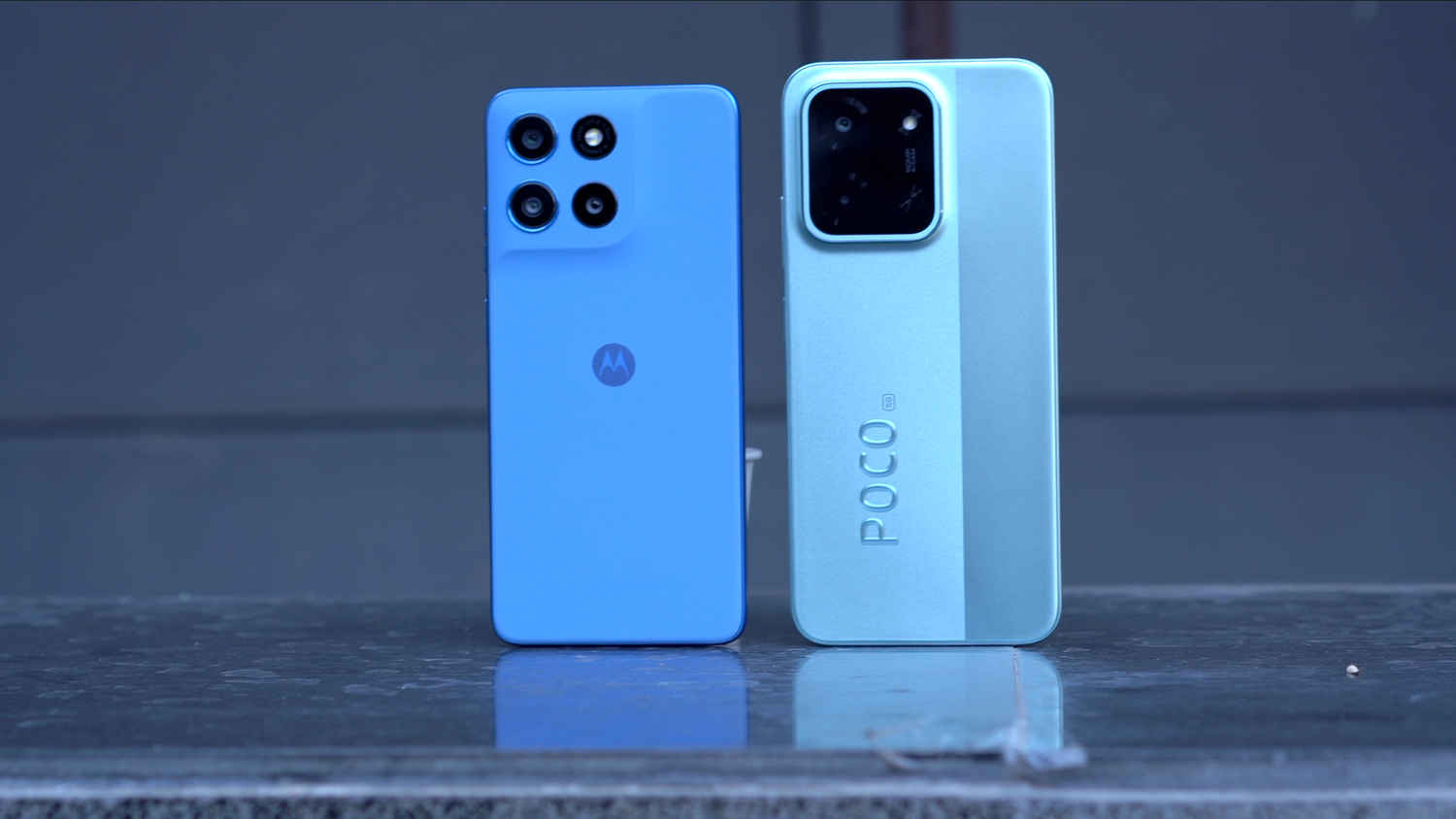
Despite competing in the same price segment, these two phones feel fundamentally different in the hand. The Motorola G57 Power clearly leads when it comes to material choice, using a soft-touch vegan leather back that feels grippy, comfortable and noticeably more premium than expected at this price. The Poco C85 5G does not feel slippery, but its plastic rear panel makes it obvious where cost savings have been made.
Motorola also pulls ahead in durability. The G57 Power gets Gorilla Glass 7i on the front, IP64 dust and water resistance, and MIL-STD-810H certification, making it a far more rugged device overall. Poco matches the IP64 rating but does not offer the same level of durability certification.
Both phones use side-mounted fingerprint scanners that work reliably, and both retain the 3.5 mm headphone jack, which remains a welcome addition in the budget segment. Motorola goes a step further by offering stereo speakers with Dolby Atmos support, while Poco sticks to a single bottom-firing speaker.
Weight is almost identical, at 210.6 g for Motorola and 211 g for Poco, but the G57 Power feels more balanced and secure in the hand thanks to its textured back.
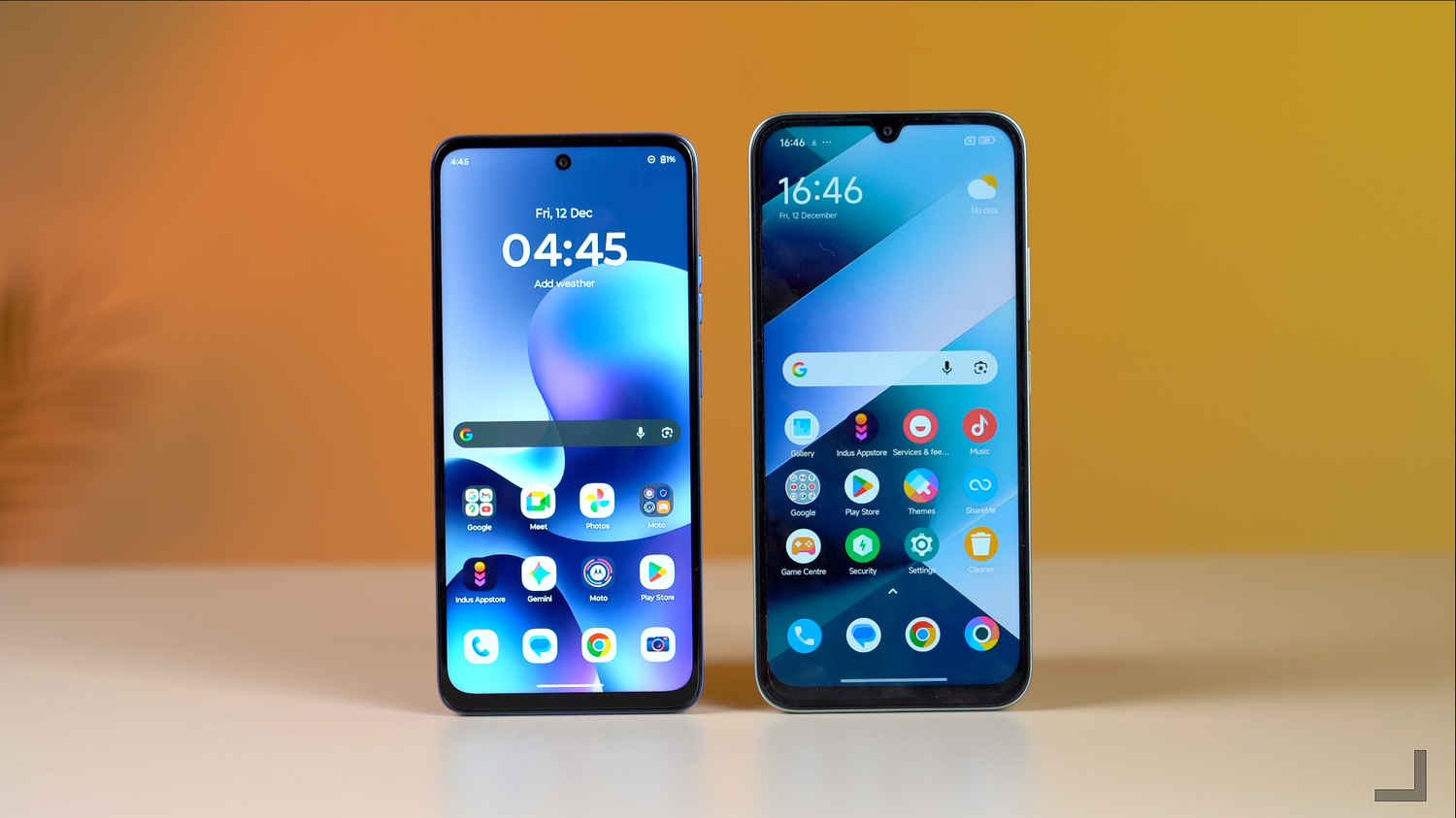
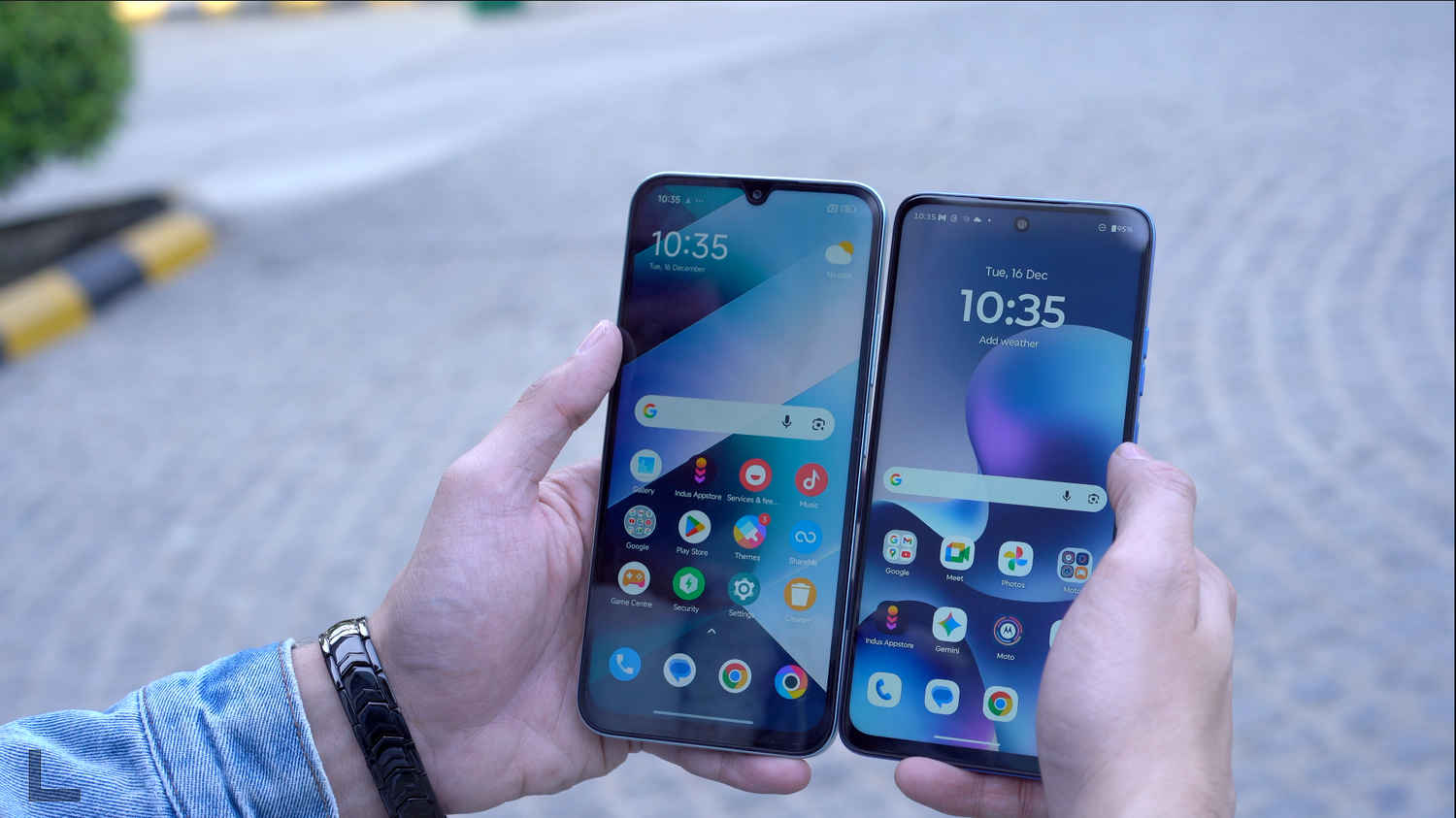
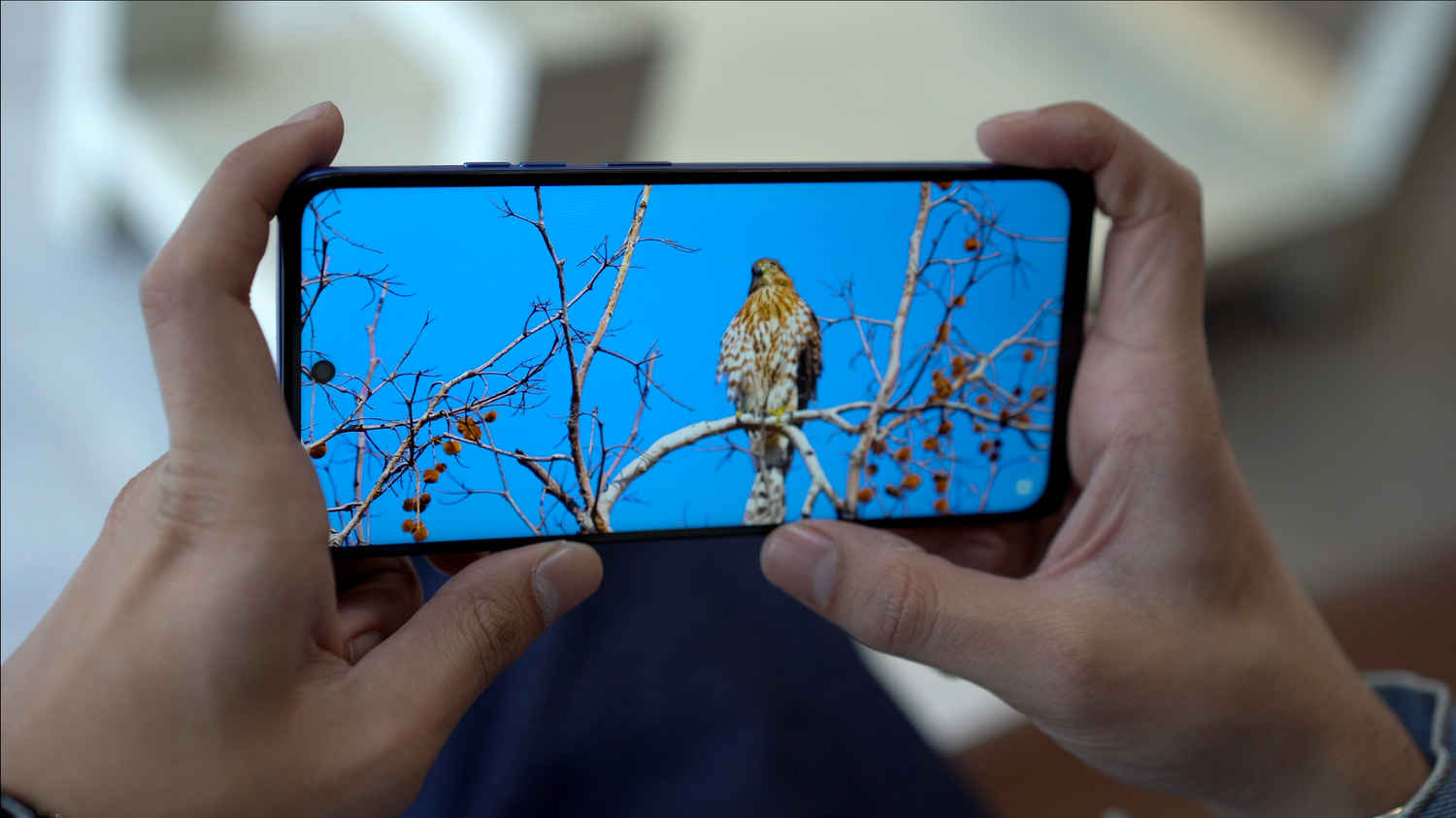
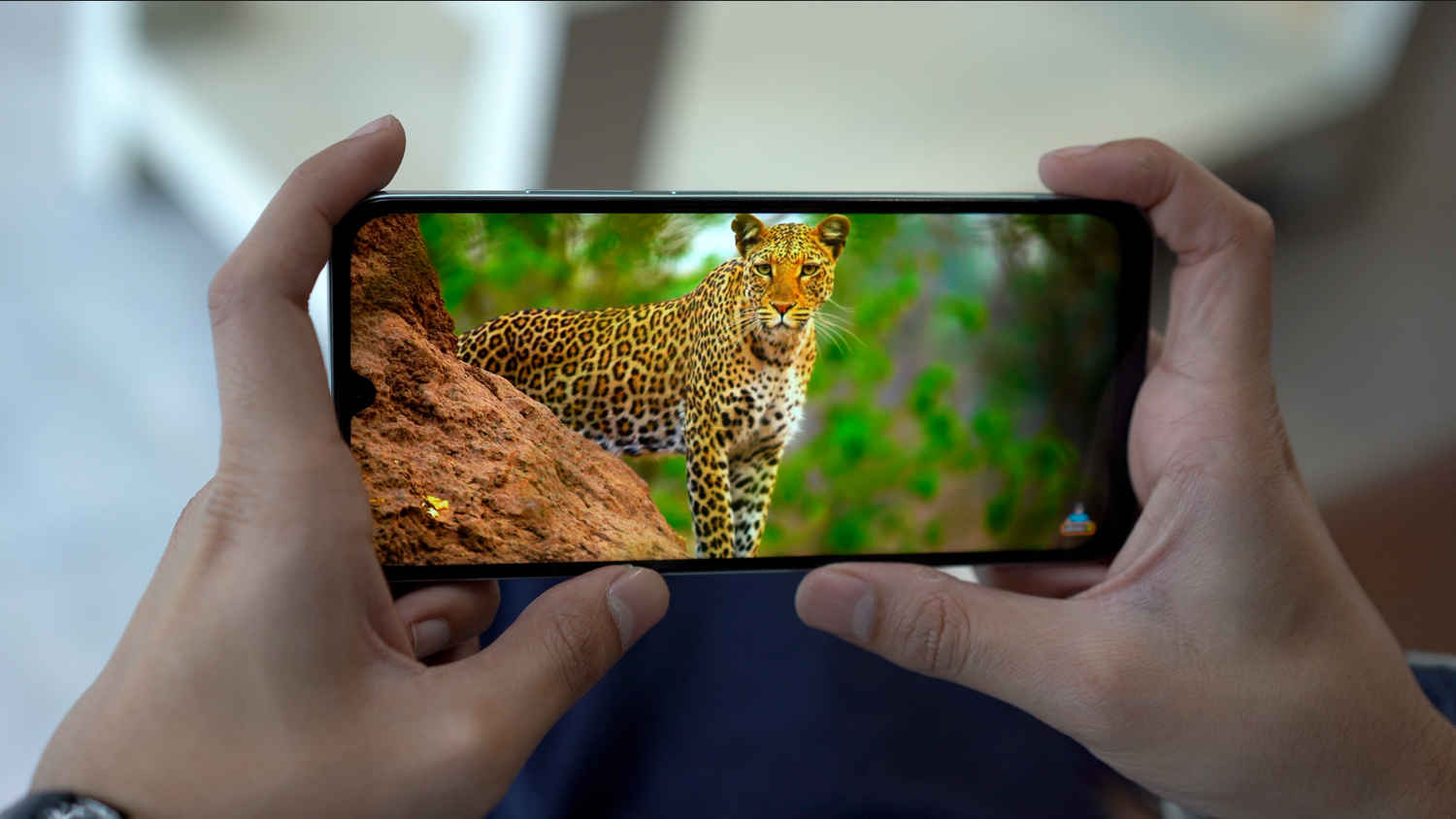
Motorola and Poco take very different approaches to the display. The Motorola G57 Power features a 6.72-inch Full HD+ IPS panel, while the Poco C85 5G stretches to a larger 6.9-inch screen but drops the resolution to 720p. The difference is immediately noticeable. Motorola’s display looks sharper and more refined, while Poco’s larger panel feels softer due to the lower pixel density.
Brightness performance is mixed. In auto-brightness mode, Motorola edges ahead slightly at around 1,029 nits compared to Poco’s 1,012 nits. In manual mode, however, Poco takes the lead, reaching close to 810 nits, while Motorola stays around 530 nits.
Colour tuning and contrast control are better on Motorola’s panel, even though neither phone attempts OLED-level blacks. Poco’s bigger drawback is design rather than brightness. The waterdrop notch feels dated on a 2025 device, especially when Motorola offers a more modern hole-punch layout.
The Motorola G57 Power is powered by the Snapdragon 6s Gen 4 chip, and the difference in day-to-day performance is easy to notice. Scrolling feels smoother, multitasking is more consistent, and overall responsiveness is better compared to the Poco C85 5G.
Poco’s Dimensity 6300 chip handles everyday tasks without major issues, but thermal throttling sets in sooner during extended gaming sessions. Frame drops are more noticeable under sustained load, particularly in games like BGMI and Call of Duty: Mobile.
Software is where the two phones diverge in philosophy. Motorola’s Hello UI stays close to stock Android and feels light and intuitive, although the inclusion of bloatware is a step back from Moto’s earlier approach. Poco’s HyperOS 2.0, based on Android 15, is packed with features and customisation options, but it also comes with a heavier dose of pre-installed apps.
You may think that the Poco clearly wins in terms of software update support, but does it really? Motorola promises only one major Android update, despite shipping with Android 16 out of the box. Poco, on the other hand, commits to two Android version updates (until Android 17) and four years of security patches, giving it a longer support window.
Motorola packs a massive 7,000mAh battery into the G57 Power, and the endurance matches the numbers. With heavy use, the phone comfortably lasts a day and a half, while lighter users can stretch it to two full days.
Poco’s 6,000mAh battery delivers solid all-day performance, but it cannot match Motorola’s sheer longevity. Charging speeds are identical at 33W, although Poco finishes a full charge in roughly 75 minutes, compared to nearly two hours on Motorola. That difference is largely down to the larger battery on the G57 Power. POCO also adds 10W reverse charging, which can be genuinely useful for accessories.
The Motorola G57 Power uses a 50 MP Sony LYTIA 600 sensor, paired with an 8 MP ultra-wide camera and a secondary light sensor. Poco opts for a simpler setup on the C85 5G with a 50 MP primary camera and a depth sensor.
In daylight, Poco C85 5G produces flatter, more neutral-looking images, while Motorola G57 Power pushes contrast and detail, resulting in more vibrant shots. Portrait performance is similar on both phones, with decent edge detection, but Motorola handles indoor skin tones more naturally. Outdoors, however, Motorola’s processing can occasionally push skin tones slightly towards red.
The 8 MP ultra-wide camera on the Motorola G57 Power is serviceable but unremarkable. On the selfie side, both phones use 8 MP sensors. Poco tends to brighten skin for a softer look, while Motorola captures more visible detail.
Video recording is another area where Motorola takes the lead. The G57 Power can record up to 2K at 30 fps, while Poco is limited to 1080p at 30 fps.
Here are the camera samples clicked from the Moto Edge 70.
Here are the camera samples clicked from the POCO C85 5G
After extended use, the difference between these two phones becomes clear. The Motorola G57 Power is built for users who value stability, sustained performance, excellent battery life, a more premium in-hand feel, and a mostly clean software experience. It delivers consistently across categories, which gives it strong value under Rs 15,000.
The Poco C85 5G focuses its appeal on a larger display, longer software support and a slightly lighter feel in daily use. Its base variant, priced at Rs 11,999 for 4 GB + 128 GB, further improves its value proposition.
If your priorities revolve around performance consistency, gaming stability and battery endurance, the Motorola G57 Power is the better choice by a noticeable margin. If a bigger screen and longer software support matter more to you, the Poco C85 5G remains a compelling alternative.