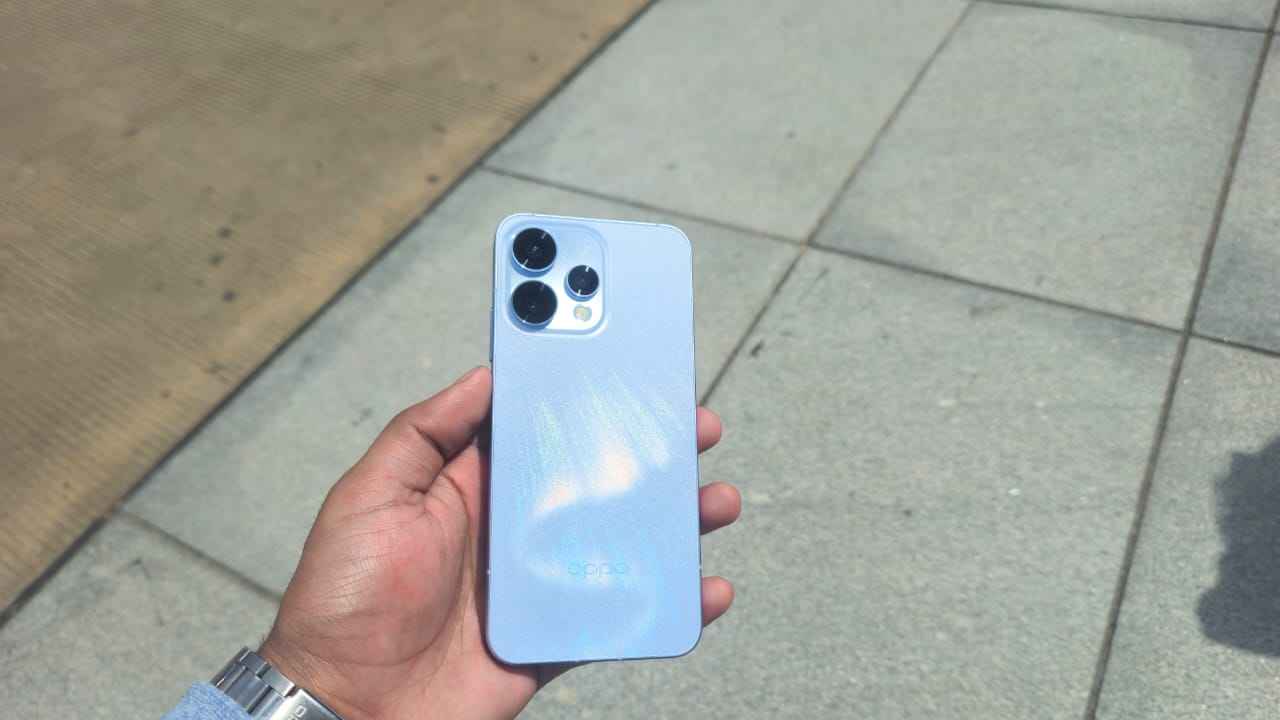
I’ve been testing various camera phones for Digit for over a year now. I feel a certain kind of pressure when testing a smartphone camera outside controlled conditions. Studio lighting, city streets, and consistent routines are forgiving, but another country is not. So, just to step out of my comfort zone, I took the Oppo Reno 15 on a day trip in Sri Lanka and discovered sunlit coastlines, dense greenery, crowded streets, quiet backwaters and the kind of shifting light that goes from harsh noon sun to a soft evening glow in minutes. This was not a planned ‘camera trip’ as defined on Instagram. It was travel as it happens, which includes walking, waiting, observing, and responding. And here’s my take on the camera.
On paper, the Oppo Reno 15 offers a familiar but sensible camera configuration. It is led by a 50MP primary sensor, paired with a 50MP secondary camera for wider framing and an 8MP auxiliary lens for additional focal flexibility. However, Oppo’s pitch this year hasn’t been about throwing more megapixels at the problem, but about better colour accuracy and a more consistent approach. So, to see how effective that philosophy really is, I stepped out and visited a few places across the country.
In the morning, I went to the beaches and greener regions to click some photographs. And to my surprise, the Reno 15 avoided the temptation to oversaturate. Greens stay green instead of neon. Blues don’t tip into teal. Yellows, especially in boats, flowers, and signage, retain texture rather than flattening into blocks of colour. It’s not the kind of output that screams for attention at first glance, but it’s the kind that feels closer to what your eyes remember.
For context, most of my daylight shooting involved water, foliage, and movement, boats pulled ashore, leaves catching uneven sunlight, and reflections that could easily blow out highlights. But the Reno 15 handled these scenes well, with a noticeable bias towards balance. Highlights on water stayed controlled, while shadows retained enough detail to be usable without being artificially lifted.
There’s sharpening, but it’s applied with restraint. Edges don’t glow. Textures aren’t over-defined. For a phone that’s clearly aimed at people who shoot a lot, often, this matters more than dramatic contrast.
What stood out during portrait-style shots wasn’t aggressive background blur, but how natural the separation felt. Framing people against greenery or architectural backdrops produced images where depth looked optically driven rather than heavily simulated.
Edges hold up well, and more importantly, skin tones remain stable across lighting changes. There’s no sudden warmth when a face enters the frame, and no obvious beauty processing trying to reshape features. It’s a subtle choice, and one that feels intentional.
Ultra-wide cameras are often treated as checkbox features. Here, they feel genuinely usable. Wide shots of waterfronts and open spaces maintain straight lines and relatively consistent detail across the frame. There’s still some softness at the edges if you zoom in aggressively, but distortion is kept in check. Things at the edges don’t stretch unnaturally, and trees don’t bend unless you’re really pushing the limits. For travel photography, that reliability makes the lens more than just a novelty.
As daylight faded, the Reno 15’s priorities became clearer. Night shots favour controlled exposure rather than aggressively brightened scenes. Lights don’t explode into flares, signage retains colour separation, and darker areas stay dark, with visible grain, yes, but also preserved texture. This won’t impress users who equate night photography with daylight simulation, but it will appeal to those who want the mood of a place to survive post-processing. Again, nothing showy. Just dependable.
Oppo has promised a lot of imaging features with the Reno 15 series, but two of them genuinely stood out in real-world use. Popout, built into the Photos app, is easily the more practical of the two. It lets you combine two to nine photos into interactive collages, and it’s tailor-made for Instagram Stories and posts without needing extra apps.
AI Portrait Glow is more subtle but equally effective. It corrects uneven lighting and backlit scenes without flattening textures or overprocessing skin. The result looks balanced, natural, and convincingly real.
The Oppo Reno 15’s camera doesn’t pretend to be a professional tool. It doesn’t promise miracles in low light or lossless zoom across distances. What it does offer is something arguably more valuable for most users: predictability.
You know what kind of image you’re going to get. You know colours won’t shift unexpectedly. You know faces won’t be over-processed. And when you look back at photos days later, they still make sense.
So, what’s the final take? The Oppo Reno 15 handled travel photography with quiet confidence. From calm beaches and crowded streets to harsh sunlight, sudden rain, and fleeting moments of motion, the camera adapted without fuss. It may not always produce the most visually striking images, but it delivers photos that feel honest. And for a phone designed to live in your pocket every day, not just on test benches, honesty may be its best feature. But does it justify the pricing? You’ll find out in my full review in a few days.