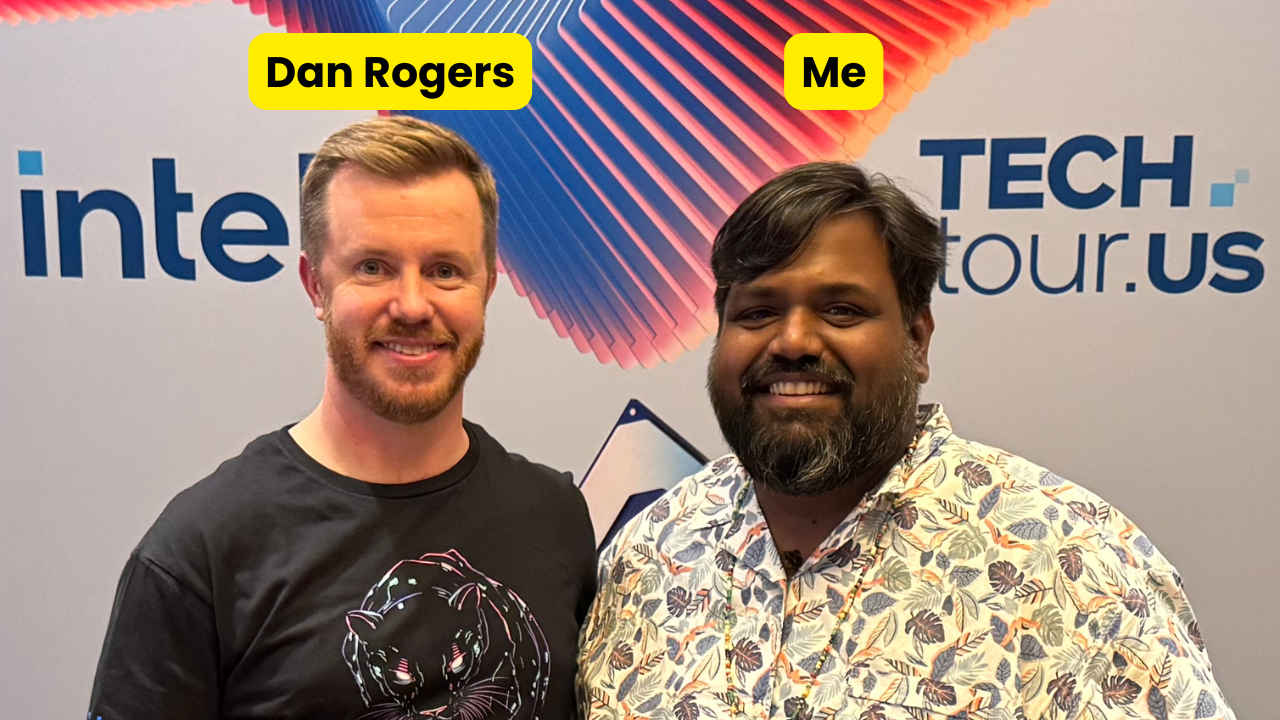
It’s not every day you sit down with two of Intel’s most senior minds – people who, quite literally, design the future of the personal computer for millions. Meet Dan Rogers, Vice President and General Manager of PR Product Marketing at Intel, and Tom Petersen, Intel Fellow and Director of Advanced Graphics Experience Engineering, he’s responsible for developing Intel’s graphics technology ecosystem across all markets. My conversation with them veers between deep technical architecture and the very human desire for laptop users for better battery life, faster graphics, and quieter machines.
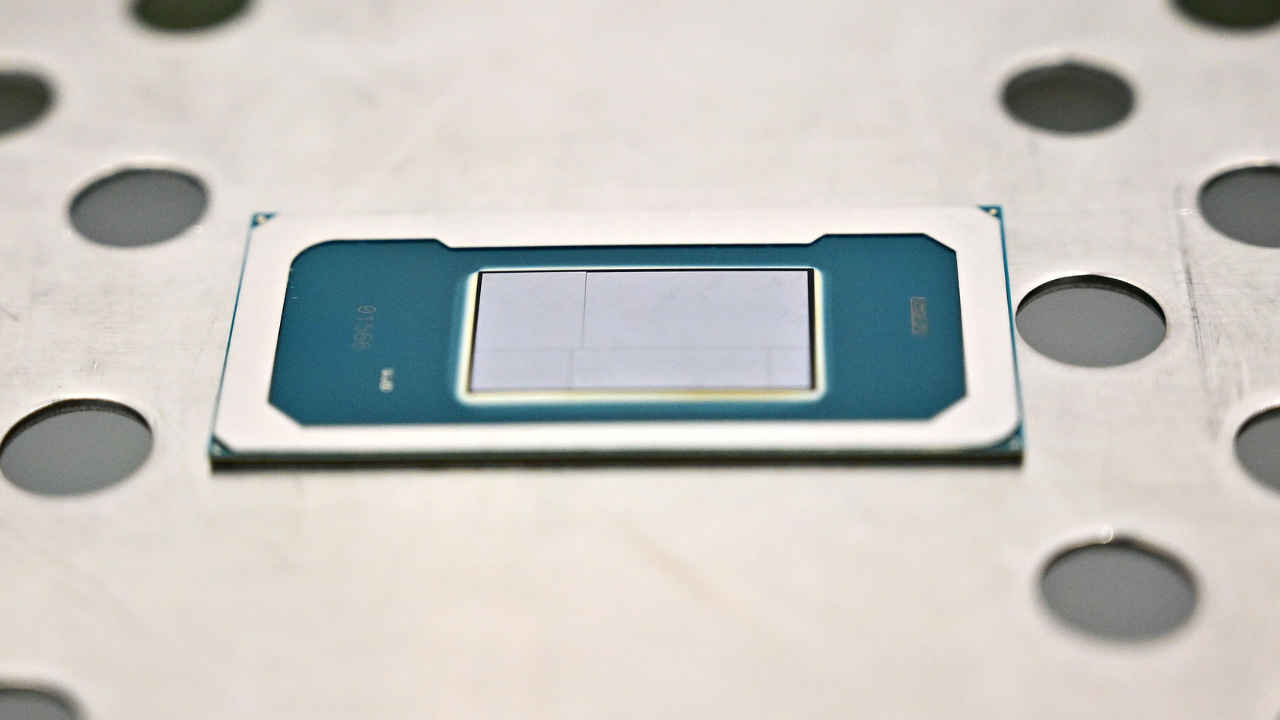
With Panther Lake or Intel Core Ultra 3, the company’s next big leap in laptop silicon slated for early 2026 release, Intel isn’t just refining what’s already out there, but trying to push the boundaries of what a PC or laptop can be in an era of AI, mobility, and gaming on the go.
So, nuts and bolts, what does that mean for anyone who’s looking to buy a new laptop in 2026? This is what the experts say in this Intel Panther Lake 2026 laptops preview about what to expect.
Rogers made it clear that Panther Lake builds upon the best of Intel’s most recent architectures. “Panther Lake, in a lot of ways, is fusing together Arrow Lake and Lunar Lake. It’s actually built on Lunar Lake – it’s Lunar Lake-like architecture. It’s the same team, internal to Intel, executing Lunar and Panther Lake.”
This combination allows Intel to scale across a wider performance envelope – from thin-and-light efficiency machines to high-performance gaming laptops.
Also read: Intel unveils Panther Lake: First AI PC chip built on 18A node
“We’re using 18A now,” Rogers added. “We can scale to a much broader set of the market, and also the high-performance designs with the 16-core config.”
The 18A process, Intel’s most advanced node yet, provides Panther Lake or Core Ultra 3 chips the transistor density and power efficiency needed to push both CPU and GPU performance without compromising on form factor or battery life – something that Lunar Lake and Arrow Lake didn’t have.
If you’ve ever felt forced to choose between battery life and brute power, that compromise could end here. By merging the DNA of Lunar and Arrow Lake, Panther Lake opens the door to laptops that are lean, quiet, and effortlessly powerful. This could mean thin-n-light laptops that think like workstations and gaming laptops that finally travel well.
“You’ll get the 12 Xe graphics performance, 16-core multi-thread performance, and Lunar Lake battery life. Imagine a high-end gaming laptop with 12 Xe but with Lunar Lake-like multi-day battery life,” according to Dan Rogers, emphasizing that efficiency wasn’t being sacrificed for raw power on upcoming laptops based on Intel’s Panther Lake chips.
Also read: Panther Lake explained: How new Intel chip will impact laptops in 2026
The new low-power island design – introduced with Lunar Lake – has been refined in Panther Lake to handle more everyday workloads on efficient cores before escalating to the high-performance ones, he further explained. “With Panther, we can handle a variety of use cases. If you’re doing Teams calls, browsing Chrome, working on email – you can run all of that on the low-power island.”
Panther Lake’s secret weapon is its different cores – P cores for performance, E cores for efficiency in terms of battery, and a low power island design. The low-power island quietly takes care of your daily grind – calls, emails, documents – without heating up your lap or spinning up fans. But when you do demand serious muscle, for gaming or video editing, the performance cores wake instantly. This will result in thinner laptops in 2026 that behave like marathoners, not sprinters, in terms of maximising battery life.
One of the headline features of Panther Lake or Intel Core Ultra 3 is its new Xe3 graphics architecture, which Tom Petersen’s team designed. Dan Rogers positioned it squarely in the territory of entry-level discrete GPUs.
“This is certainly a level of entry discrete-class graphics that you see in a laptop with 12 Xe,” said Rogers. He added that users should expect 24GB or 32GB memory laptop configurations to emerge as the new norm to keep up with these integrated GPUs. “We’re recommending 24GB and 32GB configs for 12 Xe to make sure you have sufficient capacity for games and you’re not paging out to storage.”
For gamers and creators alike, Panther Lake-based laptops promise near-discrete GPU performance without the bulk or cost of an extra graphics card. Think of it as plug-and-play gaming, out of the box. The shift to 24–32 GB of unified memory also means fewer slowdowns, even when juggling heavy creative apps or AI workloads.
On the graphics side, Tom Petersen delved into how AI rendering and frame generation are reshaping performance expectations for upcoming Intel Core Ultra 3-based laptops in 2026. He explained the progression from rasterization to ray tracing to AI-based rendering and multi-frame generation (MFG) – which is being introduced for the first time.
“The first step people did was they said, why don’t I raster a small resolution image, and then I’ll use AI to super sample – that’s XeSS. Then we added frame generation, and the last step in that process is multi-frame generation,” according to Petersen.
The results are significant, he claims. “If you’re comparing Lunar Lake to Panther Lake, on average, we’re going to see around 50% uplift for raster performance. But that’s not counting new techniques like MFG, which could scale up to 3x on top of that.”
When asked about input latency, Petersen assured that responsiveness remains strong. “Multi-frame generation doesn’t add any more latency compared to single-frame generation. We also have a switch inside the driver that reduces buffering for low latency,” he summarised.
This is the part where Intel’s engineers start to sound like magicians. By predicting and generating frames using AI, Panther Lake can make midrange laptops feel like high-end gaming rigs. Motion looks smoother, latency drops, and even everyday visuals – like video playback or streaming – gain a richness that we probably haven’t seen before on laptops.
Rogers reiterated Intel’s system-level approach to AI performance, emphasizing the synergy between CPU, GPU, and NPU. “What’s unique about our approach to AI is we think all the engines matter. The CPU matters, the GPU really matters, and certainly the NPU matters.”
While the GPU continues to serve as the “AI muscle,” the NPU focuses on efficiency for sustained, always-on tasks like Teams calls in the background or on-device LLM-based tasks.
“It’s actually not about the total compute for the NPU – it’s about the efficiency of that compute. We use TOPS-per-watt as a critical metric,” said Petersen.
One way to make sense of this is to think that in 2026 laptops will quietly think for you. Expect smarter background noise cancellation, on-device copilots that summarize your meetings, and creative tools that harness AI without hogging power. The idea isn’t just to run AI – it’s to live with it seamlessly, all day long.
Panther Lake is also expected to power new PC form factors, especially handheld gaming devices, teases Rogers. “One form factor that we’re pretty focused on is gaming handhelds with Windows. We think that’s a pretty exciting fit for Panther Lake with the combination of the low-power island plus the 12 Xe in terms of the platform architecture,” he confirmed.
He attributes it to the fact that Intel’s packaging flexibility – enabled by Foveros advanced packaging – will let designers mix and match chiplets more easily. “The future is chiplet-based design for sure… Foveros allows mixing and matching per generation based on IP and process alignment.”
What does this mean for 2026? Expect to see a wave of hybrid PCs that blur categories – Windows handhelds that rival the Steam Deck, foldable laptops with console-level graphics, and thin gaming notebooks that actually last through a flight. Foveros’ modularity means faster innovation cycles, too, so new designs will hit shelves sooner than we’re used to.
Intel’s 2026 laptops powered by Panther Lake will seemingly have a rare blend of efficiency, AI readiness, and gaming-class graphics – at least on paper. With 18A-based silicon, 12 Xe integrated GPUs, and smarter power management, Intel claims to finally have a platform designed for both creators and gamers who want uncompromising performance in thinner, longer-lasting devices.
In Petersen’s words, it all comes down to how far this generation can push the line between integrated and discrete graphics. “If you looked at Panther Lake compared to entry-level discrete performance, there’s a big question of – why would you do entry-level discrete?” The 2026 laptop era might just tell us why. Of course, Qualcomm and AMD would want to say something about that. Interesting times ahead.
Also read: Inside Intel’s reboot: Sachin Katti’s blueprint for an open, heterogeneous AI future