Picture this: you’re shopping for a gaming laptop in 2027, and the salesperson tells you it doesn’t need a separate graphics card because the processor alone can handle the latest AAA games. Sounds far-fetched? Well, Intel’s upcoming Nova Lake architecture might just make this scenario a reality.
Recent shipping manifests have confirmed that Intel’s powerful Nova Lake processors will indeed make their way into high-performance laptops, marking a significant shift in mobile computing. This isn’t just another incremental upgrade; we’re looking at a complete reimagining of what laptops can achieve.
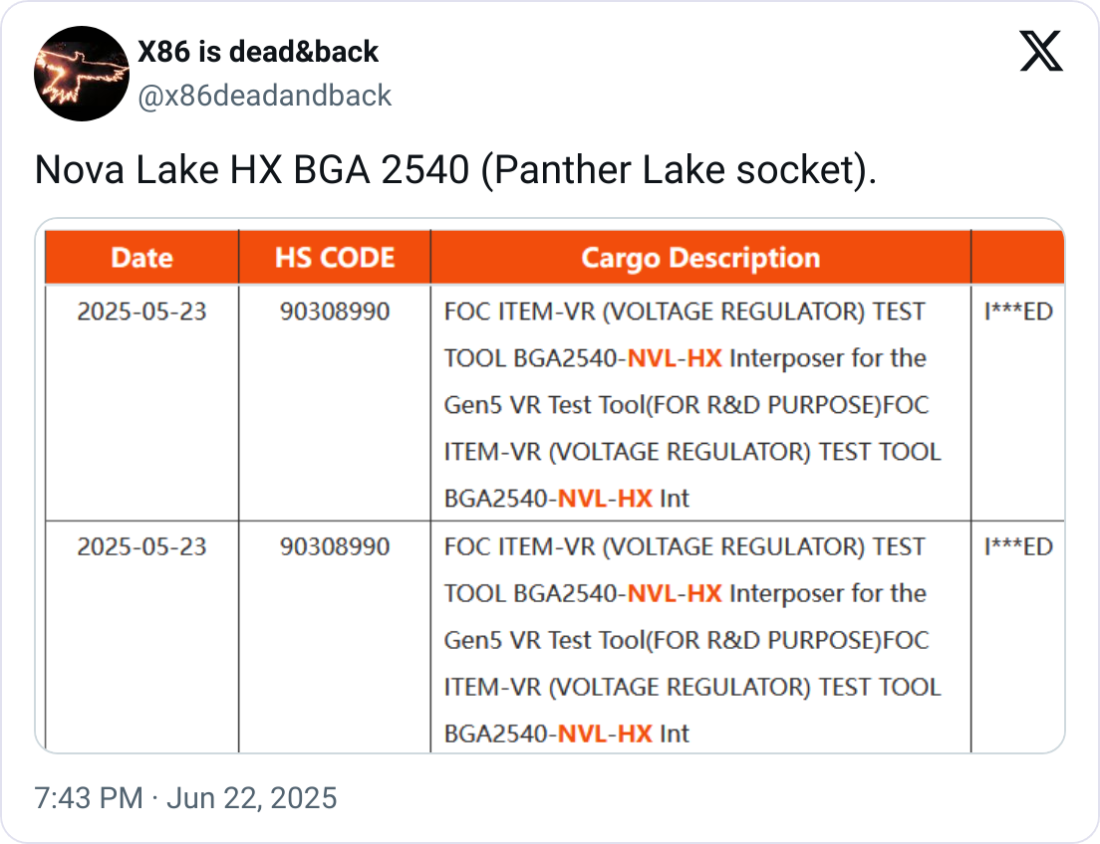
The tech world loves a good leak, and this one came courtesy of shipping documents that revealed Intel’s plans for Nova Lake-HX processors. These manifests, spotted by eagle-eyed leaker x86 is dead&back, showed test equipment for something called “BGA2540-NVL-HX” – technical jargon that translates to exciting news for laptop enthusiasts.
What makes this particularly interesting is that Intel will use the same BGA 2540 socket as their upcoming Panther Lake chipset. This decision suggests Intel is streamlining its manufacturing process whilst preparing for a substantial leap in performance capabilities.
The HX designation tells us these processors are designed for high-performance laptops, the kind that gamers and content creators rely on for demanding tasks. Intel has a history of adapting its desktop architectures for powerful mobile devices, and Nova Lake continues this tradition with what appears to be its most ambitious mobile processor yet.
Here’s where things get genuinely exciting: Nova Lake isn’t just about more cores or higher clock speeds. The architecture is rumoured to feature up to 52 cores in its desktop variant, comprising 16 performance cores, 32 efficiency cores, and 4 low-power efficiency cores. While we don’t yet know the exact configuration for the HX laptop variant, even a scaled-down version would represent a massive leap forward.
Also read: Intel ME and AMD PSP: The hidden processors inside your CPU
The real game-changer, however, lies in Nova Lake’s integrated graphics capabilities. Intel is reportedly implementing a dual-architecture GPU system that combines Xe3 and Xe4 technologies. The Xe3 architecture, codenamed Celestial, handles the heavy graphics processing, whilst Xe4 (Druid) manages display output and media functions like video encoding and decoding.
This division of labour isn’t just clever engineering, it’s potentially revolutionary. By optimising each component for specific tasks, Intel could deliver integrated graphics performance that rivals dedicated graphics cards. For laptop users, this means potentially saying goodbye to the heat, power consumption, and bulk that come with discrete graphics solutions.
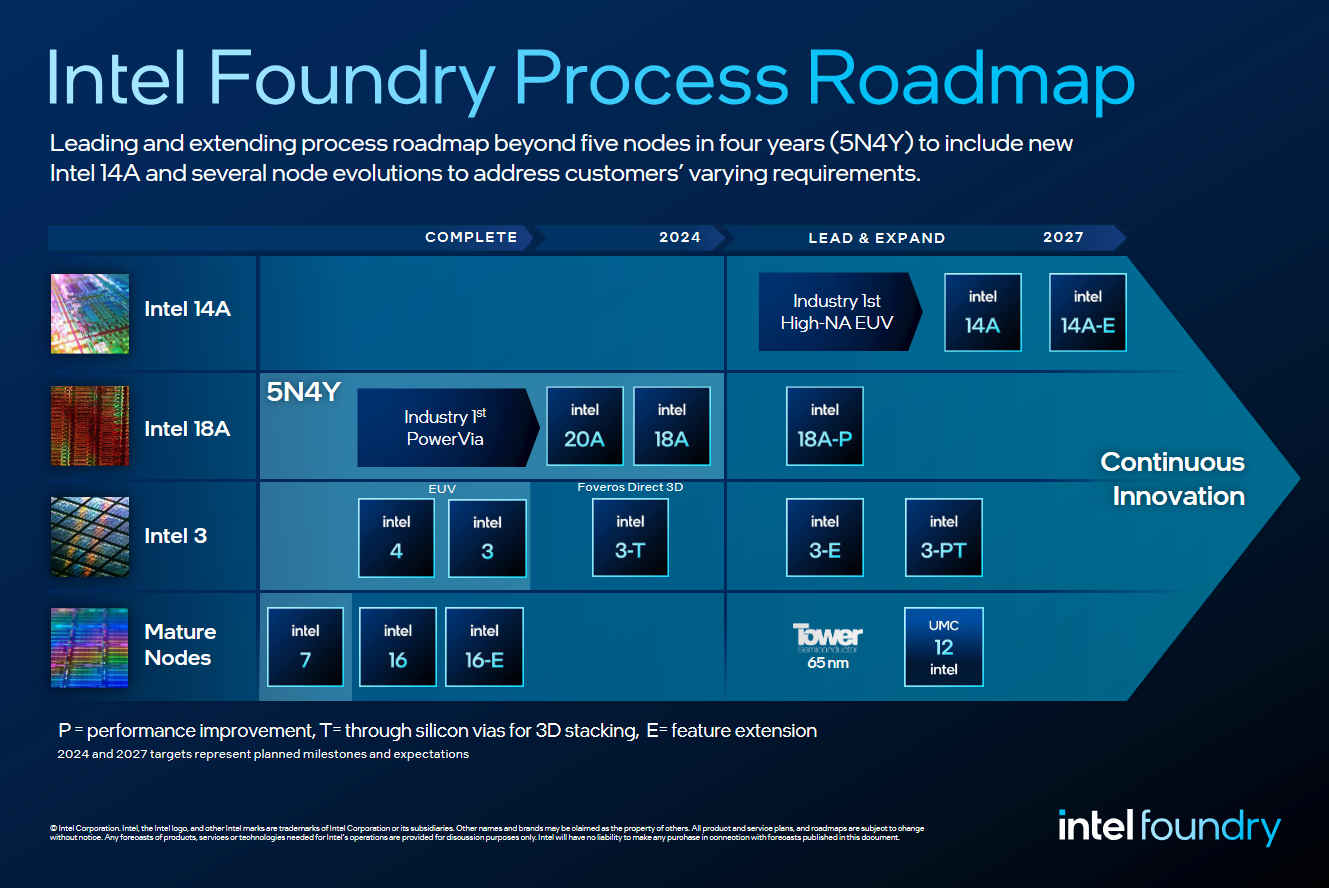
Behind all these impressive specifications lies Intel’s 18A fabrication process, which represents a significant technological advancement. This 1.8-nanometre class process delivers 25% better performance at the same voltage compared to Intel’s previous generation, whilst consuming 36% less power.
The 18A process introduces two technologies: gate-all-around RibbonFET transistors and PowerVia backside power delivery. These innovations enable better power efficiency and higher transistor density, which directly translates to improved performance in a laptop form factor.
For laptop users, this means devices that run cooler, last longer on battery, and deliver more performance than ever before. The area scaling improvements also suggest that manufacturers could potentially create thinner laptops without sacrificing performance.
The Nova Lake-HX development suggests that the laptop market is approaching an inflection point. Whilst we won’t see these processors until 2027, their eventual arrival could reshape the entire mobile computing landscape.
For current laptop shoppers, this news provides valuable context for purchasing decisions. If you’re considering a high-end gaming laptop, it might be worth evaluating whether your current device can last until Nova Lake arrives. The potential performance gains could make waiting worthwhile, particularly if you’re already running a reasonably capable system.
However, technology never stands still, and there’s always something better on the horizon. The key is finding the right balance between current needs and future possibilities.