Unleash the Avatar Game Varun Mayya
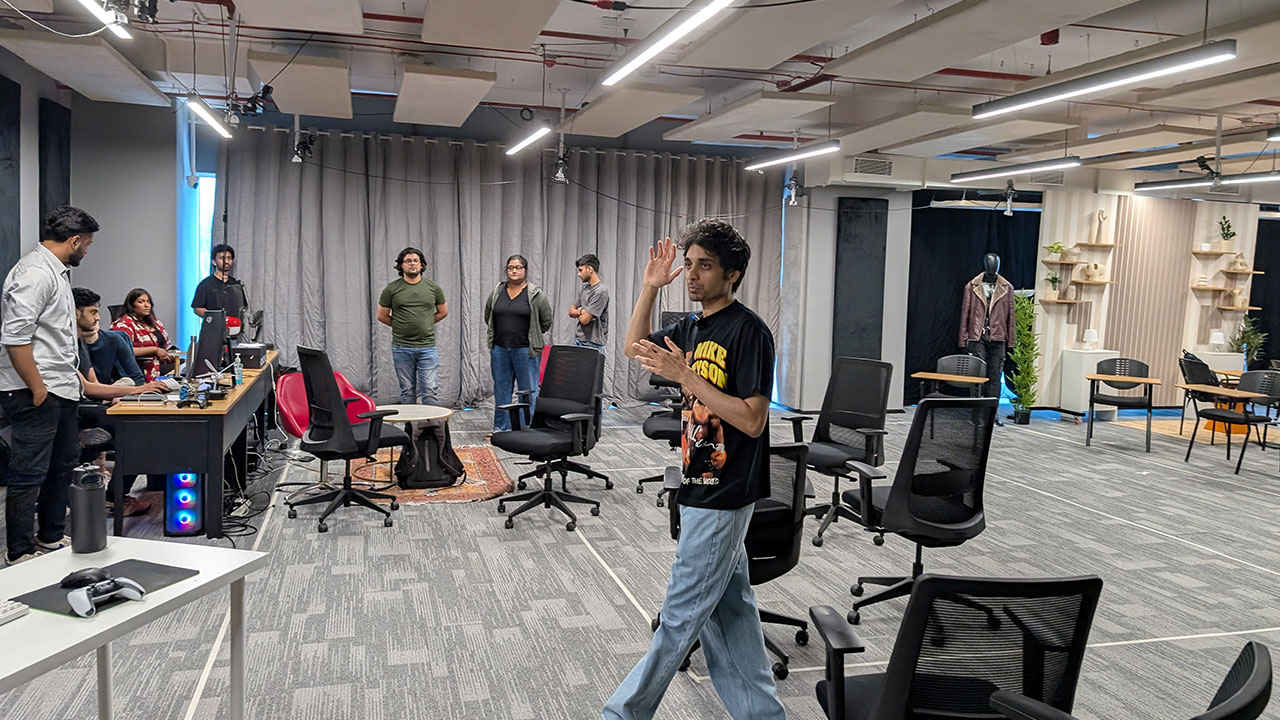
We were among a small group of journalists invited to a closed-door preview of Unleash the Avatar, the debut soulslike from Bengaluru-based Aeos Games, produced by entrepreneur and creator, Varun Mayya. The session was part trailer screening, part combat lab, and part long chat with the people building it. It also served as a reset for the project. The first teaser suggested a grounded, modern-day India; the new material shifts the action to an alternate, myth-tinted setting that feels closer to the stories many of us grew up watching on Doordarshan, only filtered through Unreal Engine 5 and a studio that seems intent on sweating the small stuff. The team describes it as an Indian epics-inspired souls-like, PC first, with consoles under evaluation, and a targeted 2026 launch window. You can wishlist it on Steam now.
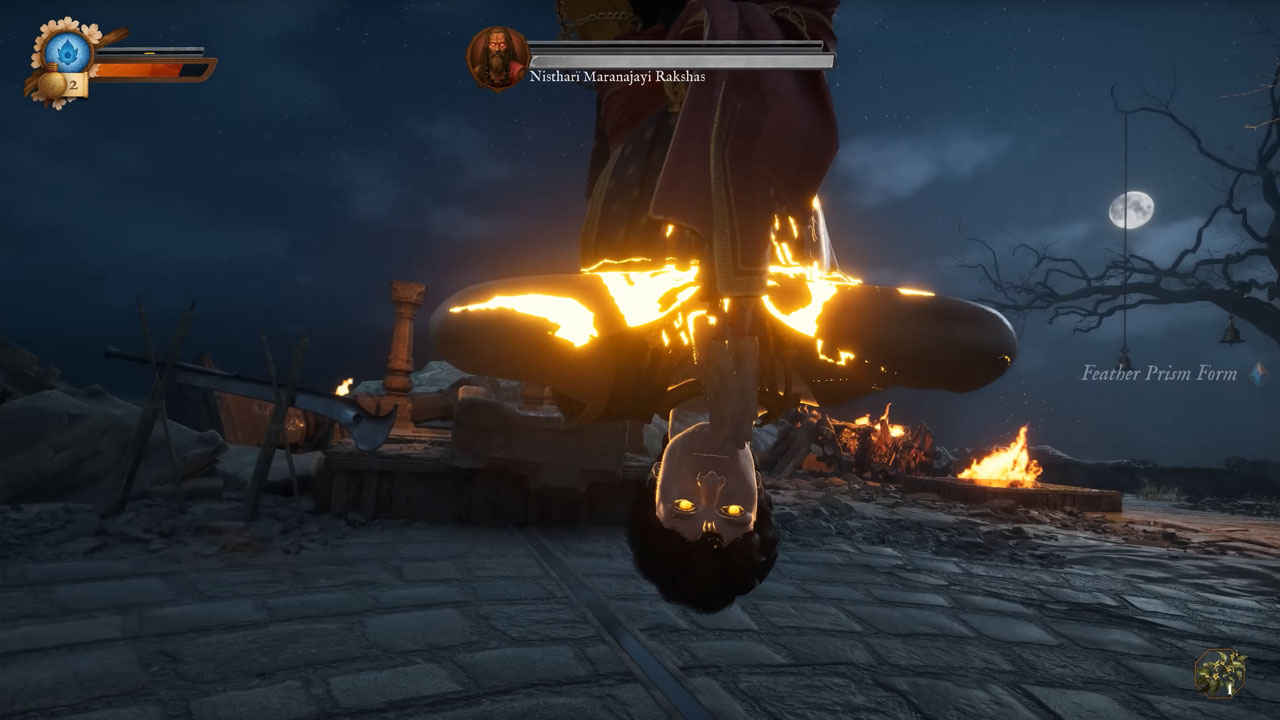
The new trailer plants us in Vishwapur, a once-idyllic coastal settlement now overrun by Nisthari Rakshas. Lorewise, the barrier between Naraka and Earth has cracked, and malevolent forces are spilling through. The player character carries a sliver of Vishnu’s power, and the arc is about restoring balance while untangling the how and why of this slow-motion catastrophe. The change in aesthetic, from a more contemporary backdrop to an alternate-timeline, high-fantasy India, is not a cosmetic decision. The team framed it as a response to community feedback after the first trailer, and, more importantly, a better fit for the story they wanted to tell. Check out the trailer below.
During our conversations, Varun and the developers spoke candidly about building in public. Early comparisons with genre heavyweights were bruising at times, but they say the scrutiny sparked hiring momentum and clarified priorities. Several specialists pitched themselves after seeing the teaser, and, by the studio’s account, that influx tightened the pipeline and raised the bar. The moral is simple enough: criticism stung, yet it sharpened the vision and accelerated polish.
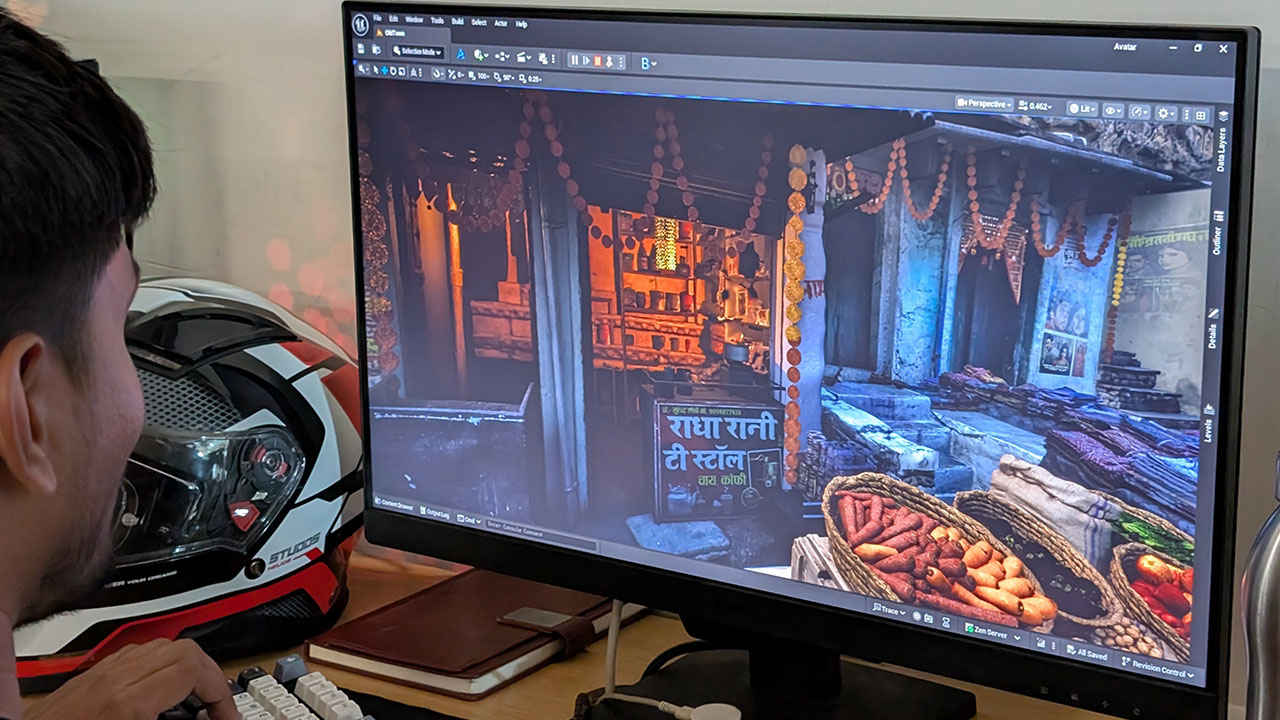
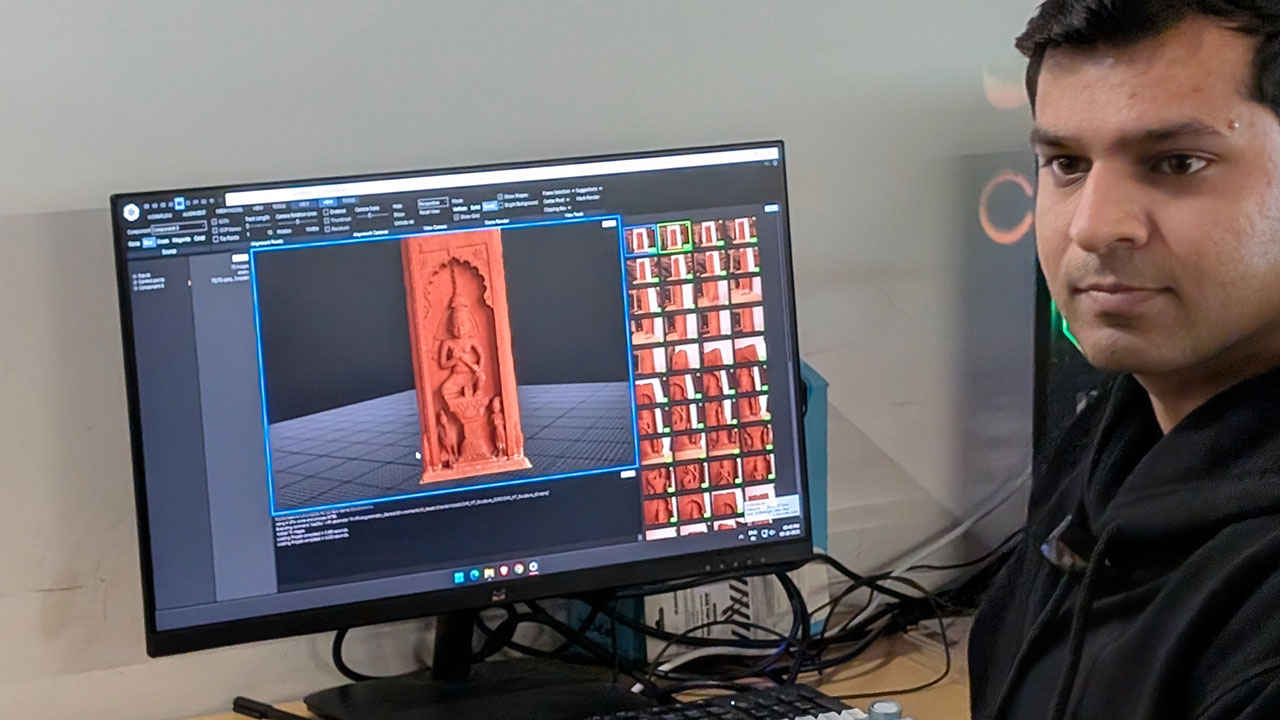
If the new setting feels convincing, it is largely because Aeos is pursuing photogrammetry with unusual zeal. The studio claims to have amassed one of the largest home-grown libraries of scanned assets, and told us it secured permission from the Archaeological Survey of India to scan an entire town in Chanderi, Madhya Pradesh. That kind of access, coupled with in-house capture, is the backbone of Unleash the Avatar’s visual language, where crumbling lime plaster, sun-blasted stone, and time-polished wood all read with tactile fidelity. The first trailer, as per Mayya, was a public photogrammetry test, which explains the initial modern-day framing. That experiment now feeds a more cohesive, mythic world.
The fidelity is paired with a serious optimisation effort. The team walked us through their profiling regimen, texture budgets that scale with camera height, selective shadow casting for lights, and a willingness to cap assets where the payoff is minimal. The gist is clear: you only get to claim AAA aspirations if you manage budgets like one, and Aeos appears to be doing the unglamorous work to keep performance headroom.
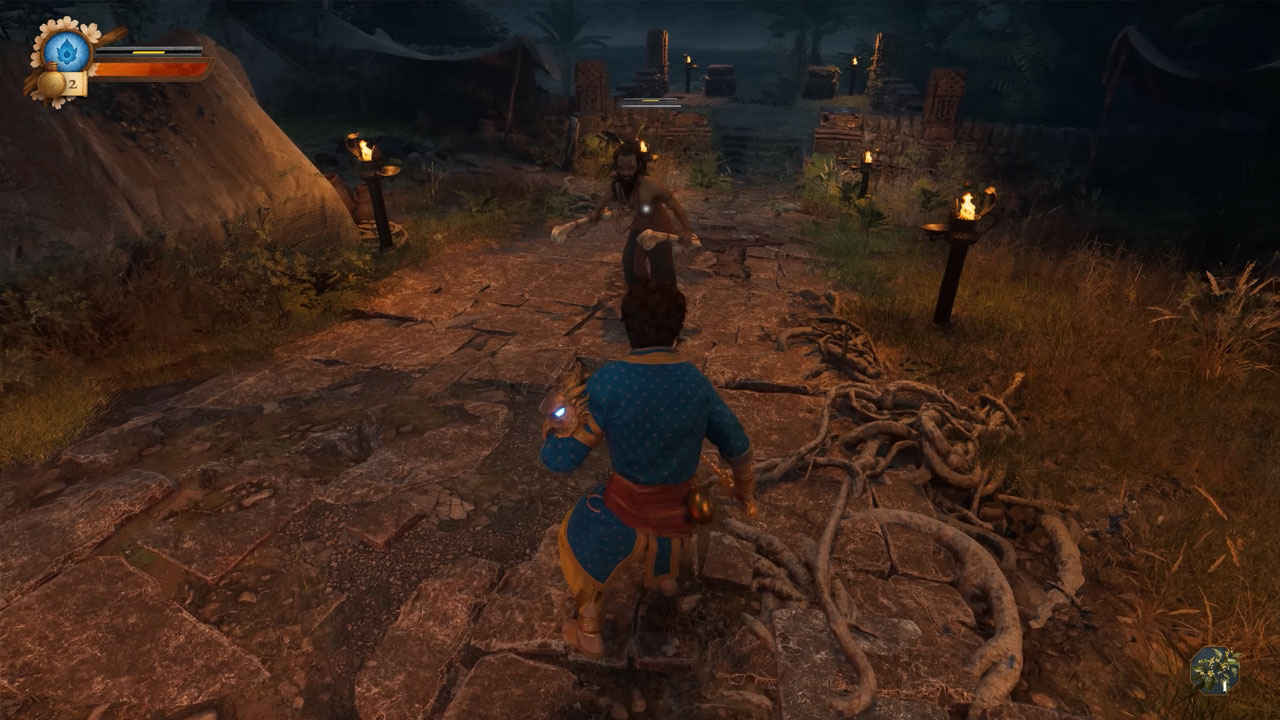
The build we tried focused on combat, and it clicked surprisingly fast aside from some latency issues. Dodges, parries, and stagger windows behave as you would expect from the genre, but there are two flourishes that stood out.
First, the fragmented chakra. It is a ranged attack with its own physics model, tuned not only for spectacle but for readability. When you launch it, the flight path briefly slows at the start of its return arc, a subtle pause that telegraphs direction before the disc whips back with speed. It sounds like a small tweak, although the result is meaningful. You can commit to an attack, read the return, and reposition without relying on intrusive indicators. As the designers put it, they debated UI markers, then instead tuned the chakra’s motion to become its own cue.
Second, the avatar state. In tougher encounters, you can call upon a more powerful form with access to multiple chakras, each with distinct utility. Think of it as a tempo shift, not a brute-force win button. Use the window to break posture, apply pressure, or create breathing room, then drop back to baseline before overcommitting. Layered on top is a posture-sensitive enemy AI that knows when to reset, when to press, and how hard to push. Combined with a rigorous parry model, the loop leans toward skill and composure rather than mindless attrition. There is also an explicit allowance for aura farming, which the team frames as a way to smooth difficulty spikes without sanding off the edge.
Boss encounters tease the right kind of dread. Visuals are clear, punish windows feel honest, and the audiovisual punch sells the stakes. None of it is wildly original on paper, yet it coheres. We left with the sense that Aeos is designing for legibility first, then layering spectacle. For a first production title, that is a smart order of operations.
Aeos is about 40 people strong, with a mix of newcomers and veterans who have shipped globally recognised titles. The studio says the game is fully self-funded to date. That choice raises risk, yet it also creates a strong incentive to ship something sharp, readable, and optimised. Wishlist counts matter more when you are cutting through the noise without a traditional publisher’s marketing muscle. The team is clear about this, and the messaging around Steam wishlists is unusually direct, which frankly, is refreshing.
Platform plans are conservative. The PC version leads, with consoles being evaluated, and handheld PCs on the wish list rather than a formal target. Internal schedules point to a 2026 release window. While that feels reasonable for a studio of this size that is building custom systems alongside content, even 200-300 people teams have pushed launch windows beyond a year from the initially planned release date, so 2026 is very ambitious.
Given Varun Mayya’s reputation for exploring AI tools, we expected a lot of generative content in the pipeline. The reality is more grounded. The team said generative AI is not used for assets, writing, or voice work. They argue that text-to-3D is not there yet, Indian voice timbre is not convincingly replicable, and narrative risks becoming generic if you let a model steer the pen. Where AI does show up is in conversation and utility: bouncing design ideas, answering fast lore questions to cross-reference mythic material, and helping scaffold small internal tools such as a GUI for version control to make life easier for artists. Apparently, a good chunk prompts were to see if the devs would get cancelled for some of the creative choices made. Well, time will tell.
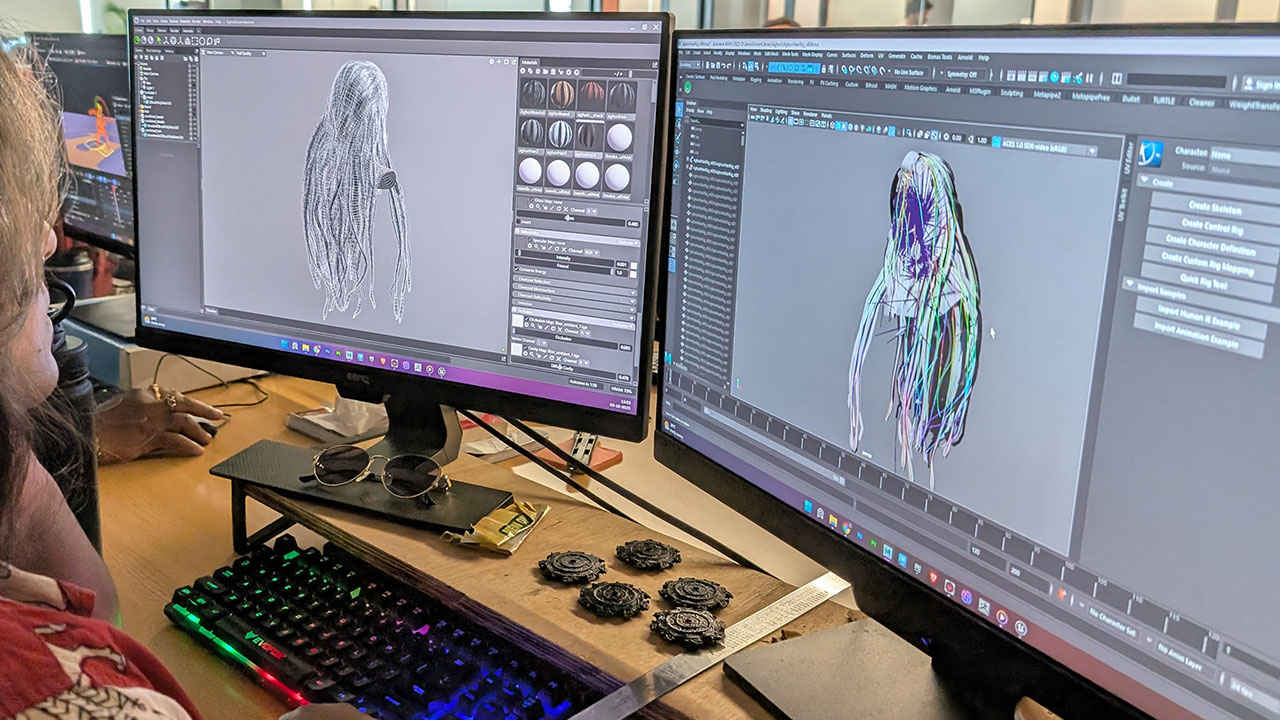
The boundary is practical. Use AI to think and to streamline plumbing, not to replace the craft that defines a soulslike. On the engine side, expect plenty of UE5 staples, including Nanite for geometry, heavy use of the profiler, and bespoke editor widgets to search large levels by tag. There is nothing showy about this, which is precisely why it matters. The best systems are often the ones you do not see.
When you draw from epics, the stakes extend beyond game design. The team talked at length about intent, representation, and the obligation that comes with a loud first impression. Expect a loose, respectful riff on themes and deities rather than direct retellings, with an alternate timeline that slides through time and space to avoid being pinned to a specific historical moment. That flexibility gives Aeos room to build its own canon without inviting pedantry about period detail, while still leaning into the silhouettes, textures, and archetypes that feel rooted in the subcontinent’s storytelling tradition.
The result, even at this stage, reads as recognisable without being patronising. Costume work nods to the televisual memories many of us carry, but the staging is cinematic, the combat is all systems and timing, and the world has a mournful beauty that is more Dark Fantasy India than devotional diorama.
Previews are snapshots. Builds change, systems get torn up, and trailers are designed to sell a fantasy. With that caveat, Unleash the Avatar already shows encouraging choices. The studio is designing for clarity and fairness in a genre that depends on both. The chakra system is clever and readable. The avatar state adds risk-reward spice without devolving into a spammy get-out-of-jail card. Enemy behaviour respects posture and pressure rather than rubber-banding artificial difficulty. And the commitment to photogrammetry gives Aeos a consistent, textured base to build from, which the artists are learning to manage with sensible budgets.
There is still a mountain to climb. Once you hit content scale, encounter variety becomes the make-or-break factor. The best soulslikes teach you new lessons through enemy design and space, not just higher numbers, and that takes time. Performance on mainstream hardware will be the other test, especially in a PC-first launch. From what we saw, the team understands both challenges and is putting the scaffolding in place.
Unleash the Avatar is not trying to bluff its way into the room. It is being built with visible craft, a grounded set of tools, and an appetite for critique that has already changed its course for the better. The setting leans into Indian myth without getting trapped by it. The combat is readable and sharp, with enough mechanical personality to stand out. The pipeline choices suggest a studio that knows its constraints and is designing within them.
If Aeos can extend this level of care across a full campaign, keep its bosses memorable rather than merely punishing, and deliver on its performance targets, it could give India the kind of globally relevant action game many of us have wanted to champion for years. For now, it is a project worth watching, and yes, worth wishlisting.