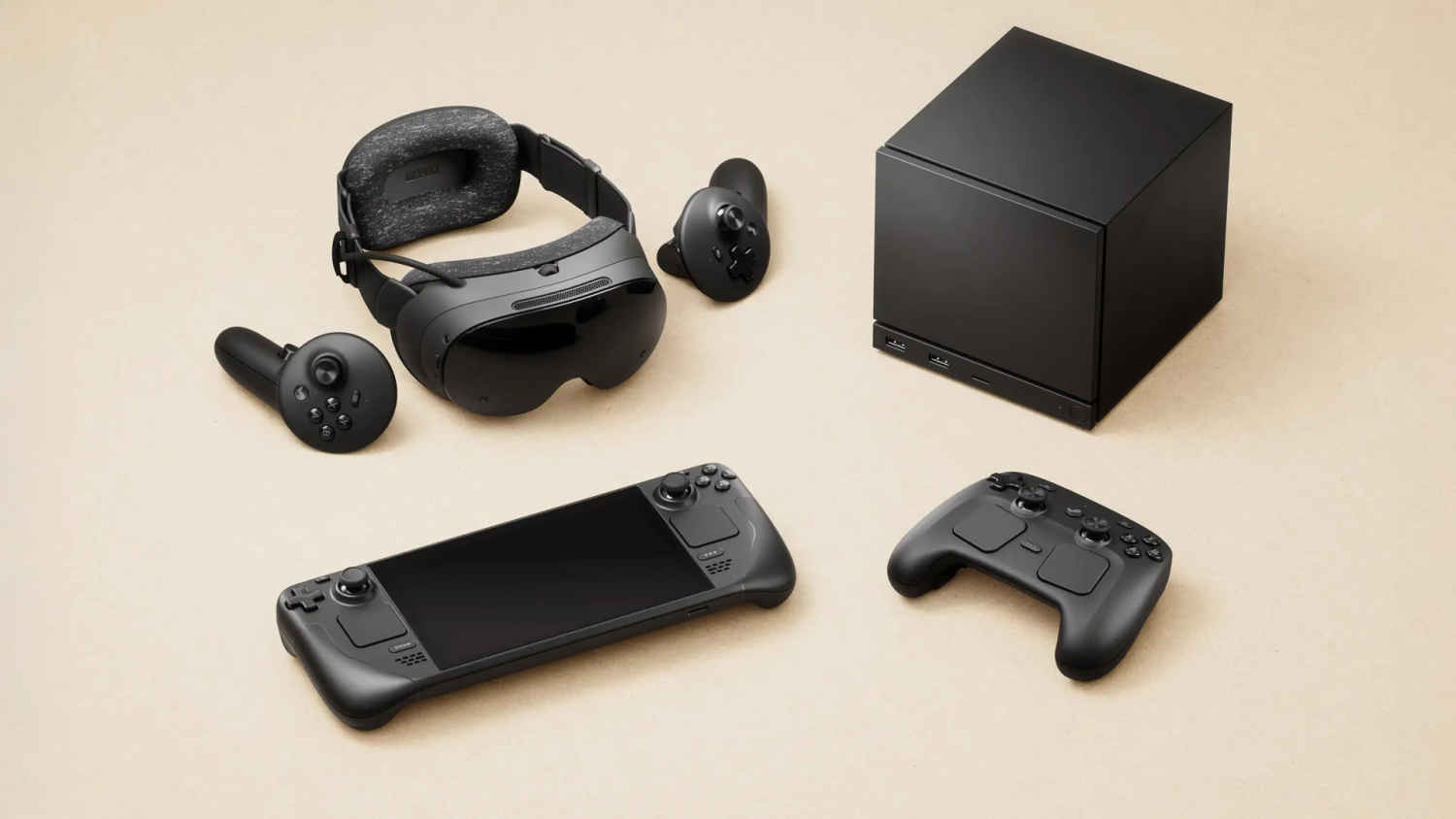
I still remember when Valve first tried to invade the living room. Back in 2015, the Steam Machine was supposed to be the PC gamer’s answer to the console – sleek, powerful, open, and utterly confusing. A dozen hardware partners, multiple configurations, and an operating system that didn’t play half the games it promised, it felt less like the future of gaming and more like a beta test gone public. I remember watching the launch trailers, excited but puzzled: Who was this really for?
A decade later, Valve is quietly reviving that old dream, and somehow, it doesn’t feel as crazy this time. The new Steam Machine is real, official, and built in-house, with a clear purpose: a compact, AMD-powered gaming PC designed for the couch, running on a mature version of SteamOS that actually works. It’s the same idea, but one that’s grown up, shaped by the hard lessons of the past and the unlikely success of the Steam Deck.
Also read: Valve announces Steam Machine console, Frame VR headset and controller: First look, features
Valve’s first attempt at hardware failed for all the right reasons. The company was experimenting – a dozen manufacturers made “Steam Machines,” all with different specs and prices, and no clear identity. SteamOS, back then, was a Linux-based dream that couldn’t run most games without Windows. And the original Steam Controller? Innovative but awkward, a device that tried to be both a gamepad and a mouse and satisfied neither camp.
Valve never officially killed the project; it just faded away, like an early-access game that never reached version 1.0. But while everyone moved on, Valve didn’t stop building. Steam Link, Big Picture Mode, Proton compatibility, the Steam Deck, all those pieces were steps toward a single idea: a unified gaming ecosystem that doesn’t need Windows to thrive.
The 2025 Steam Machine is smarter and more self-assured. There’s only one model, built entirely by Valve, no confusing partnerships. Inside sits a custom AMD chip: a six-core Zen 4 CPU paired with an RDNA 3 GPU, capable of pushing 4K at 60fps with AMD’s FSR upscaling. It’s quiet, compact, and, unlike its ancestor, doesn’t sound like a jet engine when you launch Cyberpunk 2077.
Also read: Microsoft launches Xbox Cloud gaming in India: How to setup on phone and TV
SteamOS, now on its third major iteration, is no longer a tech enthusiast’s experiment, it’s a proven, console-like experience refined by millions of Steam Deck users. Every update to Proton, Valve’s compatibility layer, has made Windows games more seamless to play on Linux. The Steam Machine is now, quite literally, plug and play.
And that new Steam Controller? It’s back too redesigned with gyro support, refined haptics, and capacitive sensors. Valve hasn’t abandoned its weird ideas; it’s just finally had the time and feedback to make them work.
Valve’s comeback isn’t just about nostalgia, it’s about timing. The “console” is no longer what it used to be. Microsoft is busy merging Xbox and PC into one platform. Sony is publishing its biggest games on Steam. And most gamers, especially in the post-Deck world, want flexibility: a machine that works on a monitor and a TV, with the same library, same saves, and no subscriptions.
Valve’s advantage is that it already owns that ecosystem. Steam’s social layer, controller APIs, cloud saves, Proton – it’s all there. The new Steam Machine isn’t trying to beat consoles; it’s trying to be the PC that finally belongs in your living room without feeling like a compromise.
Still, Valve’s biggest challenge won’t be hardware or performance, it’ll be marketing and price. The original Steam Machine failed partly because people didn’t know what it was. Valve’s audience today is bigger and more trusting thanks to the Deck, but explaining why you need a living-room PC in the age of handhelds and cloud gaming is still a tall order.
Valve isn’t a company that follows trends. The Steam Deck proved that gamers will give Valve a second chance when the product feels genuine. The new Steam Machine carries that same energy: confident, minimalist, and quietly radical in what it represents – a belief that open platforms can still thrive in an increasingly closed world of ecosystems and subscriptions.
I don’t know if it’ll sell. Maybe it’ll just be another cult classic like the first one. But as someone who once watched Valve’s grand experiment collapse under its own ambition, there’s something poetic about seeing it try again – smarter, steadier, and finally self-aware.
This time, the Steam Machine doesn’t need to win the console war. It just needs to prove that the idea was never wrong, just too early.
Also read: From consoles to the cloud: Why gaming in India is entering a new era