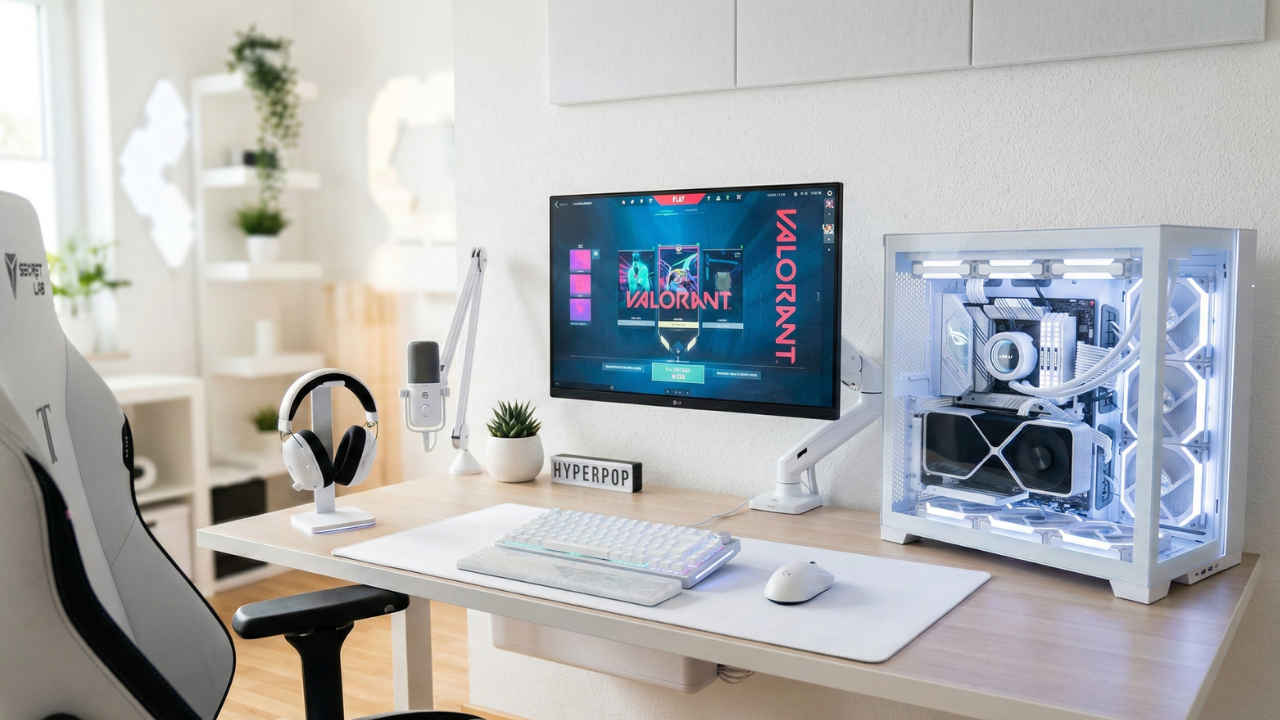
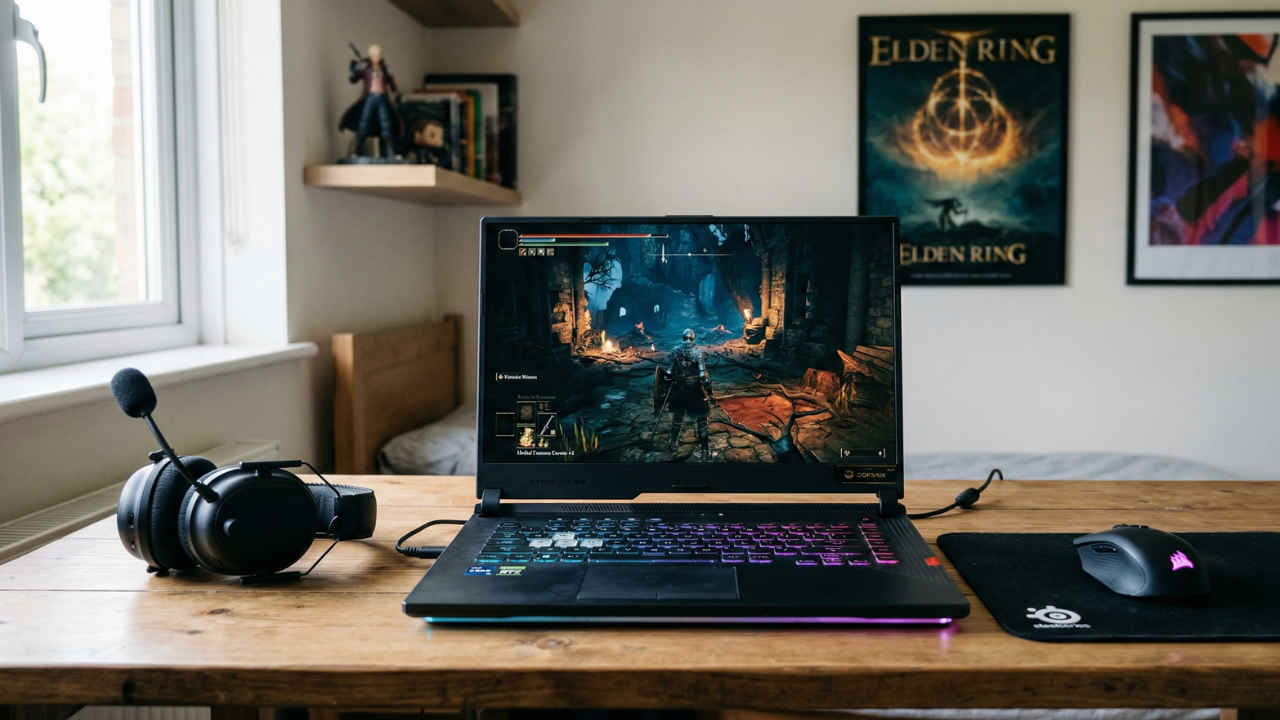
I still remember the first time I seriously considered switching to a desktop. My laptop was throttling hard mid game, fans screaming, frames tanking at the worst possible moments – and I thought, enough is enough. Next year, I told myself, I will have a proper rig, a real setup, no more fighting my own hardware. However, I never made the jump. Now in 2026, with hardware prices the way they are, I am starting to regret it.
AI infrastructure demand has sent RAM and SSD prices into orbit. The fabs that used to keep our gaming components affordable are now churning out memory for data centres. That single shift changes the PC vs. laptop calculation by a lot.
Also read: These Lenovo concept devices unveiled at MWC 2026 have my attention
A desktop has always been the more sensible (and cooler) choice for pure performance per rupee, but today that argument is sharper than ever. When RAM costs are elevated, a desktop lets you decide exactly how much you need and buy accordingly. Start with 16GB, run it for a year, expand later. A gaming laptop offers you no such luxury, the manufacturer locks in the configuration, bakes in their margin on top of already inflated component costs, and sends it your way as a take-it-or-leave-it deal.
Then there is the GPU story. At every price bracket, whether you are spending fifty thousand rupees or two lakh, the desktop discrete graphics card beats its laptop counterpart comfortably. Laptop thermals and power limits simply cannot keep pace with what the latest Nvidia and AMD silicon wants to do when it is allowed to breathe. In a demanding title, that gap is not just in the benchmark numbers. You actually feel it in frames.
A desktop is also a more honest long-term companion. The monitor you buy today will outlive three GPU cycles. The cabinet, the PSU, the cooler – none of these need replacing when you upgrade. In an inflationary component environment, that modular nature is financial common sense.
I will be honest here. There are real, legitimate reasons to choose a laptop, and I have lived most of them. If you are a college student moving between a hostel and home, or someone who travels and wants to game on the road, a laptop is not a compromise. It is the only option that fits your life.
Also read: 5 mouse settings you should change for maximum performance
There is also an invisible cost that desktop enthusiasts tend to ignore: a PC is not just the tower. Add a decent monitor, a keyboard, a mouse, a headset, a UPS for our wonderfully unpredictable power situation and suddenly the budget gap narrows considerably. For someone starting from scratch, a laptop is one purchase that covers everything.
Modern gaming laptops have also just improved so much even in the budget ranges. Cooling systems are smarter, displays are 4K OLED, and brands like Lenovo, ASUS and MSI have brought capable machines to price points that would have seemed impossible a few years ago.
Right now, in this market, a gaming PC makes more financial sense for the majority of Indian gamers and the RAM and SSD situation is precisely why. You get better performance per rupee, and more importantly, you get control over where your money goes at a time when component prices are anything but stable.
A laptop wins if portability is non-negotiable, or if you need a single-box solution with no existing peripherals. I have been that person my whole gaming life – no regrets, mostly. But if you have a desk and a stable setup at home, build the rig. Learn from those of us who kept saying next year. Either way, game on. The platform matters far less than the hours you put in.
Also read: Death Stranding 2 PC requirements released: Check out here