Multiplayer gaming has moved from the LAN party to hyperscale data‑centres in little more than two decades. Each evolutionary step has enlarged the audience—and the attack surface. Denial‑of‑Service (DoS) assaults that once knocked out a friend’s spare PC can now disrupt a global launch and drain thousands of pounds in e‑commerce revenue. As DVS Shiv Kumar, a Cloud Solutions Architect at OVHcloud, observes, “Cyber‑attacks increased by 76 percent in the first quarter of 2024, and India is amongst the most vulnerable countries.” Understanding where the server lives—and who shoulders which layer of defence—has therefore become as critical to game design as hit‑box detection or latency budgets.
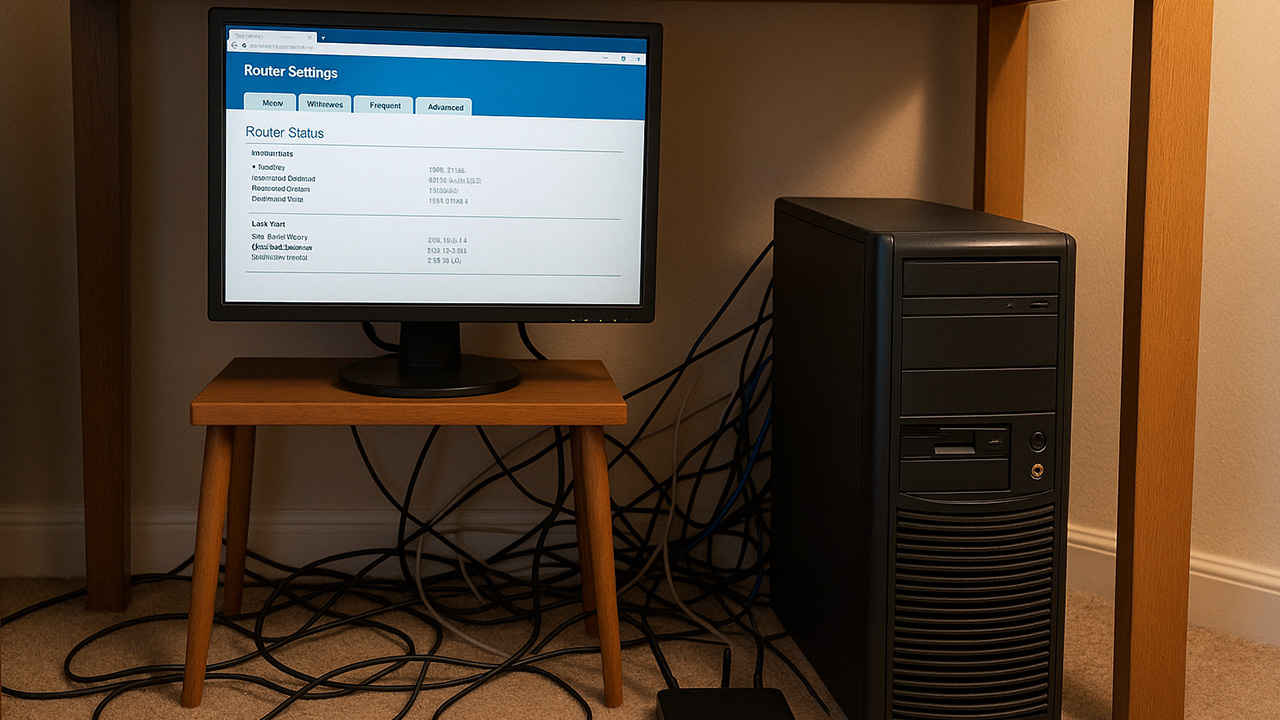
Early online communities often hinged on one enthusiast running the server on a spare desktop, port‑forwarded through a consumer router. Bandwidth caps and ADSL uplinks limited player counts to a handful, but the social intimacy fostered strong ties. Small upstream pipes naturally throttled flood traffic; attacks were usually personal grievances rather than for financial gain. When they occurred, a hard‑power‑cycle or a router reboot was frequently enough to recover. Everything—from patching the OS to moderating user bans—sat squarely with the hobbyist. Commercial mitigation services were either non‑existent or far too expensive. Hardware and electricity were sunk costs, making this a near‑zero‑budget option. Availability, however, was brittle: power cuts, siblings streaming video, or a single SYN flood could end the evening’s play.
The rise of professional clan play in titles such as Counter‑Strike and Battlefield 1942 spawned hundreds of rental providers. A low monthly fee secured a slice of rack‑mounted hardware, a public IP, and basic FTP access for mods. However, with the shift came more problems. A shared server meant that multiple game server instances would now be hosted on a single physical server. Each instance would be ensconced in a virtualisation layer but shared addresses and network ports meant a grievance against one tenant could inadvertently down dozens. So an attack on one virtual game server would down all the other game servers on the same physical server.
The GSP usually kept the box patched and the network alive, yet game administration and config‑file security remained with the renter. Also, with crowdsourcing of funds, hosting servers became more profitable. Subscription models were a dime a dozen. Many World of Warcraft servers operated by charging subscription fees or one-time donations from players. As time passed, quality of life improvements would come into the picture. While predictable flat fees suited community donations, it was the extras—private sub‑nets, higher tick‑rates, basic DDoS filtering—that soon inflated the bill. And as users became more invested in their servers, so did those with malicious intent. Shiv Kumar notes that the attacker profile likewise evolved: “Gaming and gambling servers are now the second most popular target for application‑layer DoS attacks, and the third most attacked at network level.” The growing prize drew more sophisticated tooling.
When player counts rose into the hundreds, communities graduated to virtual private servers or leased bare‑metal. Always‑on gigabit links enabled 24/7 lobbies and international player bases. And with this came even more vectors of attack. Amplification floods (NTP, memcached), UDP heartbeat floods, and application‑layer HTTP GET storms all became viable. But game server operators weren’t too far behind to counter these vectors. While hosts supplied generic firewalls, the game operators had to harden exposed ports, rate‑limit protocol handshakes, and monitor unusual spikes. Hourly billing or monthly rental shifted cost from cap‑ex to op‑ex, but egress traffic surcharges meant mitigation could quickly become costlier than the server itself during an attack. This is where “social friction” enters the debate. “Gamers prize ease of access and do not wish to jump through multiple authentication steps, whereas providers favour more comprehensive security,” warns Shiv Kumar. Balancing single‑click entry with multi‑factor controls is still fraught.
AWS, Azure and Google Cloud have re‑defined scale. Anycast addressing, global scrubbing centres and terabit backbones can absorb floods that once felled entire ISPs. Yet the shared‑responsibility model transfers only part of the burden. Large publishers have since long moved to hyperscalers for their game servers and have multiple layers of authentication and access-gating to prevent random folks from being able to target them with DoS attacks. That being said, the battle between good and bad actors has been a cat-and-mouse game since time immemorial. Also, one can’t expect hyperscalers to focus on individual servers so the shared-responsibility model leaves some of the mitigation up to the operator.
Large hyperscalers sometimes have specialised backend management services which can handle most of the tasks typically associated with hosting game servers. Services such as AWS GameLift, Google Game Servers and Microsoft PlayFab abstract much of the undifferentiated heavy lifting. They even have scheduled autoscaling which typically spin up for a saturday‑night peak and wind down as the weekend comes to a close. These services have built‑in network scrubbing and per‑packet inspection which blunt volumetric floods, but platform outages end up becoming single‑points‑of‑platform failure. The upside is that the game developers can then focus on code, matchmaking and a better experience. The backend service vendor’s SLAs cover transport‑layer availability.
Direct costs scale predictably: a reserved VPS node might run INR 430 plus taxes a month which will allow you to host a small Minecraft server for you and your friends. Whereas high‑traffic cloud instances can easily exceed INR 1,00,000 once bandwidth and premium mitigation are factored in. Indirect costs are trickier. A single 12‑hour outage for a game like Fortnite, which made USD 3.5 billion in 2023, would cost the company an estimated USD 500,000 in in‑game purchases. While that is one end of the spectrum, it goes without saying that downtime costs more than what it would have cost the game developer to mitigate the attack. Spending an extra INR 2-3 per gigabyte on DDoS‑protected egress can thus be cheaper than the churn induced by an unmitigated flood.
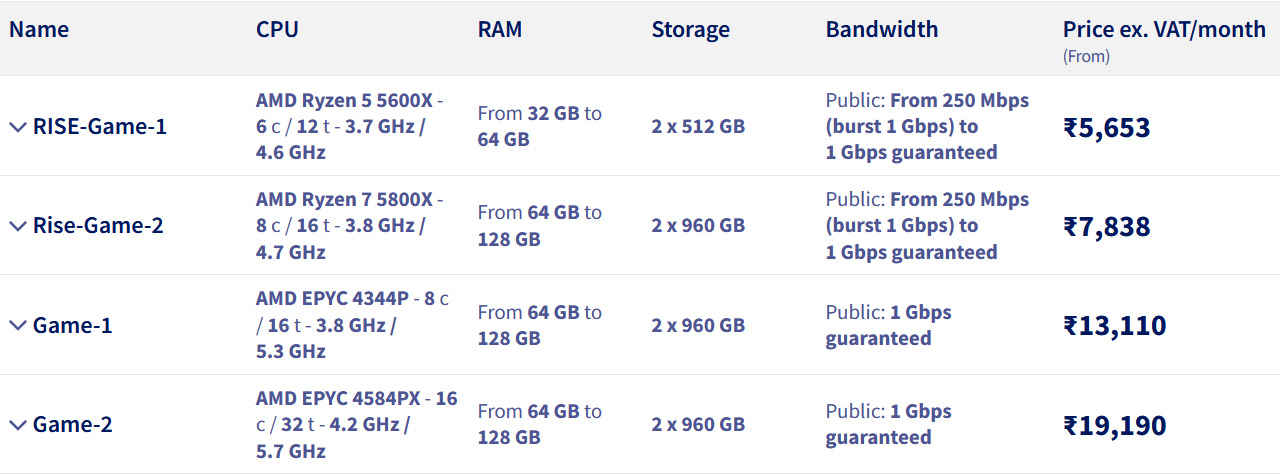
Take for example OVHcloud, which has Dedicated Servers with DDoS protection, and they start at about INR 5,653 plus taxes per month. You can host multiple instances of Minecraft on these servers and even build an entire community around it with some crowdsourced subscription model in place to help finance it. You not only get the benefits of being able to exert full control on a dedicated server, but there’s also the added DDoS protection that gives you some peace of mind.
From bedroom rigs humming under loft beds to petabyte‑scale clusters spanning continents, hosting has transformed how games entertain—and how attackers disrupt. Greater scale delivers industrial‑grade defences, yet paints a larger bullseye. Ultimately, DoS resilience must be a design‑time decision: select the hosting tier that matches your risk appetite, bake in layered safeguards, and practise incident response before the next flood arrives. As Shiv Kumar reminds us, “People are the greatest strength and liability when it comes to cyber‑attacks.” Getting both the technology and the humans aligned is the only sustainable strategy.