Death Stranding 2: On the Beach
When Hideo Kojima’s original Death Stranding arrived in 2019, it was received with mixed opinions. Detractors called it a glorified walking simulator; fans labelled it bold, meditative and freakishly original. Personally, what I’ve observed is that most detractors after pushing through the game turned into ardent admirers. Now, five years later, Death Stranding 2: On the Beach returns with a sequel that is at once more ambitious, more playable, and somehow even stranger than its predecessor. If that sounds like a contradiction, welcome back to Kojima’s world.
Where the first game reconnected a shattered America, On the Beach expands the game world to the parched outbacks of Australia and sun-drenched hills of Mexico. Sam Porter Bridges is once again the reluctant postman of the post-apocalypse, but this time he’s older, heavier, and nursing more than just physical baggage. What Kojima Productions delivers here is a longer, richer and more relatable take on the themes of connection, grief, and purpose. And yes, you’ll still fall over your parcels.
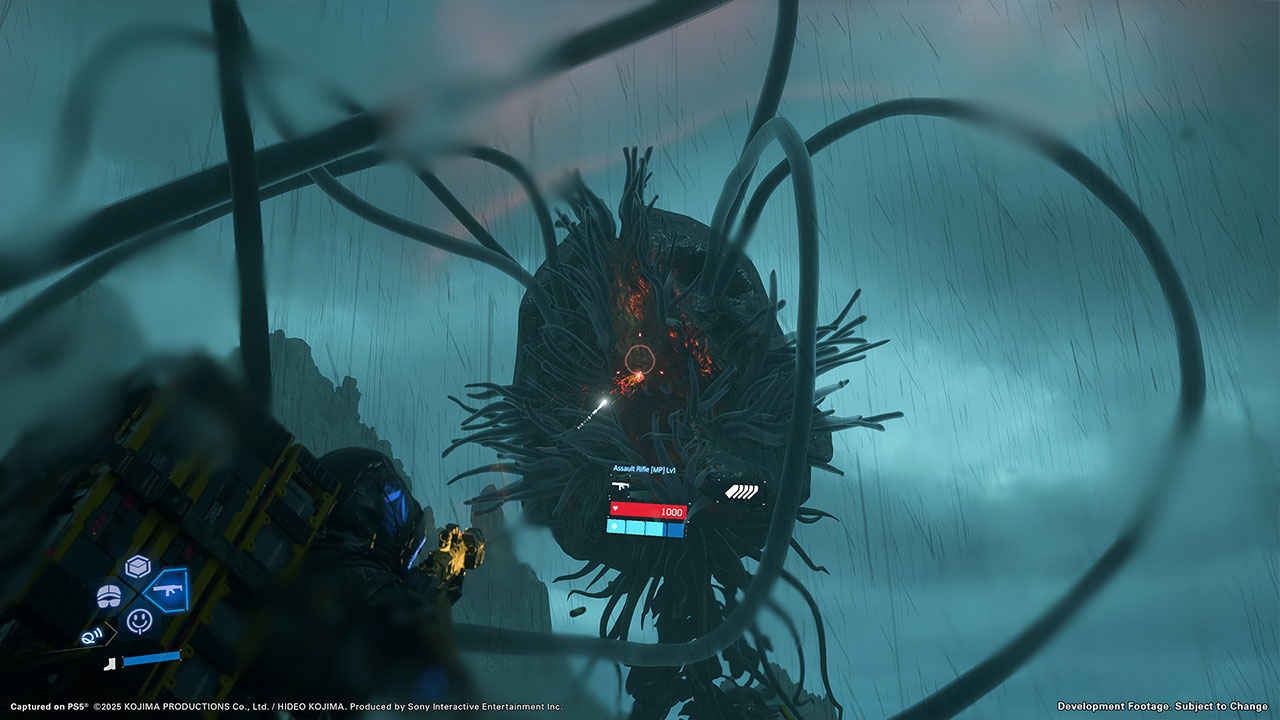
Through some inexplicable set of events, the world has become fractured and now we have the world of the living and that of the dead mangled together in an ungodly mess. Most of humankind is extinct and there are wispy spirits from the other side floating about. The wispy ghosts are called BTs. Touch one of them and everything goes boom. Some folks can travel to the other side and back. Our protagonist is one such fellow. He has special abilities that enable him to form a network with the remaining viable parcels of land on the living side. This ‘Chiral Network’ brought all of the United States back into a traversable structure. Now do you see how the name ‘Death Stranding‘ came to be? And what of the baby, you ask? If you remember the trailer of the first game then you’ll know that the baby is sort of a BT threat detector and allows you to go about the world without bumping into BTs. To summarise, you’re connecting whatever remains of the US together using the Chiral Network. You get betrayed by someone really close to you and you prevent a catastrophic extinction event the likes of which even the dinosaurs had never seen.
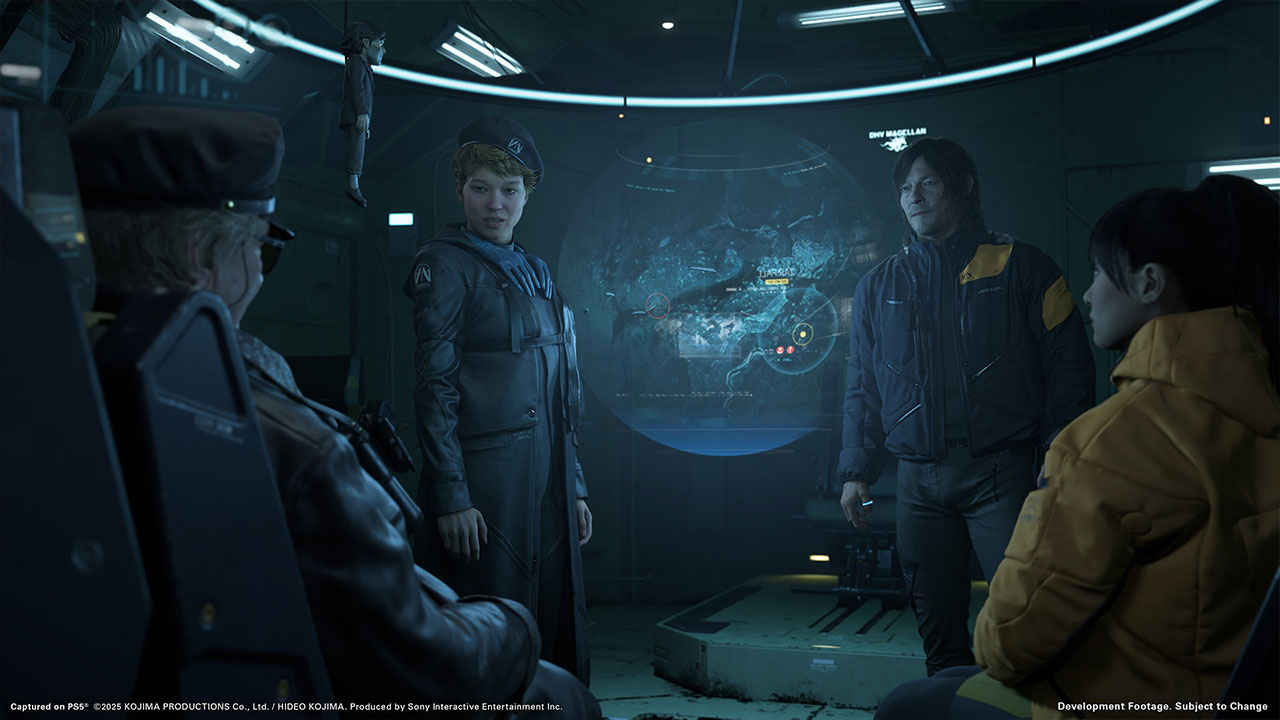
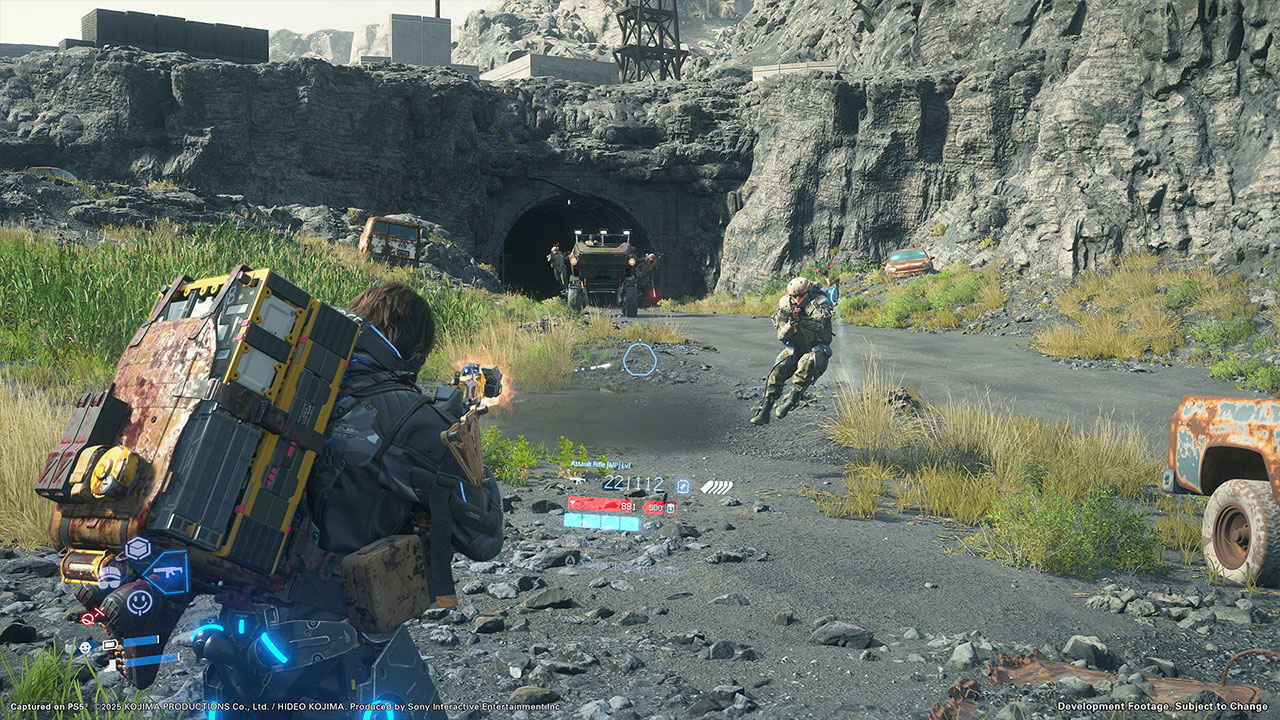
From the moment the game boots up on a PS5, it’ll be painfully obvious that this is one of the most graphically polished titles of the generation. Character models edge disturbingly close to photorealism – Norman Reedus’ haunted stare, Léa Seydoux’s nuanced expressions, and Troy Baker’s unhinged swagger as Higgs are all brought to life with a level of graphical fidelity that’s nearly out of the uncanny valley. The Decima engine on which the game is based continues to impress with sweeping vistas, dynamic weather, and breathtaking lighting that transforms the Australian outback into something that feels mythic.
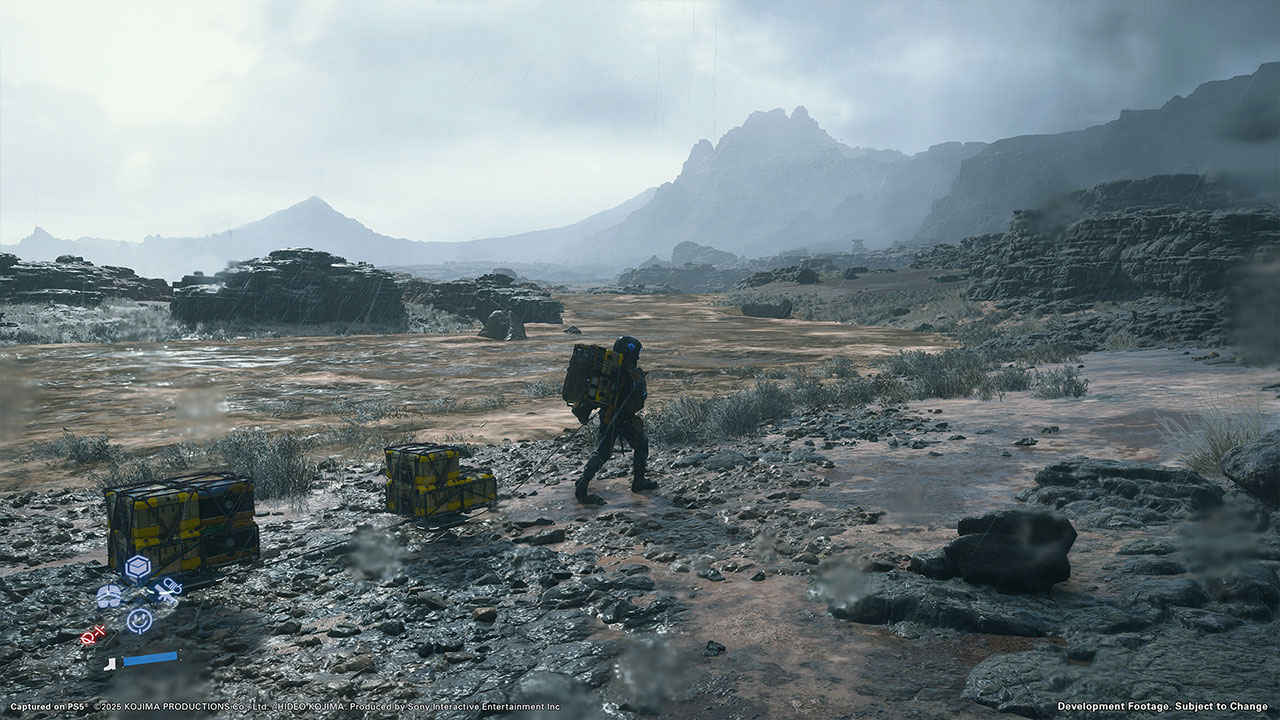
New terrain features like flash floods, sandstorms, and bushfires not only affect the scenery but actively change your route planning. That ladder you placed across a gentle stream may now be washed away in a flash flood. A route that was safe in the dry season might become a deathtrap when rain turns the soil to mud. These environmental hazards contribute to the gameplay and are not just window dressing.
If Death Stranding was a game about ropes, metaphorical and literal connections, then On the Beach is about sticks. It retains the core gameplay loop of planning and executing deliveries, but introduces more dynamic elements which act as threats but you’re also given the tools to confront them. There’s a new emphasis on combat and stealth, bolstered by an expanded arsenal that includes tranquiliser sniper rifles, grenade launchers, and even a tar cannon used for both enemy suppression and environmental control.
The stealth is more flexible, though still a bit clumsy. Enemy AI isn’t brilliant, and the absence of a prone option remains baffling. But tools like camouflage outfits, BT decoys, and quieter footwear give players more room to approach missions creatively. Folks who’ve played Kojima’s Metal Gear Solid V will notice strains of its DNA coursing through this sequel’s veins given its sandbox structure, multiple approaches to each mission, and that same experimental energy that lets you have fun even when you mess up.
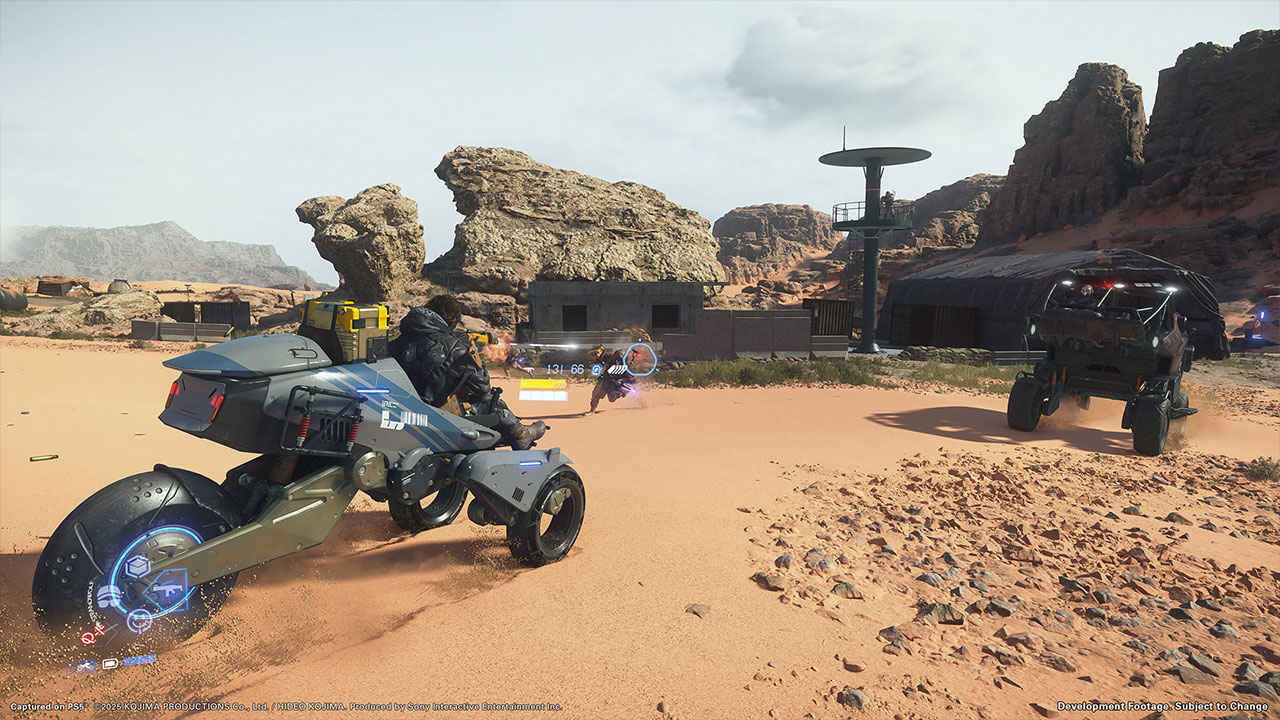
Let’s not pretend this is an action game in disguise. The heart of Death Stranding 2 still lies in hauling cargo. But this time, the segues connecting each moment have been smoothened. You now get access to vehicles early on in the game and that‘s including customisable off-roaders and the all-important monorail system. The latter allows for high-speed, player-built cargo transport systems across the map. There’s something satisfying about seeing your meticulously crafted network used by others and receiving a flood of Likes for your effort.
Structures in the environment still play a huge role in making things easy along the wya. Watchtowers, roads, bridges, and ziplines can all be left behind for other players to use. This passive multiplayer experience where you help and are helped by unseen companions remains one of the most meaningful innovations of the franchise. It turns solitude into solidarity, one ladder at a time.
No Kojima game is complete without an ensemble of deeply weird characters and gadgets. Enter Dollman which is basically part scout drone, part passive-aggressive companion, part philosophical crash test dummy. He’s a true side-kick who’s ridiculous and endearing in at the same time. Then there’s the blood boomerang, used to take down BTs in style (and with a side of blood loss). And don’t get us started on the coffin-shaped hoverboards or guitar-wielding antagonists.
Much of this strangeness could come off as indulgent if it weren’t backed by heart. The game is never cynical, never lazy. It is seriously weird. Whether you’re facing down crimson-armoured foes in the desert or delivering a pizza to a VTuber, it all fits within the same universe because Kojima’s world-building is just that … well it’s indescribable.
Set 11 months after the original, the events in Death Stranding 2 picks up with Sam living quietly with baby Lou who’s growing up nicely under his care. And then disaster strikes and the world needs reconnecting once again. This time, the corporate-backed Drawbridge organisation has a contract to bring Australia into the Chiral Network, and Sam is pulled into a whole new mission arc.
There’s more action here as you engage in boss fights with mechs, rooftop shootouts with lightning guitars, and moments that could be straight out of a Mad Max fever dream. But there’s also more reflection. Themes of grief, environmental decay, technological dependence, and emotional reconnection are explored with surprising tenderness. There are scenes of genuine vulnerability, a peek into the trauma of newcomers like Tomorrow that ground the high-concept weirdness. Yes, there’s someone named ‘Tomorrow’ in the game.
The performances carry this weight well. Reedus is stoic as ever, but it’s Seydoux and Fanning who deliver the more emotionally textured turns. And yes, George Miller, the real-life director of Mad Max plays a gentle supporting role as Tarman, lending the game a quiet gravitas.
Mechanically, Death Stranding 2 is far less frustrating than its predecessor. Cargo management is more forgiving. The UI, while still a bit busy, has been cleaned up. You earn APAS points during deliveries which can be spent on upgrades like stronger bullets, quieter boots, and better weather predictions. Skills are modular and can be swapped out, giving you the freedom to specialise.
Combat is still not the strongest suit, but it’s more satisfying now. Enemies react more dynamically to sound and threat levels. There’s genuine variety in the types of encounters — some tight, stealthy infiltrations, others chaotic vehicle battles. The difficulty scales slowly, so you rarely hit a wall, but never feel overpowered either.
If you bounced off the original Death Stranding, chances are On the Beach won’t convert you. Yes, it’s faster, tighter, and less opaque, but it still asks you to accept long walks as meaningful gameplay. It still wants you to stack boxes, read emails, and ponder metaphors about metaphysical connections while climbing a mountain. It still features cutscenes that border on self-parody, monologues that feel lifted from a philosophy undergrad’s diary, and Kojima’s inescapable fascination with bodily fluids.
But if, like me, you fell for that first game’s eccentric rhythms and philosophical aspirations, this sequel is a gift. It fixes many of the first game’s issues while adding enough new ideas to make the journey worth it. And what a journey it is.
Death Stranding 2: On the Beach is a game of contradictions. It’s grander, yet more intimate. It’s funnier, but also sadder. It introduces combat without losing sight of its meditative core. And it dares to be genuinely, gloriously strange in an industry that too often defaults to safety.
Kojima may never be subtle, but he remains singular. And in an age of predictable franchises and homogenous design, Death Stranding 2 stands alone with its awkward, brilliant, and deeply human story-telling. If you’re wondering whether you should play this game, grab Death Stranding on Steam during the Summar Sale to see if it’s right up your alley.