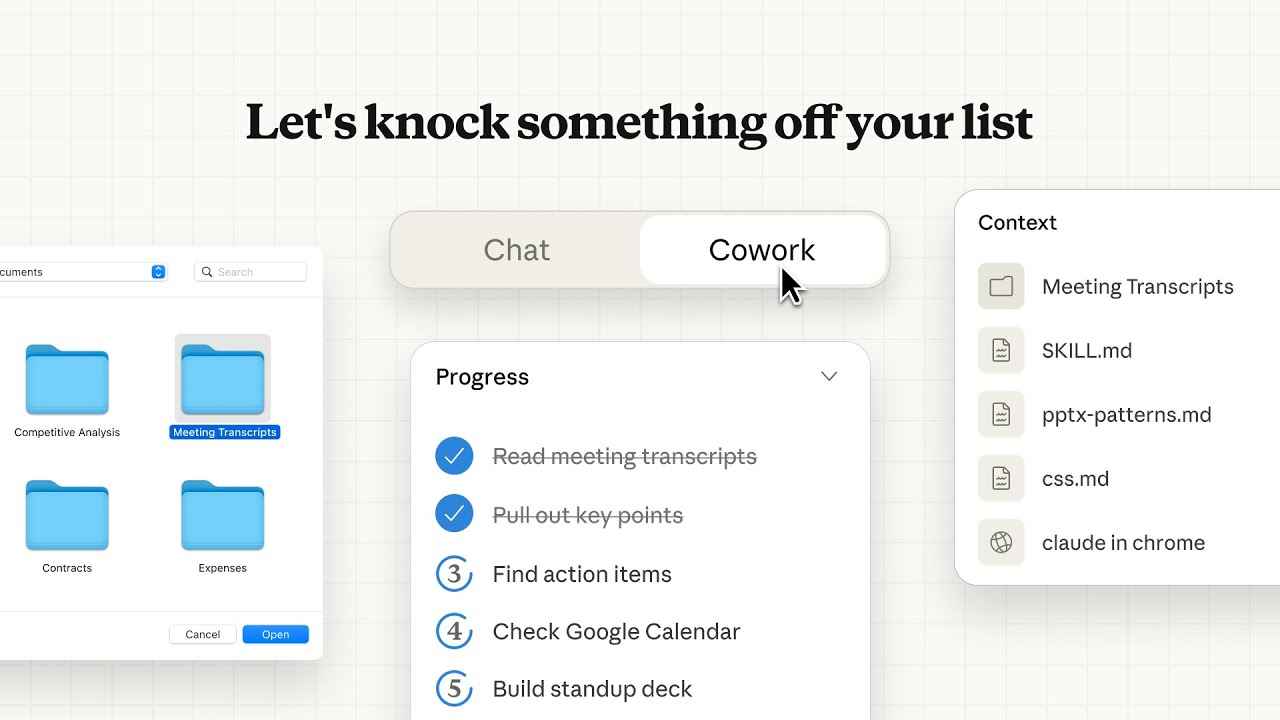
The global technology sector is currently reeling from what financial analysts are calling the “SaaSpocalypse.” For years, the industry operated under a comfortable assumption: AI would serve as a “copilot” that made existing software more valuable. However, the February 2026 launch of the Claude Cowork Agent has shattered that peace. Anthropic is no longer just providing an engine for others to use; it has moved directly into the “application layer,” offering specialized tools that perform the work of entire software suites.
The market reaction was swift and brutal, with specialized data and legal software giants seeing their valuations crater by as much as 20% in a single day. The primary fear is that Claude is transitioning from a helpful assistant into a direct competitor that threatens to make traditional business software redundant.
Also read: Anthropic AI tool for legal work is here: What it does and why investors globally are nervous
Also read: OpenAI says AI is advancing fast, hires new safety exec from Anthropic
The core of this anxiety lies in the fundamental destruction of the seat-based subscription model. For decades, companies like Salesforce, ServiceNow, and SAP have built “moats” around their businesses by charging per-user licenses. This model relies on the idea that humans need a specialized interface to perform their jobs. Anthropic’s new agentic plugins bypass this necessity entirely. Instead of a human employee logging into a dozen different platforms to manage a sales pipeline or review a legal contract, the Cowork Agent can navigate these tasks autonomously.
Investors are beginning to realize that if one AI agent can do the work of a ten-person department, the need for ten software licenses vanishes instantly. This shift toward “Service-as-Software” means that legacy platforms are being bypassed, as businesses find it more efficient to let an AI handle the workflow directly rather than paying for a bloated software ecosystem that requires human manual labor to operate.
Beyond the immediate threat to revenue, software leaders are increasingly worried about a more insidious long-term risk: the erosion of human technical competence. Anthropic’s recent research into “disempowerment patterns” has highlighted a growing crisis in engineering departments where junior developers are using AI to produce code at record speeds but are failing to understand the underlying logic. This “skill atrophy” suggests that while productivity might spike in the short term, companies are effectively hollowed out from within, losing the deep debugging and architectural expertise required to manage complex systems.
CEO Dario Amodei’s warnings about the “Adolescence of Technology” have taken on a prophetic tone, as firms scramble to defend against AI-orchestrated cyberattacks and “vibe-negotiated” contracts that look professional but lack legal nuance. Software companies now find themselves in a desperate race to justify their existence, worried that as Claude’s powers grow, the value of human-supervised legacy code will continue to evaporate.
Also read: Google Gemini is making chat history portable: Why it matters for you