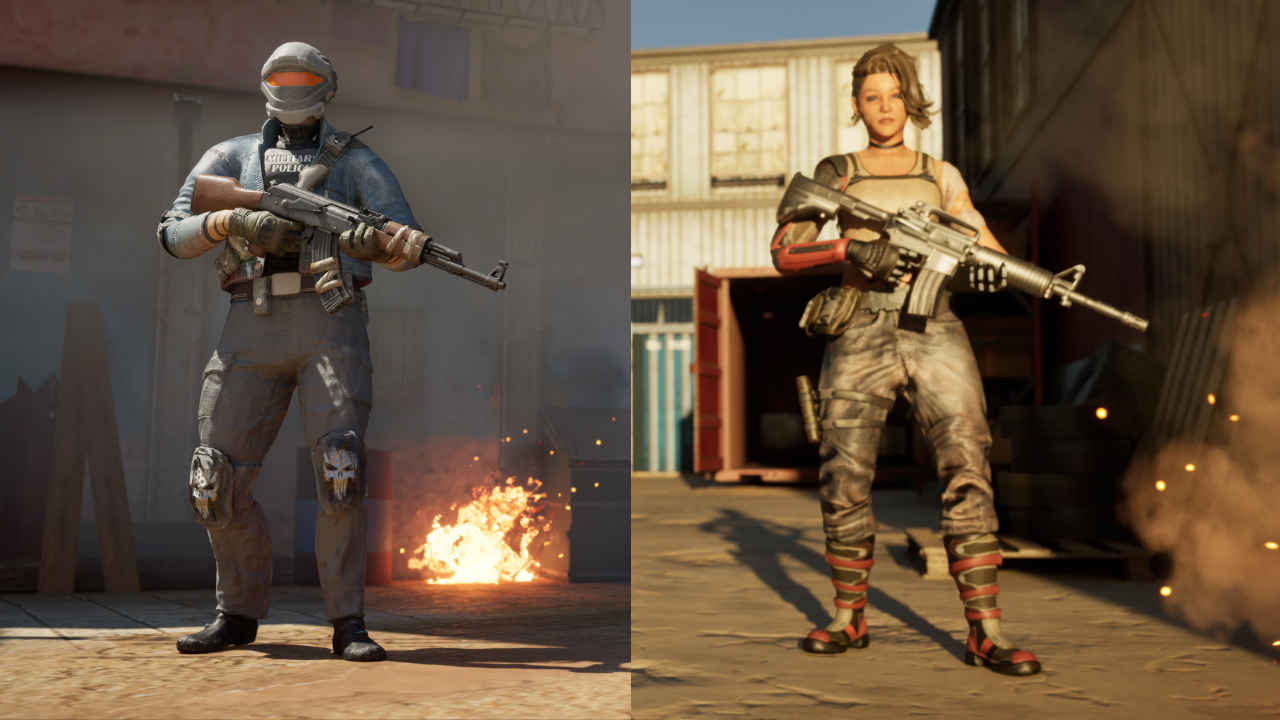
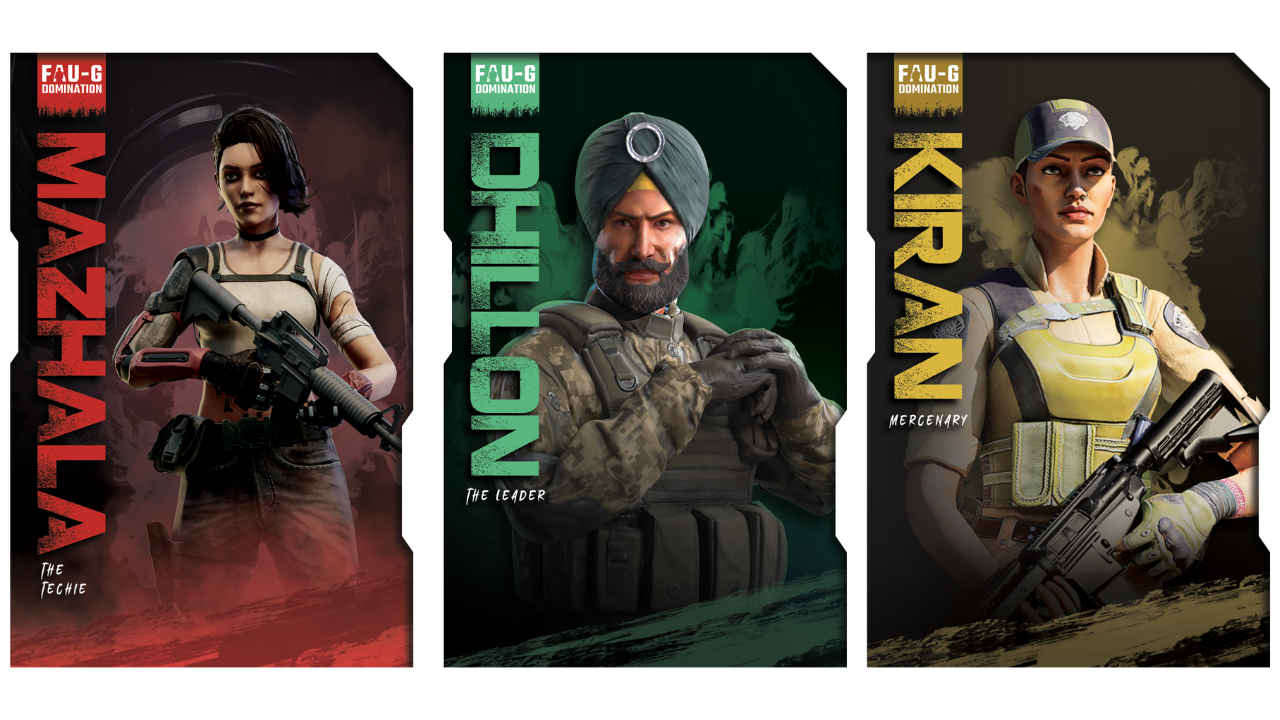
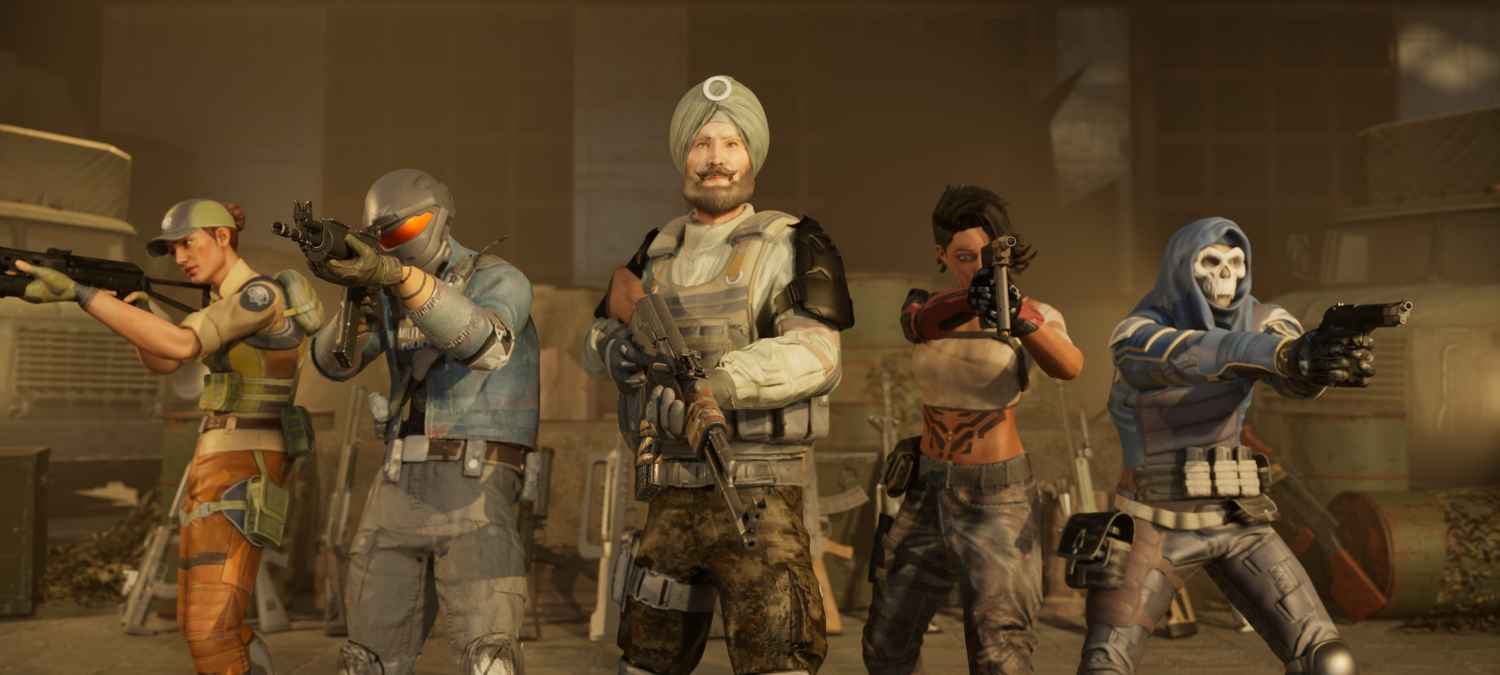
When FAU‑G: Domination launched into India’s mobile‑shooter arena, it surprised many not just with its patriotic flair, but for the polish and speed of development. Behind the curtains, led by a lean 30‑person team, lies a powerful secret weapon – artificial intelligence. I interviewed Srinivasan Veeraraghavan, co-founder of Dot9Games and executive producer on FAU-G: Domination, to uncover how AI threaded through every stage of this ambitious title’s creation – and how it might shape its future.
As far as the here and now in India goes, a market dominated by low‑end and mid‑range smartphones, maintaining smooth performance is mission‑critical. “There’s a focus on ensuring we’re performant on low-end and mid-range devices that make up the bulk of the market with a launch target of 30fps on these handsets,” Srini explains. Hitting that frame rate meant AI‑guided profiling of device capabilities, automated optimization pipelines, and relentless iteration on build settings.
Also read: FAU-G Domination trailer revealed, as Nazara opens game pre-registrations
Equally important is players shouldn’t feel nickel‑and‑dimed. Dot9 turned to data analysis – another AI forte – to calibrate its in‑game economy. “And we’re extremely conscientious of how we price our micro-transactions, with the objective of making them affordable rather than predatory,” Srini adds. By mining transaction data and player behaviour, the studio ensured purchases felt fair, encouraging engagement without backlash.
Long before a single model was sculpted, FAU-G: Domination’s world took shape in AI‑powered research sessions. “AI helps us tremendously in the pre-production and production phase,” Srini says, referencing tools that accelerate fact‑finding and idea generation. When a bullet‑teeth‑grin character from India’s Northeast needed authentic slang and apparel, Dot9 turned to Perplexity.
“We’d use deep search features of Perplexity to help us get information faster on super niche topics like street wear and slang used by North East Indian youths as one of our characters hails from that region.” The result was characters and narratives grounded in real‑world textures, not generic tropes, according to Srini.
Dot9Games didn’t stop at text. Early concept art arrived courtesy of image‑generation engines – Midjourney, Stable Diffusion, Leonardo, and KREA – to spin out hundreds of scene sketches and color palettes.
“We use image generation tools like Midjourney and Stable Diffusion to create swathes of concept art that we go through with human eyes and hands to tweak and use as necessary.” By outsourcing rough drafts to algorithms, artists could home in on the details that make environments memorable: the gleam on a shotgun barrel, the scuff on a tactical boot.
This hybrid workflow – AI draft, human polish – allowed Dot9 to iterate art direction at a speed unthinkable a decade ago, without sacrificing the studio’s signature handcrafted touch.
Procedural content is the holy grail of player retention, but Srini warns of the “monotony trap.” “For our live services pipeline we have considered the possibility of procedurally generated Battle Pass quests powered by AI. Our concern is that it may end up being too ‘same-y’.” Instead of letting AI spit out generic assignments, Dot9 harnesses it to propose broad game‑mode ideas – then designers add human‑crafted twists.
“Following this a game designer on our team would go through the output and add a twist on it to make it more enjoyable. For example: an AI could tell us a one-life mode might be fun but a one-life mode with knives only would be better – the latter is what happens when the human element is a part of the process.” This approach marries AI’s boundless creativity with a designer’s intuition, maintaining variety without fragmenting quality.
Also read: Inside FAU-G Domination: A Deep Dive into Dot9 Games’ Latest Mobile FPS
Dynamic difficulty adjustment (DDA) is a tantalizing feature for player retention – but Dot9 treads carefully. “While FAU-G: Domination isn’t using real-time AI adjustments we are considering this possibility down the line. That said, the inherent risk is automating a process that demands direct and constant communication with the community, which we prefer keeping as the domain of our community manager.” For now, Dot9 uses AI‑driven analytics to track player churn and skill curves, informing manual tweaks rather than fully automated shifts.
NPCs offer another testbed. “Yes this is something we have in-game and are constantly tweaking. At the moment it’s pretty brutal against first-time players while FPS veterans find it a bit easy. Finding the sweet spot is a never-ending endeavour even post-launch,” says Srini. AI models ingest match data – kill rates, death locations, weapon usage – to suggest parameter adjustments, ensuring bots feel both challenging and fair.
True personalization remains aspirational, according to Srini. “This depends on how the game is received at launch. With a larger player pool we could consider automating this after looking at the data. Right now, we’re looking at this from a POV of ensuring every weapon and loadout has a sufficient representation in the game’s meta.” Dot9 is exploring AI that tracks a player’s favoured weapons, maps, and playstyle to recommend loadouts or game modes – much like a music service curating your next playlist.
Matchmaking, by contrast, is already AI‑driven. “We use AI to bucket players. What this means is we identify and segregate them based on level. For example: a level 10 player won’t be matched with a level 1 player. He will be matched with a level 10 or anything between level 8 to 12. And if there are no players, he’d be matched with a level 10 bot.” This basic yet effective sieve smooths out skill disparities, keeps game queues flowing, and avoids crushing new recruits under veteran firepower, emphasizes Srini.
Looking ahead, AI remains Dot9’s co‑pilot. Srini asserts, “AI in FAU-G: Domination is usually used – and will likely continue to be used – in unison with human employees. We prefer working in tandem with tools rather than wholesale automation. That strategy is why a 30-man team with no experience of shipping shooters was able to put together a competent experience in about 2 years.” By outsourcing rote tasks – research, rough art drafts, matchmaking logic – Dot9 frees up its small team to focus on story arcs, level design, and community engagement.
Through every stage – from pre‑production research and art ideation to live‑service pipelines and esports packaging – FAU‑G: Domination exemplifies a philosophy of partnership, not replacement. AI augments Dot9’s creative muscle, scaling their reach without diluting their vision.
In the crowded mobile‑shooter landscape, Dot9Games has found a competitive edge by blending algorithmic efficiency with designer intuition. As FAU‑G: Domination continues to evolve, one thing is clear: its small team’s secret weapon isn’t a bigger budget or flashier tech – it’s the smart, judicious use of AI, guided at every turn by human creativity. As Srini puts it, “AI in FAU‑G: Domination is usually used – and will likely continue to be used – in unison with human employees.” And in a world where AAA studios often crush indie ambitions, that human‑AI symbiosis might just be FAU‑G’s most powerful weapon of all.