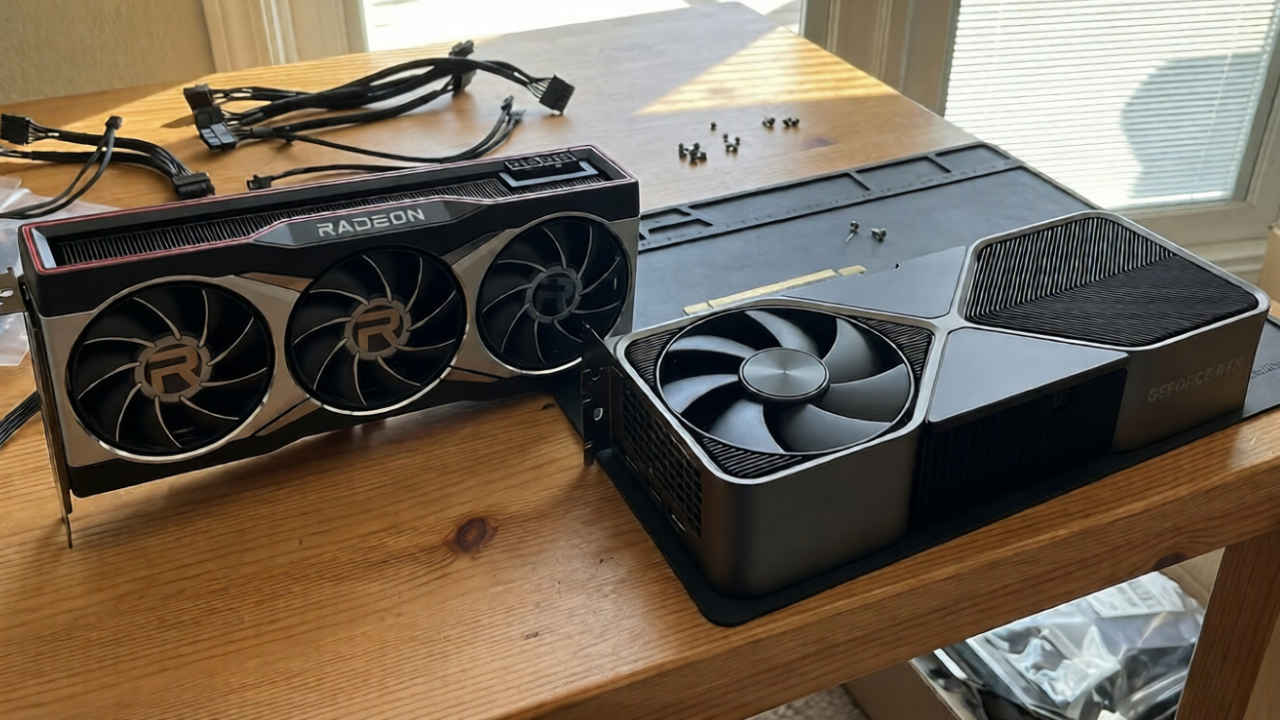
If you’ve been scanning PC enthusiast forums recently, you’re not imagining things. The next big story in graphics cards isn’t about performance wars or AI-accelerated ray tracing – it’s about price hikes that could reshape the GPU market in 2026.
Multiple reputable outlets and supply-chain sources are now converging on the same realisation. That AMD is set to raise GPU prices by at least 10% starting January 2026, and NVIDIA appears poised to follow shortly thereafter. Why is this happening now, so early in the new year? Blame it on prolonged squeeze in memory markets that’s reverberating through every segment of PC hardware.
According to several reports, AMD has already informed its board partners about a roughly 10% price increase across its Radeon RX lineup, with initial adjustments taking effect at the factory gate or AIB level as early as January 2026.
This isn’t speculation – there are early distributor-level increases already visible, such as a $10 bump per 8GB of VRAM on existing Radeon RX 9000 boards, with further increases scheduled as the new year kicks off.
Also read: ASUS could make its own DDR5 RAM: Here’s what it changes for laptops
NVIDIA isn’t being left out of the conversation. Multiple leak outlets, social media whispers, and industry trackers indicate that NVIDIA board partners (AICs) are bracing for price increases as well, likely starting in February 2026 – a move tied to the same memory cost pressures AMD is facing.
Just how expensive will graphics cards get? According to a few extreme rumours, next-gen RTX 5090 pricing will be as high as $5,000 in the US if trends continue, though such projections remain unverified.
Everything ultimately traces back to the global memory supply crunch. DRAM and GDDR variants – the memory chips that make GPUs tick – are in short supply thanks to surging AI data-center demand, reallocation toward high-bandwidth memory (HBM), and tight fab capacities among Samsung, SK Hynix, and Micron.
With DRAM prices climbing and GDDR6/GDDR7 spot prices elevated, GPU makers are facing higher input costs. Since manufacturers like AMD typically bundle memory with their GPU silicon before sending boards downstream, those costs are now being passed – at least partially – to partners and eventually to consumers.
Even broader PC-industry forecasts from financial outlets suggest that electronics prices across the board could rise 15–20% in 2026 due to memory scarcity and prioritization of chips toward the AI sector.
Globally, a 10–20% hike at source is bad enough. But in markets like India, the GPU price impact could be even steeper once import duties, thin inventories, and weak currency dynamics are factored in.
Retail prices could climb 15–30% year-over-year, especially in the high end where VRAM counts – and therefore memory costs – are highest. Flagship models like the RTX 5090 or RX 9070 XT could see very sharp premium pricing, with effective street prices climbing to levels that make current MSRPs look cheap by comparison. Mid-range cards may follow a similar pattern, potentially shifting the entire gaming PC purchase calculus toward laptops, consoles, or prebuilt systems if discrete GPUs become too expensive.
Of course, PC builders have lived through past component crunches, and very well know that if you’re planning an upgrade or a build, seriously consider buying sooner rather than later. With memory prices unlikely to retreat quickly and GPU supply chains already signaling cost moves, the window to lock in pre-hike prices may be closing fast – potentially before the first quarter of 2026 ends.
Also read: Memory crisis: Dell, Lenovo to limit some laptops to 8GB DDR5 RAM in 2026